Skip to content
  English
  Russian
  Turkish
  Spanish
  French
  German
  Japanese
Tablet press machines play a big role in how solid medicines are made today. They need to be accurate, clean, and built to handle different kinds of production needs. In China, several well-known companies have built strong reputations by making tablet presses that are trusted around the world.

Tablet press machines are used to form powder into solid tablets. They apply pressure to shape each tablet with a set size, weight, and thickness. These machines are common in the pharmaceutical industry and help make tablets quickly and consistently.
| Company Name | Year Founded | China |
| Truking Feiyun | 1986 | Ruian City, Zhejiang Province |
| AIPAK Pharmaceutical Machinery | 2002 | Hubei Province |
| Sinoped International | 2008 | Liaoyang, Liaoning Province |
| Shanghai Tianhe Machinery Equipment | 2011 | Shanghai |
| Guangdong Rich Packing Machinery | 1993 | Guangzhou, Guangdong Province |
| Liaoning Tianyi Machinery | 1996 | Chaoyang, Liaoning Province |
| Finetech Pharmaceutical Machinery | 1992 | Ruian City, Zhejiang Province |
| Shanghai Tianfeng Pharmaceutical Machinery | 2000 | Songjiang District, Shanghai |
| LTPM China (LeadTop Pharmaceutical Machinery) | 1996 | Rui’an City, Zhejiang Province |
| Tianjiu Pharmaceutical Machinery | 2008 | Songjiang District, Shanghai |
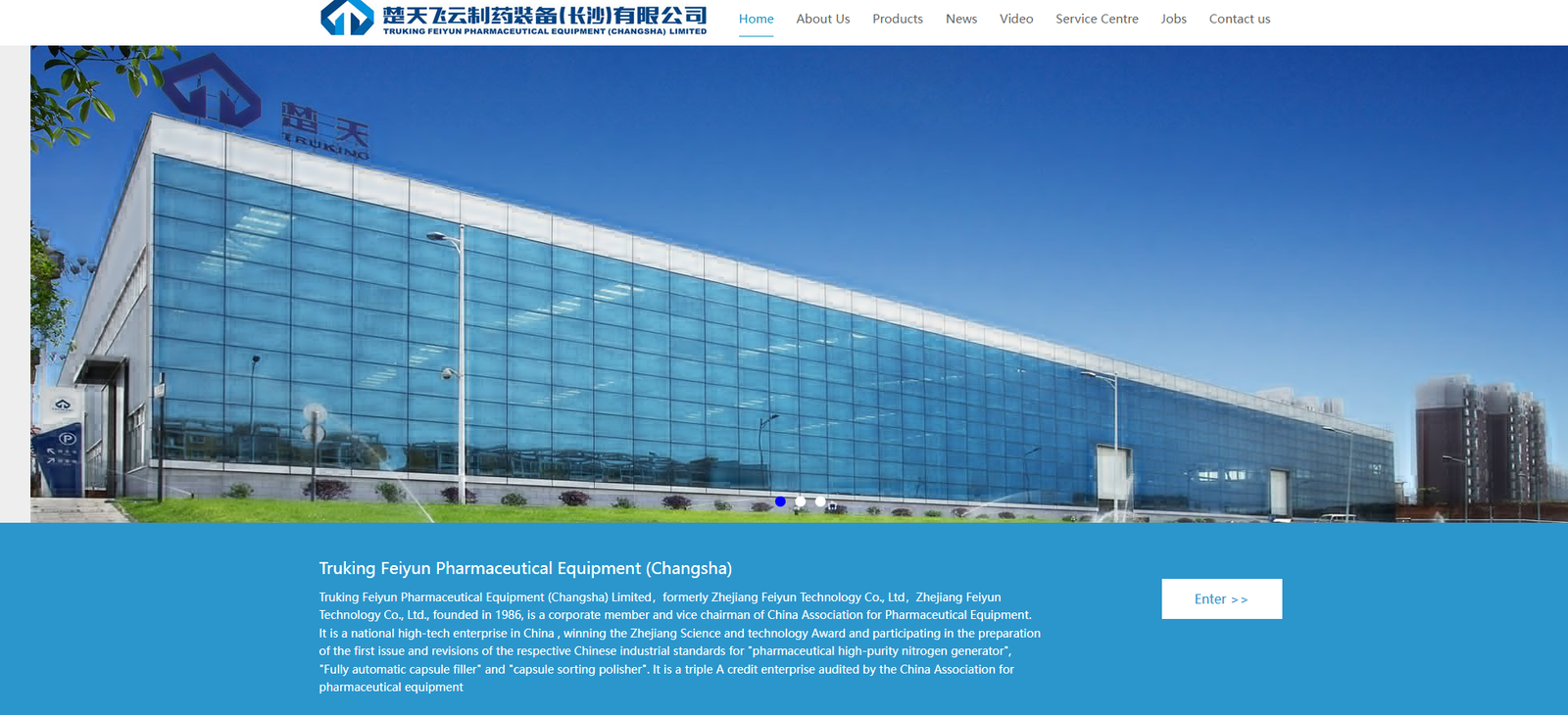
Truking Feiyun (Zhejiang Feiyun Technology Co., Ltd.)
Year Founded: 1986
Main Products:
- Rotary Tablet Press Machine.
- Automatic Capsule Filling Machine.
- Tablet/Capsule Packaging Line.
- High-Shear Mixer Granulator.
- Fluidized Bed Dryer.
- Medical High-Purity Nitrogen Generator.
Truking Feiyun began in 1986 as Ruian Feiyun Machinery. It is an experienced maker of machines for drug companies in China. The company is from Ruian City in Zhejiang Province. It became well-known in 1992 when it built the first automatic capsule filling machine in the country. Today, it helps set the quality rules for other machine makers in China.
The company is known for creating new and better products. It holds over 70 patents for its unique designs. Its NJP7200 capsule filler is the world’s largest and won a national award for its smart design. Besides capsule fillers, Truking Feiyun also makes many other machines to produce solid medicines. This includes modern rotary tablet presses that are built to be exact and reliable.
In 2017, the company grew by joining with Truking Technology, a top industry leader. Now, Truking Feiyun is fully part of the larger Truking company. This change allows it to mix its many years of knowledge with Truking’s large resources and ideas for “smart factories.” This partnership also brings in new technology from German engineering standards.
All machines are built to follow strict cGMP rules for making medicine safely. They also have a CE mark, so they can be sold in over 30 countries. The company helps clients by offering complete production lines, from mixing powders to pressing tablets and packaging them. Because it is part of Truking’s worldwide network, it offers great customer service, help with setup, and training for its customers everywhere.
AIPAK Pharmaceutical Machinery
Year Founded: 2002
Main Products:
- High-Speed Rotary Tablet Press Machine.
- Tablet Coating Machine.
- Capsule Filling Machine.
- Blister Packing Machine.
- Tube Filling and Sealing Machine.
- High Shear Mixer Granulator.
- Fluid Bed Dryer.
AIPAK Pharmaceutical Machinery, located in Hubei Province, has been a key maker of solid dose equipment since 2002. It was started by engineers who had a lot of experience designing production lines for medicine. Their mission from the start was to offer a complete setup for making oral solid doses, with a special focus on tablet press machines.
The founder, a pharmacist who became an engineer, knew that making great machines required a deep understanding of the whole process. Because of this, AIPAK invested a lot in research right away. They built a lab just for testing customer materials, which helps them design custom parts to get the best results.
AIPAK’s campus is large, over 12,000 square meters. To make sure their machines are trustworthy, they buy important parts like PLCs and gearboxes from top companies in Germany, Japan, and the U.S. They were also one of the first Chinese press companies to get a CE certification.
When it comes to tablet presses, you have a lot of choices with AIPAK. You can order presses that make tablets with multiple layers or ones that have advanced sensors to check pressure and thickness. Their machines can make from 60,000 to 1.8 million tablets per hour, so they work for both small test batches and huge production runs. The company also helps customers with factory layouts and making sure their new tablet press fits in perfectly with other equipment.
Sinoped International
Year Founded: 2008
Main Products:
- Rotary Tablet Press Machine.
- Single Punch Tablet Press Machine.
- Double-Slide High-Speed Tablet Press Machine.
- Fluid Bed Dryer.
- High Shear Mixer Granulator.
- Drying and Conveying Systems.
- Blister Packing Machine.
Sinoped International is in Liaoyang, Liaoning Province, and its history comes from a factory that started back in 1947. The company got a new name and structure in 2008. It used its decades of experience to become a supplier for all kinds of solid dose equipment, but especially tablet presses.
At first, the company was owned by the government and focused on different technologies. After it became a private company in 2008, the new leaders expanded into making rotary tablet presses. They used modern tools to make very precise parts for the presses.
The new management team, made of both older, experienced engineers and younger pharma experts, made sure Sinoped met global rules. They earned important certifications like ISO9001 and CE. This helped the company grow fast and sell its machines in more than 120 countries.
Sinoped offers many different tablet presses. They have affordable models for labs and super-fast rotary presses for big factories. They even have special double-slide presses for making tablets with many layers or with ring shapes. The machines also come with touch screens and systems to track data during production.
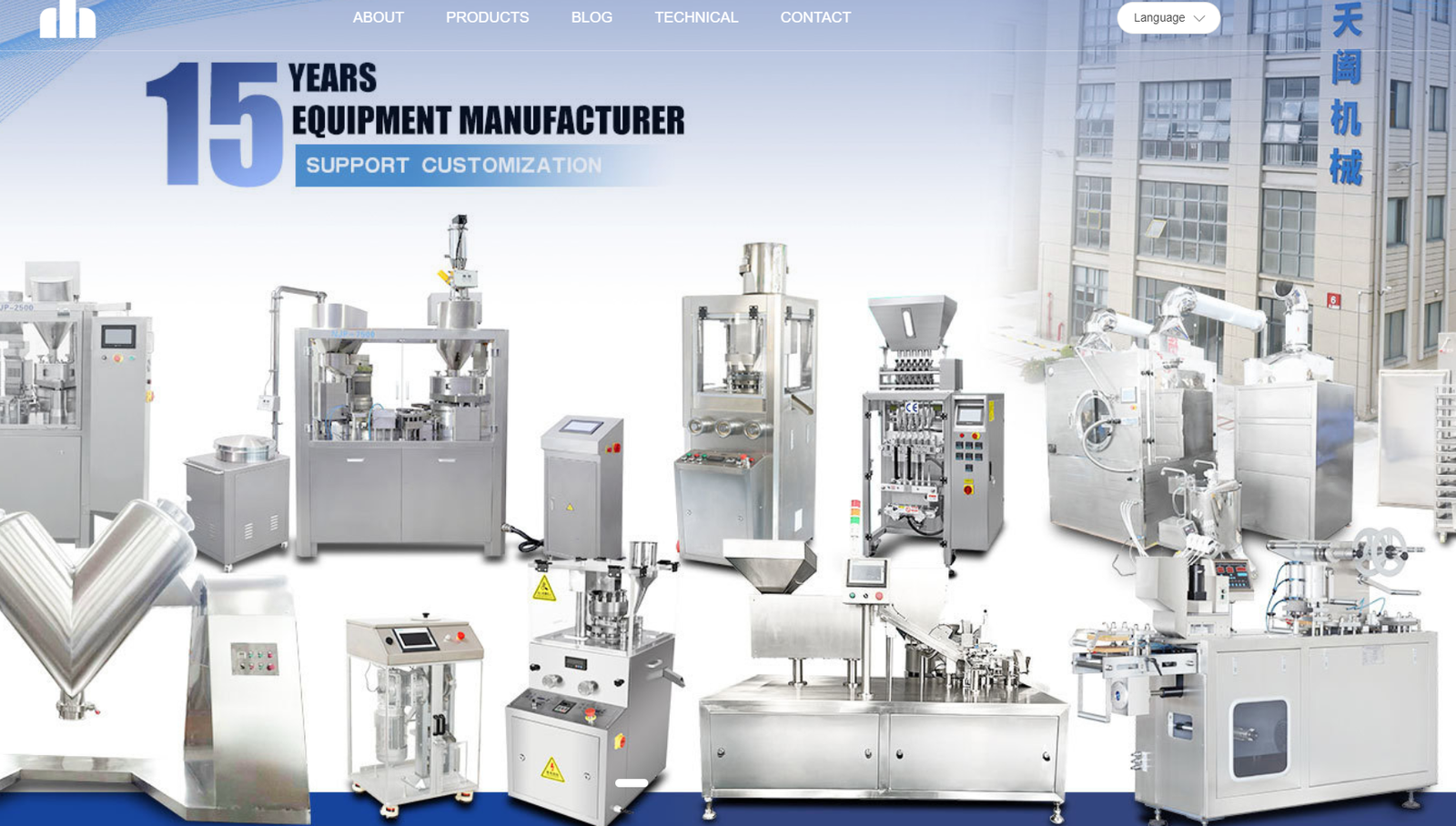
Shanghai Tianhe Machinery Equipment
Year Founded: 2011
Main Products:
- Rotary Tablet Press Machine.
- Single Punch Tablet Press Machine.
- Cone Blender.
- High Shear Mixer Granulator.
- Fluid Bed Dryer.
- Vacuum Loading Station.
Shanghai Tianhe Machinery Equipment Co., Ltd. was formed in April 2011 in a part of Shanghai known for making tablet presses. A group of engineers from another factory started their own company to focus completely on new ideas for tablet press machines.
Being in Shanghai helps Tianhe work with top suppliers and universities. The first machines they made were rotary tablet presses built to meet GMP rules, with features like dust-proof covers and frames that were easy to clean. Their ZP1100 model became popular with mid-sized companies because it was a good machine for a good price.
In 2018, Tianhe opened two more workshops, which gave them more manufacturing space. This allowed them to produce up to 25 presses a month.
This expansion also helped them develop new digital control systems. This led to press consoles with touch screens that can save different settings and check the force being used in real time. The company holds several patents for its unique press designs.
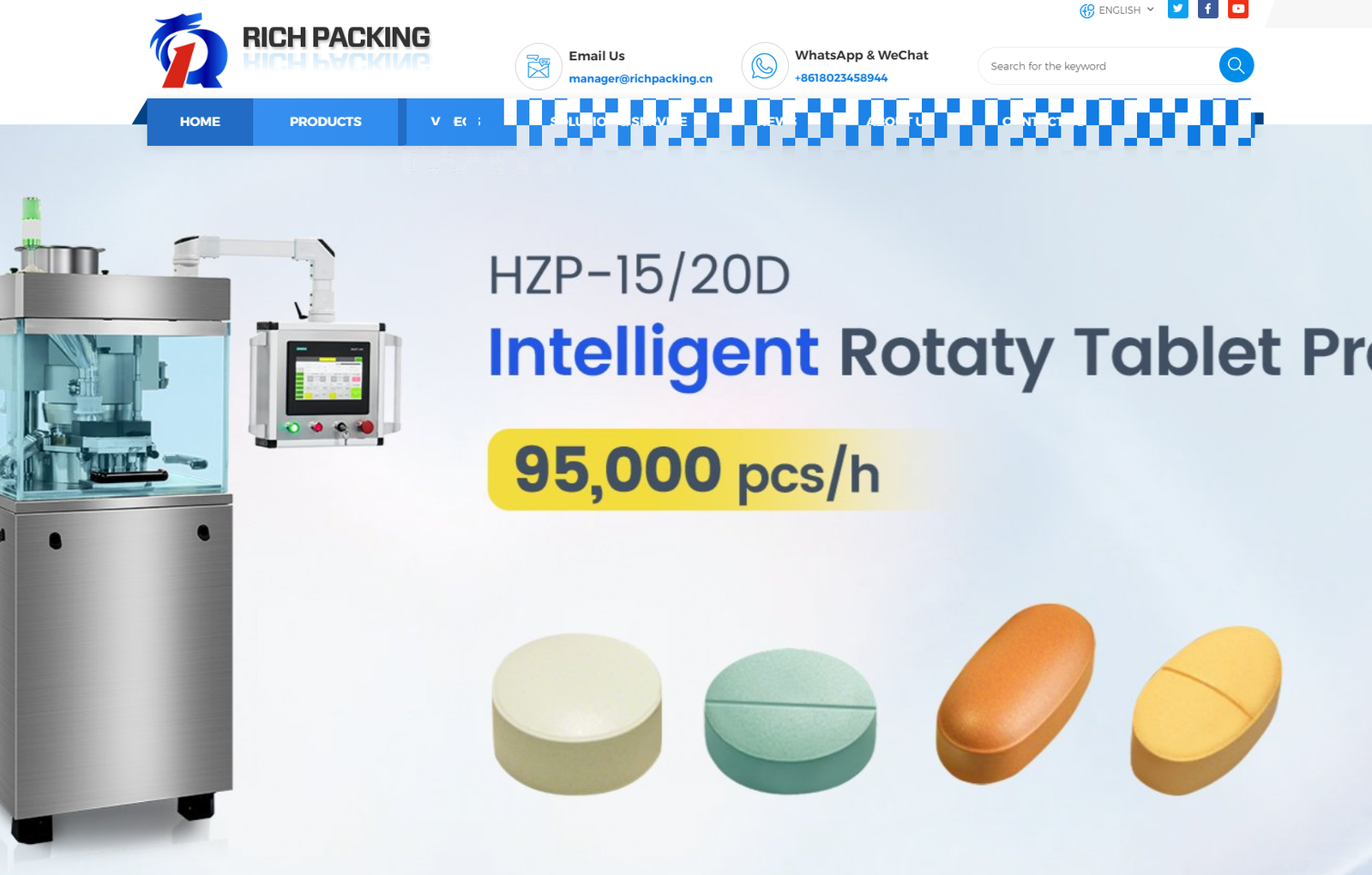
Guangdong Rich Packing Machinery
Year Founded: 1993
Main Products:
- Rotary Tablet Press Machine.
- Automatic Capsule Filling Machine.
- Tablet, Capsule Counting Machine.
- Blister Packing Machine.
- Cartoning Machine.
Guangdong Rich Packing Machinery Co., Ltd., based in Guangzhou, started in 1993. The founders, including Chairman Li Jian, wanted to build strong machines and offer great customer support. Rich Packing quickly became a top maker of tablet presses and capsule fillers in China and around the world.
From the start, Rich Packing used advanced tools like laser cutters in its big factory. An early success was the DPP series, which combined tablet pressing with blister packing and boxing. By 2000, they had a line of rotary tablet presses that were fast and easy to take care of.
The presses made by Rich Packing are built to last, with tough parts and precise die tables. This ensures that every tablet has the same hardness and weight. The engineering team, led by Chief Engineer Wu Feng, created an open-frame design for their presses, which made cleaning and maintenance much easier and faster.
Rich Packing also puts a focus on digital technology. By 2005, its presses had PLC interfaces that let customers program settings and track production data. The company also offers complete solutions, helping clients with plant layout and making sure everything meets GMP rules. Their global service network ensures spare parts get delivered quickly to customers in over 60 countries.
Liaoning Tianyi Machinery
Year Founded: 1996
Main Products:
- High Speed Rotary Tablet Press Machine.
- Double-Slide High-Speed Tablet Press Machine.
- Deduster Machine.
- Capsule Filling Machine.
- Granule Packing Machine.
Liaoning Tianyi Machinery Co., Ltd. is in Chaoyang, Liaoning Province, and was founded in 1996 by Zhang Guowei and a team of engineers. They saw that more companies needed to make tablets quickly. Their goal was to build presses that mixed strong Chinese manufacturing with smart German design.
The company’s first presses were already built for high speed. In 2002, Tianyi came out with double-slide machines. These let factories make ring-shaped and multi-layer tablets very fast.
They added important new features, too. These included separate oiling systems, parts to control dust, and motors with adjustable speeds for better control over the machine.
Tianyi’s large factory has advanced machines and can make about 20 rotary presses each month. The company’s engineers work with customers to set up entire production lines. Tianyi’s presses follow GMP standards and have CE certification.
The team, led by General Manager Liu Cheng, focuses on making machines just the way customers need them. Tianyi often changes the press tooling for special tablet shapes and does tests on-site to get the machine settings right.
Finetech Pharmaceutical Machinery
Year Founded: 1992
Main Products:
- Rotary Tablet Press Machine.
- Single Punch Tablet Press Machine.
- Capsule Filling Machine.
- Tablet Coating Machine.
- Blister Packing Machine.
- High Shear Mixer Granulator.
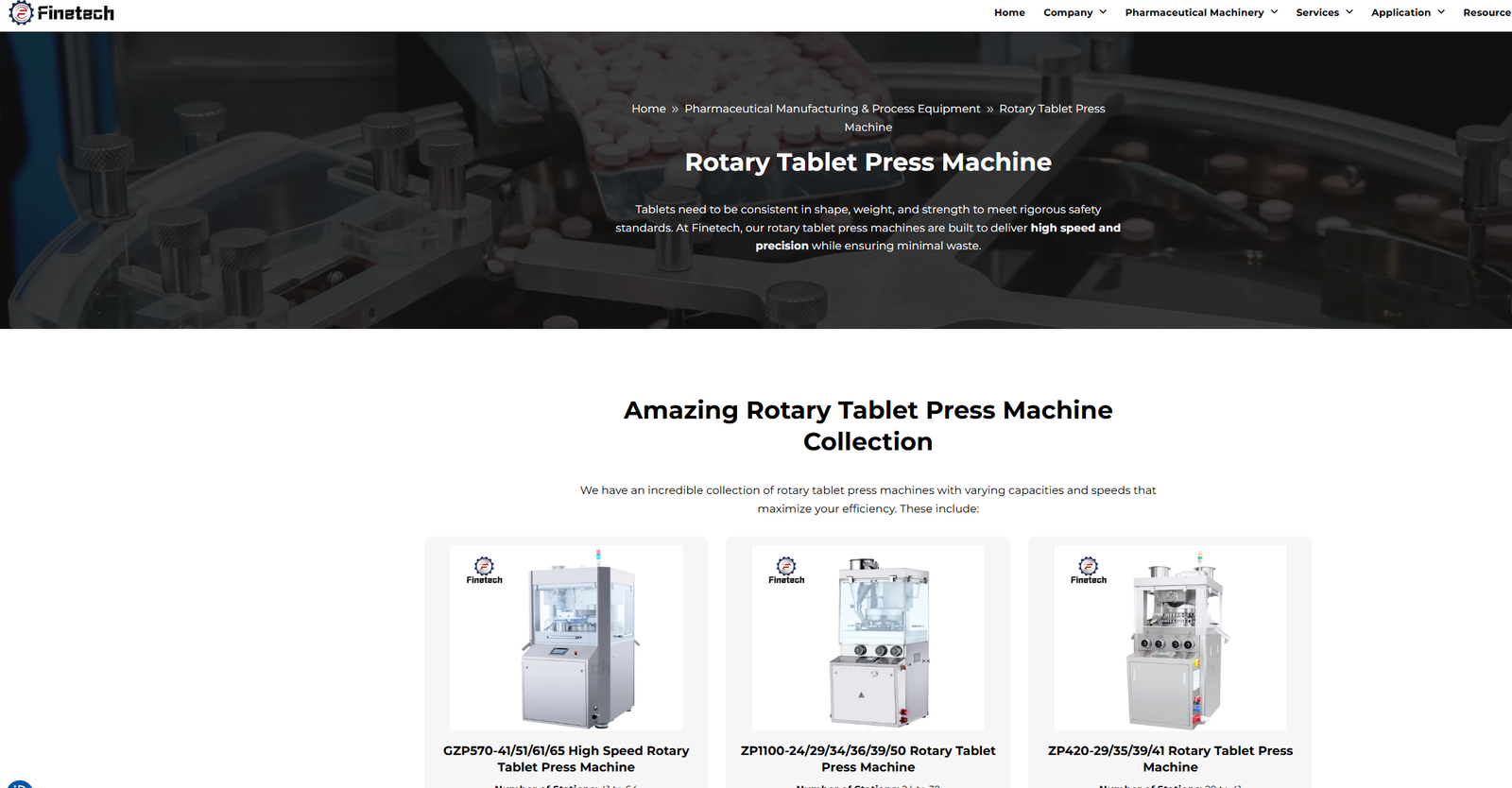
Finetech Pharmaceutical Machinery is in Ruian City, Zhejiang Province, and started in 1992. CEO Tony Tao and some design experts began with a small shop making single punch presses. They were dedicated to meeting tough cGMP standards and passing all international checks, which helped them grow fast.
Under Tony Tao’s direction, Finetech went from a small local shop to a major Chinese equipment maker. The company used European machine standards and kept doing research, leading to their GZP series of high-speed rotary presses. These presses had advanced features like multi-station designs and touch-screen controls, making up to 70,000 tablets an hour.
The company’s campus in Ruian is large and has workshops for every step of the process, from making molds to painting and assembly. Its research and development team has over 30 patents for inventions. These include special press parts for multi-layer or three-color tablets.
Finetech also has an office just for designing entire pharmaceutical lines. They can help with planning the process flow, the factory layout, and getting everything running.
The company makes a range of tablet presses, from small lab models to large rotary presses for big factories. All machines meet CE and ISO standards. Finetech also has its own support network to provide spare parts, remote help, and training to customers in more than 60 countries.
Shanghai Tianfeng Pharmaceutical Machinery
Year Founded: 2000
Main Products:
- Rotary Tablet Press Machine.
- Single Punch Tablet Press Machine.
- High-Efficiency ZPW Series Tablet Press Machine.
- Powder Mixing Machine.
- High Shear Mixer Granulator.
- Capsule Filling Machine.
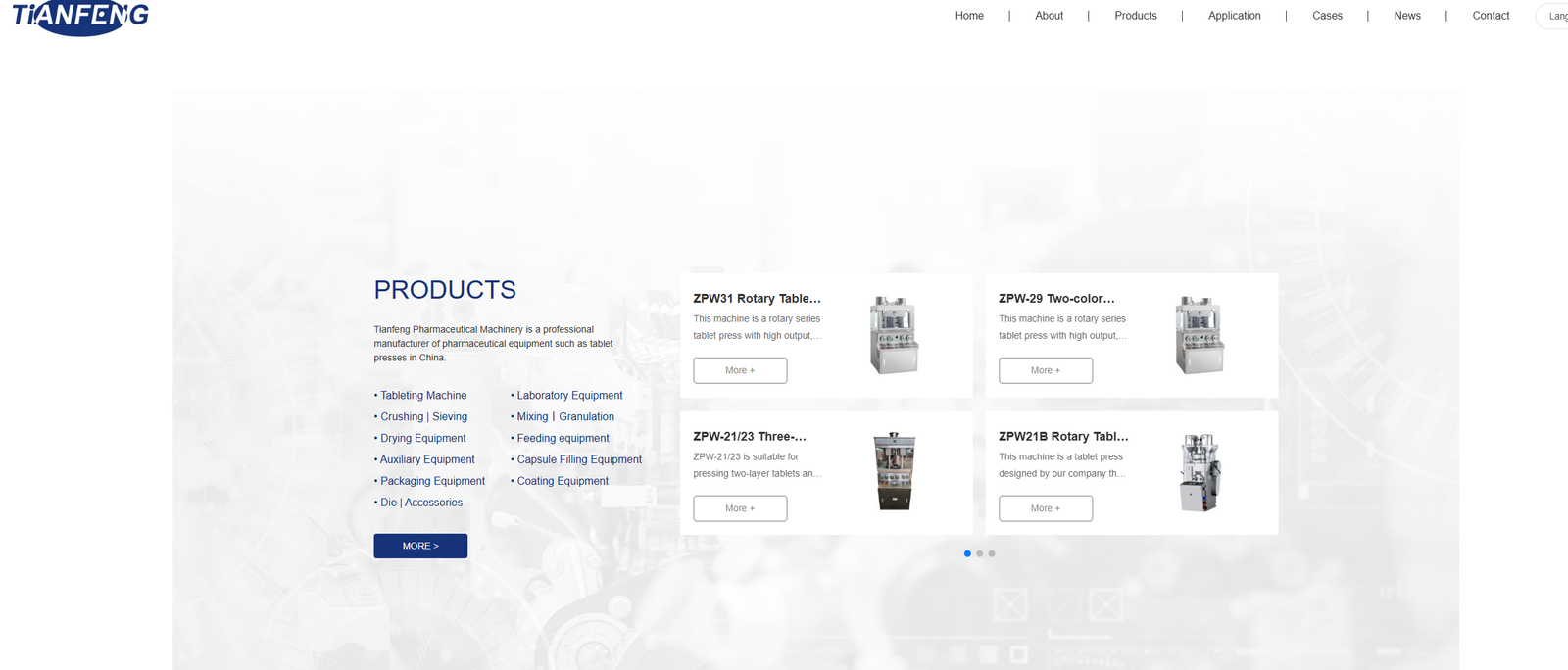
Shanghai Tianfeng Pharmaceutical Machinery Co., Ltd. started in October 2000 as a part of a larger, well-known factory. In 2005, it became a private company that focused only on making tablet presses and other equipment for solid medicines. It’s located in the Songjiang District of Shanghai.
The leaders at Tianfeng were experienced engineers who knew how important it was to make very precise and dependable machines. Their first products included the TDP single-punch press and the ZP rotary press, both made to follow China’s new GMP rules. By 2002, Tianfeng had created a popular high-speed press that even won an award in Shanghai.
The company’s 19,000 square-meter factory has lots of modern equipment, like CNC machines and robot welders, all in a clean work area. Tianfeng holds many patents for its smart designs, especially for its punch parts and systems that let you change over the press very quickly.
Besides the presses, Tianfeng also makes other machines that work with them, like powder mixers and granulators. Its technical team helps customers with things like checking that the equipment works right and designing layouts. This helps projects go smoothly from start to finish.
LTPM China (LeadTop Pharmaceutical Machinery)
Year Founded: 1996
Main Products:
- Rotary Tablet Press Machine.
- Single Punch Tablet Press Machine.
- Blister Packing Machine.
- Cartoning Machine.
- Tube Filling and Sealing Machine.
- Cleanroom Project Solutions.
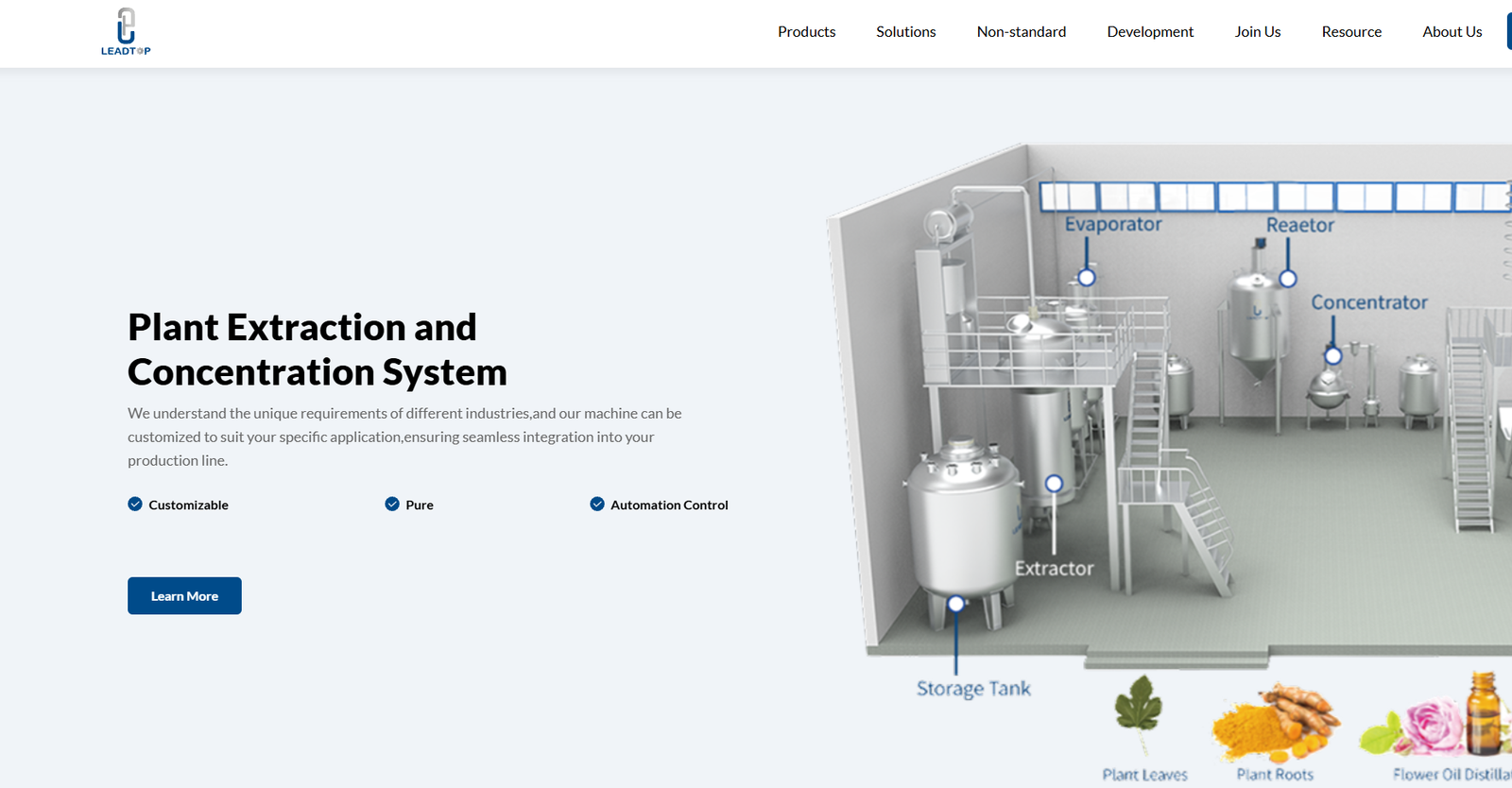
Zhejiang LeadTop Pharmaceutical Machinery Co., Ltd., usually called LTPM China, was started in 1996 in Rui’an City by founder Chen Wei. At first, LTPM helped local drug companies, but it quickly got a name as one of China’s best makers of capsule fillers and tablet presses.
LTPM’s early success came from its smart press design, which was easy to clean. By 2000, the company was making high-speed rotary presses that could handle different powders and multi-layer tablets.
A special patented design helped speed up the process of changing out the punches. This meant the machines were down for less time between jobs.
The company’s large campus has its own quality control team. This team checks every machine many times to make sure it is built correctly. LTPM follows strict global standards like FDA and GMP, so you can be sure the machines are ready for export.
LTPM China also offers complete production lines. Their services can cover everything from planning the process to setting up the cleanroom. The presses come with digital controls that let you save recipes, track batches, and check for problems in real time.
Tianjiu Pharmaceutical Machinery
Year Founded: 2008
Main Products:
- Rotary Tablet Press Machine.
- Single Punch Tablet Press Machine.
- Powder Block Press Machine.
- Vacuum Feeder.
- Crushers and Mixers.
Tianjiu Pharmaceutical Machinery Manufacturing Factory is in Shanghai’s Songjiang District and was started in 2008. Founder Zhou Bin was an industry expert who wanted to make equipment for small batches and special kinds of tablets. Tianjiu became known for making presses for both food blocks, like bouillon cubes, and regular pharmaceutical tablets.
The company’s machines include simple models for research labs, as well as rotary presses for making fun, novelty tablets with multiple colors. Their main ZPW23 series press can make tablets with two or three colors. It uses special enclosed parts and dust-control systems to meet GMP standards.
Tianjiu’s factory is equipped with modern CNC machines. This allows the company to control the quality of all its important parts. The research team often develops custom equipment for customers who have unique needs.
Good service is very important to Tianjiu. The technical staff works with clients to understand their needs, set up the machines correctly, and run tests. The company offers a one-year warranty and lifetime technical support to demonstrate its commitment to customer success.
FAQS
1. What Types of Tablet Press Machines are Available from China?
China manufacturers produce the full spectrum:
-
Single Punch / Eccentric Presses: Simple, cost-effective for R&D, small-batch production, or educational use (e.g., TDP-1, TDP-5).
-
Rotary Tablet Presses: The industry standard for production. Ranging from small (ZP series) to large, high-speed models.
-
Single-Sided: One compression station per turret (e.g., ZP-5, ZP-9).
-
Double-Sided: Two compression stations, higher output (e.g., ZP-17, ZP-35).
-
Multi-Layer & Bi-Layer: For producing complex layered tablets.
-
High-Speed Presses: With pre-compression, force feeding systems, and speeds exceeding 500,000 tablets/hour.
-
-
Chewable Tablet Presses: Often with secondary compression for high hardness.
2. What is the Price Range?
Prices vary dramatically based on type, size, automation, and quality.
-
Small Single Punch: $500 – $3,000 USD.
-
Standard Rotary Press (ZP Series): $5,000 – $30,000 USD.
-
High-Speed/Advanced Rotary Press: $30,000 – $150,000+ USD.
-
Key Factors: Brand reputation, materials of contact parts (SS304 vs. SS316L), precision of tooling stations, control system (PLC vs. touchscreen), and included features (dust extraction, de-tangler, IPC).
3. How Do I Find a Reliable Manufacturer?
-
B2B Platforms: Alibaba, Made-in-China. Crucial: Look for “Gold Suppliers,” check transaction history, and read reviews.
-
Industry Directories: Search for pharmaceutical machinery manufacturers.
-
Verification is Key:
-
Factory Audit: Request a video tour or use a third-party inspection service (e.g., SGS, BV) if the order is large.
-
Ask for Client References: A reputable company will have them.
-
Check Certifications: ISO 9001, CE certification is common. For pharmaceutical use, GMP compliance of the machine design is critical.
-
Communication: Gauge their technical knowledge and responsiveness.
-
4. What About Tooling (Dies and Punches)?
-
Included or Separate? Most machines come with a basic set of standard round tooling. Custom shapes/sizes are always extra.
-
Tooling Standards: Crucially, confirm the tooling standard.
-
B or D Type (International Standard): Most common globally. Ensure the machine you buy uses this if you want interchangeable tooling from Western suppliers.
-
EU Standard: Similar to B type, widely used.
-
Chinese ZP Standard: Proprietary to some older Chinese models. Avoid this if you need global compatibility. Always specify “B Type” tooling stations.
-
-
Quality: Invest in good tooling. It affects tablet quality, wear, and operational safety.
5. What Are the Key Technical Specifications to Check?
-
Max Number of Stations: How many dies the turret holds (e.g., 35 stations).
-
Max Tablet Diameter: Usually correlated with station number.
-
Max Depth of Fill: Determines the max weight/powder volume.
-
Max Compression Force: Measured in kN (e.g., 40kN, 80kN). Higher force is needed for hard tablets or difficult materials.
-
Production Capacity: Tablets per hour. Be realistic, rated speed is often under ideal conditions.
-
Motor Power: Indicates overall machine strength.
-
Control System: Modern PLC with touchscreen HMI is preferred for parameter control and data logging.
6. What About After-Sales Service, Spare Parts, and Installation?
-
This is the #1 Challenge. Discuss this upfront.
-
Installation & Training: Will they send an engineer? At whose cost (you typically pay for flight, accommodation, per diem)?
-
Warranty: Standard is 12 months for parts (not wear items). Understand what it covers.
-
Spare Parts: Request a recommended spare parts list and their prices. Ensure common parts (like gears, sensors) are available long-term.
-
Technical Support: Do they offer remote support via video call? What are the working hours?
7. What is the Shipping and Import Process?
-
Incoterms: FOB (Free on Board) is most common. You pay for main shipping and import to your country.
-
Packaging: Machines should be crated in a wooden case for ocean freight.
-
Import Duties: Consult your local customs broker. Duties vary by country for “pharmaceutical machinery.”
-
Lead Time: Typically 30-60 days after order confirmation, depending on complexity.
8. How Can I Ensure the Machine Meets My Country’s Regulations?
-
CE Marking: Indicates compliance with essential EU health, safety, and environmental standards. Request the CE certificate.
-
Electrical Standards: Specify the voltage and plug type for your country (e.g., 110V/60Hz or 220V/50Hz).
-
GMP Aspects: While the machine itself isn’t “GMP certified,” its design should facilitate cleaning, prevent contamination, and allow for validation (IQ/OQ/PQ). Ask for design documentation (drawings, manuals) early.
-
Material Certificates: For contact parts, request Mill Test Certificates (MTC) for stainless steel grades.
9. What Are the Common “Red Flags” to Watch Out For?
-
Price too good to be true.
-
Unwillingness to provide a live video of the factory or machine in operation.
-
Poor communication, lack of technical details in English.
-
Pressure to pay via insecure methods (Western Union, etc.). Use Alibaba Trade Assurance or Letter of Credit (L/C) for large orders.
-
Vague or no warranty terms.
10. Final Recommendations Before Ordering
-
Request a Detailed Quotation (Proforma Invoice): With all specs, included accessories, payment terms, delivery time, and warranty.
-
Ask for Operation & Maintenance Manuals (Draft): To assess their completeness.
-
Clarify Payment Terms: Standard is 30-50% deposit, balance before shipment.
-
Plan for Validation: If for regulated use, discuss with the supplier what documentation they can provide to support your Installation Qualification (IQ).
Conclusion
Tablet press machines enable pharmaceutical manufacturers to produce tablets that are consistent, safe, and of high quality. As the demand for solid medicines grows, these machines continue to improve in speed and precision. Their impact can be seen in factories around the world, where reliable tablet production is essential.