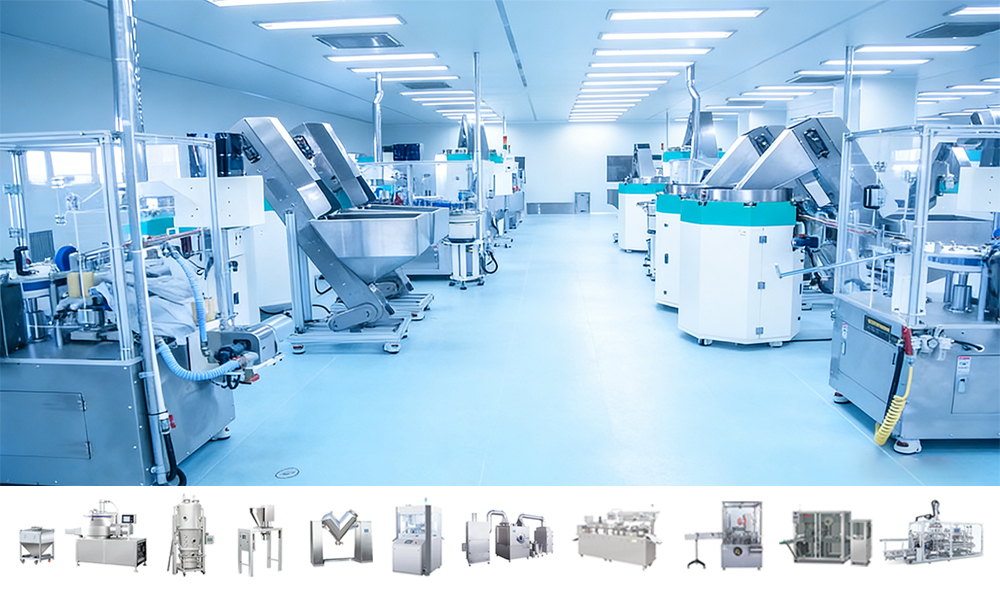
Professional supplier of overall solutions for pharmaceutical manufacturing and packaging

High-Speed Mixer Granulator for Powder Wet Granulation in Tablet Manufacturing

Make capsule filling more efficient with a semi-automatic capsule-filling machine designed for controlled dosing and dependable operation. The system supports powders, granules, and pellets while helping operators achieve consistent fills, secure capsule locking, and smoother production with less manual handling.

Finetech High Speed Mixer Granulator

High-Speed Mixer Granulator Introduction

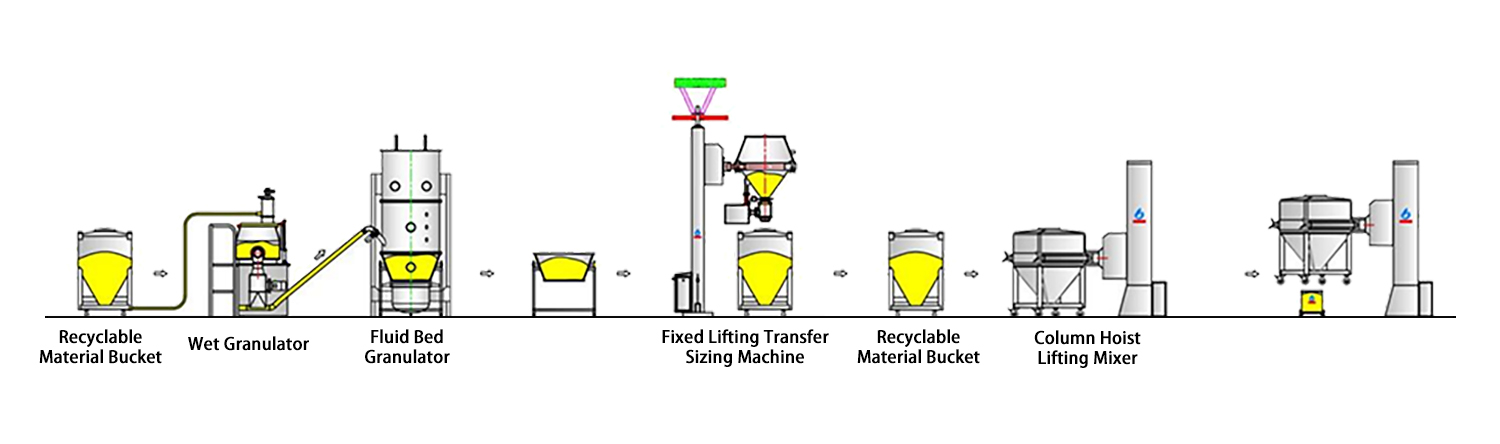
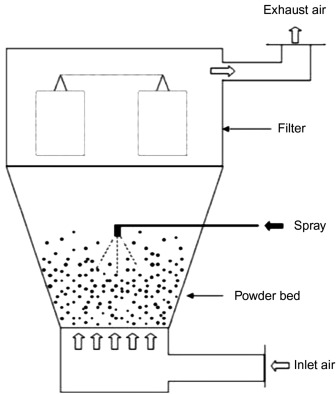
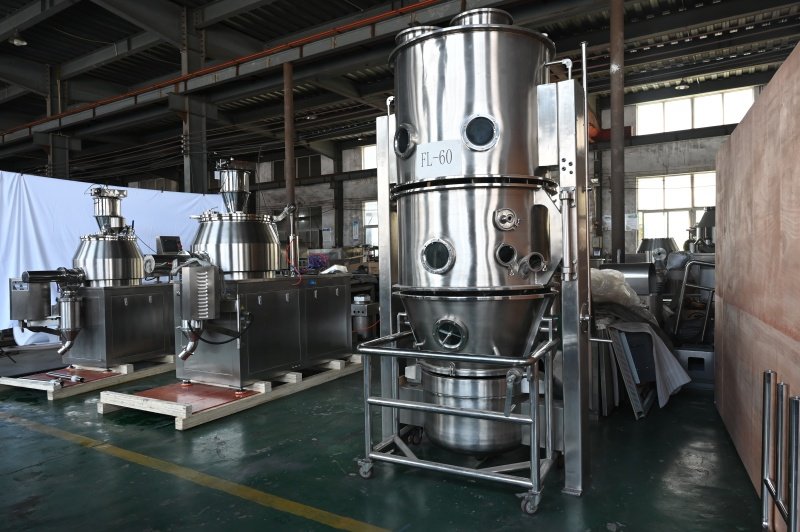
Powders that feed unevenly into a tablet press may need granulation before compression. Dry ingredients first enter the bowl, where a rotating impeller mixes them. As liquid binder is added, the impeller distributes it through the blend and particles begin to join. A separate chopper breaks up larger wet lumps. The batch then passes to a fluid bed dryer, followed by any required sizing and final blending before compression.

Select a bowl that accommodates both your regular batch and your smallest planned batch. For example, the FTSG-100 has a 100 L bowl and a manufacturer-listed feeding volume of 25 to 80 L. The same loading volume can hold different weights of powder, depending on bulk density. Your loading method is another decision: operators can add materials manually, or optional systems can automate powder and binder feeding. The discharged batch must also match the dryer’s capacity.

Key Benifits

Steadier Flow Into Dosing Equipment

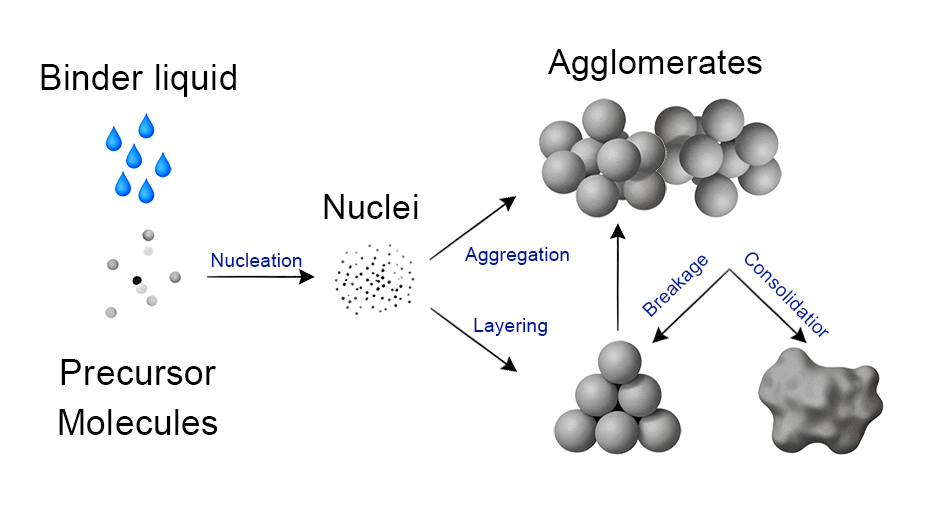
Wet granulation turns fine particles into larger granules that can flow more consistently after drying and sizing. The goal is steadier feeding into dosing equipment when the original powder tends to cling together.

Less Handling Between Process Stages

Combining dry mixing and wet granulation in one bowl removes the transfer between separate machines for these stages. Operators have less material to move, and the blend passes through fewer exposed transfer points.

A Clearer Record of Batch Conditions

When granule quality changes, stored operating data provides a starting point for investigation. The FTSG series records and exports process parameters, allowing your team to compare batch conditions with the quality of the resulting granules.

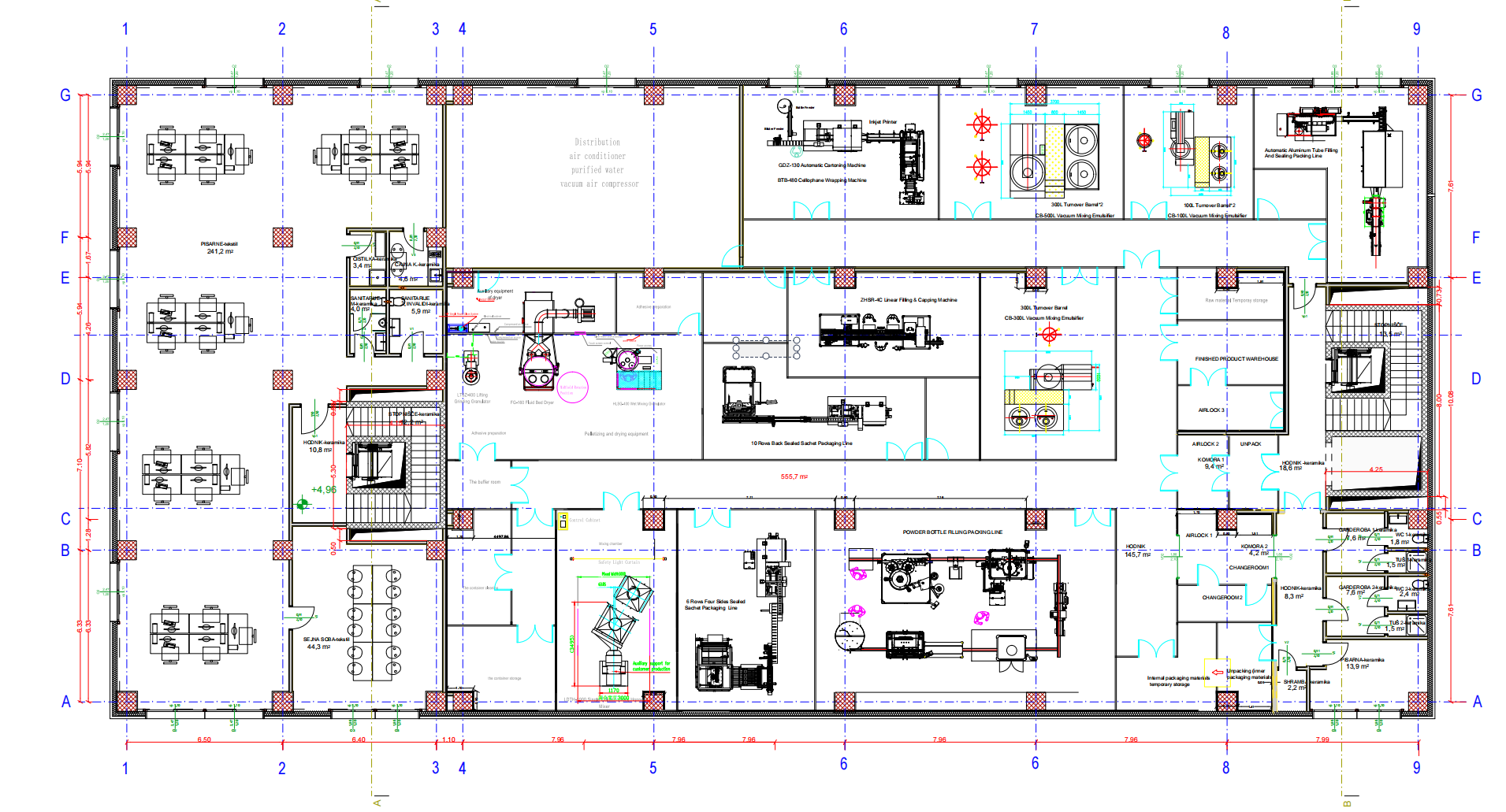
Finetech Line Planning for Wet Granulation and Drying

Installation Checks Followed by Operator Training

Finetech supplies granulation lines with fluidized drying and plans layouts around the movement of material between these stages. The agreed transfer arrangement guides installation, followed by commissioning checks on electrical connections, controls, and operation under load. Operator training covers routine use, cleaning, daily maintenance, and common faults. Define these services and the acceptance criteria during selection so the handover addresses how your team will run the line.

Finetech’s Core Strengths:

Finetech Office

Different Types of High-Speed Mixer Granulators

High Speed Rapid Mixer Granulator Main image

FTSG-30-1000 High-Speed Rapid Mixer Granulator

This equipment is specifically designed for the pharmaceutical, food, and chemical industries. It utilizes high-speed mixing and rotary cutting technology to achieve rapid material blending, wet granulation, and integrated drying. The three-dimensional mixing paddles ensure uniform dispersion without dead zones. Adjustable rotation speeds and cutting blades work together to produce uniform particle size distribution and high yield. The machines are operated via PLC with a touchscreen interface, and parameters can be programmed to meet GMP requirements. The fluid, dynamic design is optimized to reduce energy consumption, while corrosion-resistant stainless-steel construction ensures durability. Ideal for producing tablets, granules, and powders, this system helps improve both efficiency and product quality.

High Speed Rapid Mixer Granulator

FTSG-High Shear Mixer Granulator

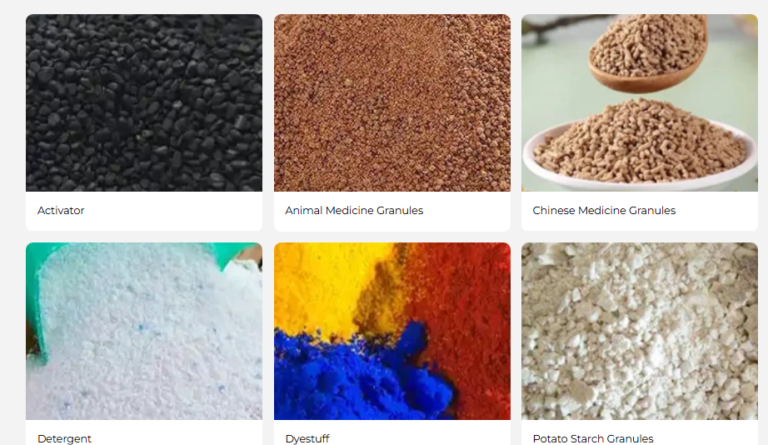
The high shear mixer granulator is ideal for products requiring granulation in a wide range of industries, including pharmaceuticals, food additives, rubber and plastic additives, pesticides, dyes, pigments, catalysts, and daily chemicals.

Interested?

Contact our Technical Support Team

Application Industries

Granules for Medicines, Food Additives, and Chemicals

Key Features

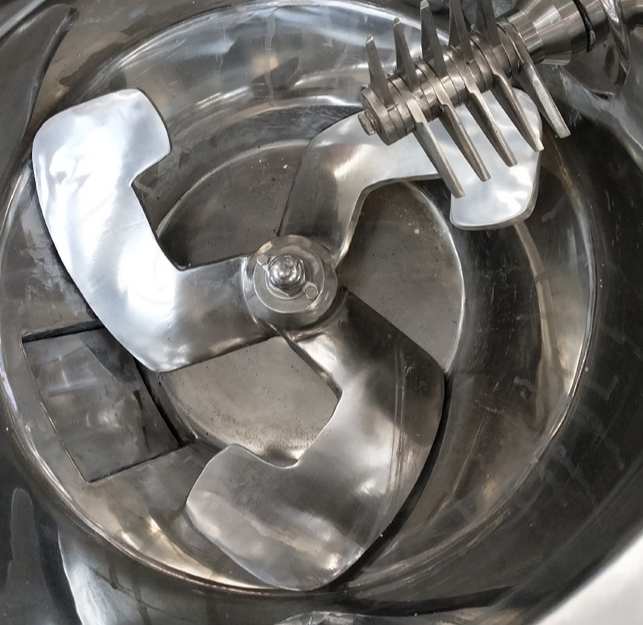
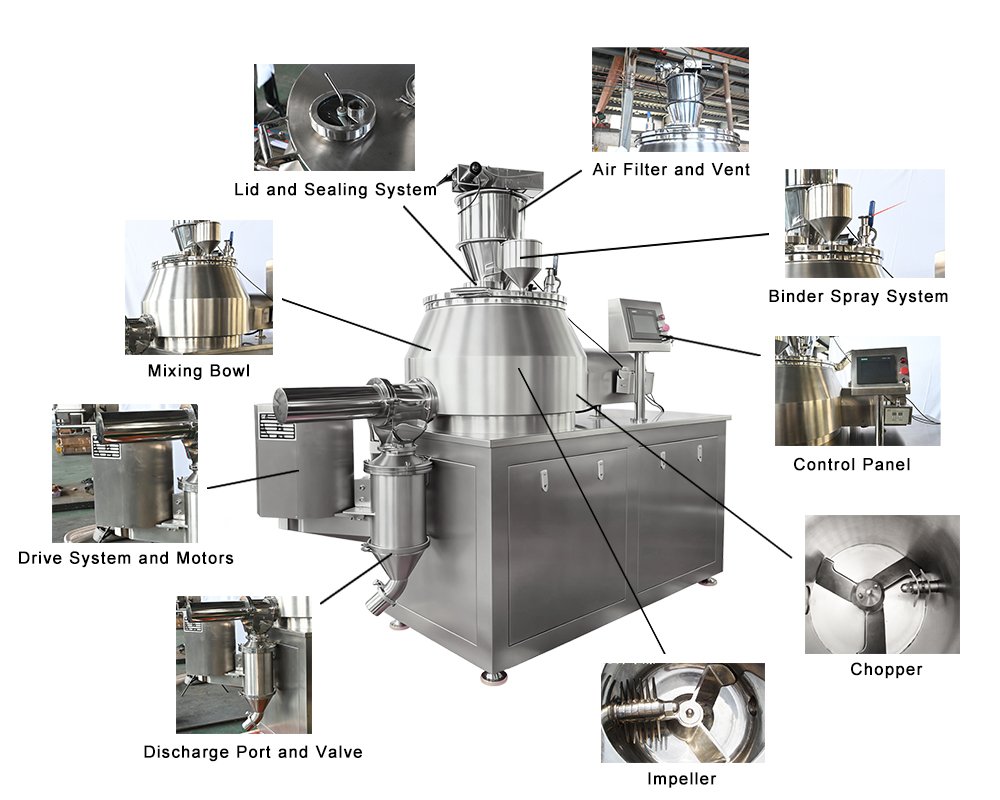
Impeller

Separate Impeller and Chopper Drives

Separate motors drive the impeller and chopper, so their speeds can be adjusted independently. Operators can change powder circulation and lump breakup as the formulation moves from dry blending to wet granulation.

Cooling Through the Bowl Base

Circulating water carries heat away through the double-layer jacket at the bowl base. Operators can use this cooling during mixing when the powder blend or binder needs temperature control.

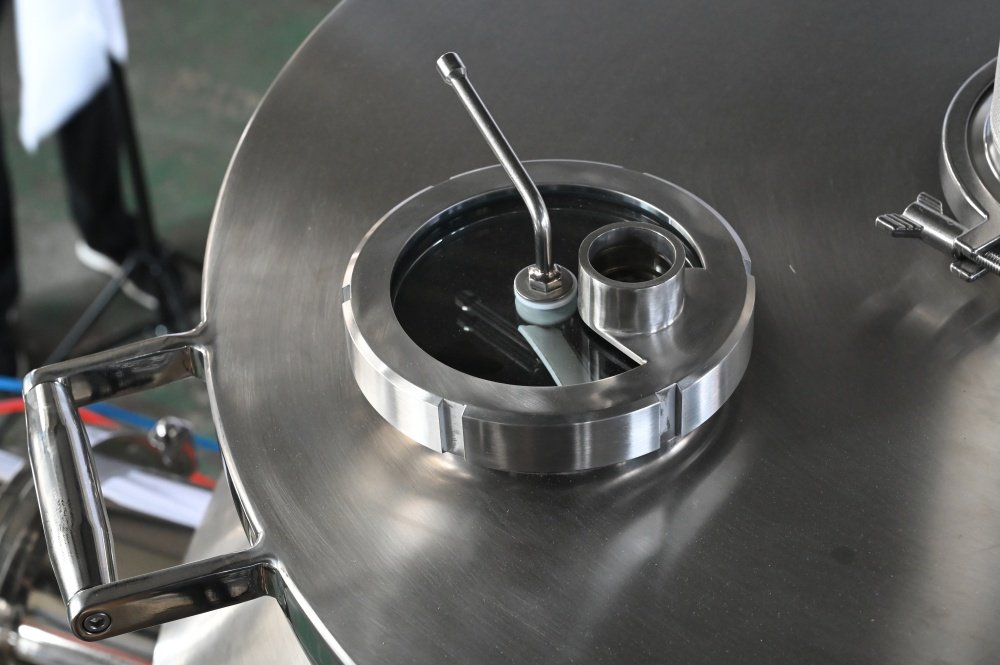
Lid and Sealing System

Combined Shaft Seals

Mechanical, air, and isolation seals work together around the drive shaft to limit powder entry into the shaft chamber. Seal condition and access for replacement are practical considerations for maintenance planning.

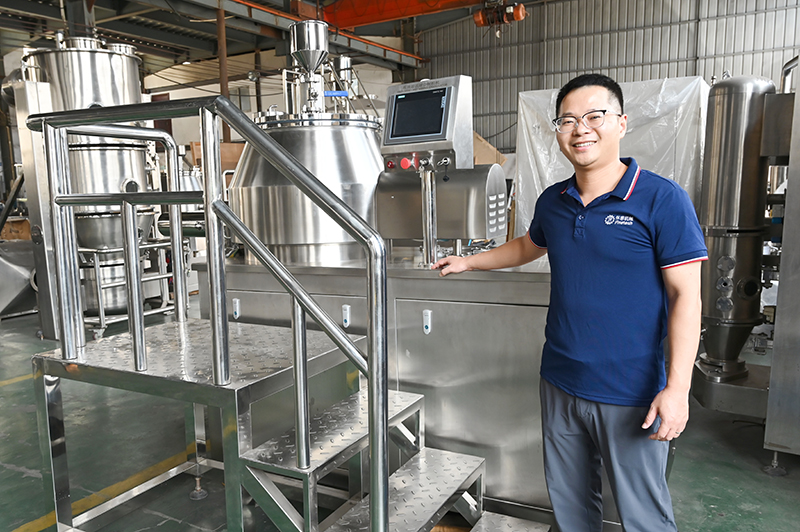
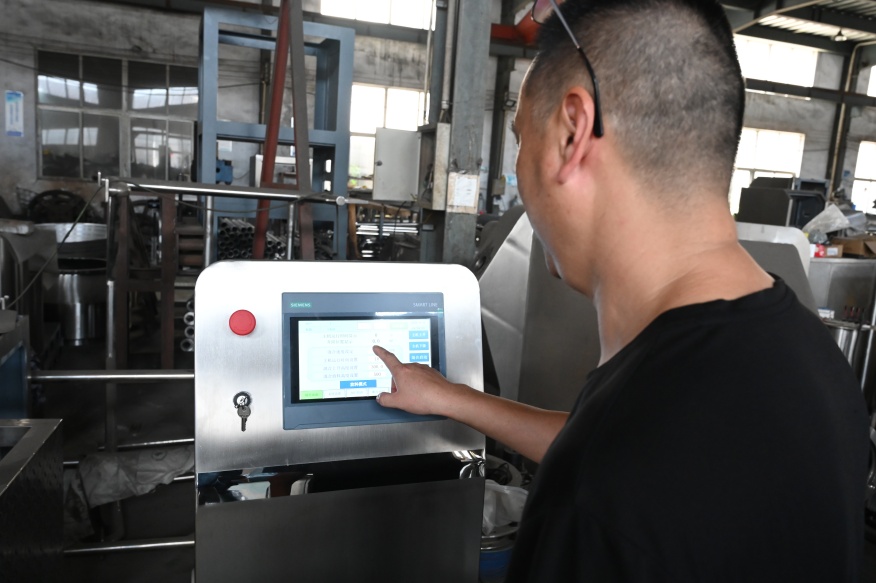
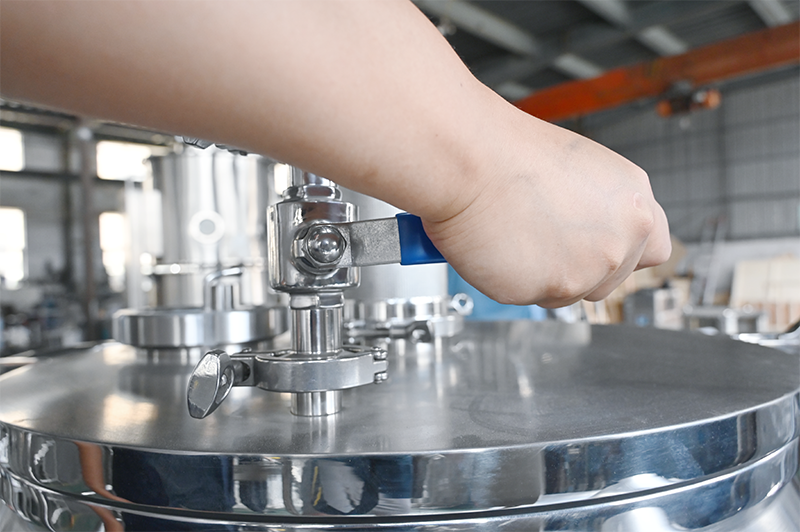
A technician is operating a high-speed granulator.

Touchscreen Monitoring and Data Export

The PLC and touchscreen let operators view process data, adjust settings, and save selected parameters for later use. If the machine includes endpoint monitoring, the specification should also state which measurement or signal is used to determine when the granulation process is complete.

Feeding

Automatic Feeding Options

Optional systems feed powder and add binder to the bowl, reducing manual tasks during loading and liquid addition. Their inclusion should reflect how materials will be supplied from the preceding process.

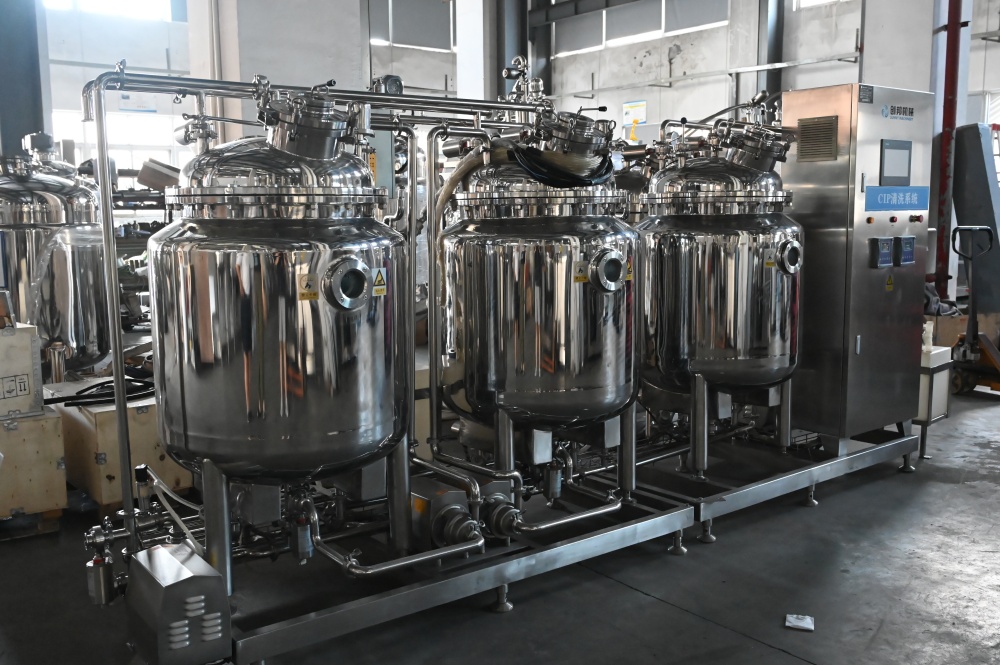
CIP and SIP Skid Systems

Built-In Washing System

The built-in cleaning system automates routine wash operations. Cleaning coverage and access for any remaining manual work determine how the machine fits into your product changeover procedure.

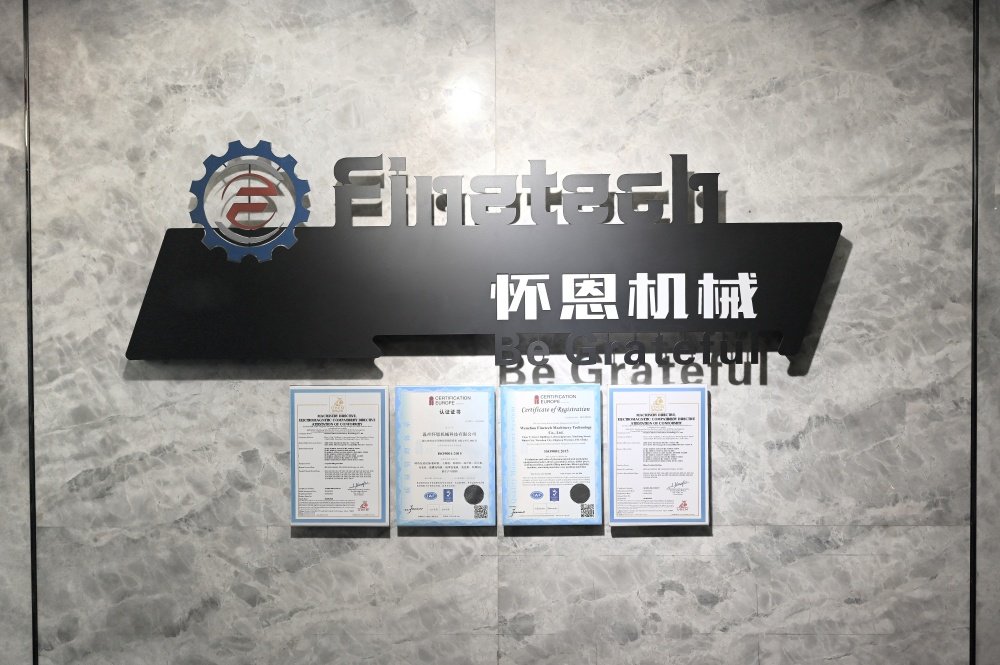
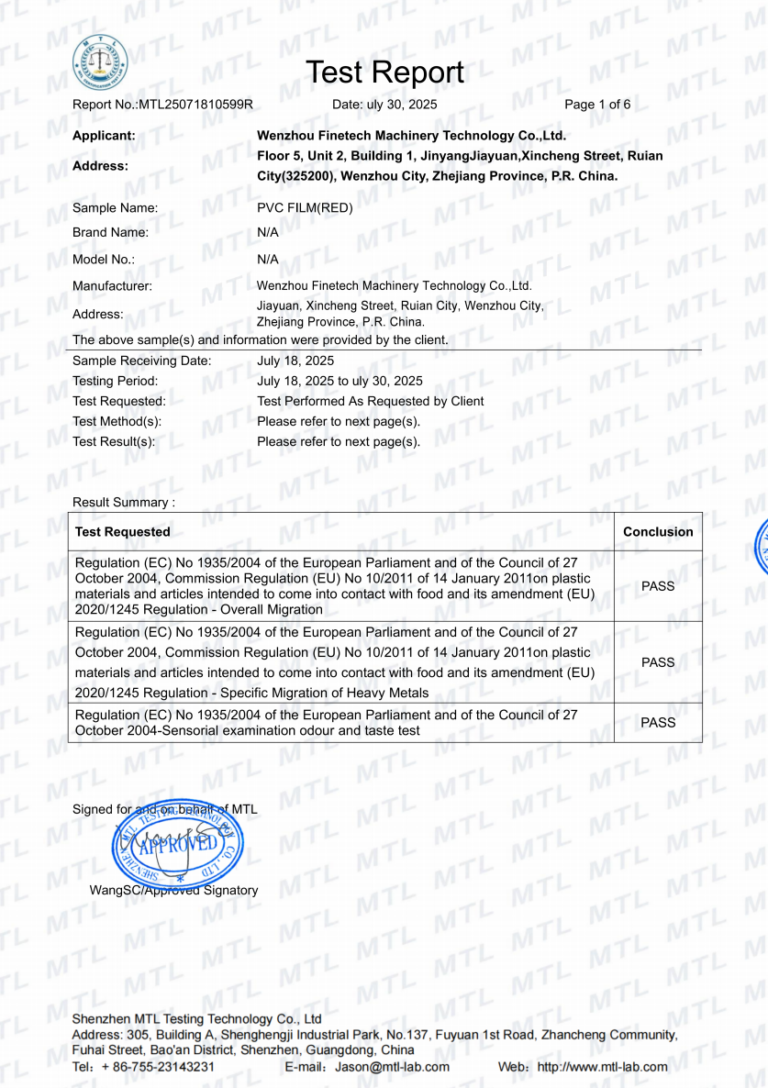
Certification

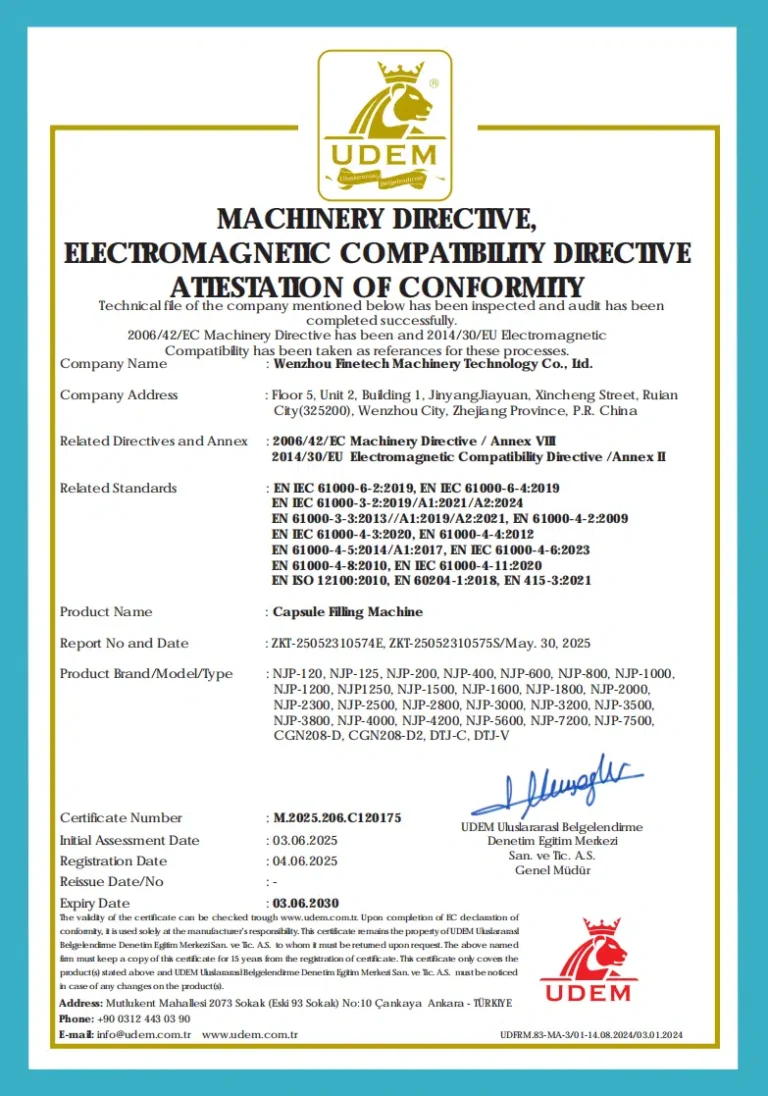
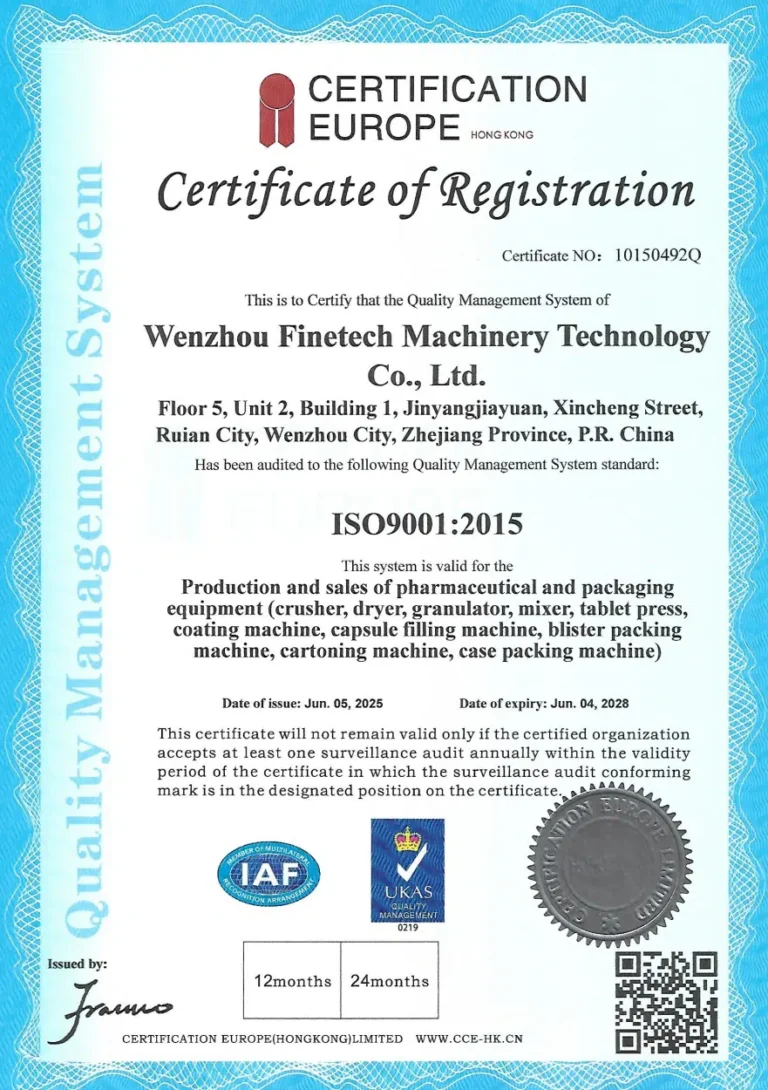
Finetech has obtained CE certification for the European market and passed ISO 9001 quality system certification. Our machinery is eligible for export to international markets, including Europe, the United States, Southeast Asia, the Middle East, South America, and Africa.


Our Services

The services we provide include granulation solutions, online training, on-site installation and commissioning, and a three-year warranty.

Technical Data

RMG Models Available

10 Sets

Feeding Volume Range

0.3–750L

Hopper Volume

1,000L

Granulating Knife Speed

3,000rpm

Specification

ModelFTLSG-5FTLSG-10FTSG-30FTSG-50FTSG-100FTSG-200FTSG-300FTSG-400FTSG-500FTSG-1000
Hopper volume1L/3L/5L3L/6L/10L30L50L100L200L300L400L500L1000L
Feeding volume0.3L-4L0.8L-8L8-24L12-40L25-80L50-160L80-240L100-320L150-480L250-750L
Stirring motor1.5KW2.2KW3kw5.5KW7.5KW15KW18.5KW22KW30KW45KW
Stirring speed5-500rpm50-500rpm50-500rpm5-300rpm30-300rpm30-25rpm30-220rpm30-220rpm20-200rpm20-200rpm
Granulating motor0.55KW0.75KW1.1KW1.5KW3KW4KW7.5KW11KW11KW18.5KW
Granulating knife speed50-3000rpm50-3000rpm50-3000rpm50-3000rpm50-3000rpm50-3000rpm50-3000rpm50-3000rpm50-3000rpm50-3000rpm
Compressed air0.3 cubic meter 0.8Mpa0.3 cubic meter 0.8Mpa0.5cubic meter 0.8Mpa0.5cubic meter 0.8Mpa0.5cubic meter 0.8Mpa0.6cubic meter 0.8Mpa0.6cubic meter 0.8Mpa0.7cubic meter 0.8Mpa0.8cubic meter 0.8Mpa1.2cubic meter 0.8Mpa
Host size900*850*1160mm900*850*1160mm1700*600*1600mm1750*600*1620mm1760*650*1680mm2200*820*1950mm2400*1050*2150mm2500*1050*2300mm2980*1200*2500mm3400*1500*3500mm
Weight300kg300kg400kg500kg800kg1200kg1600kg1800kg2600kg3600kg

Interested in a RMG?

Talk to our experts to discover the right solution for your needs.

Read related resources

Related Technologies

FAQs

A moisture-sensitive powder can undergo wet granulation if it remains stable with the proposed binder liquid. Check that compatibility before selecting equipment. If liquid exposure is unacceptable, consider dry granulation, which forms granules without adding binder liquid.

Estimate shift output from usable batch mass and the full production cycle, including loading, mixing, granulation, discharge, and cleaning. Check whether drying limits the line. Use measured output that meets your quality criteria to confirm the estimate for your formulation.

Set the stopping point by comparing granule samples with recorded process measurements. Mixing time and available motor-load readings can indicate progress, but the relationship must be established for your formulation. A single signal does not prove acceptable granule quality.

Clean every product-contact area, including the bowl, impeller, chopper, binder path, seals, and discharge. Confirm detergent compatibility with the specified contact materials. Assess residues after cleaning to determine whether the procedure is adequate for the next formulation.

Plan for power, compressed air, cooling water, cleaning water, and drainage as specified for the ordered package. Obtain connection loads and flow requirements before preparing the room. Leave space for loading, lid opening, discharge containers, and drive maintenance.

Only use alcohol-based binders in equipment documented for the solvent and its hazards. The assessment must cover the granulator, transfer route, and dryer, including ventilation and explosion protection. General wet-granulation capability does not establish that the package can handle flammable solvents.

The endpoint is reached when the wet mass develops the required granule characteristics. Manufacturers may monitor factors such as processing time, motor load, torque, power consumption, and granule appearance to establish a repeatable endpoint.