Professional supplier of overall solutions for pharmaceutical manufacturing and packaging

Industrial Case Packer Machine for End-of-Line Packaging

Finetech supplies case packer machines for pharmaceutical, cosmetic, food, beverage, and consumer-goods operations. We match the loading method, pack pattern, case size, product orientation, sealing style, and output to the end-of-line requirement. Robotic and conventional configurations are available. Support includes pack-pattern review, layout planning, trials, commissioning, and operator training.

automated-case-packer-cover-image

What Is a Case Packer Machine?

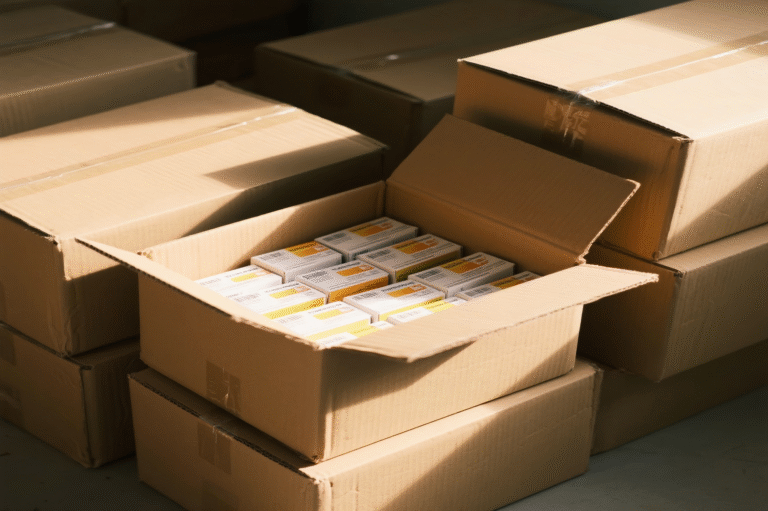
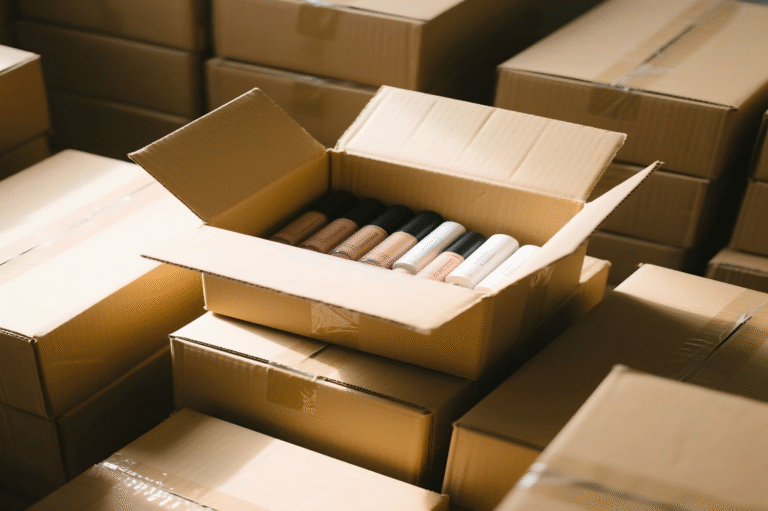
A case packer machine groups finished products and loads them into corrugated shipping cases in a defined pattern. The system may erect cases, collate products, use a robot or pusher for loading, and close the flaps. Tape or hot-melt adhesive then seals the case. Completed cases move to coding, palletizing, or warehouse handling.

Key Benifits

Lower Manual Packing Demand

Automatic collation and loading reduce repetitive lifting and placement. Operators can focus on replenishment, verification, and line supervision.

Consistent Case Patterns

Controlled product grouping creates repeatable rows, layers, or orientations. Stable patterns improve case use and downstream palletizing.

Stronger End-of-Line Flow

Integrated case erection, loading, and sealing reduce handoffs between separate stations. This supports steadier dispatch preparation.

Why Choose Us

End-of-Line Packing Built Around the Shipping Case

A case packer must handle both the product and the corrugated case reliably. Finetech reviews product dimensions, weight, incoming orientation, required count, layer pattern, case quality, seal method, and line speed. We then configure the collator, gripper or pusher, case handling, inspection, and controls around the approved pack.

Finetech’s Core Strengths:

Case Packer Machine

Different Types of Case Packer Machines

Case packers include robotic pick-and-place systems, side-load machines, drop packers, wraparound designs, and conventional pusher configurations. Robotic units offer flexible patterns and gentle handling, while dedicated mechanisms can suit stable, high-volume packs. Selection depends on product rigidity, incoming orientation, case style, required layers, changeover frequency, speed, and available end-of-line space. Future products and pallet patterns should be considered before the cell layout is finalized.

FX-600

FTZCP-600 Automatic Case Packing Machine

Production capacity: ≤200 boxes/hour

Power supply: AC 380 / 50 Hz 7.5 kw

Weight: 2,500 kg

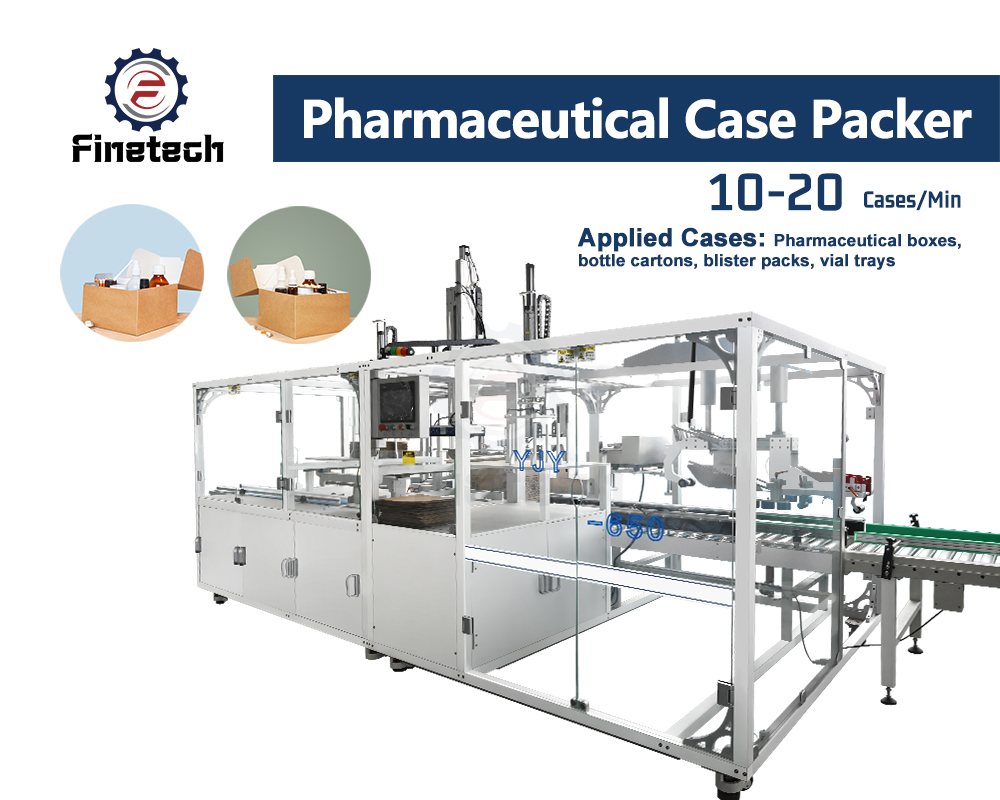
Pharmaceutical Case Packer

Pharmaceutical Case Packer

It automatically collects, arranges, and packs medicine boxes, blister packs, bottles, and sachets into carton cases.

Not Sure Which Case Packer Machine Is Right for You?

Click the button below to contact us for a solution.

A photo of sales manager Bella at a fully automated capsule filling machine factory2

Applications for Case Packing

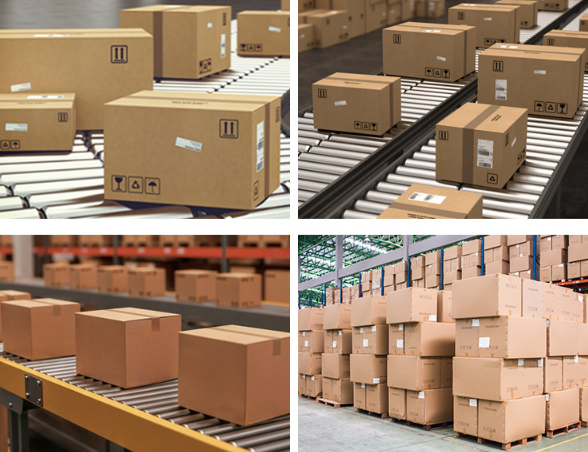
Cartons are widely used as tertiary packaging for products. Below are the industries where Finetech case packers are applied.

Key Features

Stable Packing Quality

Organized Product Infeed

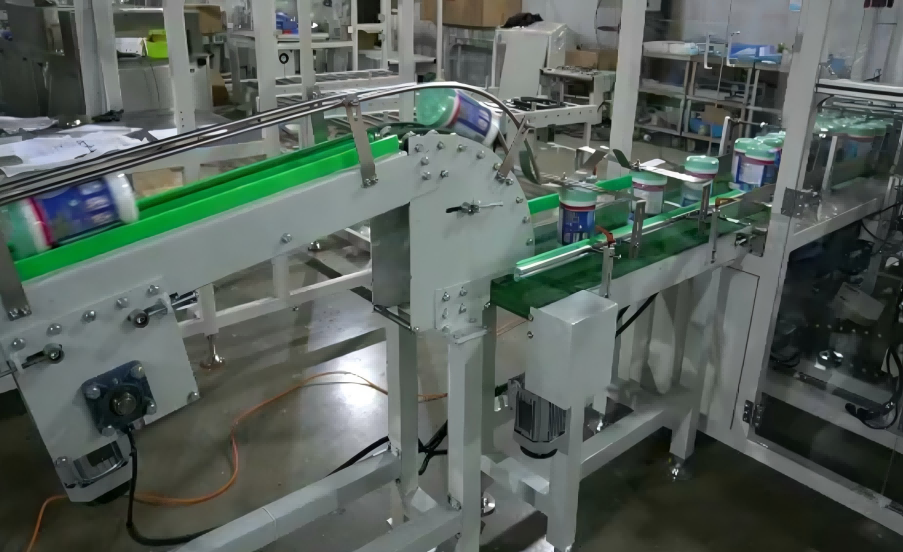
Conveyors and lane guides present products at the required spacing. Stable infeed conditions support reliable grouping before case loading.

Automatic Material Alignment System

Automatic Product Collation

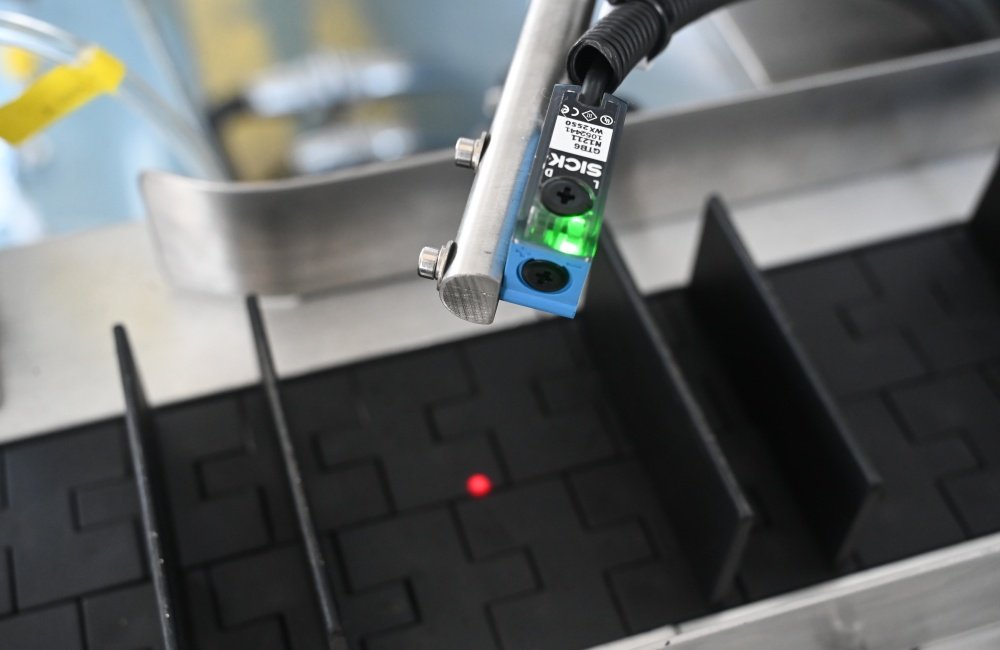
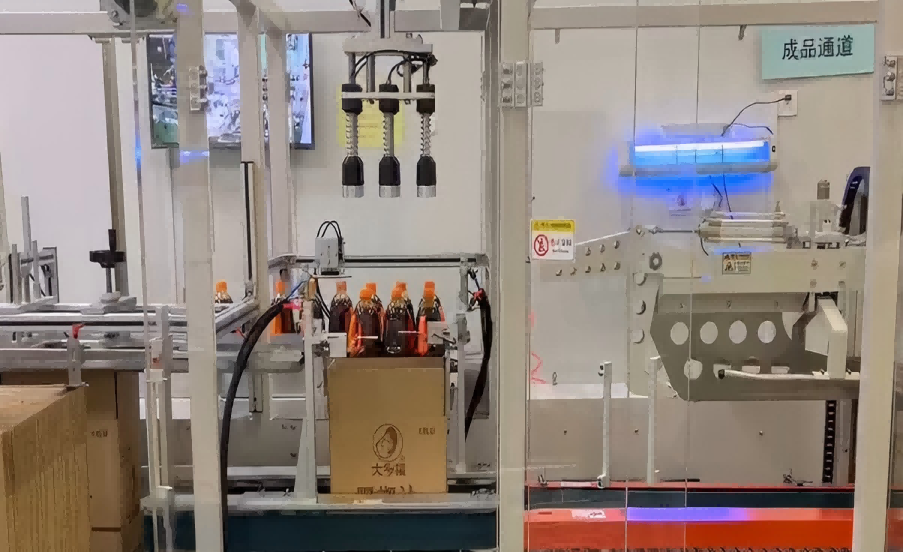
The machine builds rows or layers according to the approved case pattern. Sensors track product presence and accumulation.

Vision Inspection System

Vision-Guided Positioning

Available vision systems identify product location and orientation before robotic pickup. This supports flexible handling of variable incoming positions.

Wide Compatibility

Product-Matched Grippers

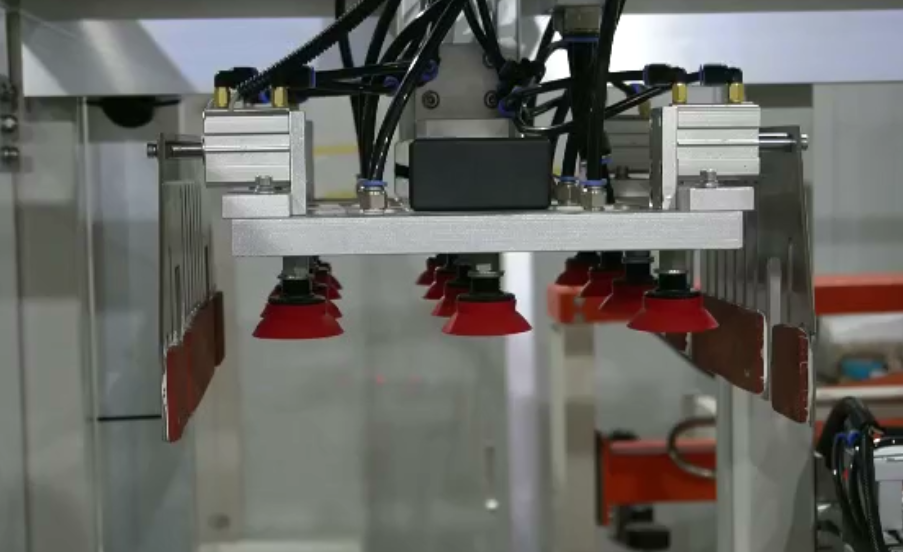
Vacuum cups, clamps, or custom end effectors handle the product during loading. The design considers weight, surface, rigidity, and damage risk.

High Productivity

Recipe-Based Pack Patterns

Stored recipes control product count, layer arrangement, motion, and case format. Operators can call up validated patterns during changeover.

High-Speed DeltaCartesian Robot

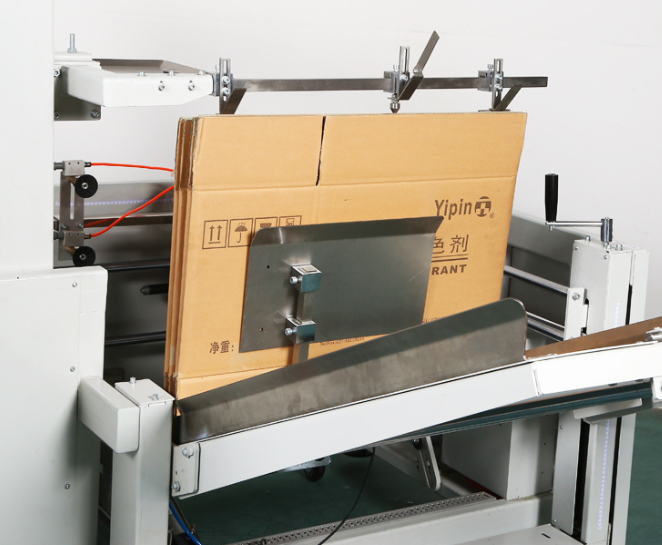
Integrated Case Erection

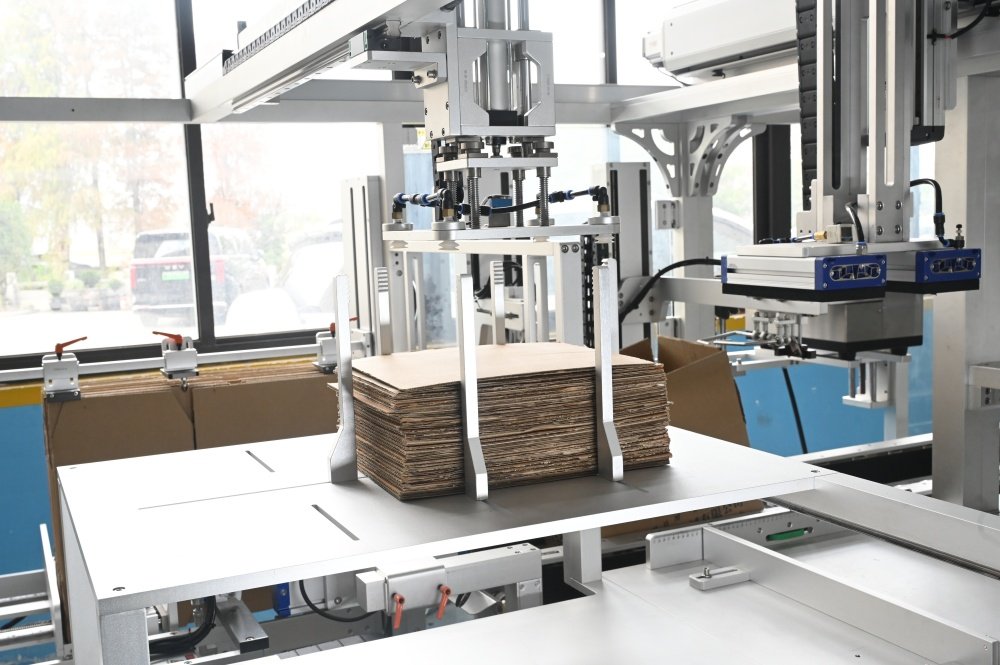
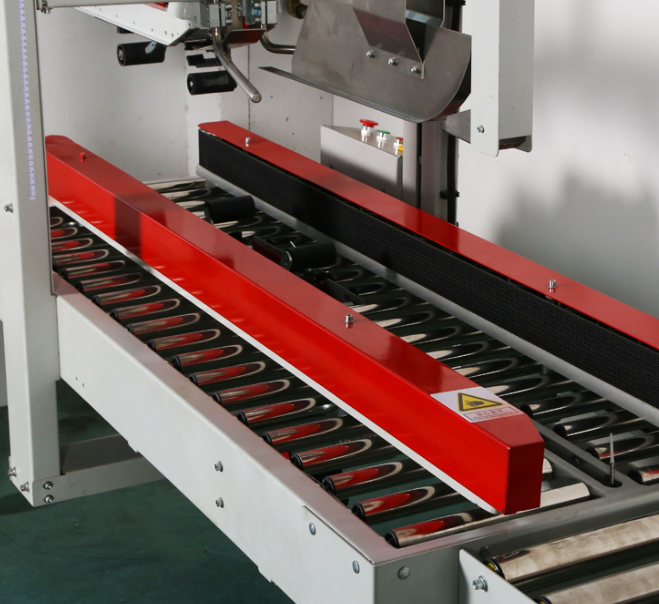
Configured systems open flat corrugated blanks and prepare the bottom before loading. Sensors confirm the case is ready.

Multi-Suction Cup Parallel Gripper

Tape or Adhesive Sealing

Top flaps are folded and closed with tape or hot-melt adhesive. The method is matched to the case and distribution needs.

Inspection and Fault Handling

Sensors can check product count, case position, and selected closing conditions. Faults trigger alarms, stops, or reject actions.

Inline-Packaging-Systems

Guarded End-of-Line Access

Interlocked guarding protects robotic and mechanical movement. Planned access supports cleaning, jam clearance, gripper changes, and maintenance.

Certification

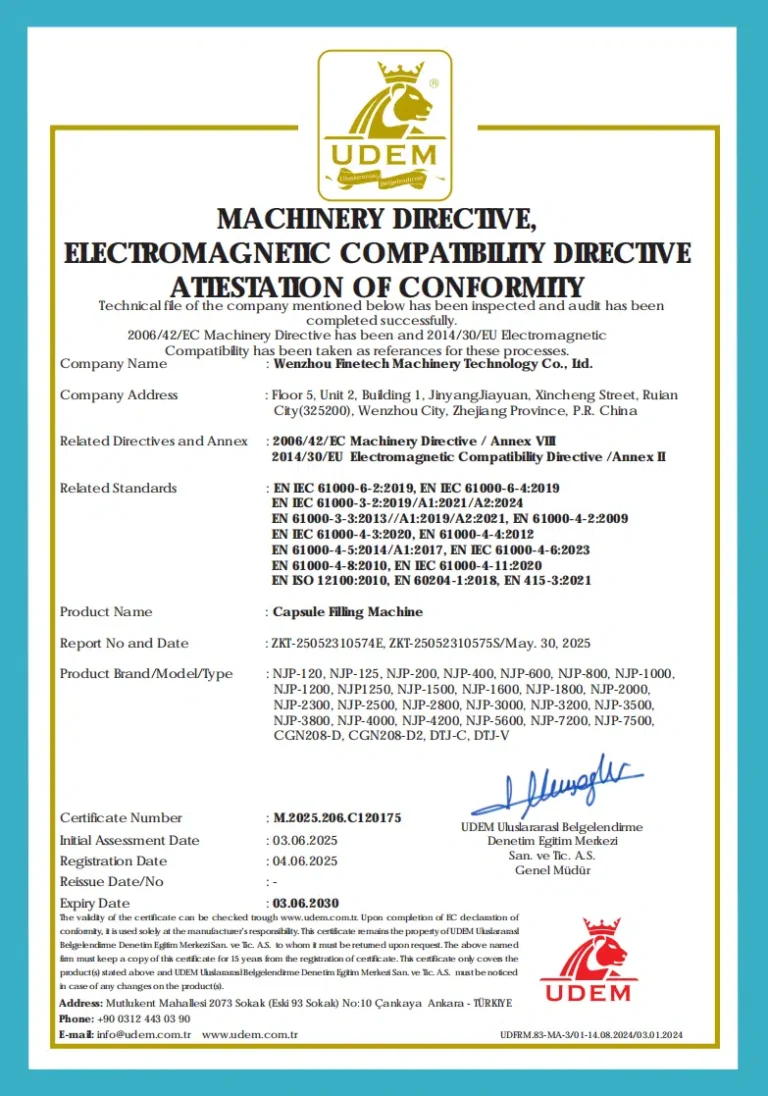
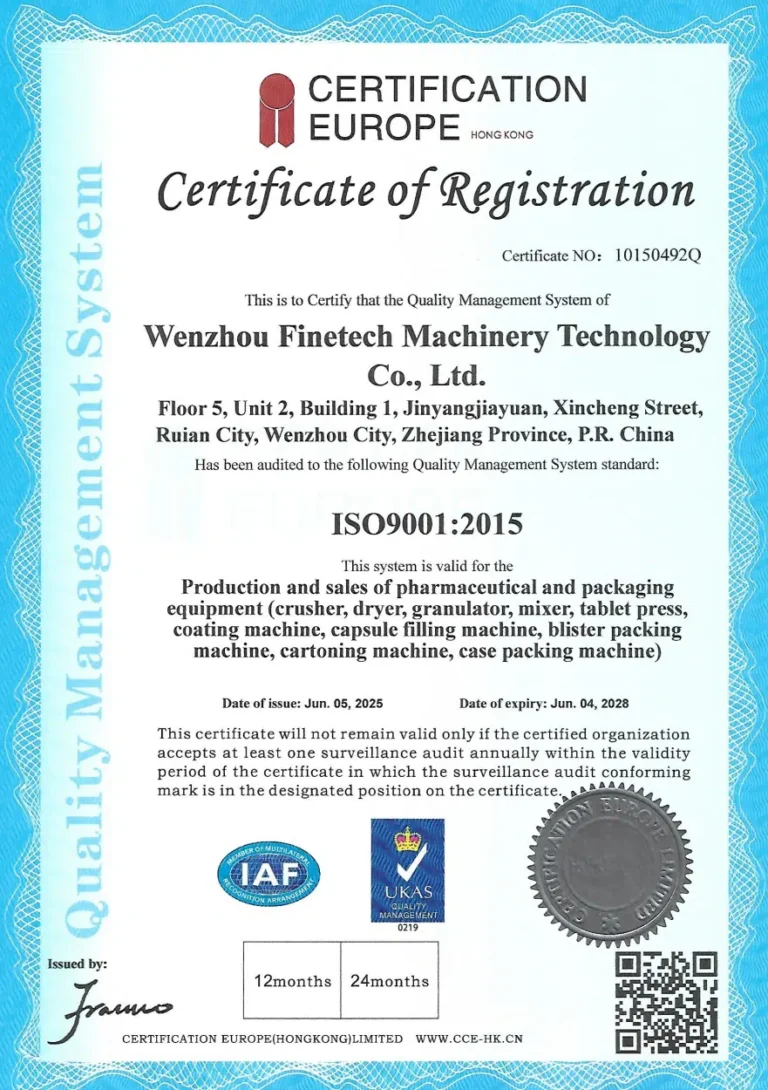
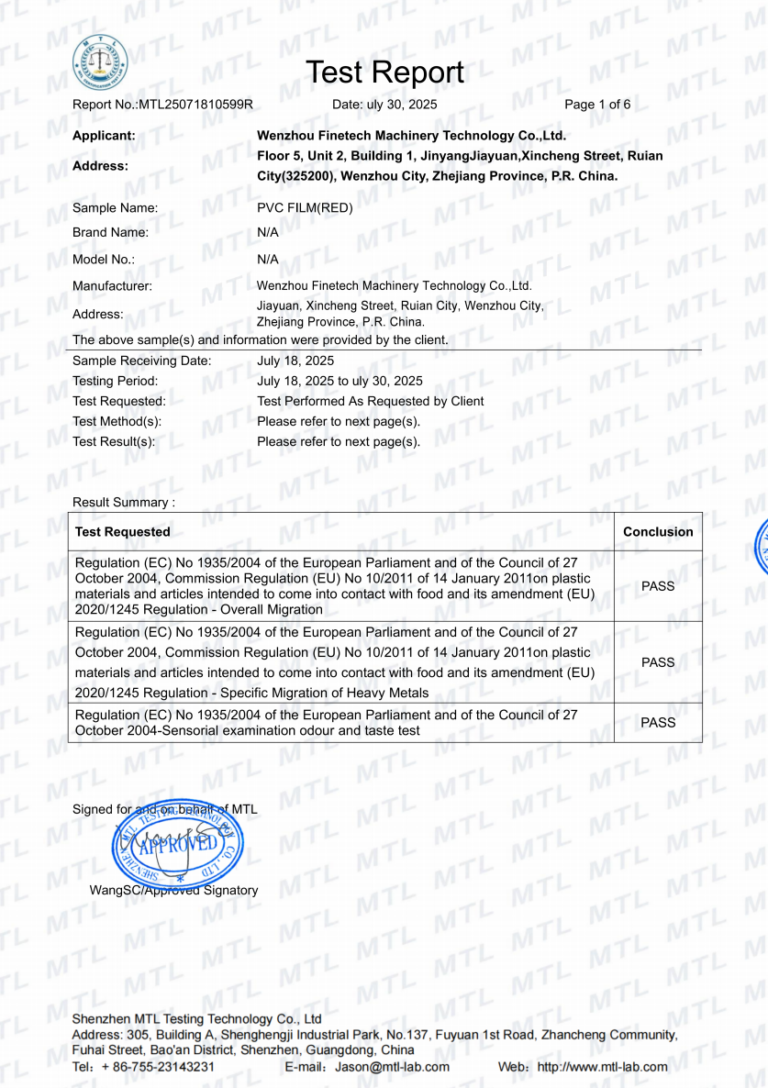
Finetech has obtained CE certification for the European market and passed ISO 9001 quality system certification. Our machinery is eligible for export to international markets, including Europe, the United States, Southeast Asia, the Middle East, South America, and Africa.


Our Services

View the list of cartoning machine solutions.

Technical Data

Production Capacity Up to

200

Cases/hour

Mechanical-Arm Pick Rate

10

Cycles/minute

Standard Case Size

300 x 250 x 200

mm

Installed Power

7.5

kW

Specification

ModelFTZCP-600 Automatic Case Packing Machine
Production capacity≤200 boxes/hour
Mechanical arm grasping production capacity10(times/minute)
Sealing typeAdhesive tape or hot melt adhesive
Carton size300X250X200mm
Power supplyAC380/50Hz 7.5kw
air supplyPressure:0.6MPa Air consumption:≤1m3/h
Overall dimensions5000*2000*2900mm
Weight2500(kg)
Main materialAluminum alloy,304 stainless steel

Interested?

Talk to our experts to discover the right solution for your needs.

A photo of sales manager Bella at a fully automated capsule filling machine factory1

Related Technologies

FAQs

Start with product samples, case drawings, pack count, layer pattern, required output, sealing method, and line layout.

Yes, within the designed range. Case guides, recipes, grippers, and loading positions may need adjustment or part changes.

Robots can handle cartons, bottles, pouches, trays, and other packs when a suitable gripper and infeed are provided.

The pattern is developed from product and case dimensions, count, orientation, weight distribution, and palletizing needs.

Yes. A configured line can open blanks, seal the bottom, load products, close the top, and discharge finished cases.

Tape offers straightforward opening and handling. Hot-melt adhesive can provide a clean closure. Case design and logistics guide the choice.

Controlled motion, cushioned contact surfaces, suitable grippers, and gentle acceleration reduce impact during pickup and placement.

Yes. Finished cases can transfer through conveyors to coding, weighing, palletizing, or warehouse systems.

Poor product spacing, unstable cases, incorrect guides, unsuitable corrugated board, and timing errors are common causes.

Timing depends on case dimensions, gripper changes, guide adjustments, recipe setup, and the required verification procedure.

Confirm electrical supply, compressed air, conveyor interfaces, floor space, guarding clearance, and adhesive or tape requirements.

Support can include layout review, installation, commissioning, operator training, troubleshooting, spare parts, and new-format assessment.