 English
  Russian
  Turkish
  Spanish
  French
  German
  Japanese


FTSG-High Shear Mixer Granulator
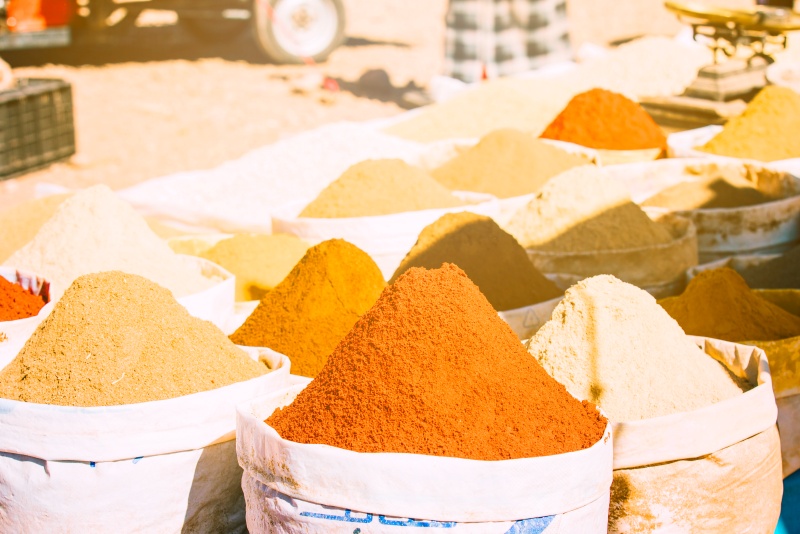
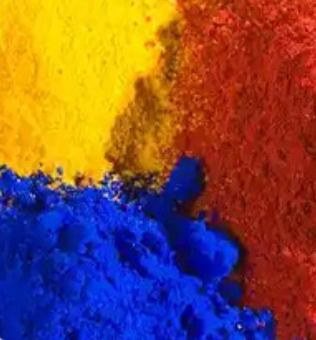
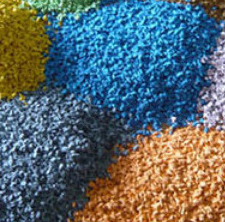
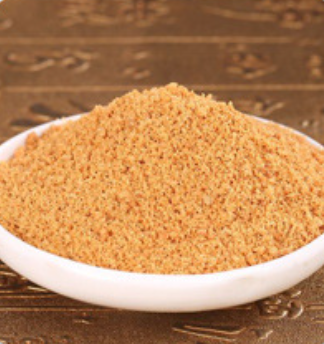
The high shear mixer granulator is ideal for products requiring granulation in a wide range of industries, including pharmaceuticals, food additives, rubber and plastic additives, pesticides, dyes, pigments, catalysts, and daily chemicals.
Need a Custom Quote?
Or More information About this product? Contact our sales stuff today!
Key Features
Technical Data
Machine Details
FAQ
Application Granule Types
Reviews No reviews yet
Improved Mixing Efficiency
Uses 25% less binder than traditional methods, with significantly shorter drying times.
Faster Processing
Each batch requires just 2 minutes of dry mixing and 1–4 minutes of granulation, increasing output up to 45 times compared to conventional pellet mills.
Easy Maintenance & Cleaning
Features an air-sealed drive shaft and is fully washable with water.
Consistent Granule Quality
Fluidized granulation ensures uniform particle size and excellent flowability.
Safe to Operate
Designed with comprehensive safety protections for secure operation.
Customizable
Granulation options can be tailored to your specific needs.
| Name | High Shear Mixer Granulator Models | ||||||
| Volume(L): | 50 | 150 | 200 | 250 | 300 | 400 | 600 |
| Production capacity(KG/Batch): | 15 | 50 | 80 | 100 | 130 | 200 | 280 |
| Mixing Speed(R.P.M): | 200/400 | 180/270 | 180/270 | 180/270 | 140/220 | 106/155 | 80/120 |
| Mixed Power(KW): | 4/5.5 | 6.5/8 | 9/11 | 9/11 | 13/16 | 18.5/22 | 22/30 |
| Cutting Speed(R.P.M): | 1500/3000 | 1500/3000 | 1500/3000 | 1500/3000 | 1500/3000 | 1500/3000 | 1500/3000 |
| Cutting Power(KW): | 1.3/1.8 | 2.4/3 | 4.5/5.5 | 4.5/5.5 | 4.5/5.5 | 6.5/8 | 9/11 |
| Compressed Air Volume (m³/min): | 0.6 | 0.9 | 0.9 | 0.9 | 1.1 | 1.5 | 1.8 |
| Weight(KG): | 500 | 800 | 1000 | 1300 | 1800 | 2200 | 2600 |


A High Shear Mixer Granulator is a closed vessel that uses a high-speed impeller and a stationary chopper to agitate, mix, and densify dry powders with a liquid binder. It transforms fine powders into uniform, dense granules through a combination of mechanical (shear) and thermal energy. The process is fast and efficient, making it the industry standard for wet granulation.
Main Bowl/Vessel: Where the granulation process occurs. It can be fixed or tiltable.
Three-Phase Motor: Powers the impeller.
Impeller (Main Blade): Located at the bottom, it rotates at high speed (typically 100-500 rpm) to circulate, mix, and densify the material.
Chopper (Auxiliary Blade): Mounted on the side or lid, it rotates at very high speed (1500-3000 rpm) to break down lumps and promote uniform particle size distribution.
Spray System: For adding binder solution (liquid addition port or spray nozzle).
Control System: PLC or HMI for controlling speed, time, and process parameters.
Discharge System: Often a discharge port at the bottom or via tilting the bowl.
Rapid Processing: Granulation times are typically 5-15 minutes.
Improved Granule Properties: Produces dense, spherical granules with excellent flow and compaction characteristics.
Uniform Mixing & Consistency: High shear forces ensure homogeneous distribution of API (Active Pharmaceutical Ingredient) and excipients.
Reduced Binder Usage: Efficient mixing often allows for a lower liquid-to-powder ratio.
Closed System: Minimizes dust exposure, improving operator safety and containment (important for potent compounds).
Reproducibility: When parameters are controlled, batch-to-batch consistency is high.
This is critical for consistency. Methods include:
Power Consumption (Amperage): The most common method. Motor load increases as granules densify. The endpoint is often a specific amp value or a steady plateau.
Empirical Observation: Operator experience (looking/feeling the granules), though less objective.
Time & Impeller Speed: Using a fixed recipe of time and speed after process development.
Advanced In-Line Analytics: PAT (Process Analytical Technology) tools like FBRM (Focused Beam Reflectance Measurement) or NIR (Near-Infrared) spectroscopy.
Nutraceuticals & Food: For vitamin blends, powdered drink mixes, and food additives.
Chemicals: For catalysts, detergents, ceramics, and agrochemicals (fertilizers, pesticides).
Cosmetics: For compact powders and makeup products.
Yes. While primarily for wet granulation, HSMGs are excellent for high-intensity dry blending of powders before liquid addition. They are not typically used for drying; the wet granules must be discharged and dried in a separate dryer (e.g., Fluid Bed Dryer, Tray Dryer).
Scale-up is non-linear and focuses on achieving similar granule properties. Key parameters to consider:
Tip Speed of Impeller: Maintaining similar impeller tip speed (π * D * RPM) is the most critical scaling principle. It governs the shear force applied to the granules.
Relative Swept Volume: The volume swept by the impeller relative to the batch size.
Power Consumption per Unit Mass: Similar power profiles often indicate similar work input.
Binder Addition Time & Method: Scaling the spray rate proportionally.
Bowl Geometry: Maintaining similar bowl dimensions (e.g., height-to-diameter ratio) is ideal.
| Feature | High Shear Granulator | Fluid Bed Granulator |
|---|---|---|
| Principle | Mechanical shear & compaction. | Fluidization & spray agglomeration. |
| Granule Density | Dense, low porosity. | Porous, low density. |
| Process Speed | Very fast (minutes). | Slower (tens of minutes to hours). |
| Heat Sensitivity | Less suitable (friction generates heat). | More suitable (fluidizing air can cool). |
| Drying | Separate step required. | Combined mixing, granulation, and drying. |




Customer Reviews
No reviews yet. Be the first to review this product!
Write a Review

Related Products

No reviews yet