Professional supplier of overall solutions for pharmaceutical manufacturing and packaging

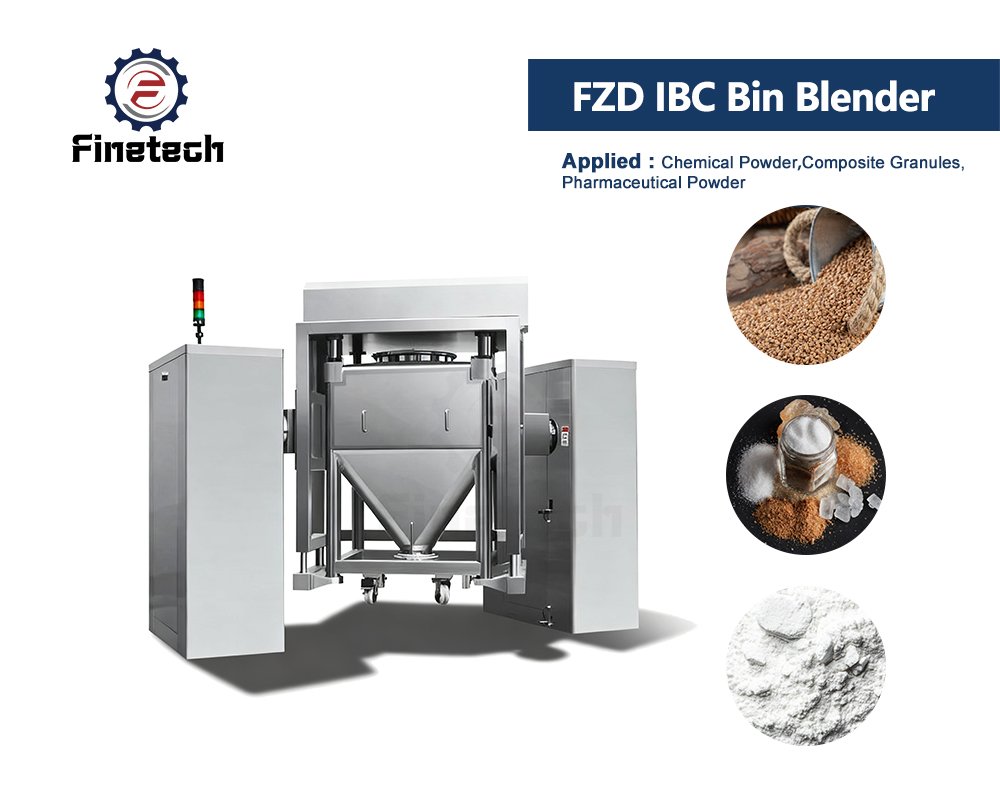
FZD IBC Bin Blender

An IBC (Intermediate Bulk Container) Bin Blender is a fully integrated mixing, storage, and transport system designed for efficient, safe, and sanitary handling of powders and granules in high-volume production. It combines a large-volume tumble blender with a standardized IBC container (bin) that serves as both the mixing vessel and the portable discharge unit.
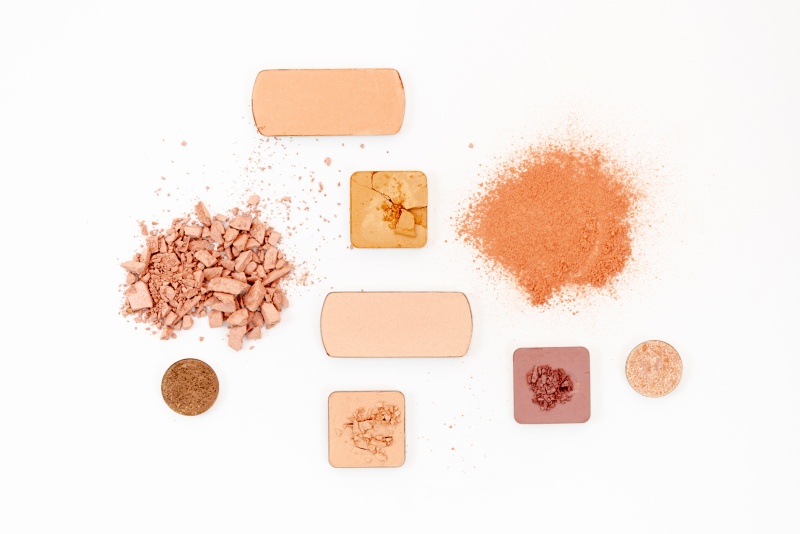
Chemical Industry
Chemical Industry powders

Need a Custom Quote?

Or More information About this product? Contact our sales stuff today!

Key Features

Technical Data

Machine Details

FAQ

Application Powder Types

  • PLC auto-control + man-machine interface operation.
    IBC Bin Blender Diagram
    IBC Bin Blender Diagram.
  • Infrared safety device protects mixing area.
  • Multi-safety chains (hopper, lifting, positioning, etc.).
  • Mixing rack:high-quality S304 stainless steel.
  • High efficiency, multi-volume hoppers, continuous mixing
  • Complies with GMP requirements for pharmaceutical use.
Model Static size Dynamic size Lifting Height Net Load Mixing speed Total power Hopper weight Equipment weight
L W L L W1 H1 H2 Kg rpm Kw Kg Kg
FZD-400 2710 1662 2390 2710 2200 2600 720 200 3-15 5.5 130 1700
FZD-600 2860 1755 2860 2860 2700 2860 750 300 3-15 5.5 155 1850
FZD-800 3050 1750 2675 3055 2500 2990 750 400 3-15 7 185 2400
FZD-1000 3350 1870 2870 3350 3000 3290 750 500 3-15 7.7 200 2800
FZD-1200 3470 1650 2900 3470 3250 3350 750 600 3-15 7.7 240 3000
FZD-1500 3560 1450 3030 3560 3600 3510 850 750 3-15 9.7 280 3200
FZD-2000 3770 1600 3280 3770 4300 3800 850 1000 3-15 9.7 330 3800
FZD-2500 4400 1950 3500 4400 4540 4200 850 1250 3-10 15 450 4600
FZD-3000 4400 1950 3750 4400 4300 4400 850 1500 3-10 15 510 5000
Column Frame
Column Frame
Electrical control system
Equipment Base Caster
Hopper Discharge Valve
What is an IBC Bin Blender?

An IBC (Intermediate Bulk Container) Bin Blender is an industrial mixing system where the product is blended directly inside its mobile IBC container. The container is placed onto a blender base, which rotates or tumbles it to achieve a uniform, homogeneous mix of powders, granules, or pastes.

What are the main advantages of using an IBC Bin Blender system?
  • Reduced Handling & Contamination: The container serves as a blend vessel, discharge hopper, and storage/transport unit, minimizing manual transfers and cross-contamination risk.

  • Fast Changeover: Easy swap of IBC bins allows for quick product changeovers and cleaning, boosting production flexibility.

  • Gentle Blending: The tumbling action is ideal for fragile or cohesive materials that could be damaged by high-shear mixers.

  • Scalability: Blend small batches in the same system used for large-scale production by using different-sized IBCs.

  • Containment: Enclosed systems are excellent for potent, toxic, or dusty materials, protecting operators and the environment.

What industries use IBC Bin Blenders?

They are critical in industries requiring precise, sanitary, and contained powder processing:

  • Pharmaceuticals & Nutraceuticals (API blending, excipient mixing)

  • Food & Beverage (spices, drink mixes, ingredients)

  • Cosmetics (powders, pigments)

  • Chemicals & Plastics (compounds, additives, dyes)

How does an IBC Bin Blender achieve a uniform mix?

The blender base imparts motion—typically rotation, tumbling, or inversion—to the secured IBC. This motion constantly folds and diffuses the material particles against each other until a statistically homogeneous blend is achieved. Mixing time is validated for each recipe.

What types of IBC containers are compatible?

Most blenders are designed for standard stainless steel or FDA-approved polyethylene IBCs with common footprint dimensions (e.g., 1140mm x 1140mm). Compatibility with your existing bins is a key specification to check. Custom adapters are often available.

What is the typical capacity range?

Capacities range from small pilot-scale bins (e.g., 50-200 liters) to large production bins (1000-1500 liters or more). The working volume is usually 50-70% of the bin's total capacity for effective blending.

Can I blend wet and dry materials together?

Yes, for certain applications like forming granules or cohesive pastes. However, the formulation and process parameters must be carefully designed. Not all standard bin blenders are suited for high-moisture applications; discuss your needs with the manufacturer.

Are IBC Bin Blenders suitable for cGMP and FDA-regulated environments?

Absolutely. High-quality blenders are constructed with 316L stainless steel, polished welds, and hygienic designs. They support validation with documentation packages (DQ, IQ, OQ, PQ) and can feature CIP (Clean-in-Place) and containment systems to meet strict pharmaceutical and food safety standards.

What should I consider when selecting an IBC Bin Blender?

Key factors include: material characteristics (flowability, abrasiveness), required batch size, industry compliance needs (cGMP, ATEX for explosive atmospheres), level of automation (manual vs. PLC control), and future scalability.

Pharmaceutical Industry
Pharmaceutical & Healthcare Industries
Food Products
Food Products
Feeds
Feeds
Chemical Industry
Chemical Industry
Metallurgy
Metallurgy
Building Materials
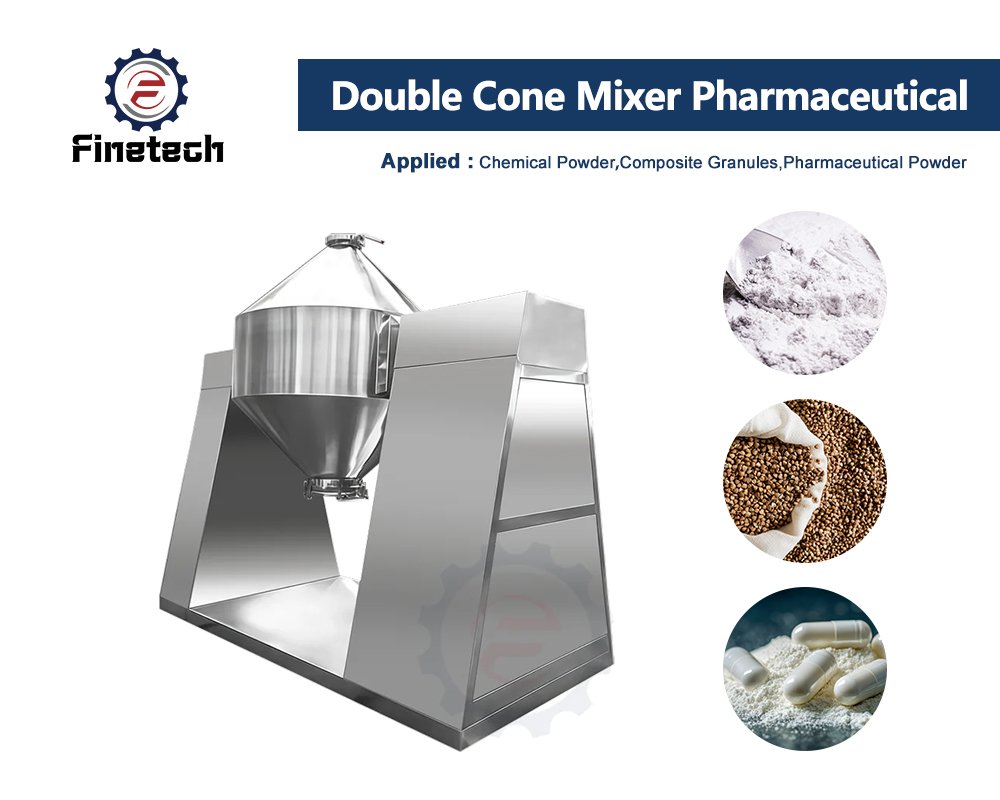
Building Materials

Related Products

Scroll to Top