English
  Russian
  Turkish
  Spanish
  French
  German
  Japanese
Ampoule filling and sealing is one of the most delicate steps in sterile pharmaceutical production. If operators follow different methods or rely on memory, the risk of contamination, overfilling, breakage, and batch rejection increases.
That’s why every facility today needs a clear ampoule filling and sealing machine SOP document that guides each step from start to finish.
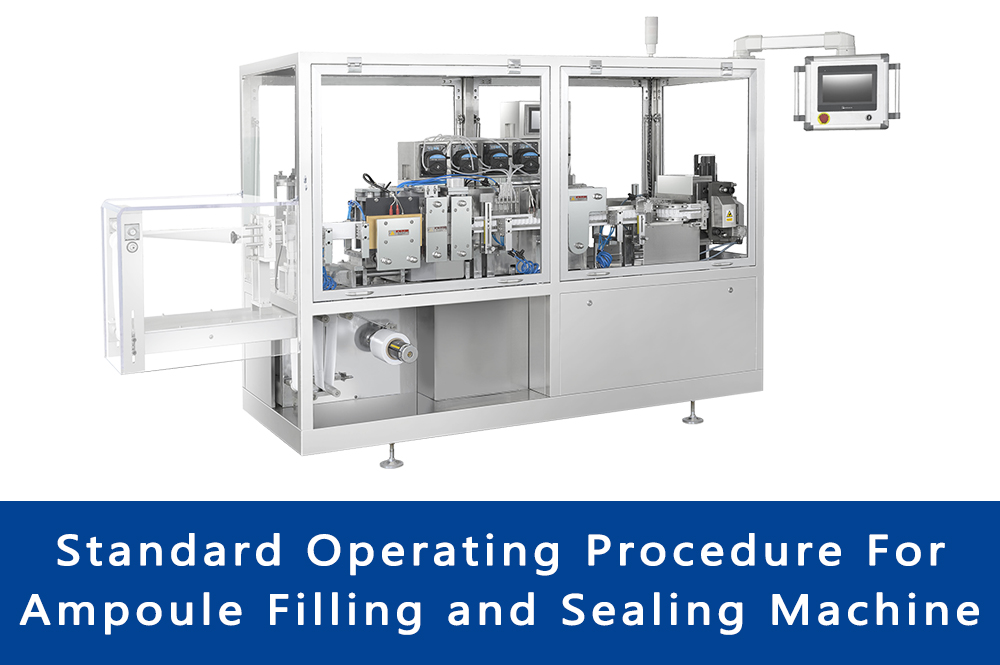
With that in mind, we’ll share the SOPs operators need to follow when using an ampoule filling and sealing machine. Keep reading till the end to get the free PDF version of the SOPs.
1.0 Purpose
The purpose of this SOP is to describe the correct methods for operating, cleaning, and maintaining the ampoule-filling and sealing machine. This document guarantees that every ampoule is filled and sealed accurately in accordance with GMP requirements.
This ampoule filling and sealing machine SOP procedure helps prevent contamination, leakage, breakage, mix-ups, and quality failures during production.
2.0 Scope
The SOPs apply to:
2.0.1: All ampoule filling and sealing operations that are carried out in sterile manufacturing areas.
2.0.2: Machine types used for filling, pre-gassing, post-gassing, and flame sealing of glass ampoules.
2.0.3: Production batches, including trial batches, validation runs, and commercial batches.
2.0.4: Staff involved in machine operations, cleaning setup, maintenance, and in-process quality checks.
3.0 Responsibility
3.1 Operators
3.1.1: Follow this SOP step-by-step during operation and cleaning.
3.1.2: Make sure the correct machine setup, sterilization, filling, sealing, and documentation.
3.1.3: Report abnormalities such as misfills, broken ampoules, flame issues, or contamination risks.
3.2 Production Supervisor
3.2.1: Verify that operators are trained and authorized.
3.2.2: Confirm that machine setup, line clearance, and batch details are correct before starting.
3.2.3: Verify that deviations or breakdowns are reported and recorded.
3.3 Quality Assurance (QA)
3.3.1: Perform line clearance checks before and after production.
3.3.2: Verify critical parameters: fill volume, sealing quality, breakage rate, and integrity.
3.3.3: Approve cleaning records, batch documentation, and process deviations.
4.0 Safety Precautions
4.0.1: Wear sterile gowning and PPE as per cleanroom protocols.
4.0.2: Handle glass ampoules carefully to prevent cuts and breakage.
4.0.3: Do not touch sterile parts (needle, product path) with bare hands.
4.0.4: Keep hands away from the open flame and sealing area.
4.0.5: Dispose of broken ampoules in designated sharps containers.
5.0 Materials and Equipment Needed
5.0.1: Ampoule filling and sealing machine
5.0.2: Sterile ampoules
5.0.3: Sterile product solution
5.0.4: Labels and batch documentation
5.0.5: Cleaning agents (validated)
5.0.6: Lubricants (if applicable, non-contaminating)
5.0.7: Tools for minor adjustments
5.0.8: PPE and sterile gowning
6.0 Procedure
6.1 Pre-Operation Activities
6.1.1: Keep the machines and surrounding areas free from previous batch materials.
6.1.2: Remove old labels, cartons, tools, and leftover ampoules.
6.1.3: QA must sign the line clearance before starting.
6.1.4: Verify that the machine is clean and all parts are assembled correctly.
6.1.5: Check lubrication points (only non-product contact surfaces).
6.1.6: Ensure sterile parts are sterilized (autoclaved or dry heat sterilized).
6.1.7: Check cleanroom pressure, temperature, and humidity within limits.
6.1.8: Check that the laminar airflow (LAF) is ON and functioning correctly.
6.2 Machine Setup
6.2.1: Set ampoule size and type (1ml, 2ml, 5ml, 10ml, etc.).
6.2.2: Adjust filling needle height and depth according to ampoule size.
6.2.3: Set flame height, intensity, and burner alignment.
6.2.4: Calibrate fill volume on HMI or mechanical dial.
6.2.5: Test run empty ampoules to check alignment and smooth movement.
6.3 Filling Operations
6.3.1: Load sterile ampoules into the feeding tray.
6.3.2: Make sure proper orientation for neck presentation.
6.3.3: Activate nitrogen gas purge settings.
6.3.4: Adjust pressure based on product requirement.
6.3.5: Start the machine at slow speed for initial checks.
6.3.6: Verify fill volume using a calibrated cylinder.
6.3.7: Adjust fill volume until within permitted limits.
6.3.8: Switch to normal production speed only after QA approval.
6.4 Sealing Operations
6.4.1: Verify that the ampoule neck is correctly positioned under the flame.
6.4.2: Adjust rotation speed of ampoules for uniform sealing.
6.4.3: Check flame size and temperature at the start of every shift.
6.4.4: Observe sealing quality. It should be smooth, without cracks or blackening.
6.5 In-Process Quality Checks (IPQC)
6.5.1: Perform IPQC every 15–30 minutes, or as per batch protocol.
6.5.2: Checks include:
6.5.2.1: Fill volume and weight
6.5.2.2: Sealing integrity
6.5.2.3: Appearance (no particles or burnt glass)
6.5.2.4: Breakage rate (< specified limit)
6.5.2.5: Proper ampoule height and capillary profile
6.5.2.6: Temperature and nitrogen settings
6.5.3: QA must document and sign each check.
6.6 Handling Rejected Ampoules
6.6.1: Collect broken, under-filled, or improperly sealed ampoules separately.
6.6.2: Record the number of rejects.
6.6.3: Dispose of them as per waste handling SOP.
6.7 Completion of Batch
6.7.1: Stop the machine after all ampoules are processed.
6.7.2: Remove remaining ampoules from the track.
6.7.3: Count total ampoules filled and sealed.
6.7.4: Compare final count with batch yield expectations.
7.0 Cleaning Procedure
7.1 Post-Production Cleaning
7.1.1: Switch off the machine and the gas supply.
7.1.2: Allow the machine to cool before cleaning.
7.1.3: Remove filling needles, tubing, and product contact parts.
7.1.4: Clean these with validated cleaning agents.
7.1.5: Rinse with WFI (Water for Injection) if required.
7.1.6: Dry all parts and send them for sterilization.
7.2 Equipment Body Cleaning
7.2.1: Wipe external surfaces with approved disinfectants.
7.2.2: Confirm no residue, liquid, or dust remains.
7.2.3: Reassemble only after areas are fully dry.
8.0 Maintenance
8.0.1: Mechanical checks: belts, bearings, alignment, and lubrication.
8.0.2: Calibration of filling volume systems.
8.0.3: Flame adjustment and burner maintenance.
8.0.4: Replacement of worn-out needles or rubber components.
8.0.5: Record all maintenance activities in the machine logbook.
9.0 Definitions
9.0.1: Filling Needle: Transfers sterile liquid into the ampoule.
9.0.2: Pre-Gassing: Removal of air before filling (for oxygen-sensitive products).
9.0.3: Post-Gassing: Adjustment of final headspace before sealing.
9.0.4: Flame Sealing: Melting and closing the ampoule’s neck using controlled flame.
9.0.5: In-Process Checks (IPQC): Real-time quality checks during production.
Download the Ampoule Filling and Sealing Machine SOP PDF for Free
Download Ampoule Filling and Sealing Machine SOP PDF
The Ampoule Filling and Sealing Machine SOP PDF we’ve prepared is a ready-to-use form designed for operators on the production floor. That means operators can quickly verify that every step is executed exactly in accordance with GMP standards.
Your SOP Performs Best with Reliable Equipment
A clear ampoule filling and sealing machine SOP is the backbone of safe operations. It protects your batches, keeps your operators aligned, and guarantees every ampoule leaving your facility meets GMP expectations.
However, even the best-written SOP can only perform well when supported by the right machinery. And to get that machinery, Finetech is the best choice.
Our ampoule filling and sealing machines are designed for precision, smooth operation, and full GMP compliance. With 30+ years of experience, we can guide you to the equipment that fits your exact needs.