Professional supplier of overall solutions for pharmaceutical manufacturing and packaging

FSD Laboratory Bin Blender

A Laboratory Bin Blender is a precision-engineered device used in research, development, and small-scale production to achieve a uniform, homogeneous mixture of dry, solid powders and granules. It is the smaller, bench-top counterpart to large industrial bin blenders, designed for accuracy, flexibility, and repeatability in a controlled lab setting.

Pharmaceutical Industry
Pharmaceutical Industry Powders

Need a Custom Quote?

Or More information About this product? Contact our sales stuff today!

Key Features

Technical Data

Machine Details

FAQ

Application Powder Types

  • PLC auto-control, man-machine interface operation.
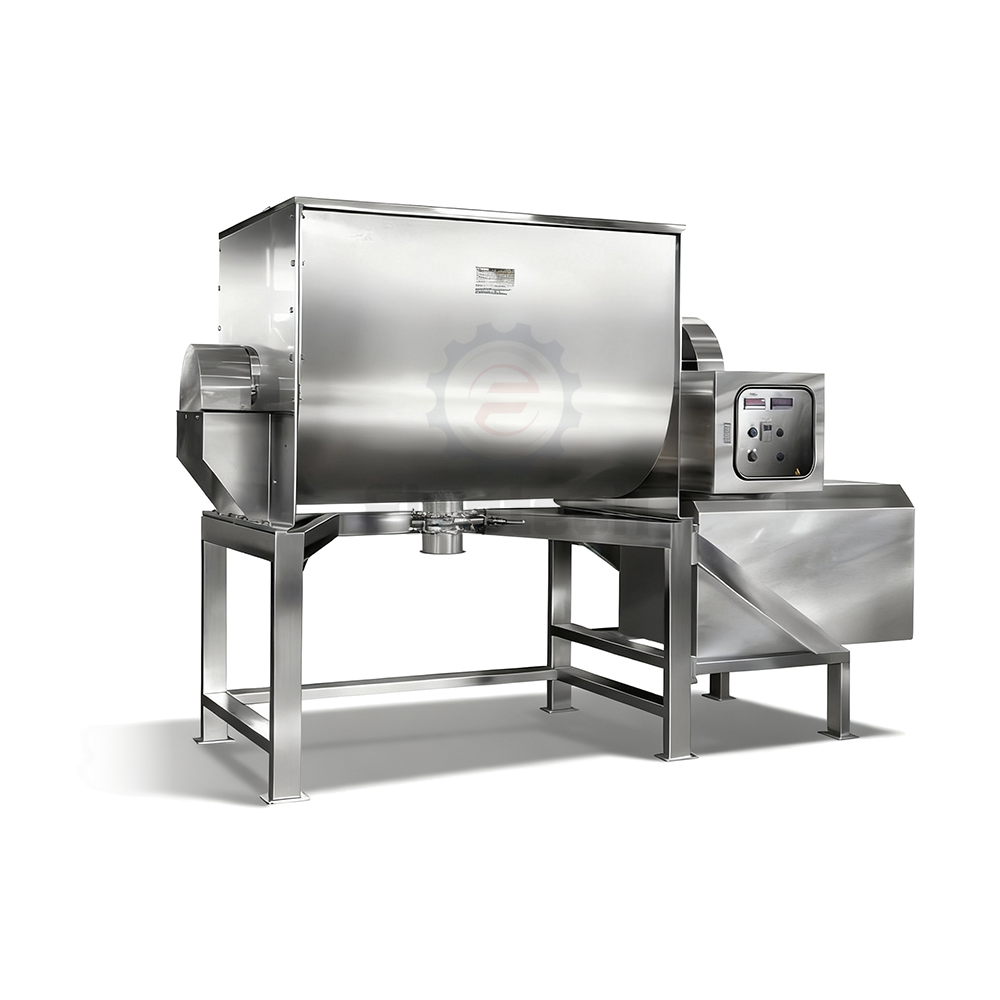
    Laboratory Bin Blender Diagram
    Laboratory Bin Blender Diagram.
  • Mechanical interlocking fence protects mixing area.
  • Safetyinterlocks: vertical positioning, start-stop deceleration, etd.
  • Replaceable hoppers for differential mixing volume need.
  • Mixing hopper:high-quality S304 stainless steel.
  • EU, CE certified to guarantee excellent quality.
  • Meets GMP requirements for pharmaceutical production.
Model Dimensions Net Load Mixing speed Total power Equipment weight
W1 W2 H1 H2 H3 L Kg rpm Kw Kg
FSD50 1538 1300 1023 400 650 1282 25 3-15 0.37 180
FSD100 1870 1300 1234 500 700 1514 50 3-15 0.75 240
FSD150 2060 1465 1481 600 800 1600 75 3-15 0.75 260
FSD200 2152 1540 1443 465 800 1805 100 3-15 1.1 320
Hopper Discharge Valve
Mixing Impeller Assembly
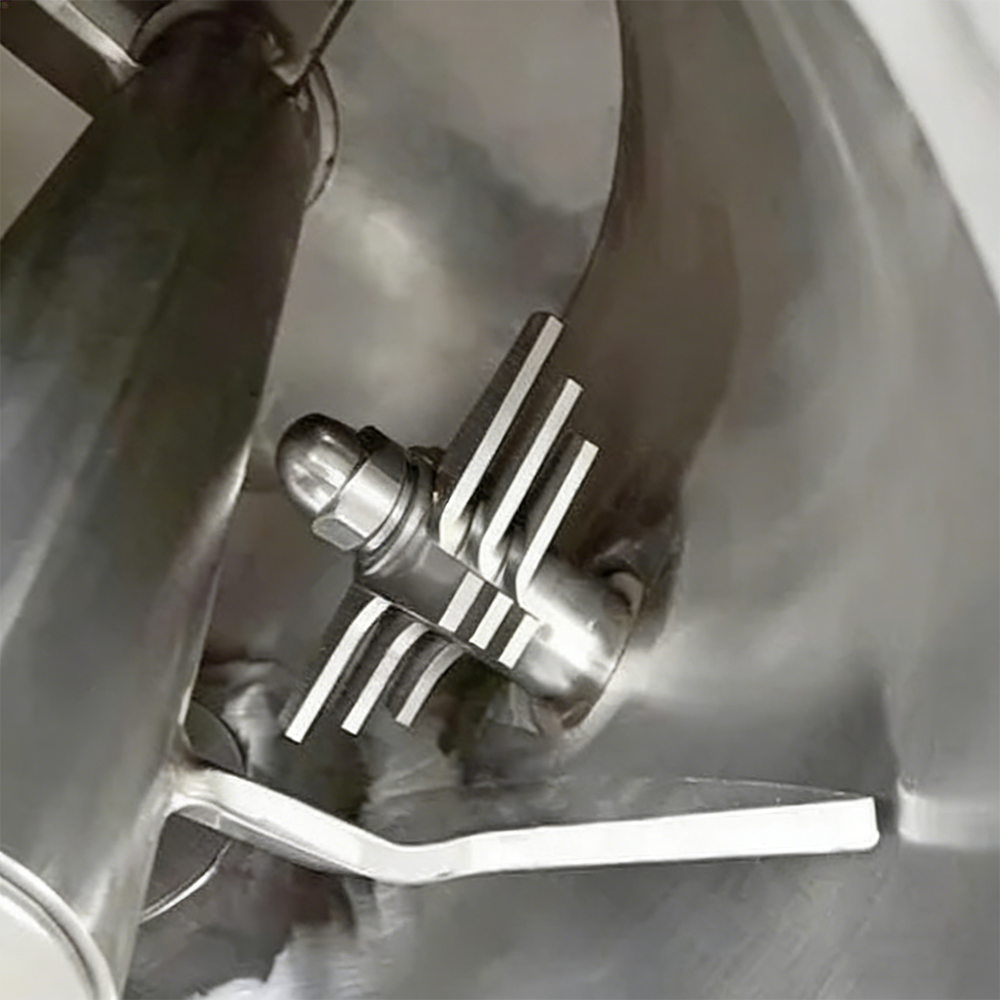
Shear Blade
Shear Blade
What is a Laboratory Bin Blender, and what is it used for?

A Laboratory Bin Blender is a precision mixing machine used primarily in R&D, QA/QC, and small-scale production. It is designed to achieve a homogeneous, uniform blend of dry powders, granules, and other free-flowing solid materials. Common applications include pharmaceutical formulation development, food & beverage testing, chemical research, and cosmetic powder mixing.

How does a Bin Blender work?

It operates on the principle of gentle tumbling or diffusion mixing. The material is loaded into a sealed container (the "bin"). This bin is then securely attached to a rotating frame. As the frame rotates, the bin tumbles end-over-end or at an angle, causing the particles to repeatedly cascade and fold over each other, creating a consistent blend without high shear or heat generation.

What are the key advantages of using a Bin Blender?
  • Uniform Blending: Excellent for cohesive and free-flowing powders.

  • Gentle Action: Prevents particle degradation, attrition, or separation of fragile materials.

  • Contamination-Free: Sealed bins eliminate cross-contamination and product loss.

  • Easy to Use & Clean: Bins are removable, making loading, unloading, and cleaning simple.

  • Scalability: Blending parameters from the lab scale can be directly correlated to larger production-scale bin blenders.

What types of bins or containers are available?

Bins come in various materials to suit different product needs:

  • Stainless Steel (SS 304 or 316L): Standard for most applications, durable, and easy to clean.

  • Polymers (e.g., Polycarbonate, UHMW): Excellent for corrosion resistance, lightweight, and visual blending observation.

  • Specialty Coatings: Options like Teflon® or electropolished finishes for sticky or highly pure products.

How do I choose the correct bin size and fill level?

For optimal blending, the bin should typically be filled between 30% and 70% of its total volume. This ensures enough headspace for the material to tumble and mix effectively. Always consult the manufacturer's guidelines. Common lab sizes range from 1-liter to 50-liter bin capacities.

How long does it take to achieve a homogeneous blend?

Blend time varies based on material characteristics (density, particle size, flowability) and the required homogeneity. It can range from 5 to 30 minutes for most applications. We recommend conducting a blend uniformity study to determine the optimal time for your specific product.

Can I get a customized Bin Blender for my specific application?

Yes. We offer various customization options, including:

  • Custom bin sizes, shapes, and materials.

  • Specialized seals (e.g., silicone, PTFE) for containment.

  • Integration with loading/unloading stations, sieves, or sensors.

  • Explosion-proof motors for hazardous environments.

Pharmaceutical Industry
Pharmaceutical & Healthcare Industries
Food Products
Food Products
Feeds
Feeds
Chemical Industry
Chemical Industry
Metallurgy
Metallurgy
Building Materials
Building Materials

Related Products

Scroll to Top