 Skip to content
  English
  Russian
  Turkish
  Spanish
  French
  German
  Japanese
Due to an increase in production demands, manual capsule filling is no longer enough for many operations. That’s why semi-automatic and fully automatic capsule filling machines are designed to offer better speed and reduce human error at scale.
However, using these machines effectively requires understanding how they work and where the differences lie.
With that said, we’ll guide you through the process of using a semi and fully automatic capsule filling machine so you can operate it safely and confidently.
How to Use a Semi-Automatic Capsule Filling Machine
If you’re looking for a straightforward way to operate a semi-automatic capsule filling machine, this section walks you through the process step by step. Follow the instructions below while keeping the capsule filling machine SOPs in mind:
Step 1: Connect the External and Internal Power Supply
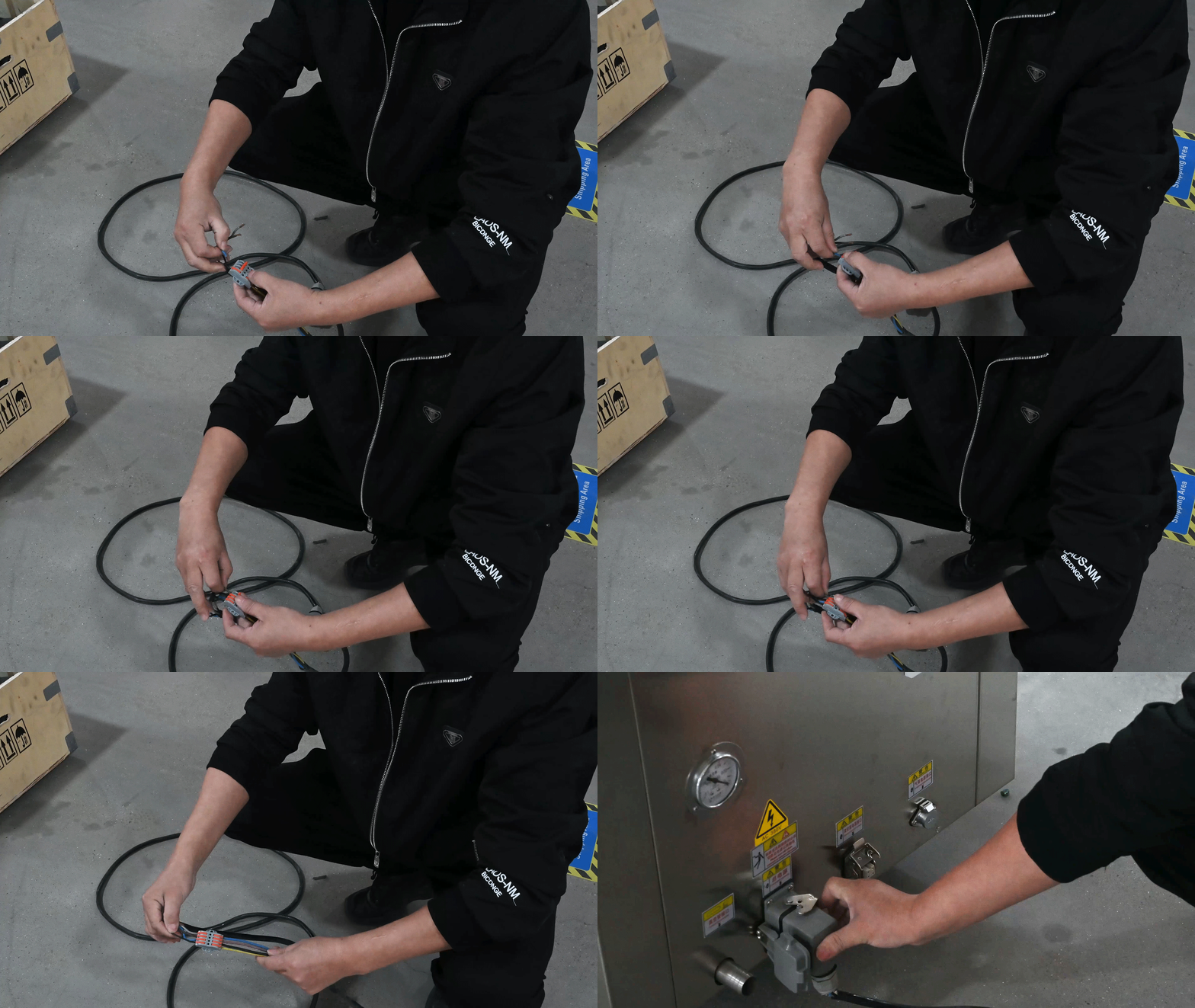
First, make sure the machine is completely off. Connect the external power supply to a stable electrical source that matches the machine’s voltage requirements. Next, confirm that all internal power connections inside the control panel are secure.
Loose or incorrect connections can cause erratic behavior or damage components. Never skip this check, even if the machine was used recently.
Step 2: Install the Vacuum Pump
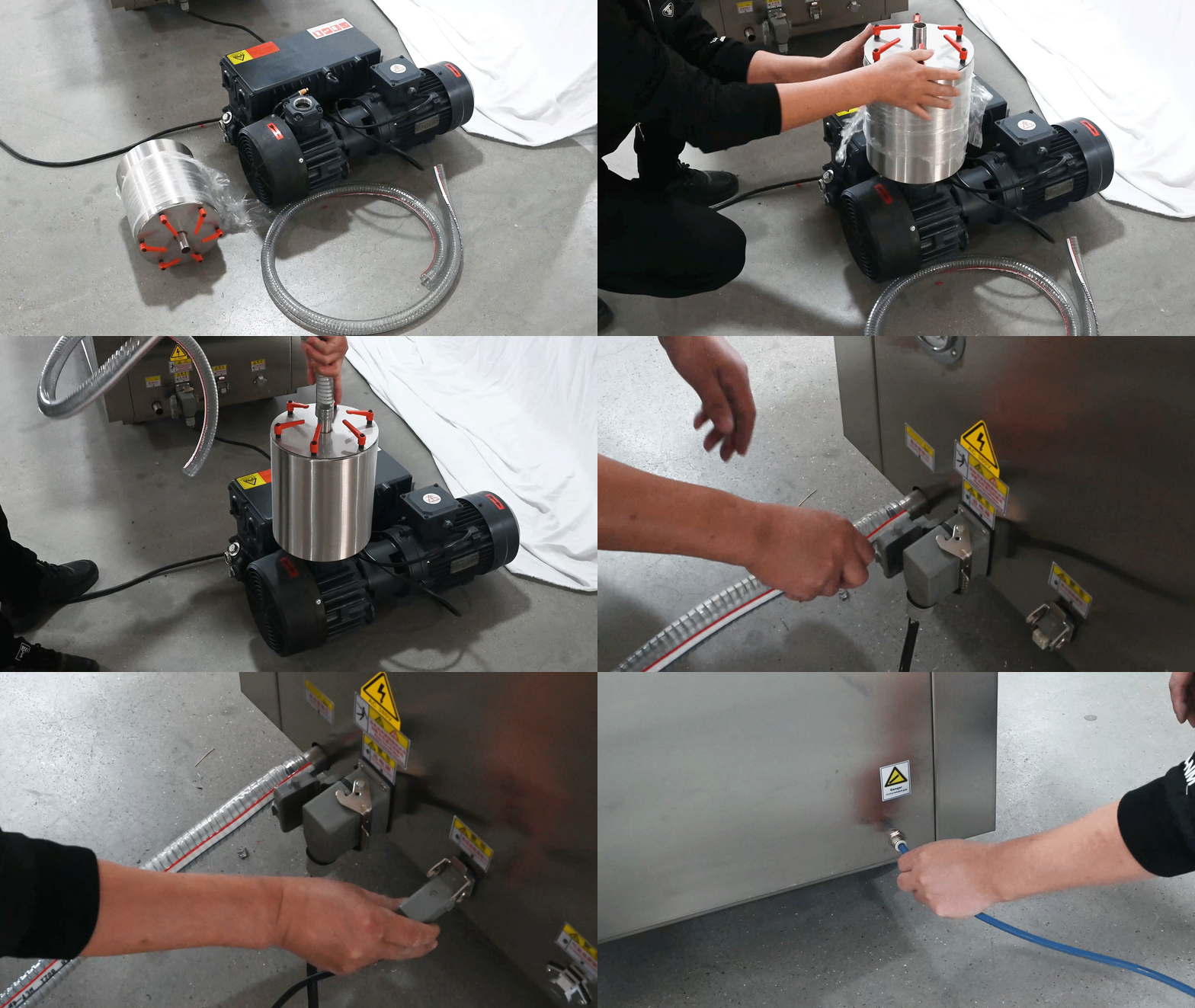
The vacuum pump is critical for capsule separation. Connect the vacuum pump hose firmly to the machine’s vacuum port. Make sure the seal is tight, and there are no air leaks.
Place the vacuum pump on a flat surface with adequate ventilation. Improper installation can lead to capsule misalignment or incomplete separation.
Step 3: Swap Phase Wires (If Required)
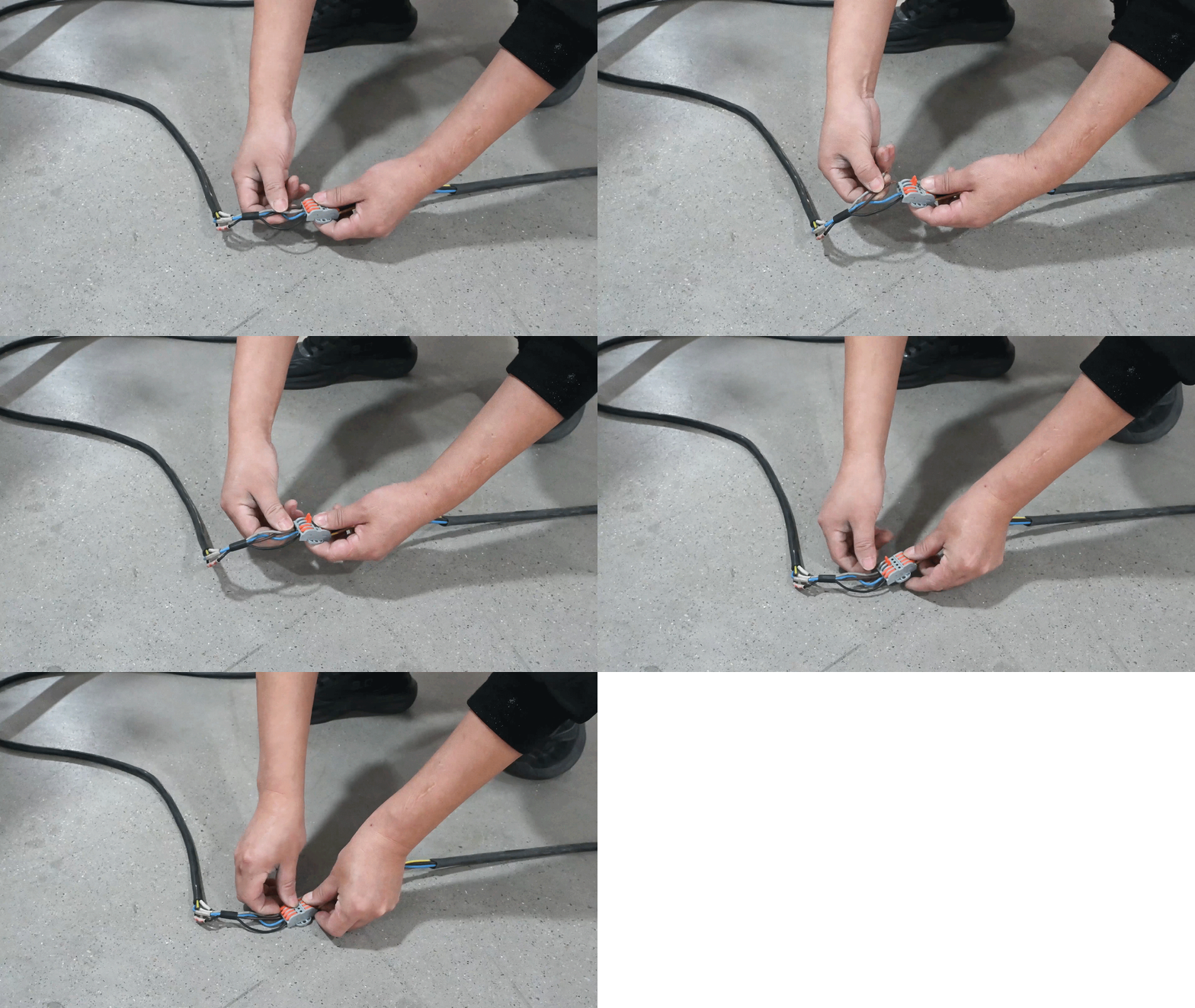
If your machine uses a three-phase power supply, check the motor rotation direction. Turn the machine on briefly and observe motion. If the rotation is incorrect, turn off the machine immediately and swap the two-phase wires.
This step ensures motors and moving parts rotate in the correct direction. Incorrect phase wiring can damage the machine over time.
Step 4: Load Capsules and Medicine Powder
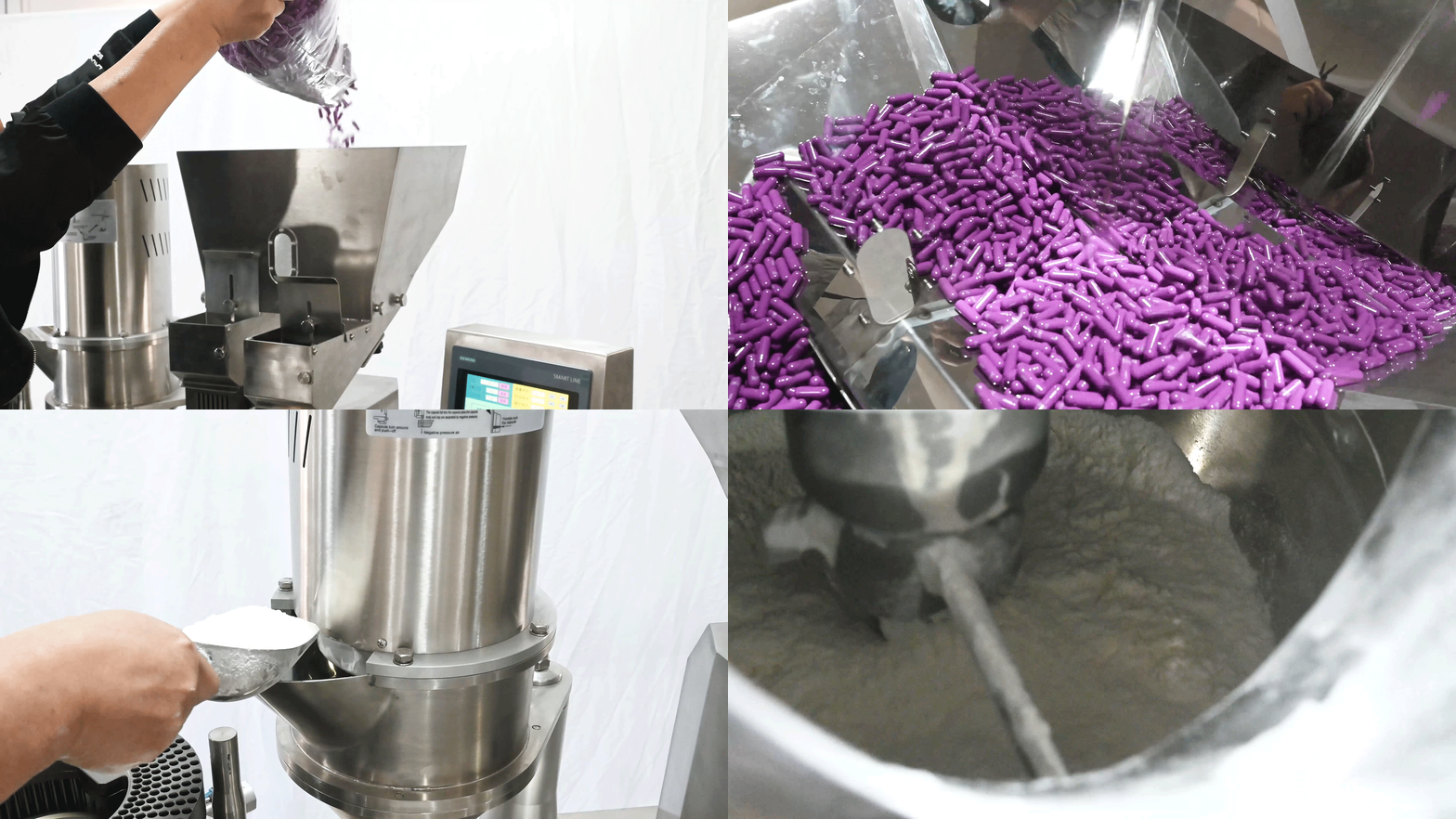
Now prepare your materials. Load empty capsules into the capsule hopper, making sure they are clean and free from any defects. Fill the powder hopper with your medicine powder to start the filling process.
Before loading the powder, break up any clumps to ensure uniform flow. Consistent powder flow is essential for accurate capsule weight, so take care during this step.
Step 5: Turn on the Vacuum Pump Switch
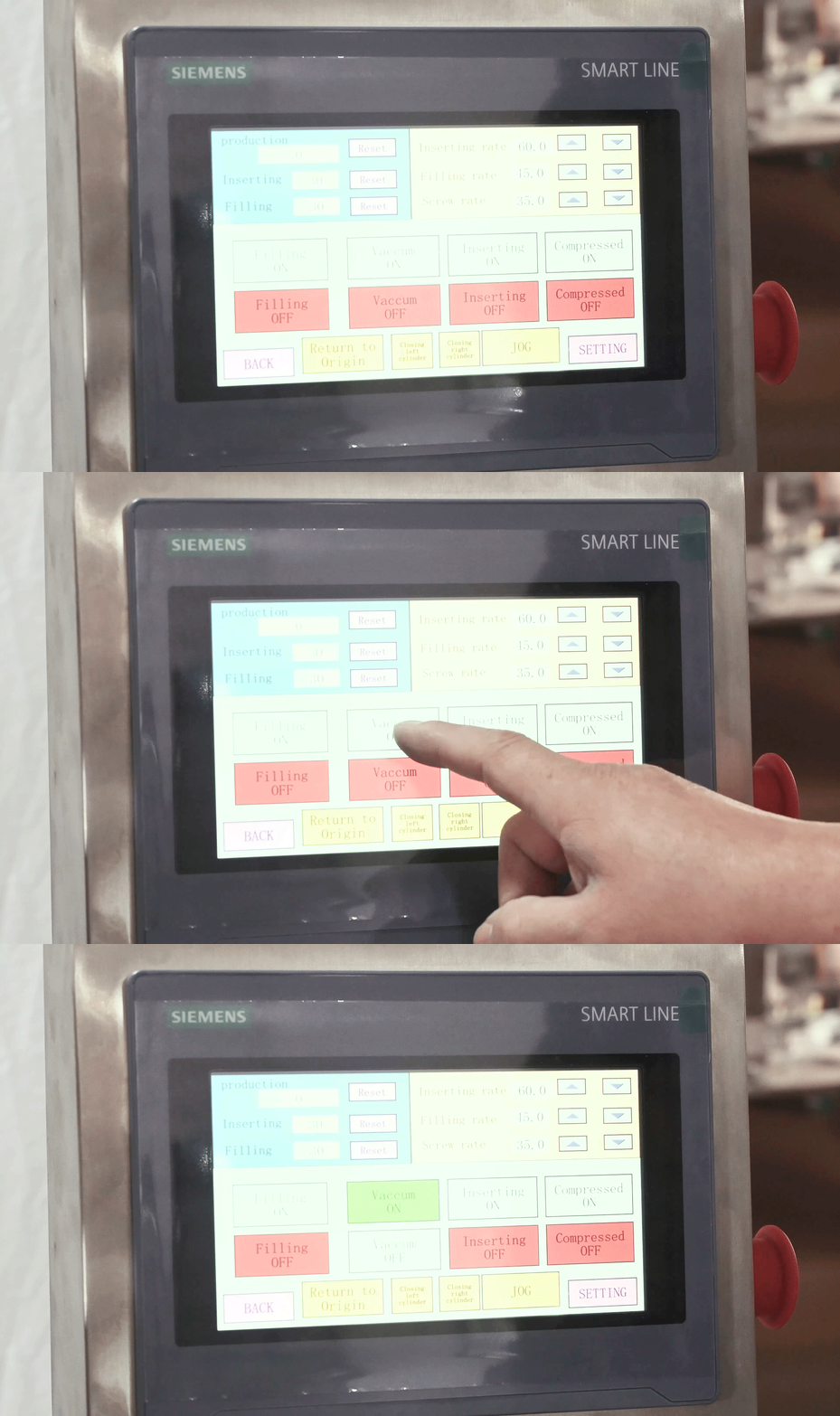
Use the control panel to switch on the vacuum pump and allow it to stabilize for a few seconds. Listen for steady operation. The vacuum system will help separate capsule caps from capsule shells during processing.
Weak suction usually means a loose connection or blockage, which you must fix before continuing the filling process.
Step 6: Place Capsule Tray
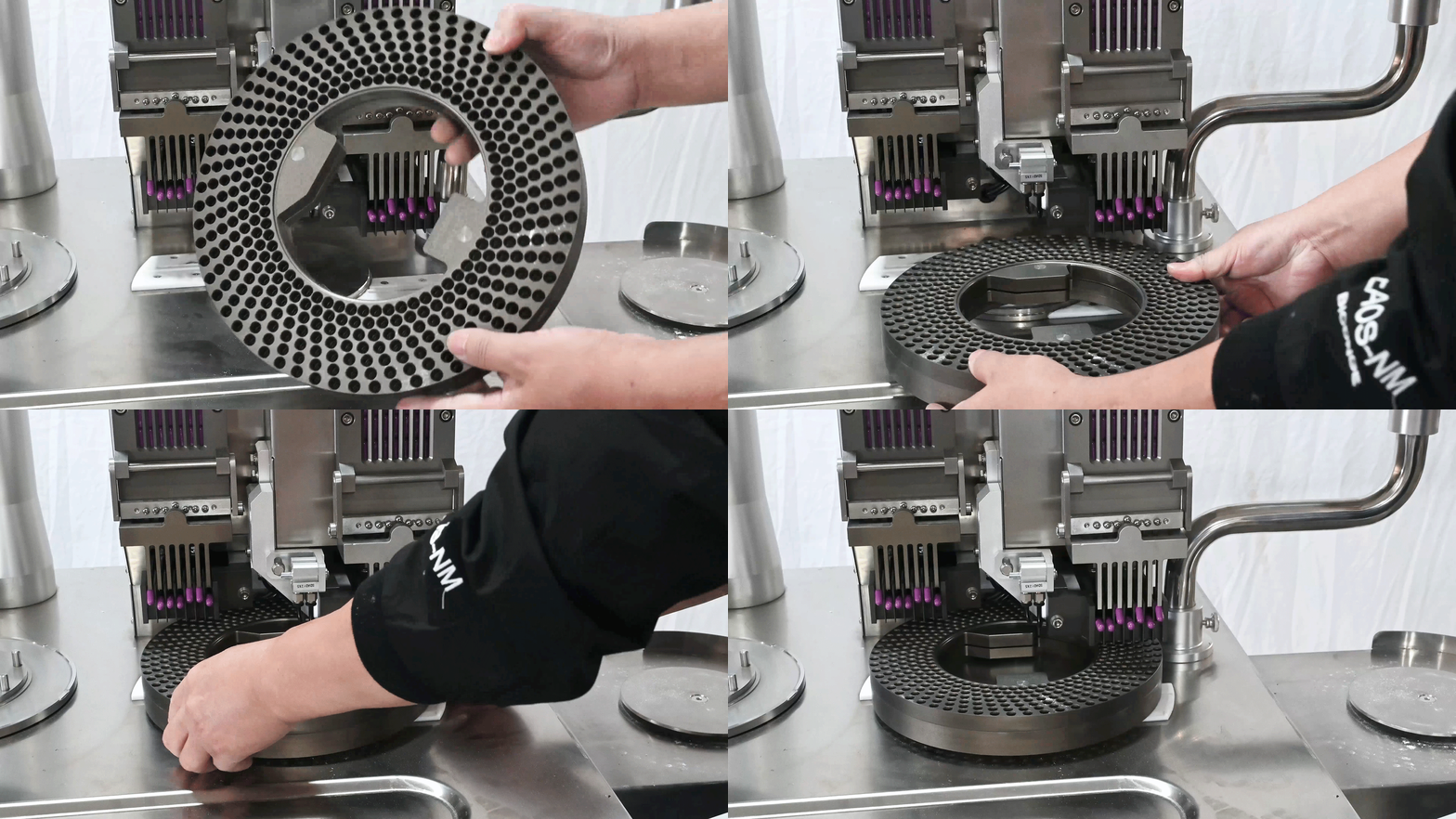
Insert the capsule tray into its designated position. Keep in mind that the capsules sit flat and lock into place.
If the tray is uneven, it can cause capsule misalignment, which leads to poor filling and sealing later. This step sets the foundation for the entire cycle.
Step 7: Reset Equipment and Begin Filling Capsules
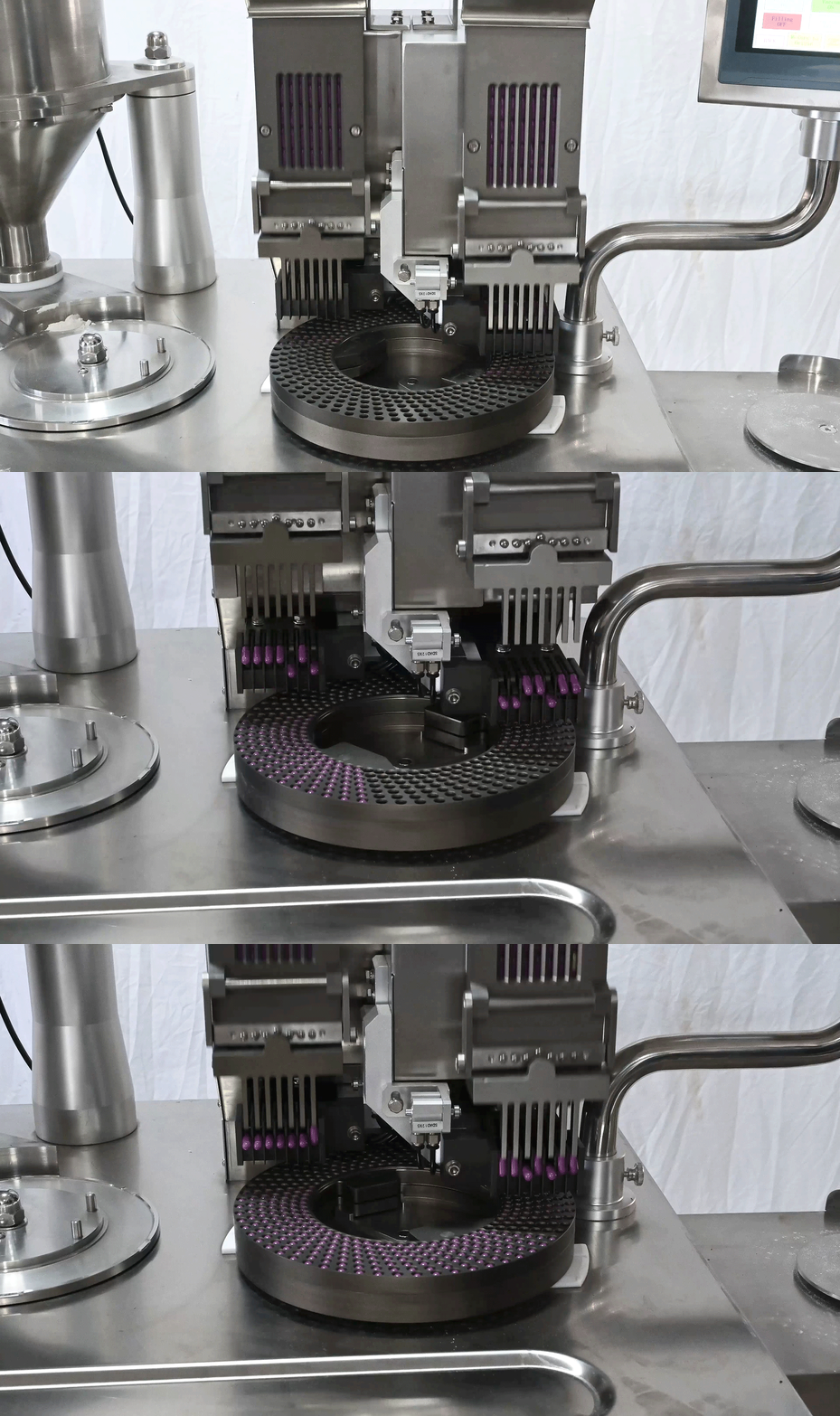
Use the control panel to reset the machine to its starting position. It ensures all moving parts return to their default alignment.
This step is the beginning of the capsule filling process. Skipping the reset can cause timing issues between the capsule separation and filling stages.
Step 8: Move Capsule Tray to Fill Powder
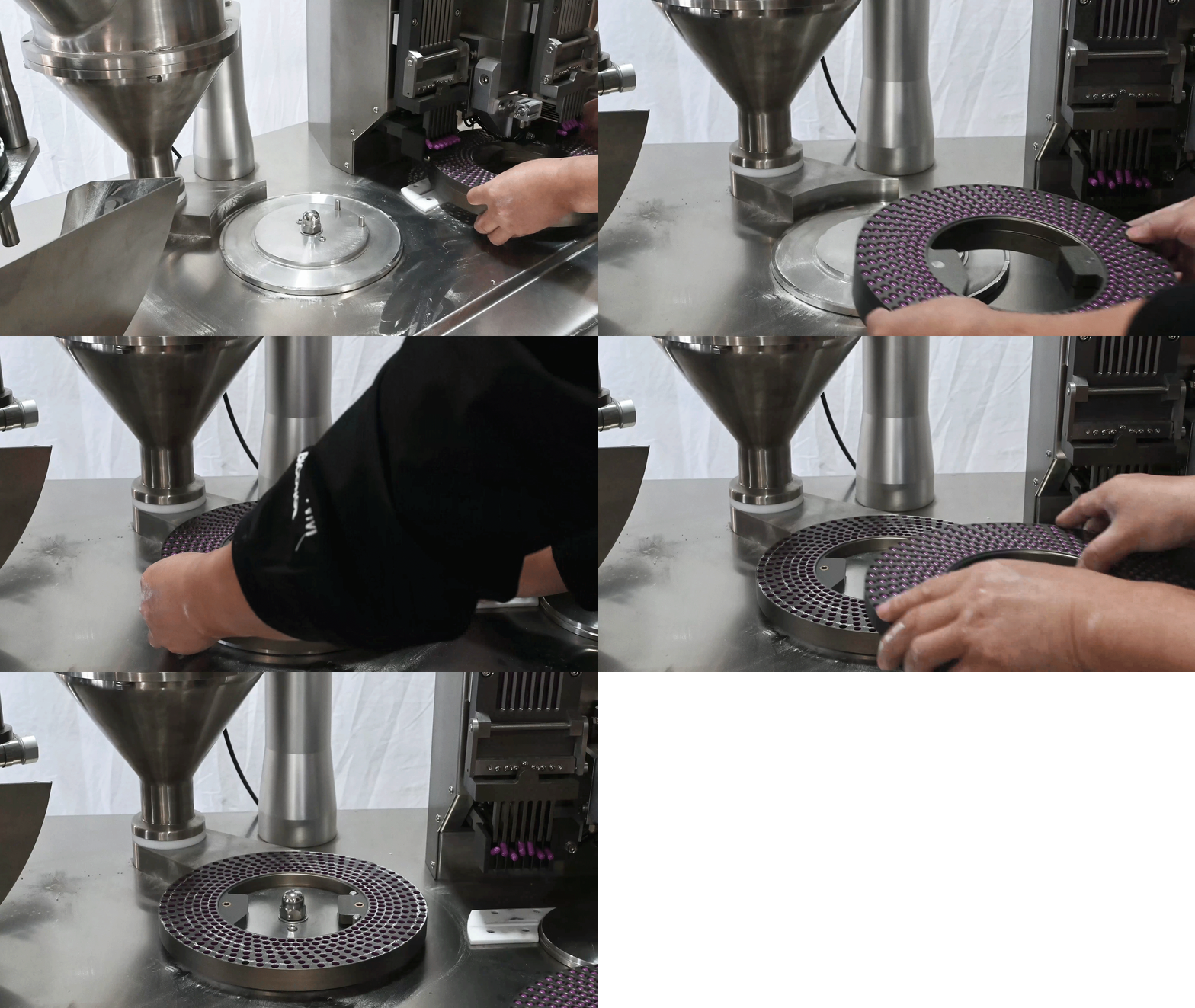
As we’re currently using a semi-automatic capsule filling machine, move the capsule tray to the powder filling station. If this were an automatic machine, the capsule tray would automatically move to the next filling station.
Be precise while aligning the capsule tray with the dosing system. Proper alignment here lets the powder enter the capsule bodies cleanly.
Step 9: Start Medicine Powder Filling
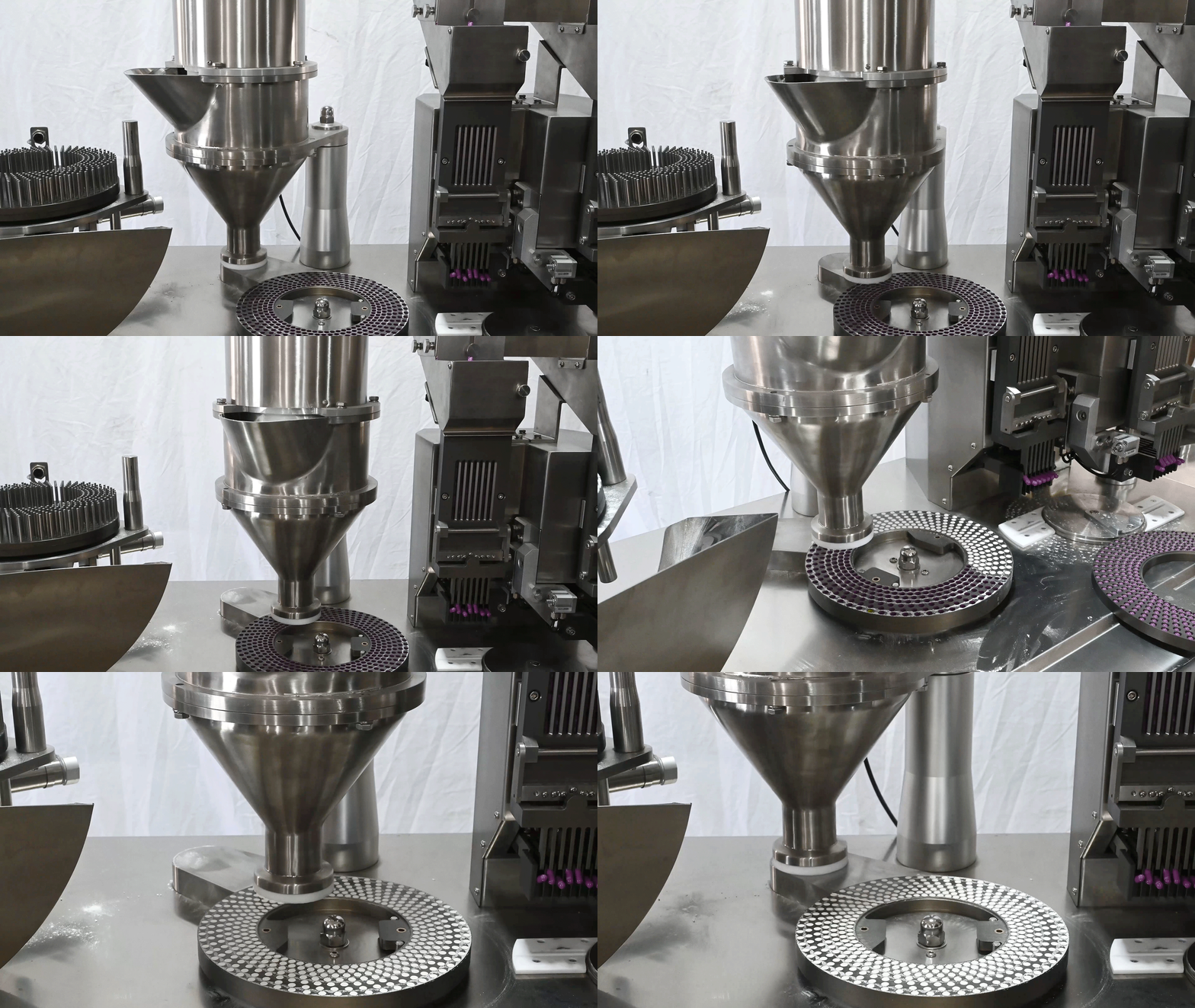
It’s time to activate the powder filling process. The dosing system will now dispense powder into each capsule body. Monitor the powder filling closely so that capsules are evenly spread inside the capsule bodies.
If you see uneven filling, stop the machine and adjust powder density or dosing depth. Consistency at this step determines product quality.
Step 10: Move Capsule Tray to Locking Station

Once filling is completed, move the capsule tray to the locking station. Then, bring in the other capsule tray loaded with capsule caps that’ll go over the filled capsule bodies.
Now, the capsule bodies and caps are ready for the sealing process. Don’t show haste, and confirm they align with each other before moving forward.
Step 11: Begin Capsule Sealing Process
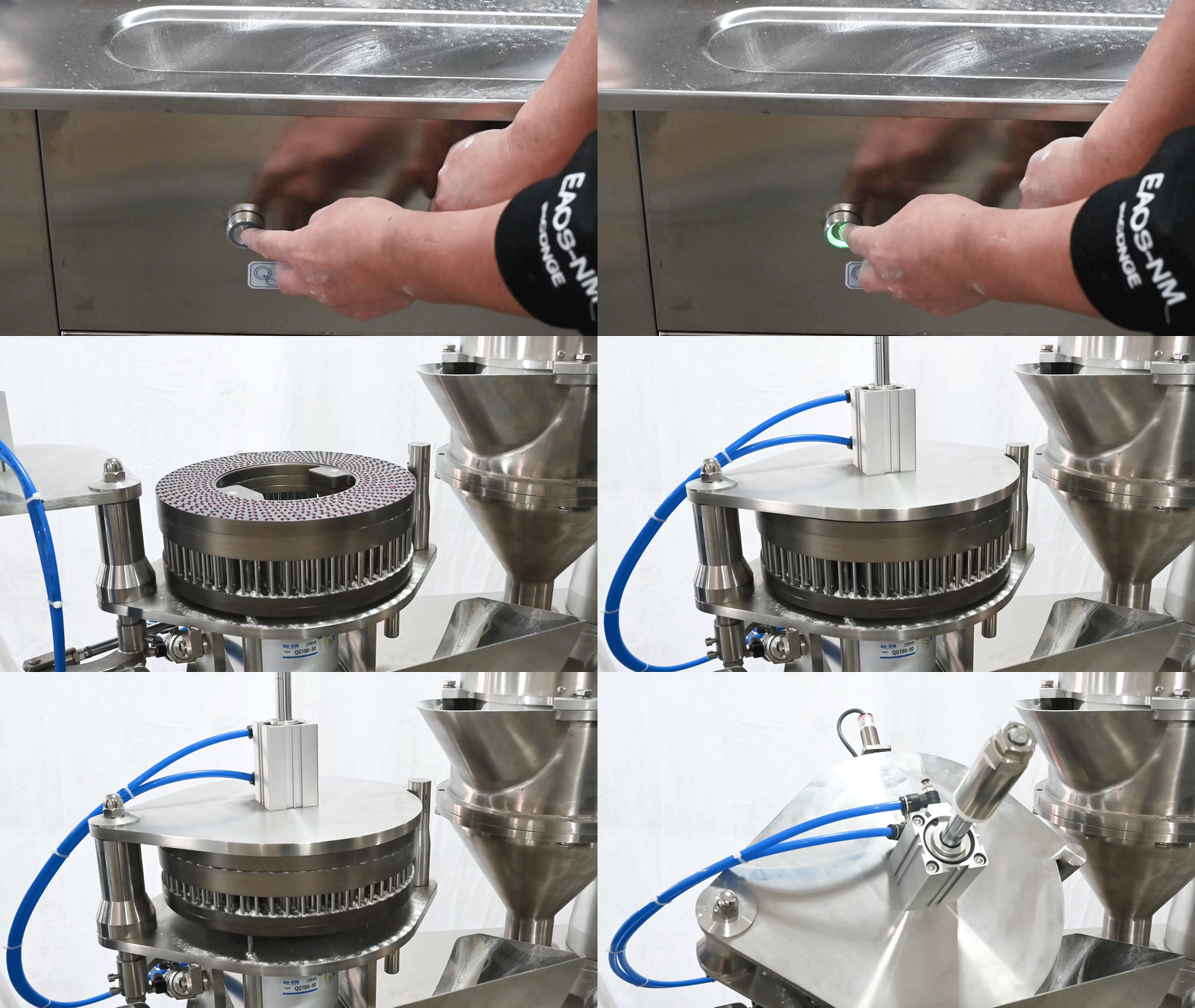
You’re almost done with the capsule filling process. In this step, start the sealing process to press caps and bodies together.
Apply steady pressure as designed by the machine. Do not force the mechanism and let it do its job. Proper sealing ensures capsules do not separate during handling, packaging, and transport.
Step 12: Complete Capsule Filling Process
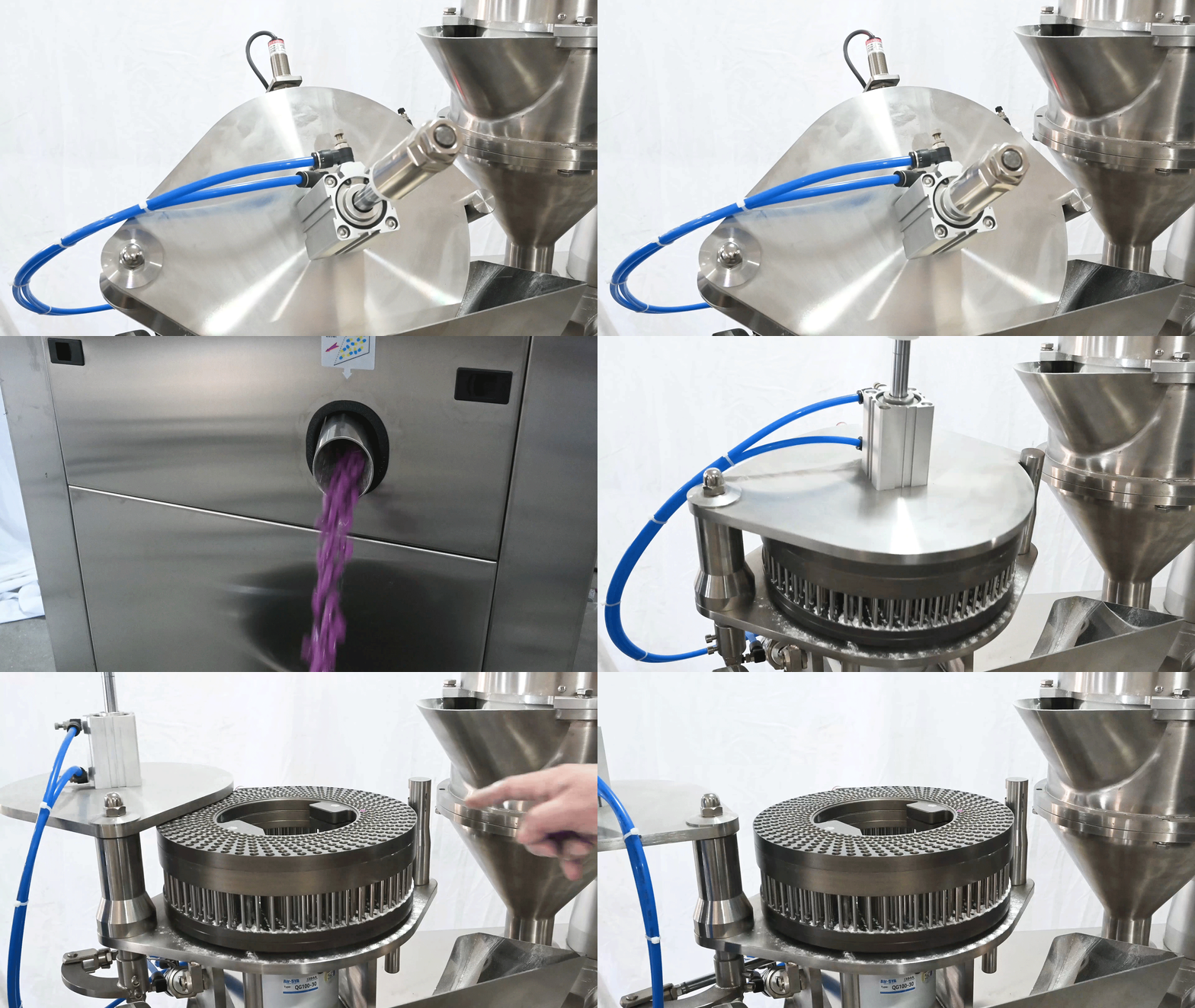
After sealing, the machine will release the finished capsules from the tray and into a collection tray. Moreover, as you’re doing half of the work manually, you might have to inspect a sample batch for proper fill level, secure locking, and visible defects.
If everything looks correct, the cycle is complete. Any observed issues require stopping the machine and making necessary adjustments before continuing production.
Working Principle of a Fully Automatic Capsule Filling Machine
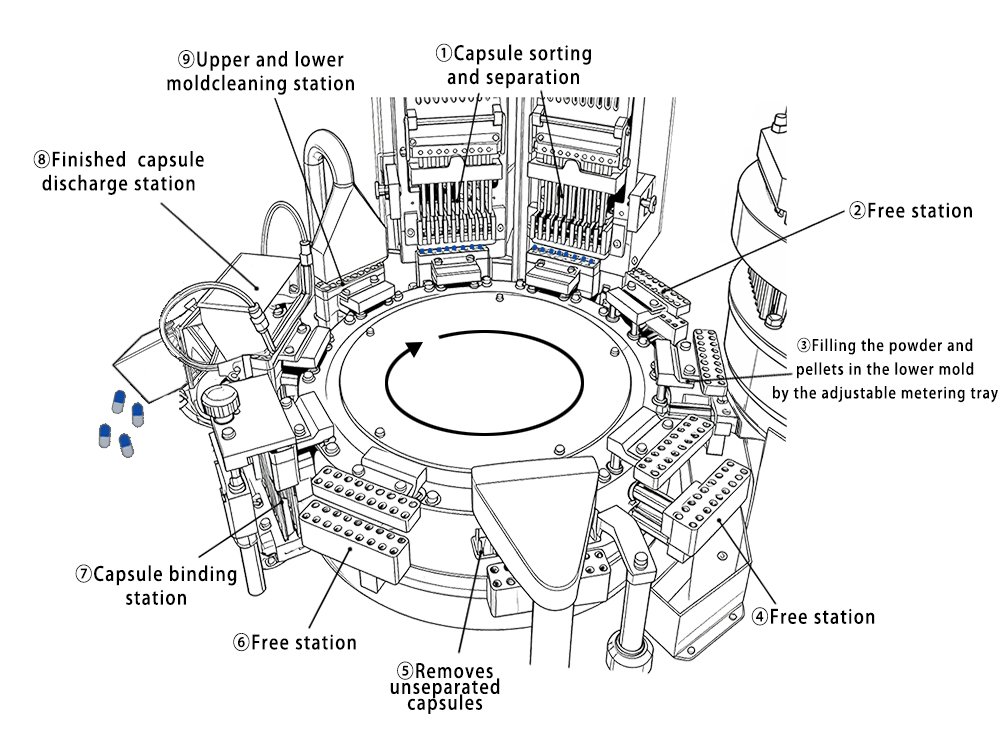
A fully automatic capsule filling machine operates a bit differently from a semi-automatic one, as everything works on auto mode. So, if you’re looking to get a fully automatic one, this working principle will help you operate it better.
Here is the NJP 1200 Automatic Capsule Filling Machine Installation tutorial
1. Capsule Sorting Station
At the beginning of the process, empty capsules are fed into the machine through the capsule hopper. The sorting station orients each capsule correctly and separates the cap from the capsule body.
Vacuum suction is typically used to pull the two halves apart. Only properly oriented capsules move forward, keeping filling accurate later in the process.
2. Powder and Pellet Filling Station
Once the capsule bodies are separated, they move to the filling station. The dosing system fills each capsule body with the correct amount of powder or pellets.
Depending on the machine design, this may use tamping pins, dosators, or auger systems. The goal is to achieve a consistent weight and uniform density across all capsules.
3. Removing Unseparated Capsules
Not all capsules separate perfectly. This station automatically detects capsules that failed to separate into the cap and body.
Those capsules are removed from the production line to prevent jams, misfilling, or sealing errors. This step protects the machine and maintains product quality.
4. Capsule Binding Station
After filling, capsule caps are brought back together with the filled bodies at the binding station. Controlled pressure is applied to lock the capsules securely.
This process guarantees the capsules are properly sealed and will not open during handling, transport, or packaging.
5. Finished Capsule Discharge Station
The finished capsules are released from the mold and discharged into a collection container.
At this stage, capsules should be fully closed, evenly filled, and ready for inspection or downstream processes such as polishing or packaging.
6. Upper and Lower Mold Cleaning Station
To keep the process clean and efficient, the machine continuously cleans the upper and lower capsule molds.
Air pressure or vacuum removes powder residue from capsule holes and surfaces. This prevents buildup, reduces cross-contamination, and offers smooth capsule movement throughout long production runs.
Semi-Automatic vs. Fully Automatic Capsule Filling Machine
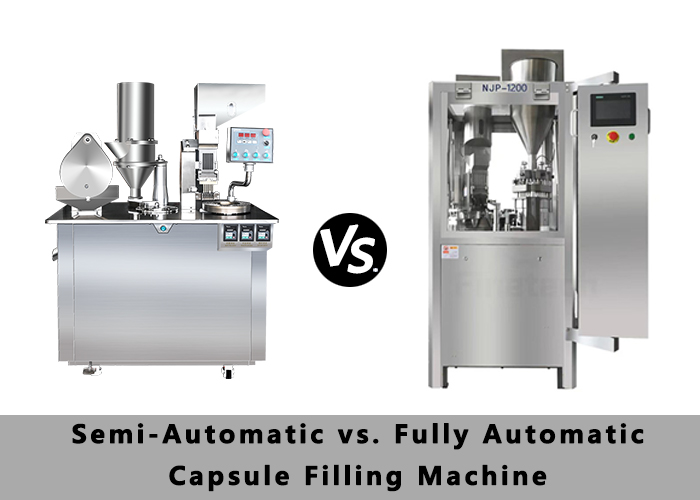
Semi-automatic capsule filling machines require operator involvement at specific stages and suit medium-scale production. Fully automatic capsule filling machines automate the entire workflow with minimal human intervention, supporting high-volume manufacturing.
Here are the key differences between the two:
| Features | Semi-Automatic | Fully Automatic |
| Production Speed | Moderate output, suitable for small to mid-scale batches | High-speed output for large-scale production |
| Labor Requirement | Requires manual loading and monitoring | Minimal operator involvement |
| Automation Level | Partial automation | Full automation |
| Capsule Handling | Manual or assisted loading | Fully automated capsule handling |
| Flexibility | Easier to switch capsule sizes | Changeovers require more setup |
| Cost | Lower initial investment | Higher upfront cost |
| Best For | Small manufacturers, labs, and growing businesses | Large pharmaceutical and nutraceutical plants |
Common Operational Issues and Troubleshooting
Even with modern capsule filling machines, operational issues can still occur. Most problems are not caused by the semi or fully automatic machine failure, but by setup errors, material issues, or skipped checks.
Here are the issues you should be aware of:
1. Capsule Misalignment Problems
Capsule misalignment usually happens when capsule shells are not fed or oriented correctly. Worn guide parts, incorrect capsule size settings, or weak vacuum pressure can cause this.
These misaligned capsules may bend, jam the turret, or fail to separate properly. Always confirm capsule size settings before starting, and inspect the capsule hopper and sorting station regularly.
2. Inconsistent Fill Weight
Inconsistent fill weight is one of the most common quality issues. It often comes from uneven powder flow, incorrect dosing depth, or inconsistent tamping pressure.
Powder characteristics also play a significant role. Fine or sticky powders tend to flow poorly and increase weight variation. In regulated production environments, even minor deviations in capsule weight can result in batch rejection. To minimize this risk, keep the powder dry and perform frequent weight checks throughout the production run.
3. Capsule Locking Failures
Capsule locking failures occur when caps and bodies do not seal properly. Overfilled capsules, worn locking mechanisms, or poor alignment at the binding station are typical causes.
Capsules that are not fully locked can open during handling or packaging. Reducing fill volume slightly and checking sealing pressure can resolve this issue quickly.
4. Powder Leakage or Dusting
Powder leakage or dusting usually points to excessive vibration, poor sealing, or fine powder escaping during transfer. This not only causes material loss but also increases cleaning time and contamination risk.
The best ways to avoid this and keep the machine clean are:
- Ensuring proper gasket condition.
- Reducing unnecessary vibration.
- Using dust extraction systems.
Time to Upgrade to the Best Capsule Filling Machines
Understanding machine operation and quality assurance creates confidence in advancing production capabilities. The next logical step is choosing equipment known for performance and durability.
Finetech delivers a complete lineup of capsule filling machines engineered for pharmaceutical, herbal, and food applications. Each model combines reliability, flexibility, and precise control to suit production demands.
Contact Finetech for expert guidance and optimal equipment choices.
Copyright Notice:
You may not reproduce, modify, publish, display, transmit, or in any way exploit any content on this website, or use such content to construct any kind of database without prior express written approval by Finetech Group. For permission to use the content, please contact: info@pharmamachinecn.com
Disclaimer:
The information contained in this article is for general information purposes only. The Company does not guarantee the accuracy, relevance timeliness or completeness of any information, and the Company assumes no responsibility for errors or omission in the content of this article.


1 thought on “How to Use Capsule Filling Machine: Semi to Fully Automatic”
Good day, I just have a question about the simi automatic capsule lock. The EGC or capsule does not lock. What should I adjust to lock it? Thank you. I hope you can answer my question.