 Skip to content
  English
  Russian
  Turkish
  Spanish
  French
  German
  Japanese
Manual Capsule Filling Machine
Finetech supplies 100, 200, 300, and 400 hole capsule fillers, available in capsule sizes 000#, 00#, 0#, 1#, 2#, 3#, and 4#.
Discover Fintech’s Hand-Operated Capsule Filling Machine Series
Check out Fintech capsule filling trays. Applied for home, lab and hospital use, available for filling all capsule sizes.
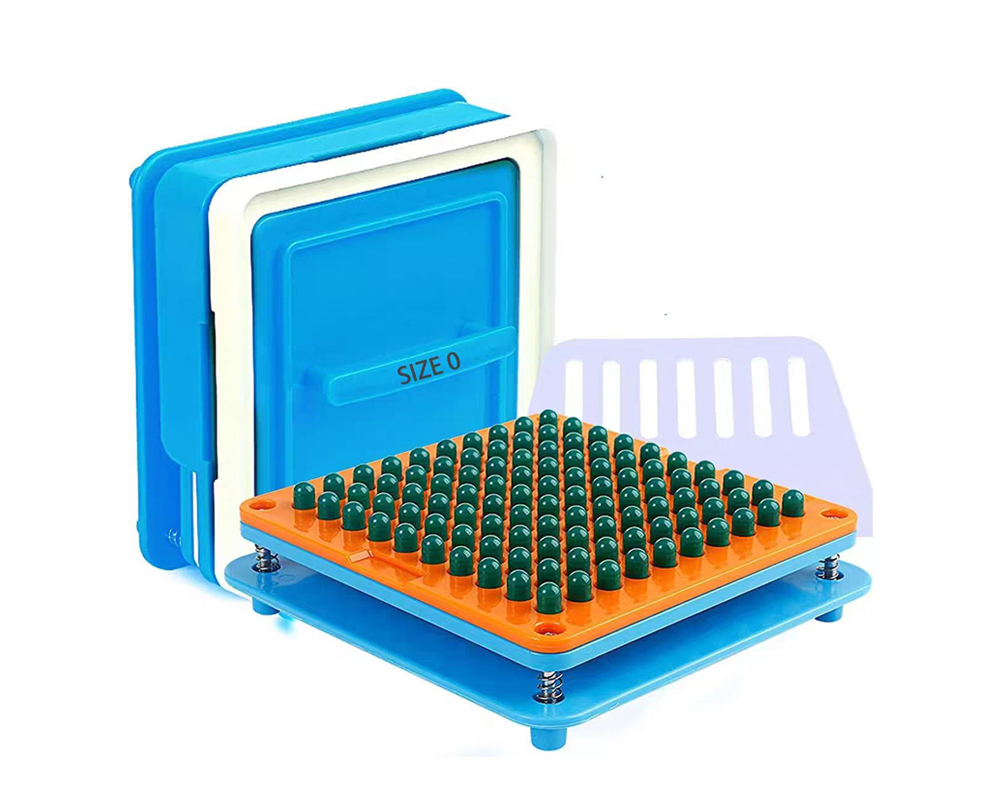
Material: ABS Blue
Holes: 100 holes
Weight: 0.95kg
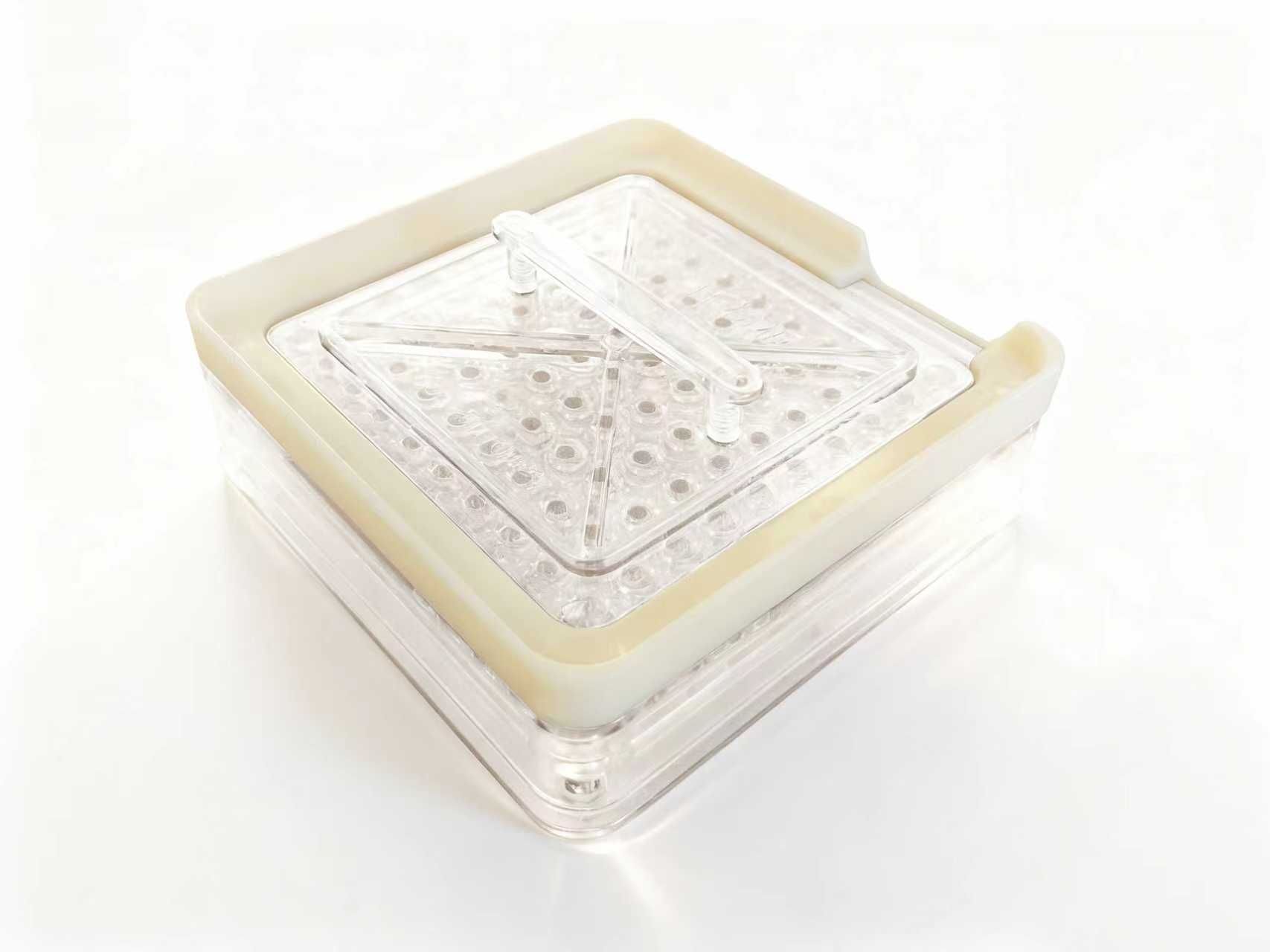
Highly customizable.
100-400 holes available.
Acrylic material extends shelf life.
Specification
| Model | 100 Holes | 200 Holes | 300 Holes | 400 Holes |
|---|---|---|---|---|
| Capacity | 100 pcs/time | 200 pcs/time | 300 pcs/time | 400 pcs/time |
| Capsule Size | 000#-5# Hard capsule | 000#-5# Hard capsule | 000#-5# Hard capsule | 000#-5# Hard capsule |
| Parts | 7 Parts | 7 Parts | 8 Parts | 9 Parts |
| Dimensions | 210mm X 210mm X 220mm | 285mm X 190.5 mm X 100 mm | 405mm X 300mm X 455mm | 350mm X 260mm X 450mm |
| Net Weight | 2.5KG | 2.8KG | 3.1KG | 5KG |
Capsule Filler Applications
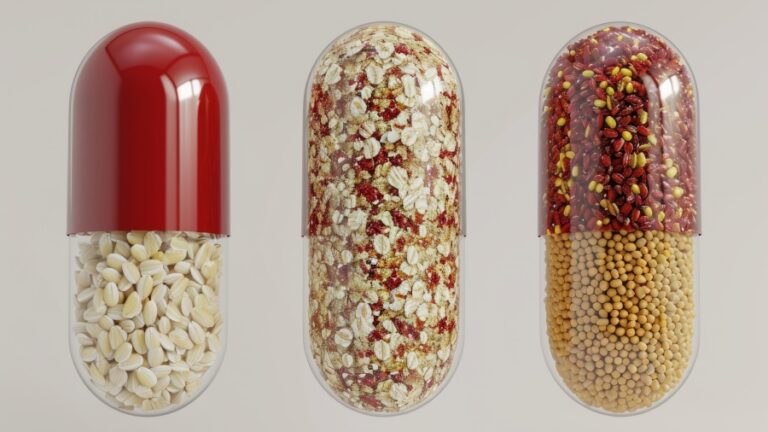
Our manual capsule filling machines are versatile and used in multiple industries, including pharmaceutical, food, and herbal.


More Details About Finetech Manual Capsule Filler
Key Parts of Manual Capsule Filler
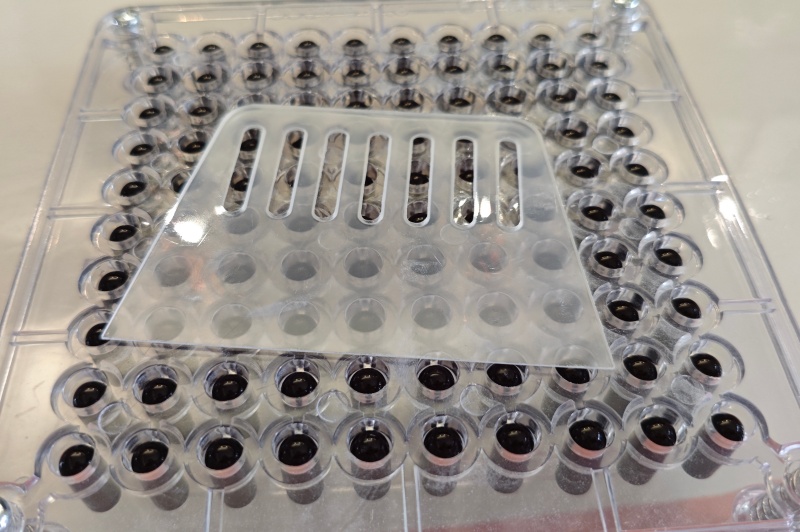
pushing excess powder off the top of the turret and ensuring all holes are filled level.
Scraper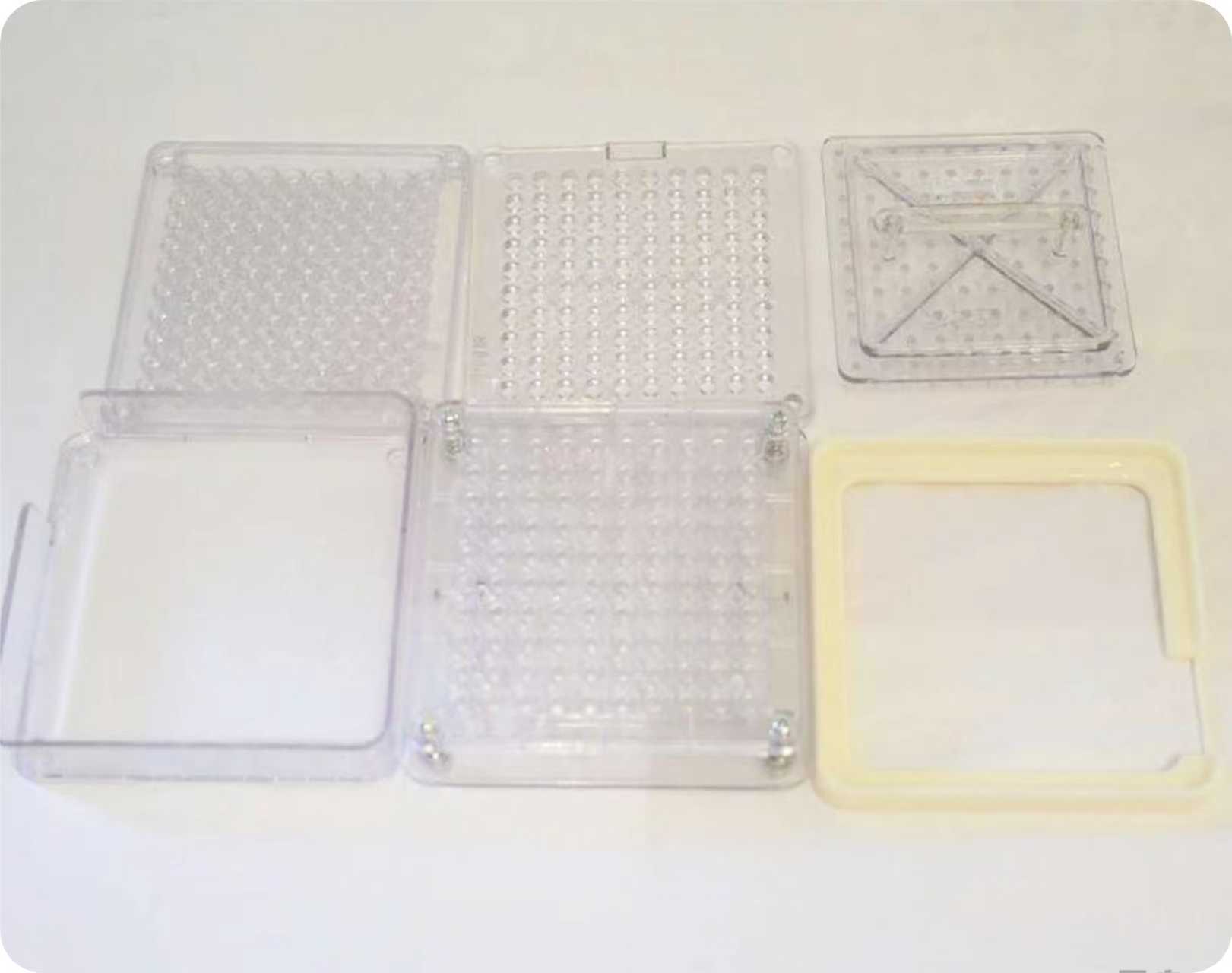
About Frame, Capping, Middle, Spill Guard and Body Plates.
Base PlatesHow Do Manual Capsule Filler Work
A manual capsule filler works by:
- Step 1: Sorting capsules into their caps and bodies.
- Step 2: Holding them in precise, fixed positions within two plates.
- Step 3: Filling the bodies volumetrically by scraping powder across them.
- Step 4: Compressing the powder with a tamper plate to ensure dose uniformity.
- Step 5: Pressing the bodies and caps back together using a pin plate.
- Step 6: Releasing the entire batch of finished, filled capsules at once.
FAQ
- Small-scale supplement manufacturers.
- Compounding pharmacies.
- Herbalists and naturopaths.
- Research laboratories.
- Small business owners creating their own product lines.
- Home users who need to encapsulate large quantities of powders.
Most models are designed to hold specific sizes. Common sizes are 000, 00, 0, 1, 2, 3, and 4. Many machines come with a set of interchangeable plates to handle different capsule sizes. You must ensure you buy the correct plates for your capsule size.
Free-flowing: Like powdered herbs, amino acids, or fine minerals.
Powders that are sticky, oily, clumpy, or very fibrous are more difficult to work with and can lead to clogging and inconsistent fill weights.
Yes, but it requires extra preparation. You must grind the powder to a very fine consistency using a coffee grinder or mortar and pestle. You may also need to add a small amount of a flow agent (like rice flour or silica) to improve flow, but this dilutes your active ingredient.
Accuracy is volumetric, not weighted. The dose is determined by the size of the capsule and how tightly you tamp the powder.
With practice and consistent tamping pressure, you can achieve very consistent results (typically within a 5-10% weight variance).
For critical applications, you must check the weight of finished capsules on a scale and adjust your tamping technique accordingly.
Speed depends on the user and the model. A skilled operator using a 100-hole machine can typically complete 3-5 batches (300-500 capsules) per hour, including setup, filling, and cleanup.
Disassemble all the plates.
Brush away all powder residue with a small, dry brush.
Wipe with a dry, lint-free cloth.
For a deeper clean, you can wipe components with a cloth slightly dampened with food-grade alcohol or a mild soapy solution. Air dry completely before reassembling to prevent rust (on metal parts) or powder clumping.
Never immerse the entire unit in water, especially if it has springs or other mechanical parts.
Key factors include:
Number of Holes: (24, 50, 100, 200). Choose based on your production volume.
Build Quality: Metal (aluminum/stainless) is more durable than plastic.
Capsule Size Compatibility: Ensure it comes with or supports plates for the capsule size you use.
Included Accessories: Many kits come with a tamper, cleaning brush, and capsule separator tray, which are essential.
Manual: Requires human operation for every step (scraping, tamping, pressing). It’s mechanical, affordable, and perfect for small batches.
Automatic/Semi-Automatic: Uses electric motors to perform some (semi-auto) or all (full-auto) of the steps like filling, tamping, and joining. They are much faster but also significantly more expensive and suited for high-volume commercial production.
Designed to hold the capsule caps.
Cap Plate