Skip to content
  English
  Russian
  Turkish
  Spanish
  French
  German
  Japanese
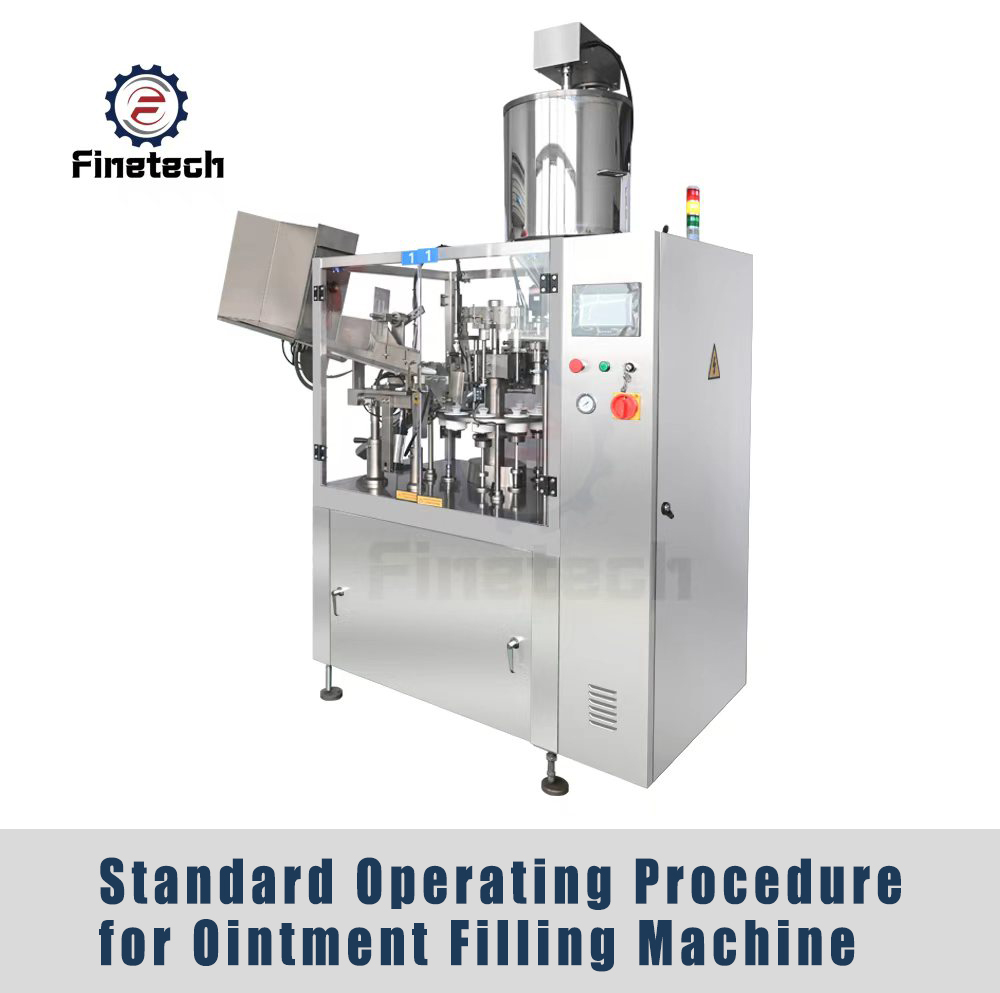
1.0 OBJECTIVE:
This document lays out how to operate the Ointment Filling Machine properly. The goal is making sure we get accurate fills every time, keep things consistent batch to batch, and avoid any contamination of the product. We’re talking ointments, creams, gels – basically any semi-solid that needs to go into a tube or container. Everything here follows cGMP requirements.
2.0 SCOPE:
This SOP applies to our Ointment Filling Machine in the production department. We use it for filling semi-solids like ointments, creams, gels, and pastes. The machine handles aluminum tubes, laminated tubes, and plastic containers. What’s covered here: putting the machine together, running it, doing in-process checks, and wrapping things up after a batch.
3.0 RESPONSIBILITY:
The Operator and Production Chemist handle day-to-day operation. They run the equipment following these steps and make sure everything gets written down in the right logs.
4.0 ACCOUNTABILITY:
Production Manager owns this process. They need to make sure everyone working the machine has been trained and that we’re following all the standards.
5.0 PROCEDURE:
5.1 First thing – check that the area and equipment are clean. Look for the “CLEANED” label on the machine. The whole area should be clear of any leftover product or debris from previous batches.
5.2 Log everything in the Equipment Usage Log. Date, time, what product you’re running, batch number, your name.
5.3 Take off the “CLEANED” label. Put up an “UNDER PROCESS” label with the current batch info.
5.4 Get your Line Clearance Certificate from IPQA before you start anything.
5.5 Precautions:
5.5.1 Don’t run the machine on auto unless every single guard is closed properly. That means front panels, rear covers, hopper lids – all of them.
5.5.2 Never bypass the safety switches or interlocks. No exceptions.
5.5.3 Don’t modify the machine in any way without getting approval from Engineering first. No additions, no deletions, no conversions.
5.5.4 If the machine is running, keep your hands off. No repairs, no adjustments, no cleaning, no lubrication. Stop everything and cut the power first.
5.5.5 When you’re installing, assembling, taking apart, maintaining, or cleaning – the main switch stays OFF.
5.5.6 Leave the safety devices alone. Emergency stops, door interlocks, overload protection – don’t deactivate any of them.
5.5.7 Wipe down surfaces and control panels with a soft dry cloth. Keep water and solvents away from anything electrical.
5.5.8 Make sure the hopper is sealed up tight so nothing gets contaminated during filling. Check your gaskets before every batch.
5.5.9 Once a week, run through these safety checks and write them up in the preventive maintenance log:
5.5.9.1 Test that you can kill the main power using the switch on the control panel.
5.5.9.2 Hit the emergency button and confirm the machine stops dead.
5.5.9.3 Open a safety door while running – machine should stop on its own.
5.5.9.4 Check that the hopper level sensor works. You don’t want the pump running dry – that’ll wreck the dosing mechanism.
5.6 Assembling:
5.6.1 Product Hopper Assembly:
5.6.1.1 The hopper needs to be clean and bone dry. No residue from whatever you ran last time.
5.6.1.2 Mount the hopper on the frame and lock it down with the clamps. Make sure it’s seated right.
5.6.1.3 If your product needs to stay warm, hook up the heating jacket to the temperature controller.
5.6.1.4 Check all gaskets and seals. They need to be in the right spots or you’ll have product leaking everywhere.
5.6.2 Filling Nozzle Assembly:
5.6.2.1 Pick your nozzle based on the tube opening size and how thick the product is.
5.6.2.2 Put the nozzle in and tighten it down with the right tools. Don’t go crazy – you’ll strip the threads.
5.6.2.3 Set the nozzle height so it goes into the tube at the right depth when filling.
5.6.2.4 Line up the nozzle with the tube holder. If it’s off-center you’ll get spillage and uneven fills.
5.6.3 Tube Holder and Transport System:
5.6.3.1 Grab the right tube holders for whatever size tubes you’re filling today.
5.6.3.2 Lock all the holders onto the turret or conveyor. They shouldn’t be loose at all.
5.6.3.3 Check that the orientation system is working – tubes need to come in open-end-up.
5.6.3.4 Turn the transport by hand and make sure everything moves smoothly before you go automatic.
5.6.4 Sealing/Crimping Assembly:
5.6.4.1 Install the right crimping jaws or sealing dies. Aluminum tubes and laminated tubes need different setups.
5.6.4.2 Set your crimping or sealing pressure based on what the tube manufacturer says.
5.6.4.3 Running laminated tubes? Set the hot-air sealer somewhere between 350°C and 450°C, depending on the tube specs.
5.6.4.4 Get the batch coding device lined up so it prints on the sealed end where it should.
5.6.4.5 Double-check that the coding shows the right batch number, mfg date, and expiry.
5.7 Operation:
5.7.1 Turn on the main power. Give the control system a minute to boot up all the way.
5.7.2 Before going to auto or manual, run one full cycle on inch/jog mode. This lets you verify everything is assembled right and aligned properly.
5.7.3 Load your bulk ointment into the hopper. Take your time and don’t trap any air bubbles in there – they’ll throw off your fill weights.
5.7.4 Dial in the fill volume on the control panel per the batch record. You want to stay within ±2% of target weight.
5.7.5 On the main Control Panel screen, punch in these parameters based on your batch requirements:
5.7.5.1 Fill Volume: Adjust the dosing cylinder stroke or use the servo controls to hit your target fill weight.
5.7.5.2 Machine Speed: Pick your tubes-per-minute based on how viscous the product is. Usually somewhere from 30 to 80 per minute.
5.7.5.3 Sealing Temperature: Only for laminated tubes. Hot-air sealing runs 350°C to 450°C typically.
5.7.5.4 Crimping Pressure: For aluminum tubes, dial this in until you get good fold formation and a tight seal.
5.7.5.5 Batch Counter: Zero it out and set your batch quantity limit per the BMR.
5.7.6 Load empty tubes into the magazine. Make sure they’re oriented correctly and check for any damaged ones.
5.7.7 Hit START for automatic operation. Here’s what the machine does on its own:
5.7.7.1 Feeds a tube from the magazine into the holder.
5.7.7.2 Orients and centers the tube for filling.
5.7.7.3 Drops the nozzle in and dispenses product.
5.7.7.4 Pulls the nozzle back up (bottom-up fill keeps air out).
5.7.7.5 Folds or seals the tube end and crimps it.
5.7.7.6 Stamps the batch code and date on there.
5.7.7.7 Kicks the filled tube out to the conveyor or collection tray.
5.7.8 Pull samples right away for in-process QC. Check fill weights, test seal integrity, make sure the batch codes are readable.
5.7.9 Keep watching the operation and log your critical parameters at the intervals specified in the batch record.
5.8 In-Process Checks:
5.8.1 Weigh tubes at the start, middle, and end of your run. Also hit whatever interval the batch record specifies.
5.8.2 Look at each seal visually and do a squeeze test. Anything that leaks gets rejected and documented.
5.8.3 Check that batch codes are legible, accurate, and in the right position every time you sample.
5.8.4 Inspect for physical defects – dents, scratches, bad crimps, anything that looks wrong.
5.8.5 Write up all your in-process results in the batch record. Date, time, initials.
5.9 When the batch is done, stop the machine and get the leftover product out of the hopper. Handle the residual per whatever procedure applies.
5.10 Slap a “TO BE CLEANED” label on the machine with the product name and batch number.
5.11 Clean the machine following the Equipment Cleaning SOP.
5.12 RECORDS: Equipment Usage Log, Batch Production Record, In-Process Check Record, Cleaning Record.
6.0 ABBREVIATIONS:
6.1 SOP: Standard Operating Procedure
6.2 IPQA: In Process Quality Assurance
6.3 BMR: Batch Manufacturing Record
6.4 cGMP: Current Good Manufacturing Practice