Skip to content
  English
  Russian
  Turkish
  Spanish
  French
  German
  Japanese
Granulation is a vital process for high-quality drug production. This process involves the transformation of fine powders into free-flowing granules. Various types of granulator machine units are designed to support this procedure.
This step improves the flowability of dosage forms and makes them easy to compress. The National Library of Medicine reports that granules enhance the uniformity of API, reduce dust, and improve product appearance.
This blog offers you a complete guide about the role of different technologies in the pharmaceutical industry.
Common Types of Granulator Machine Units Used For Drug Production
In the pharmaceutical industry, precision and efficiency are paramount. Selecting suitable equipment helps to attain the desired granule characteristics. Below is a detailed overview of the most commonly used types of granulator machine systems.
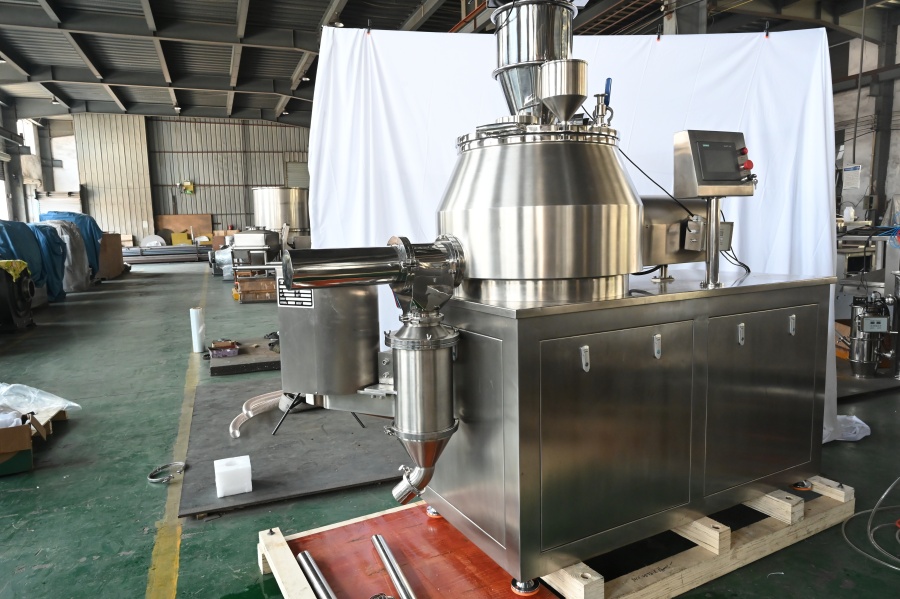
High-Shear Mixer Granulator
High-shear mixer granulators use mechanical force for blending powders. With a rapidly rotating impeller and chopper, they produce dense granules with good compactibility. The high shear forces support the wet granulation of robust materials requiring efficiency.
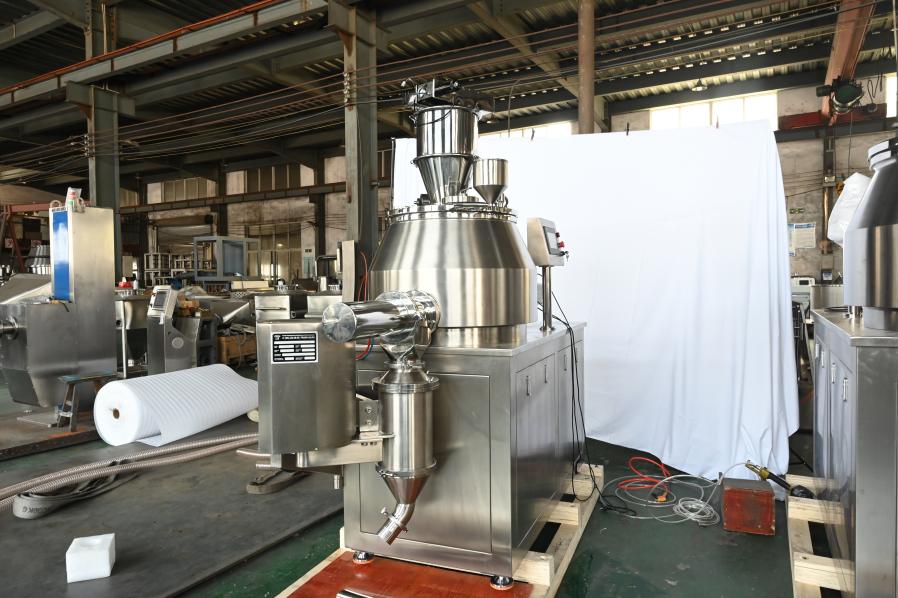
Studies reveal that high-shear technology alleviates API segregation and facilitates the desired content uniformity within granules.
Key Features & Uses:
- Rapid mixing and granulation at high speed.
- Uniform particle size distribution.
- High production efficiency.
- Integrated chopper for controlling lump size.
- Perfect for large-scale formulations requiring consistency.
Fluid Bed Granulator
Fluid bed granulators operate by suspending powder particles in a stream of hot air. Then, a binder solution is sprayed onto them. Granules are quickly formed as the liquid evaporates during the drying process.
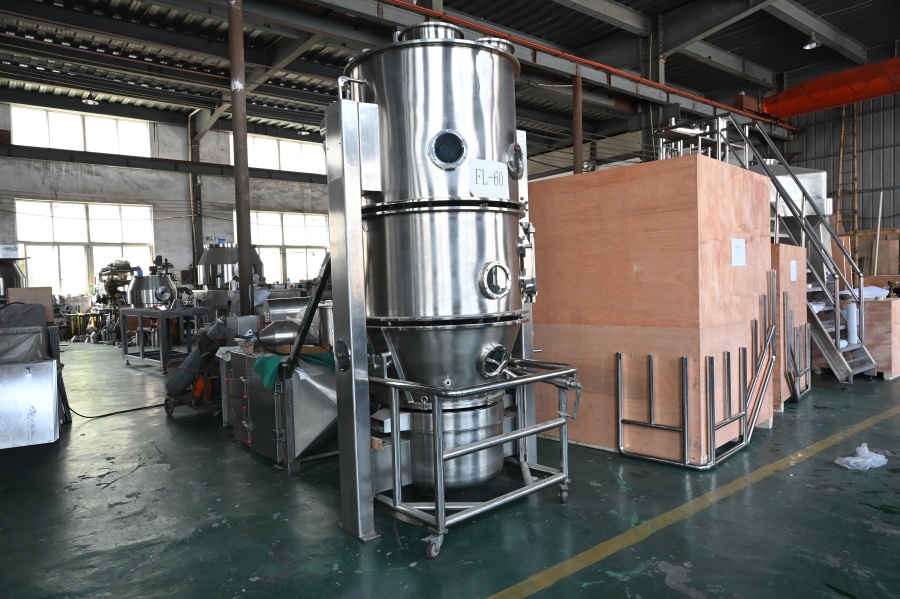
The fluidization allows each particle to be uniformly coated. It makes this unit one of the versatile types of granulator machine setups in pharmaceutical manufacturing.
Key Features & Uses:
- Adjustable granule size and density.
- Excellent flow properties.
- Uniform granule quality.
- Energy-efficient operation.
- Best for forming free-flowing granules.
Oscillating Granulator
The oscillating granulator integrates a horizontal rotor carrying blades. When particles pass through the mesh, the blades move back and forth to break down lumps. By adjusting the amplitude and vibration frequency, you can ensure a consistent particle size distribution.
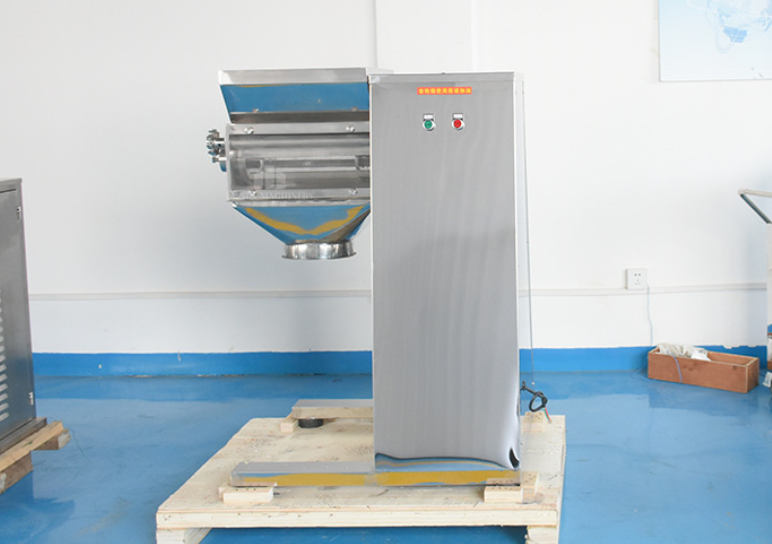
This precision makes oscillating granulators stand out in different types of granulator machine units. You can also control the rotation speed based on your material requirements.
Key Features & Uses:
- Adjustable screen for precise granule size.
- Simple Operation and Ease of Use.
- Requires Less Maintenance due to minimal moving parts.
- Used for moisture-sensitive powders and dry granulation.
Roller Compactor Machine
These machines contain two counter-rotating rollers to perform dry granulation. Without using liquids, they convert powdery particles to granules. The process involves pressing powders between two ribbon sheets. These are then milled to the desired granule size.
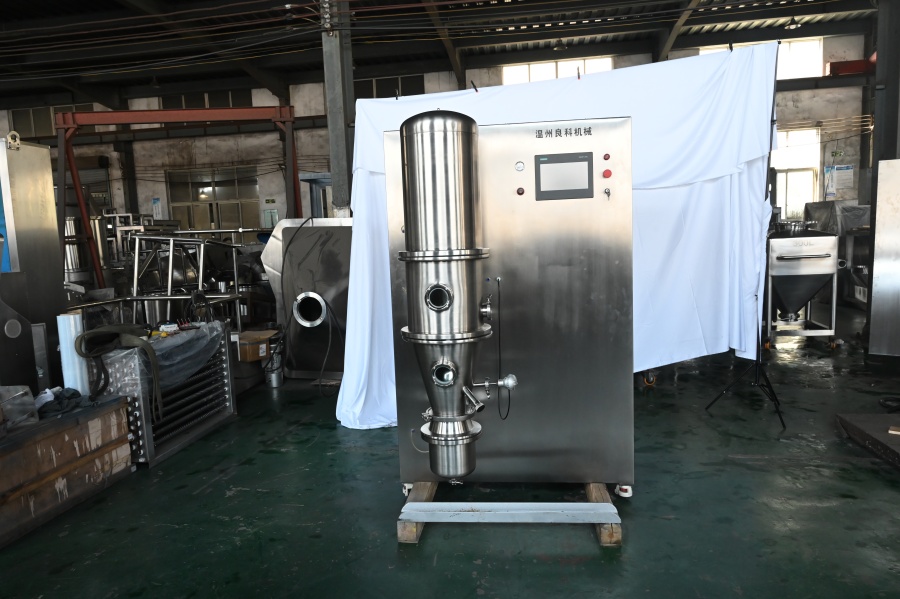
Features & Uses:
- Suitable for moisture and heat-sensitive powders
- Supports dry granulation process without liquid binders
- Adjustable roll pressure for desired density
- High throughput and continuous operation
Drum Granulator
This equipment contains a large rotating drum with a series of blades. Here, the powders and binder solutions are tumbled together. As the drum revolves, the baffles cut the materials into smaller particles. Then the resulting content sticks together to form uniform granules.
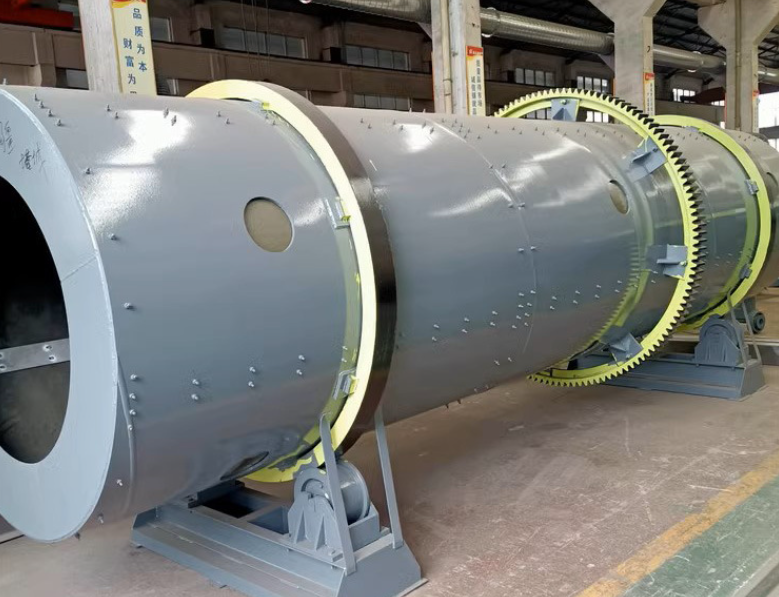
Moreover, by controlling the drum speed, tilt, and binder addition, you can achieve a homogeneous formulation. They can deal with a variety of materials and support bulk granulation.
Features & Uses:
- High capacity for large-scale production.
- Produce uniform granules with simple operation.
- Robust design for continuous manufacturing.
Planetary Mixer Granulator
Planetary mixer granulators feature a unique motion for granule formation. It allows the powder mixing as the blades rotate on their own axis. In addition, these blades also revolve around the bowl, similar to the motion of planets. This dual movement ensures thorough mixing of powders with binders. It results in producing uniform wet granules even for sticky or cohesive formulations.
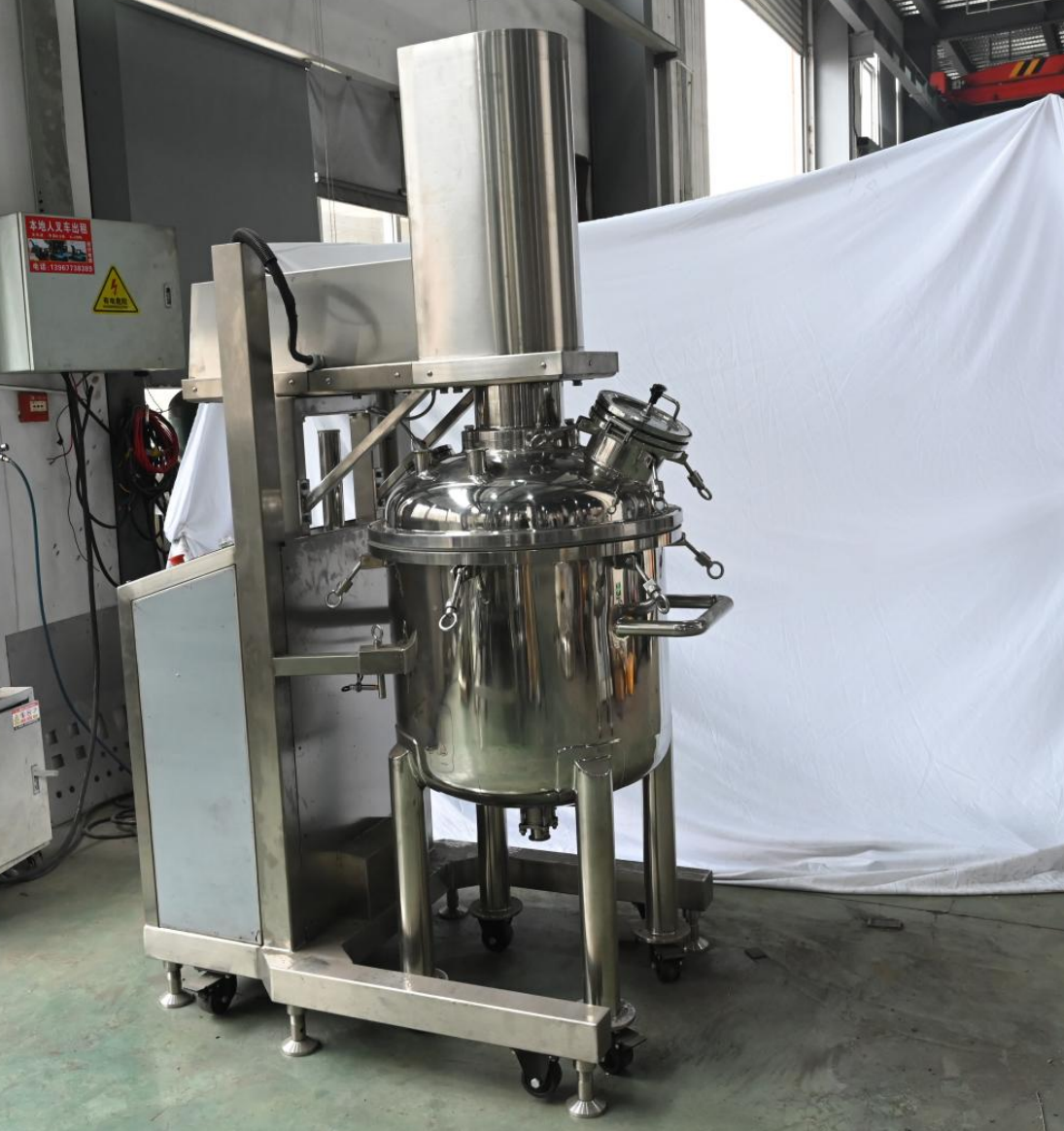
Features & Uses:
- Homogeneous granule formation.
- Easy Cleaning.
- Ideal for small and large batches.
- Optimize quality by allowing operators to adjust the rotating time or speed.
Pin Mixer Granulator
For fast action, the pin mixer granulator is a highly effective equipment. This device operates using high-speed pins that create intense shear. These impact forces break agglomerates and promote rapid wet granule formation.
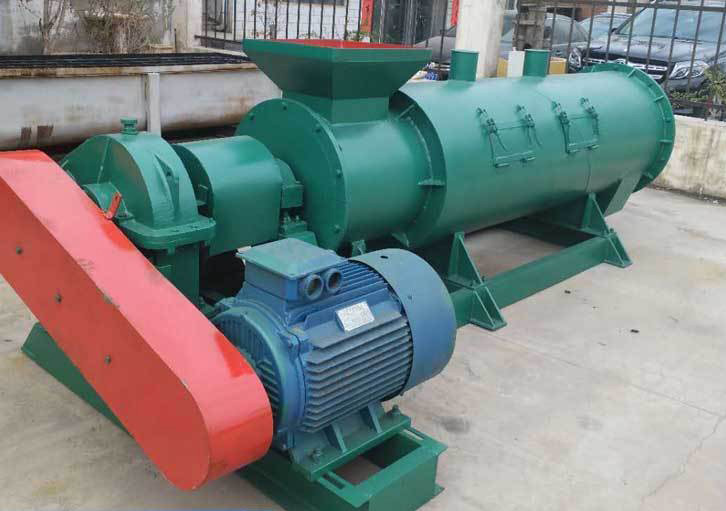
They are particularly suited for formulations that require fast processing. Also, this process allows for precise control over granule size and uniformity.
Features & Uses
- Ideal for medium-scale production.
- Compact design facilities with space constraints.
- Handle a wide range of formulations, including sticky or cohesive particles.
- Time-efficient.
| Types of Granular Machine | Key Features | Primary Use |
| High-Shear Mixer Granulator | Rapid mixing, high production efficiency | Large-scale formulations, best for wet granulation |
| Fluid Bed Granulator | Flexible size control, consumes less power | Free-flowing granules |
| Oscillating Granulator | Uniform sizing, low maintenance | Moisture-sensitive drugs, dry granulation process |
| Roller Campactor Machine | Continuous operation, allows adjustable density | Heat-sensitive medicines |
| Drum Granulator | High capacity, uniform granule formation | Bulk granule production |
| Planetary Mixer Granulator | Homogenous granules, Easy cleaning | Accommodate sticky and cohesive powders, specialty tablets |
| Pin Mixer Granulator | Compact design, fast action | Medium scale manufacturing |
Factors to Consider Before Choosing Types of Granulator Machine
Before getting into the types of granulator machine units, some factors must be considered. It helps you choose the right technology for better results. Here is an overview:
- Type of Powder: Firstly, you need to examine the physical and chemical attributes of the powder. For that, analyze moisture sensitivity, cohesiveness, particle size, and flowability. These elements help you determine the right granulation method.
- Production Scale: The batch size and production throughput are important considerations. For large-scale operations, you should select from high-capacity types of granulator machine models. However, smaller-scale or R&D batches may use compact units. So, always match granulator capacity with production needs to avoid bottlenecks in manufacturing.
- Granule Quality:Certain machines offer better control over particle size distribution and density. So, go for those types of granulator machine units that enhance dosage accuracy.
- Process Type: The manufacturing process affects the choice of types of granulator machine setups. For example, wet granulation is ideal for improving powder cohesiveness, whereas dry granulation suits moisture-sensitive formulations. Continuous processing systems can increase efficiency for large-scale production.
- Regulatory Compliance: All types of granulator machine setups must meetGood Manufacturing Practice (GMP) guidelines and other regulatory standards. Compliance ensures safe operation, easy cleaning, and reliable reproducibility.
FAQS
Which Types of Granulator Machine Systems are Best for Wet Granulation?
High-shear granulators provide intense mixing with binder solutions. They are one of the best machines for wet granulation, producing strong granules.
What Maintenance is Required for Pharmaceutical Granulator Machines?
Routine cleaning and lubrication of moving parts is essential. Also, inspect screens, blades, and calibration for the desired output. Scheduling regular upkeep helps extend the life of all types of granulator machine setups.
Can Granulator Machines Handle Heat-Sensitive Drugs?
Yes, specific equipment like roller compactors and oscillating granulators is ideal for heat-sensitive formulations. They avoid high-temperature drying processes to maintain the integrity of the drugs.
Conclusion
Understanding different types of granular machine units helps you choose suitable options for your formulation. Each equipment offers unique characteristics to cater to operators’ specific needs. For selecting the right equipment, connect with Finetech now.
We provide versatile solutions to fulfil your diverse granulation demands. Our cutting-edge technology complies with stringent standards to offer efficient operations. So, upgrade your pharmaceutical production with our advanced machines!