Skip to content
  English
  Russian
  Turkish
  Spanish
  French
  German
  Japanese
A vial cartoning machine is the heart of pharmaceutical packaging. It quietly shapes how fragile vials move from production to ready-for-distribution form.
The machine carefully places each vial into its carton with precision to protect the product while maintaining a clean and professional presentation. This step safeguards the integrity and appearance of every unit.
What makes this process fascinating is how easily multiple stages flow together. And that’s exactly what we’ll be discussing today. Let’s get started.
What Is a Vial Cartoning Machine?
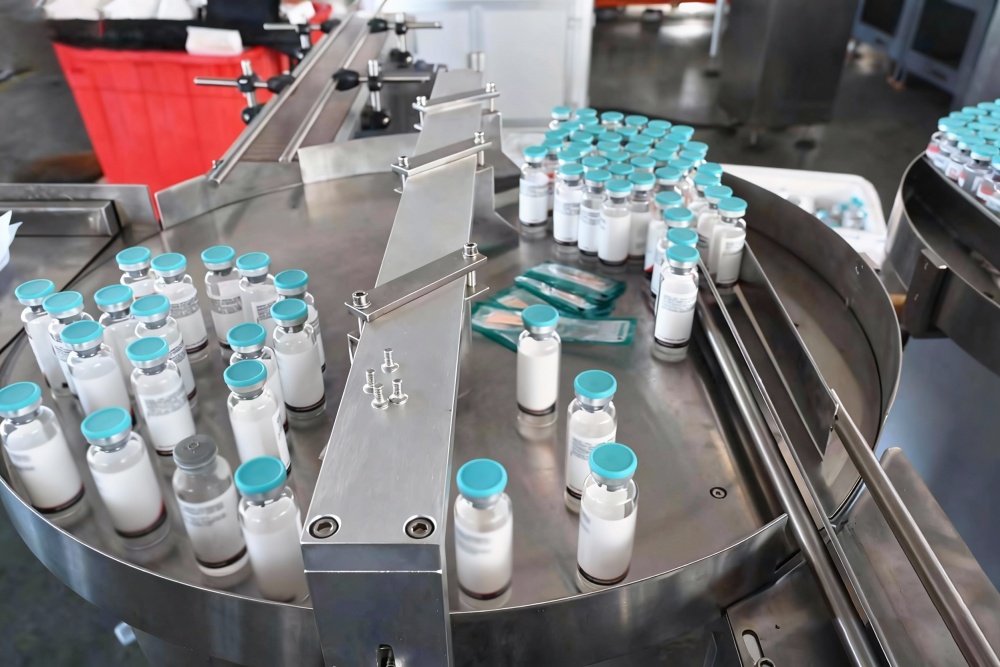
A vial cartoning machine is a specialized packaging system that places pharmaceutical vials into cartons in an organized manner. It forms cartons, positions each vial correctly, inserts any required leaflets, and seals the package for safe storage and distribution.
This process ensures every vial is protected from damage while maintaining a uniform and professional presentation. Rather than relying on manual handling, this machine automates the packing stage.
Components That Power the Cartoning Process
Behind every smooth cartoning cycle is a carefully coordinated group of parts. Each one has a specific role, and together they create a seamless flow from loose vials to sealed cartons. Let’s explore each of the components one by one.
1. Vial Feeder
The vial feeder is the starting point of the process. It guides individual vials into the machine in a steady and organized flow. This prevents clogging, misalignment, or collisions between vials. By spacing them correctly, the feeder guarantees each vial enters the next stage.
2. Carton Former
The carton former shapes flat carton blanks into fully opened boxes. This prepares the structure that will hold the vial securely. If you want to maintain stability and protect the vials during handling and transport, this step is crucial.
3. Leaflet Inserter
Many pharmaceutical products require instruction leaflets. The leaflet inserter places these documents accurately inside the carton before sealing.
4. Vial Placement Unit
This unit carefully positions the vial inside the carton. It aligns the vial to prevent movement or breakage. Proper placement also ensures the carton closes correctly without stressing the product.
5. Sealing Station
The sealing station closes the carton using glue, tuck-in flaps, or other secure methods. This final step locks the packaging in place and prepares it for stacking, storage, and shipping. A strong seal protects the vial from external damage and contamination.
How a Vial Cartoning Machine Works? Step-by-Step Process
Understanding how a vial cartoning machine operates becomes much easier when you follow the journey of a single vial. The process works as follows.
Step 1: Vial Loading and Feeding
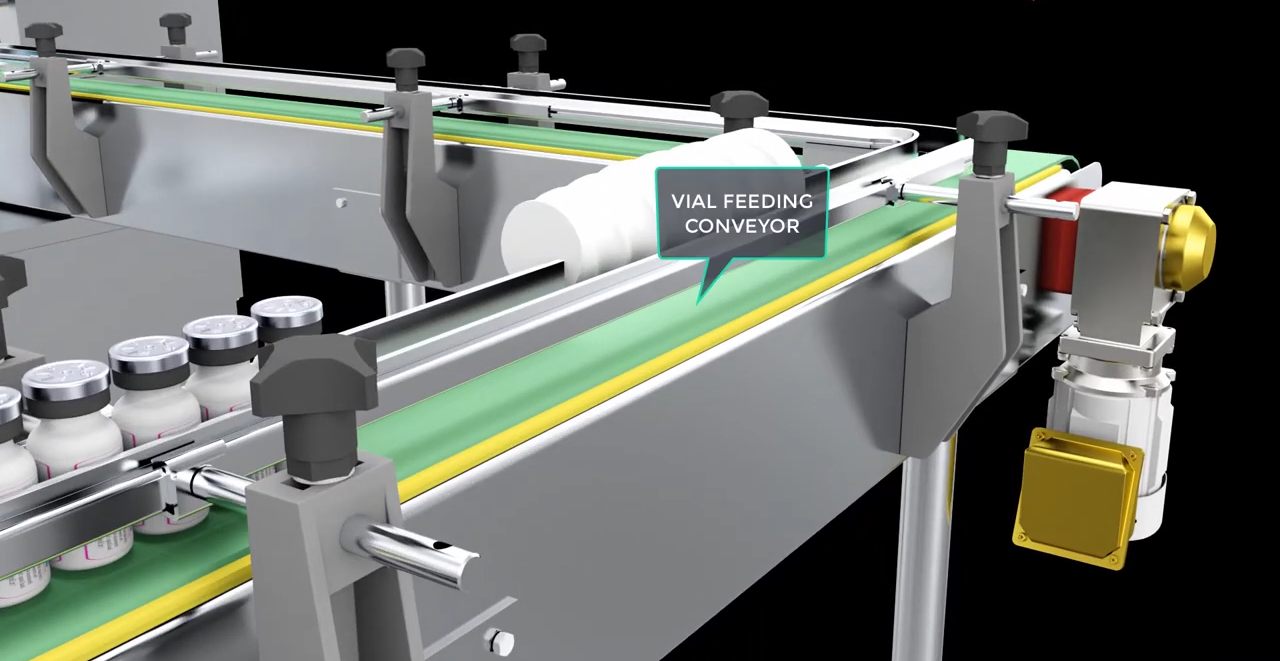
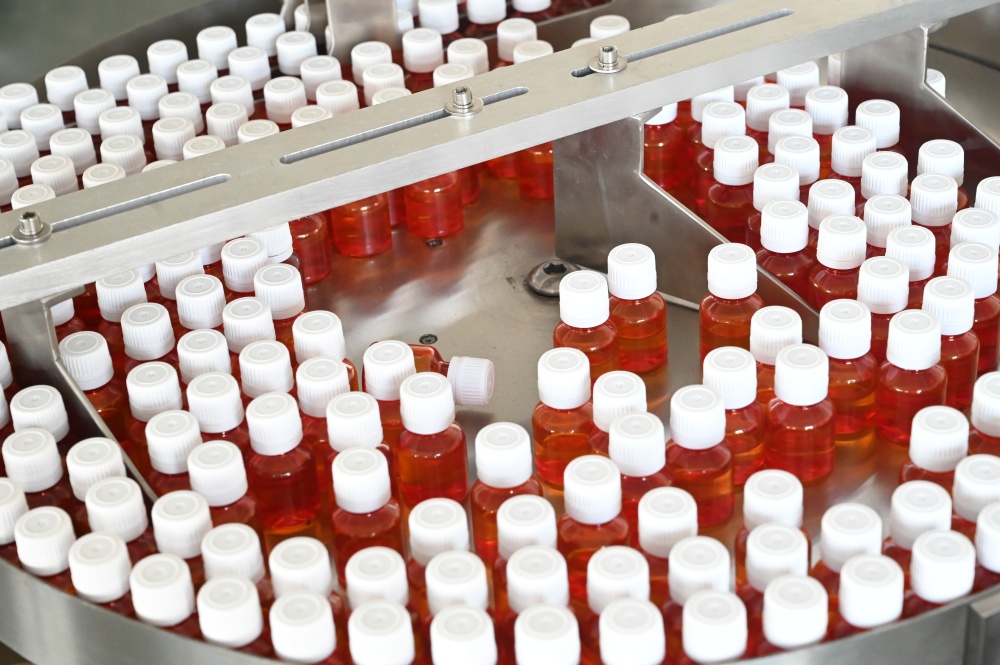
The process begins at the vial feeding area. Vials are placed onto a conveyor or feeding track where they are gently separated and aligned. This guarantees that each vial enters the system in the correct position, without crowding or overlap.
Step 2: Inspection and Discharge
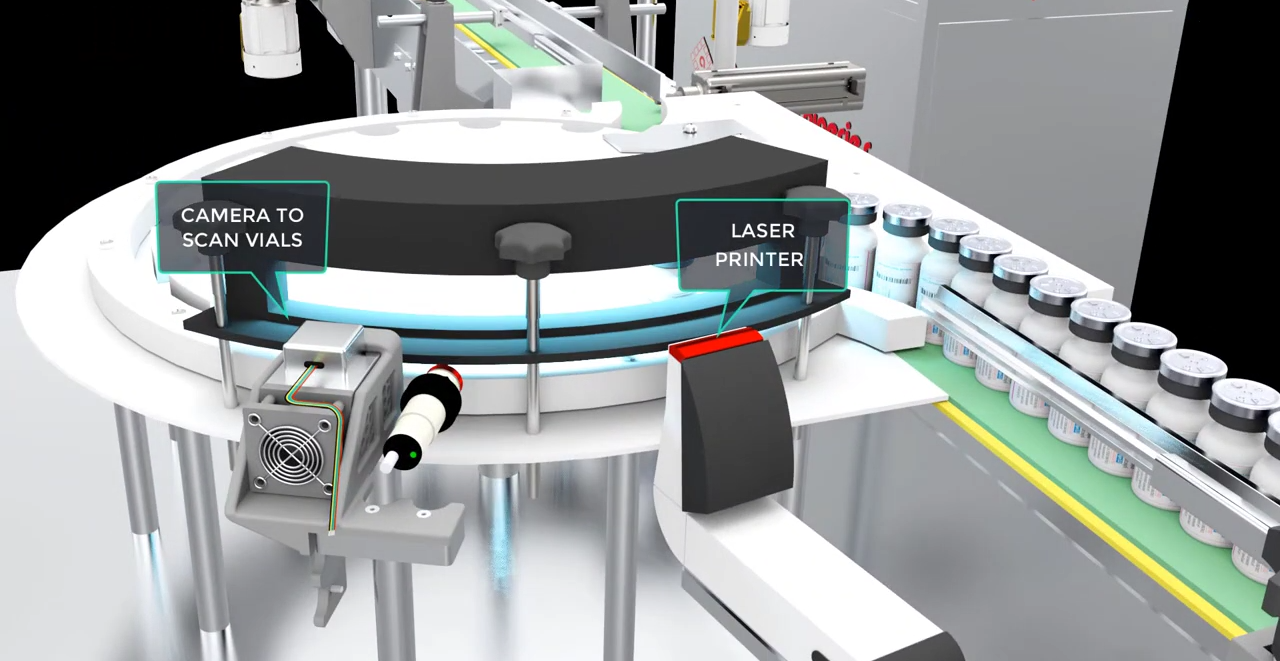
After loading, the vials are printed with a laser printer, and a camera scans them for any missing ingredients or improper sealing. Faulty units are rejected, while approved ones continue towards packing and distribution.
Step 3: Carton Preparation
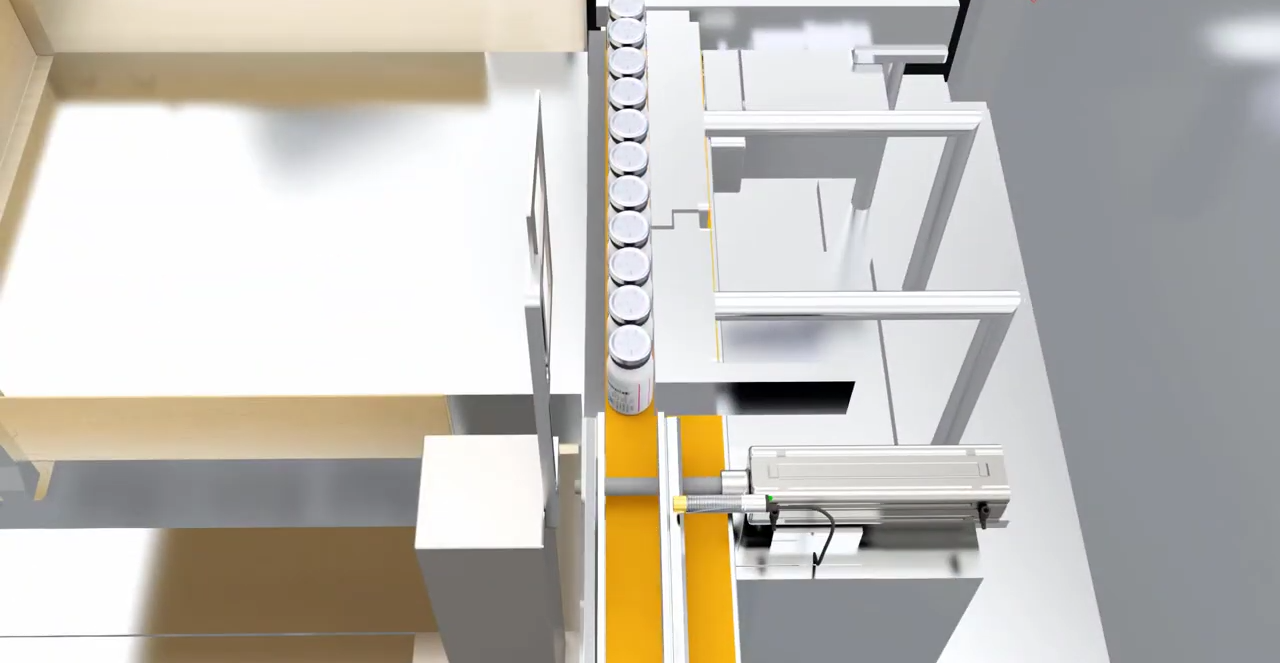
At the same time, flat carton blanks are picked up and shaped into open boxes by the carton forming unit. These cartons are positioned precisely and held open, ready to receive the vial and any supporting materials.
Step 4: Vial Insertion Into the Carton
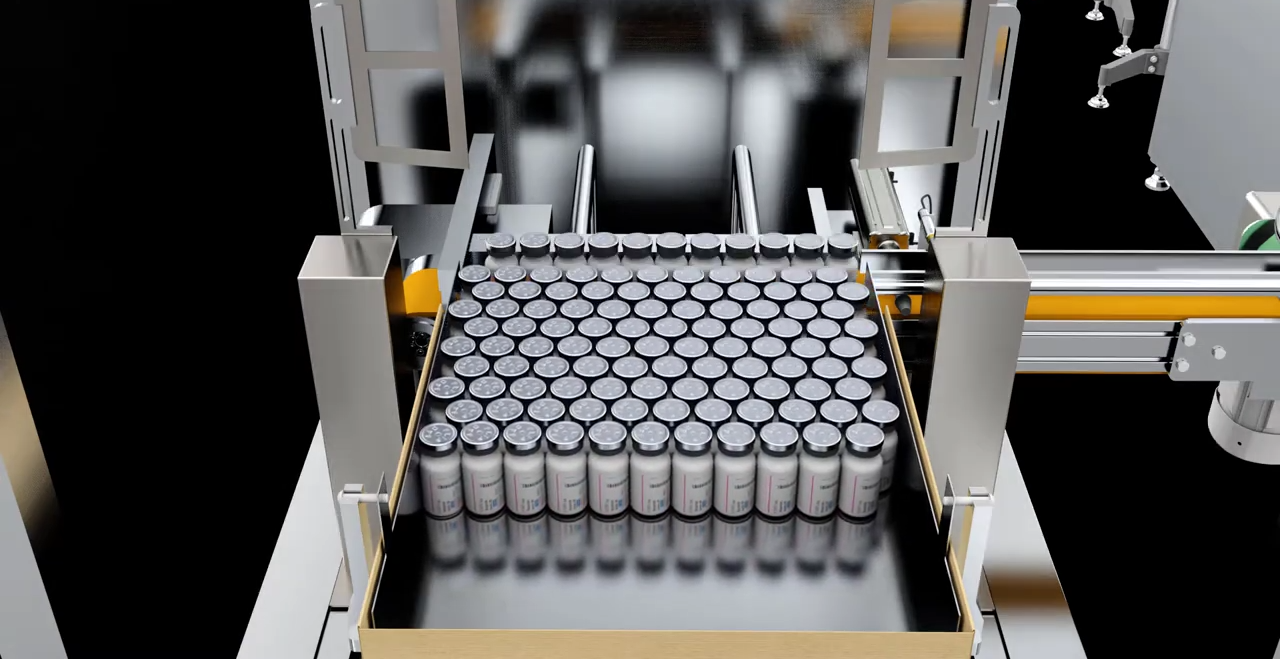
Once both elements are prepared, the vial is guided into the open carton. Depending on the machine type, this happens from the side or from above. Placement remains controlled to prevent tipping or contact damage.
Step 5: Leaflet Placement
If required, an instruction leaflet is inserted into the carton before it is sealed. This step is done to stay compliant with regulatory and informational requirements, without interrupting the overall flow.
Step 6: Carton Closing and Sealing
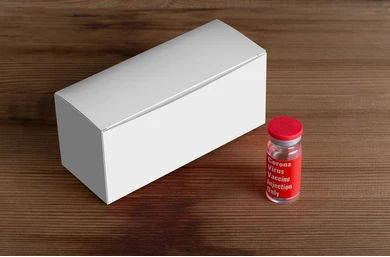
The carton then moves to the sealing station. Here, flaps are folded and secured using glue or tuck-in mechanisms. This final closure protects the vial and prepares the package for handling and transport.
All steps image from this video: https://www.youtube.com/watch?v=JmrBhzxcWjs
Two Types of Vial Cartoning Machines
Vial cartoning machines are designed in different formats to suit specific production needs. The two most common types are horizontal and vertical cartoning machines. Here’s how both of these machines work:
1. Horizontal Cartoning Machines
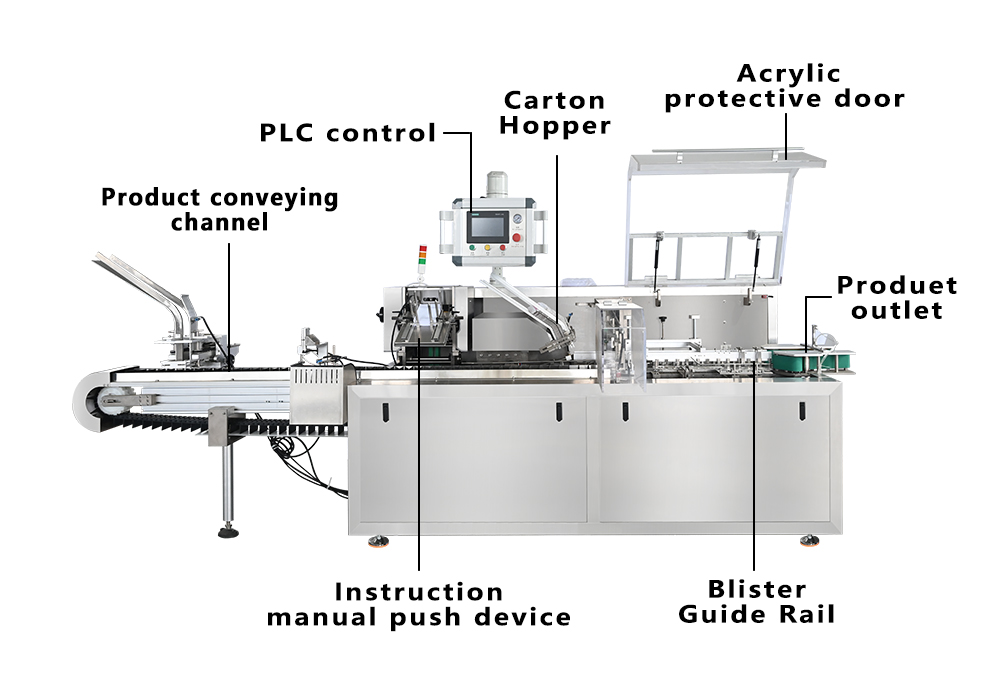
Horizontal cartoning machines load vials into cartons from the side. The carton moves along a horizontal path, and the vial is gently pushed into the open box. You’d probably see this type in production lines where careful handling is essential.
They are also preferred when packaging involves additional components such as inserts, trays, or promotional materials.
2. Vertical Cartoning Machines
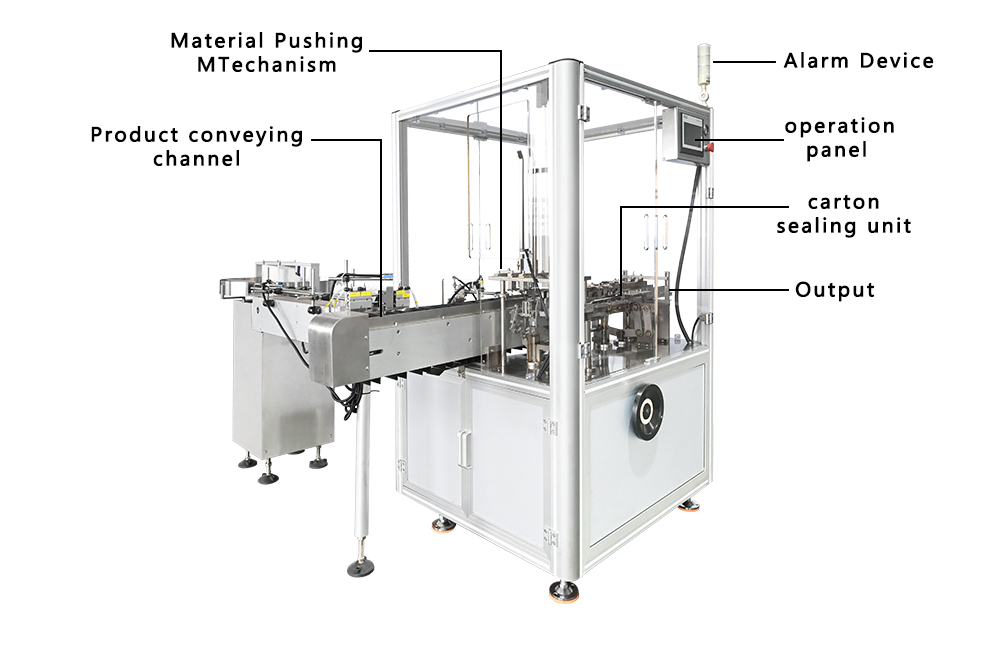
Vertical cartoners load vials from above. The carton stands upright, and the vial drops or is placed vertically into the box. This method is often used for faster operations and more compact packaging lines.
It is suitable for products that can withstand slight shifts during insertion. Vertical cartoners are typically chosen for simpler packaging designs and for lines where space is a priority.
Key Features of a Vial Cartoning Machine
The true strength of a vial cartoning machine lies in the features that keep every movement precise, stable, and dependable. These elements shape how smoothly the system runs and how well it protects the product.
Key features that make this machine valuable include:
1. Speed Control
Speed control enables the machine to adjust its operating speed based on production needs. This is important when handling different types of vials or varying production volumes. A well-regulated flow prevents sudden stops, product jams, or carton misfeeds.
2. Multi-Format Packaging
Modern vial cartoning machines are designed to support different packaging formats without compromising performance. These include plastic tray vial cartons, single vial cartons, eye drops cartons, and much more.
For instance, in the plastic tray vial cartons, the vials are placed first into protective trays before being inserted into cartons for stability and visual appeal.
3. Positioning Systems
Accurate alignment keeps vials perfectly positioned as they move through the machine. These systems guide each unit into the carton with balance and stability. Proper positioning reduces the risk of breakage, tilting, or uneven placement.
4. Detection Sensors
Sensors act as the machine’s eyes. They detect missing vials, incorrect carton formation, or improper placement. If an issue is found, the system can automatically reject the faulty package or stop the line.
5. Automation Levels
Automation determines how much human input is needed during operation. Advanced systems feature touchscreen controls and programmable settings, which allow operators to monitor performance and adjust parameters with ease.
6. Structural Stability
A strong frame and durable components support smoother operation and keep the machines running longer. Stability also reduces vibration and maintains consistent accuracy, even during continuous use.
FAQs
1. Why is automated cartoning important for vial packaging?
Vials are fragile. Automation reduces breakage, lowers contamination risks and keeps every pack identical. This helps companies meet strict pharmaceutical quality standards.
2. How often does a vial cartoning machine need maintenance?
Routine tasks like lubrication, belt checks and cleaning are done daily or weekly. The manufacturer sets more detailed preventive maintenance schedules based on usage hours.
3. Can a vial cartoning machine fit into an existing filling line?
Most machines are designed for easy integration. They connect with vial washers, fillers, cappers and downstream case packers through standard conveyors and communication protocols.
Get the Best Cartoning Machine Here at Finetech
Today, vial cartoning machines have become a critical part of the pharmaceutical production line. They protect fragile vials, maintain packaging consistency, and keep each unit ready for safe handling and distribution.
So, if you’re searching for reliable cartoning machines, Finetech has got your back.
Our machines are built for precision, durability, and seamless integration into your existing line. With over 30+ years of experience and more than 500 customers served, we can help you find exactly what your production needs.
Contact us today and let our experts guide you!
Copyright Notice:
You may not reproduce, modify, publish, display, transmit, or in any way exploit any content on this website, or use such content to construct any kind of database without prior express written approval by Finetech Group. For permission to use the content, please contact: info@pharmamachinecn.com
Disclaimer:
The information contained in this article is for general information purposes only. The Company does not guarantee the accuracy, relevance timeliness or completeness of any information, and the Company assumes no responsibility for errors or omission in the content of this article.