English
  Russian
  Turkish
  Spanish
  French
  German
  Japanese
The pharmaceutical industry produces millions of pills and tablets every day. These products come in different shapes, sizes, and chemical compositions. This diversity makes proper packaging extremely important.
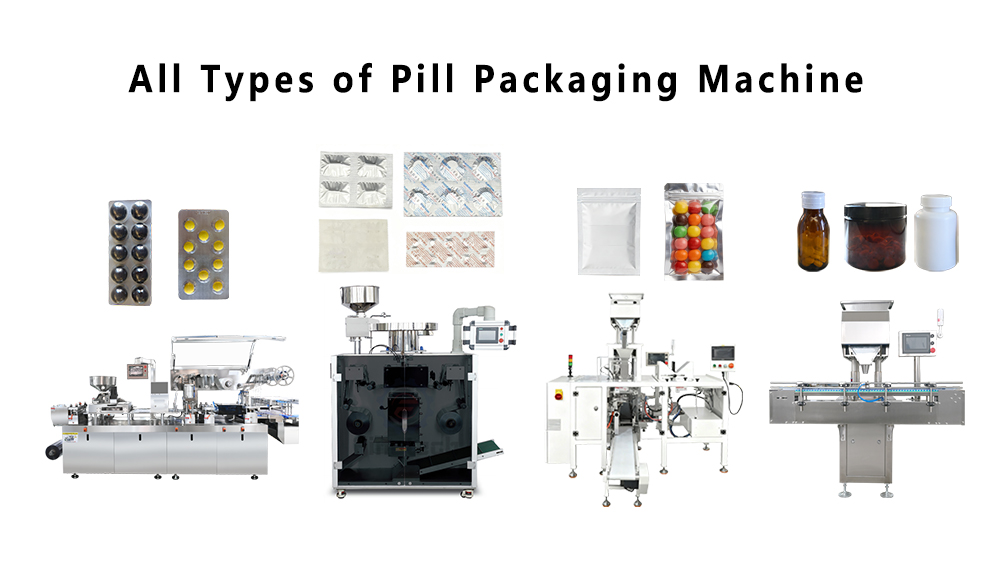
Any negligence in the process can lead to serious consequences, such as spoiling the product, compromising its effectiveness, or even jeopardizing patient safety.
Therefore, having a reliable and precise packaging system is absolutely crucial. This article is your guide to the most common pill packaging machines. We will help you understand their functions and how to make the best choice for your business.
4 Common Pill Packaging Machines
Pill packaging machines are automated systems used to package pills, tablets, and capsules. These machines are critical for ensuring product safety, quality, and accurate dosing. You will find them in different types, each designed for a specific packaging format. Let’s take a look at the most common pill packaging machines.
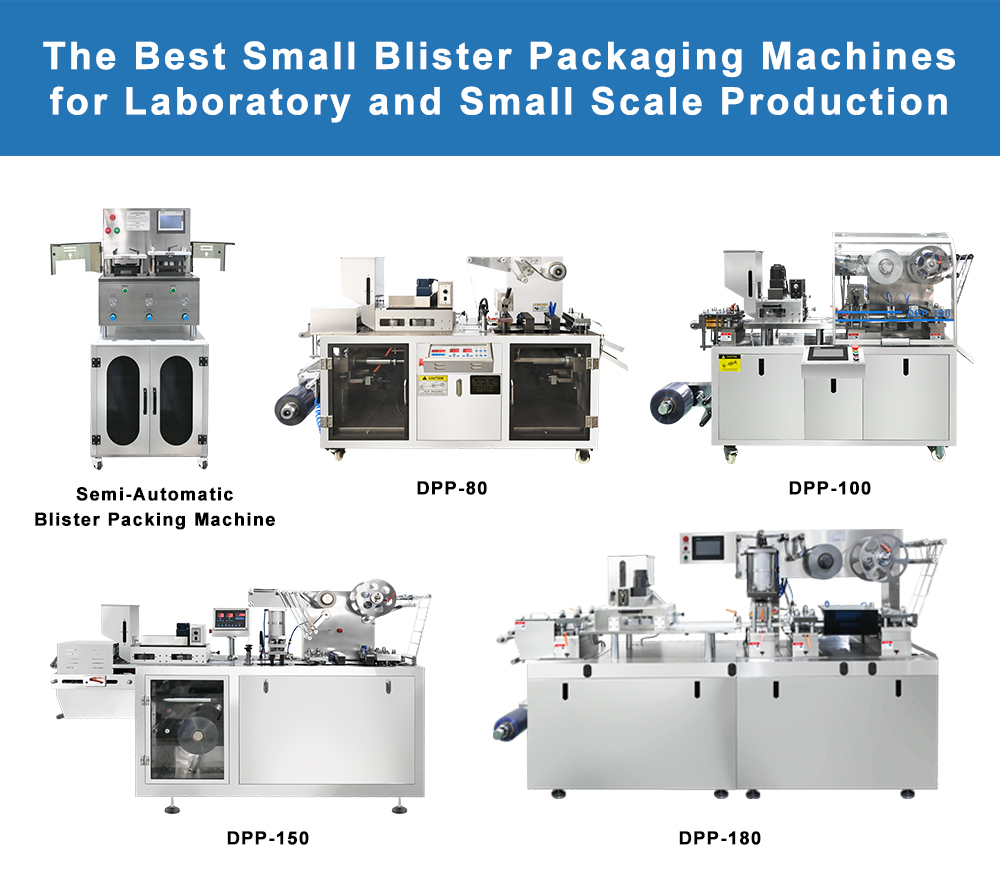
1. Blister Packaging Machines
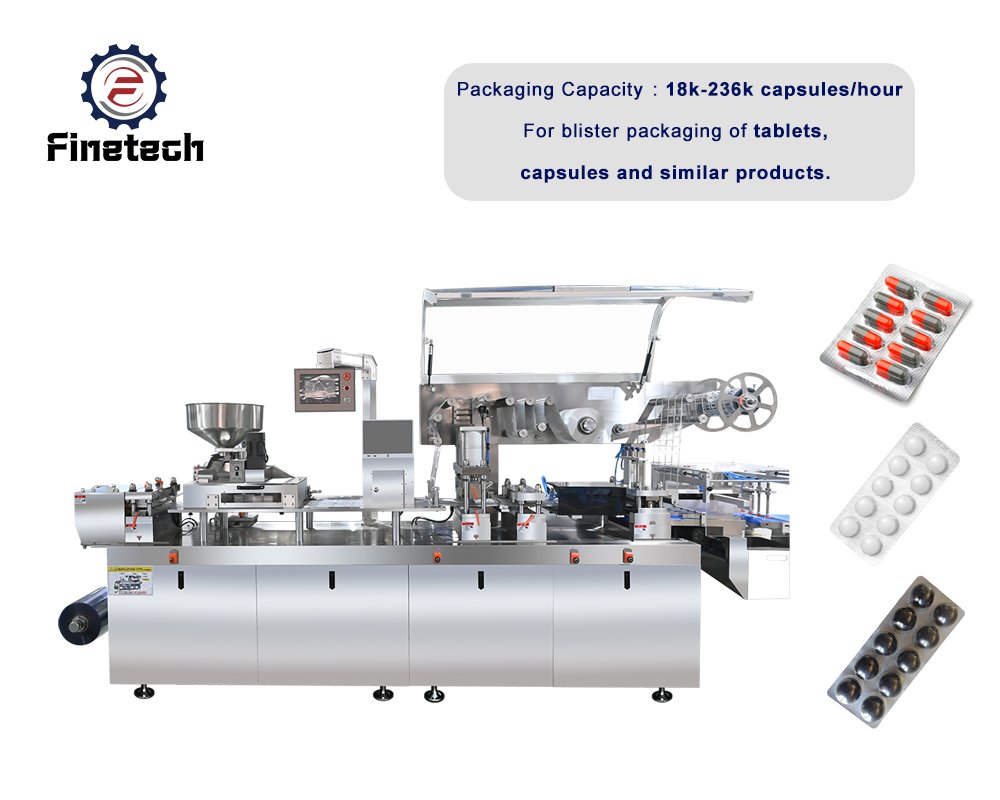
Blister packaging machines are the most common pill packaging systems used in the pharmaceutical industry. As the name suggests, they work by creating individual, sealed cavities (blisters) for each pill, with a foil backing. These machines use blister materials like polyvinyl chloride (PVC) and polyethylene terephthalate (PET). Both are chosen for their excellent barrier properties against moisture and light.
The working process of the blister packaging machine involves a series of steps:
- Unwinding: The process begins with the unwinding of a large roll of packaging material (e.g., PVC or aluminum foil) into the machine.
- Forming: The material is then heated and molded into individual cavities or blisters. This is usually done through thermoforming or cold forming (without applying heat).
- Filling: A product feeder precisely fills pills or capsules into each cavity.
- Sealing: Lidding material, such as foil, is placed over the filled blisters. It is then sealed to the blister material using heat and pressure.
- Punching and Cutting: The finished, sealed sheet is cut or punched into individual blister cards, ready for final packaging.
Applications of Blister Packaging Machine
- Pharmaceuticals: Used for unit-dose packaging of tablets, capsules, and other medications.
- Medical Devices: Provides sterile packaging for small instruments like syringes, needles, and surgical tools.
- Consumer Goods: Applied to package batteries, small electronic components, and various hardware items for protection and visibility.
2. Stripe Packaging Machine
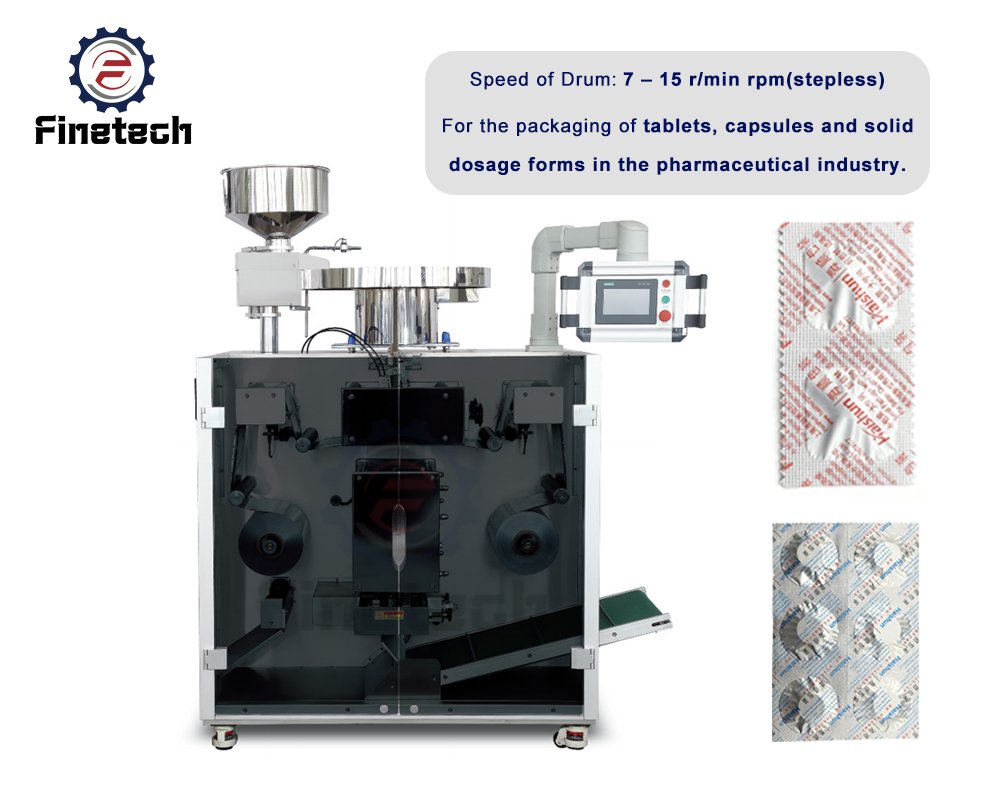
A strip packaging machine creates continuous strips of individually sealed pills. This machine works by sealing a pill between two layers of heat-sealable films (polymer-coated aluminum foil, cellophane). These materials provide strong protection against moisture, light, and gases. It is necessary for maintaining the stability and shelf life of the pharmaceutical products.
In terms of protection against moisture and light, strip and blister packaging have a similar profile. However, the key difference is that strip packaging does not use thermoforming or cold forming to create rigid, molded cavities.
Here is the working process of the stripe packaging machine:
- Material Feeding: The machine feeds two continuous rolls of heat-sealable film into the system from opposite sides.
- Product Placement: A precision feeder fills capsules or tablets between the two layers of film.
- Sealing: Heated roller seals the film layers together around each pill. This creates a secure, individual packet.
- Notching: Then a notching tool perforates the strip between each packet, making them easy to tear apart.
- Cutting: The packed strips are cut into smaller lengths according to the required number. They are then packed into cartons or boxes.
Applications of Strip Packaging Machine
- Hygroscopic Products: They are best for packaging tablets and capsules, which are highly sensitive to moisture. For example, effervescent tablets or probiotic capsules.
- Over-The-Counter Medications: Widely used for single-dose medications, vitamins, and supplements for easy, hygienic access.
- Food Items: Small consumer goods and food products like chewing gum and confectionery.
3. Pouch Packaging Machine
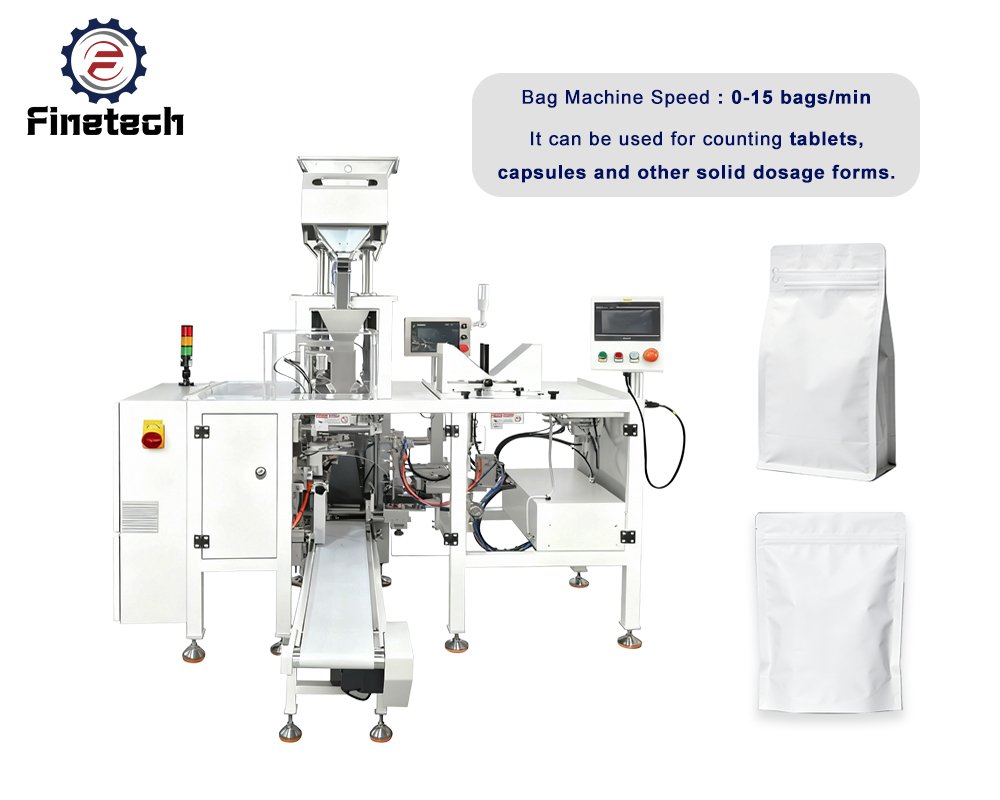
Pouch packaging machines are another versatile packaging solution. These machines create individual pouches or sachets filled with pills or capsules. They form three or four sides of sealing around the product to protect it from environmental hazards.
This type of packaging is commonly used for single-dose medications and is highly effective in improving patient compliance. By organizing a patient’s pills into pouches for specific times of the day, these systems make medication management simpler and more convenient.
This is how a pouch packaging machine works:
- Film Unwinding: The machine starts by unwinding a continuous roll of packaging film (PE, PET, aluminium foil) into the system.
- Pouch Making: The flat film is formed into a pouch by sealing three sides and leaving the top open for filling.
- Pouch Filling: Pills or capsules are filled into the pouches.
- Sealing: The open side of the pouch is sealed with heat and pressure to enclose the product.
- Cutting: The finished sealed pouch is cut from the continuous roll to create a ready-to-dispatch package.
Applications of Pouch Packaging Machine
- Single-Dose Medications: Pouch packaging enables single servings of medications. This is convenient for both patients and healthcare providers.
- Patient-Specific Prescriptions: Think of customized pouches that organize a patient’s daily medications by dose time.
- Vitamins and Supplements: They are also used for packaging single-serving doses of vitamins, supplements, and nutraceuticals.
4. Bottle Pill Packaging Machine
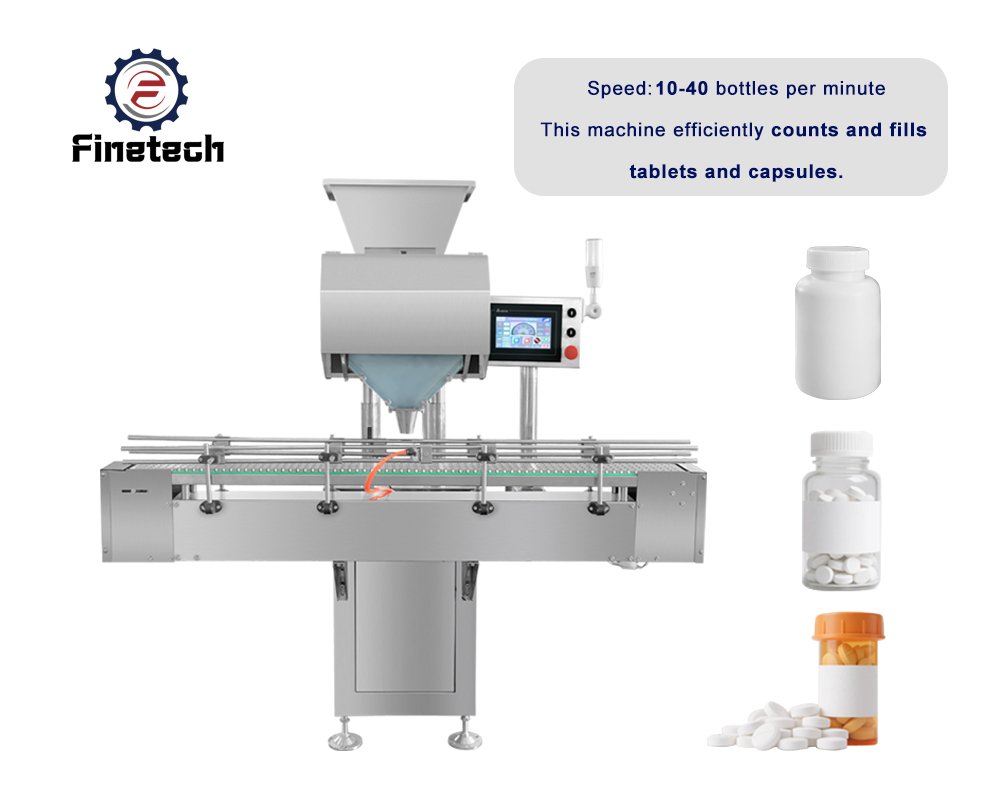
A bottle pill packaging machine is an automated system that fills and packages pills, tablets, or capsules into bottles. These machines count, dispense, and fill pills much faster and more efficiently than manual methods.
Advanced models have special features to maintain quality and accuracy. For example, some can insert desiccants to protect products from moisture. Others use sensors for weight checking and detecting faulty tablets. This ensures every bottle is filled correctly, and the final product meets all quality standards.
Let’s take a look at the step-by-step working process of the bottle pill packaging machine:
- Feeding: Pills or capsules are loaded into a hopper, which feeds the products into the system.
- Vibration: A vibratory plate or channel gently shakes the products, separating them and aligning them in a single-file line for counting.
- Counting: High-tech sensors count each individual pill as it passes to ensure the exact number.
- Filling: Once each pill is counted, it is transferred into a bottle that is synchronized with a conveyor belt.
Applications of Bottle Pill Packaging Machine
- Pharmaceuticals: It is primarily used for packaging prescription drugs, over-the-counter medications, and capsules.
- Nutraceuticals: These machines are also used for filling bottles with vitamins, dietary supplements, and herbal products.
- Food and Confectionery: Bottle pill packaging is used in the food industry to package items like mints, chewing gum, and candies in bottles or jars.
Choosing The Best Pill Packaging Machine
Choosing the best pill packaging machine is a critical decision that depends on several factors specific to your business and product. Here are three key points to consider:
1. Product and Packaging Type
Select a machine based on the pill type and your desired package format. For instance, if you’re packaging moisture-sensitive tablets, choose blister packaging machines. In contrast, a bottle-filling machine is ideal for high-volume production of standard tablets.
2. Production Volume and Speed
Your production scale is a major factor. For small-scale operations, a semi-automatic machine would be sufficient and more cost-effective. However, for large-scale production, a fully automatic machine with a high output speed is essential to meet demand and maximize efficiency.
3. Quality Control and Compliance
Pharmaceutical packaging machines must meet strict regulatory standards, such as Current Good Manufacturing Practices (CGMP). The best machines include advanced features like integrated sensors for counting and weight checking to ensure dosage accuracy. They may also have automated systems to detect and reject faulty products.
Making the Right Choice for Your Packaging Needs
Pill packaging machines are far more than just simple automated systems. The diversity in their functions highlights their critical role in ensuring product safety, quality, and accurate dosing. They are essential for protecting products and brand reputation from the start of production all the way to the final delivery to the patient.
While considering factors like product type and production volume, a key step is to choose a reliable partner. Look for a manufacturer or supplier who can offer long-term service, support, and technical expertise. A strong partnership ensures the long-term efficiency of your machine. It also protects your investment and provides ongoing peace of mind for your business.
FAQs
How do blister and strip packaging machines differ in their working principles?
The main difference lies in their formation process. A blister packaging machine creates rigid, molded cavities for each pill using thermoforming or cold forming. In contrast, a strip packaging machine seals pills between two flat layers of film without creating any molded pockets or cavities.
When is a pouch packaging machine a better choice than others?
Pouch packaging machines are particularly useful for single-dose medications and creating patient-specific prescriptions. They improve patient adherence by organizing all the medications a patient needs to take into a single, convenient pouch.
What quality control features should I look for in a pill packaging machine?
You should look for machines with advanced features that ensure accuracy and compliance. This includes integrated sensors for precise counting and weight checking, as well as systems for detecting and rejecting faulty tablets.
References:
Types of Pharmaceutical Packaging Equipment | A Complete Guide.
Types of Blister Packaging Machines Applied to Pharmaceutical Industry.
TOP 10 Pharma Packaging Machinery Manufacturers In 2025.
Copyright Notice:
You may not reproduce, modify, publish, display, transmit, or in any way exploit any content on this website, or use such content to construct any kind of database without prior express written approval by Finetech Group. For permission to use the content, please contact: info@pharmamachinecn.com
Disclaimer:
The information contained in this article is for general information purposes only. The Company does not guarantee the accuracy, relevance timeliness or completeness of any information, and the Company assumes no responsibility for errors or omission in the content of this article.