English
  Russian
  Turkish
  Spanish
  French
  German
  Japanese
Whenever a pharma company considers buying a Fluidized Bed Dryer (FBD), sensors are one of the first things they ask about: How many sensors are in the FBD, and how many are actually needed?
The answer matters because sensors directly impact safety, drying performance, and product quality. Getting them wrong means the result could be lost batches, compliance risks, flawed operations, and most importantly, wasted money.
This is why it’s extremely important to understand the number as well as the type of sensors your process actually requires. Below, we’ll break down the key sensors in an FBD, explain their role, and show you how to choose the right setup for your operation.
Key Takeaways: How Many Sensors Are in FBD
- Sensors Keep Drying Consistent: By monitoring temperature, airflow, and moisture, sensors allow operators to detect irregularities and maintain uniform drying across the bed.
- Tracking Different Metrics: Temperature probes, pressure gauges, humidity sensors, and flow meters each capture critical data that reveals how the process behaves in real time.
- Sensor Count Reflects Process Complexity: Larger dryers, more intricate batches, or higher automation levels require more sensors to provide complete visibility into the system.
- Strategic Placement Is Essential: Positioning sensors at critical points prevents hotspots, avoids uneven drying, and ensures measurements reflect the true state of the material.
- Regular Maintenance: Scheduled calibration and inspections catch drift or malfunction early, reducing the risk of compromised batch quality.
Why Sensors Matter in Fluidized Bed Dryers
To understand why sensors matter in fluidized bed dryers, we need to look at how fluidized bed dryers work.
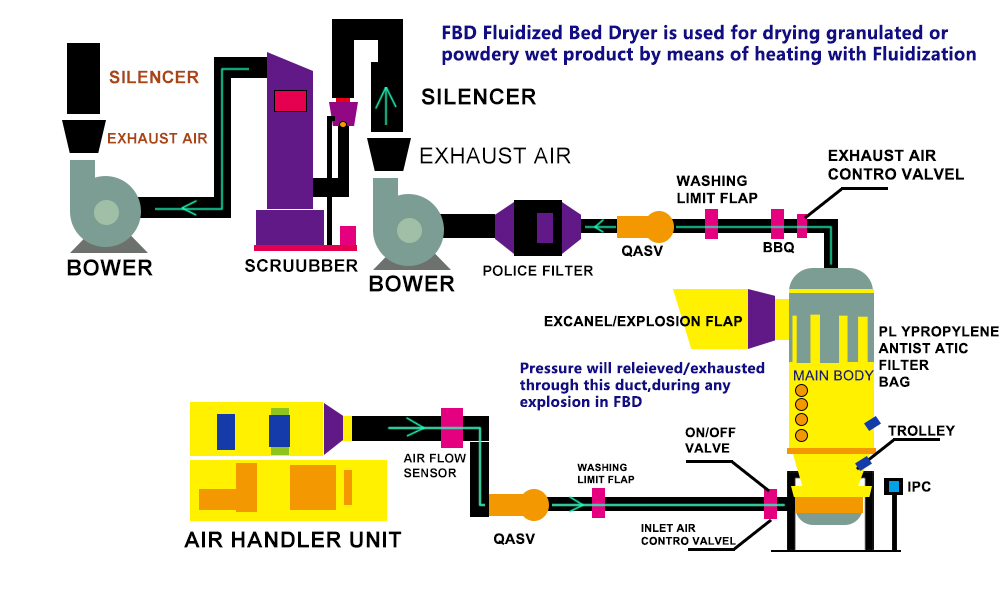
The purpose of using a Fluidized Bed Dryer (FBD), a pharmaceutical equipment, is to dry powders and granules quickly and evenly. The process begins by feeding the material (wet powders or granules) into the FBD stainless steel chamber.
Heated air is then blown upward through a perforated bottom plate. It causes the particles to become suspended and fluidized, and behave almost like a boiling liquid. This fluidized state ensures that every particle is in constant contact with the hot air, which results in uniform drying.
Sensors play a crucial role in this process. They monitor critical parameters like temperature, airflow, pressure, and moisture levels. Without them, the machine cannot detect or control these conditions, leading to uneven drying, product degradation, or potential safety hazards.
Types of Sensors You’ll Find in an FBD
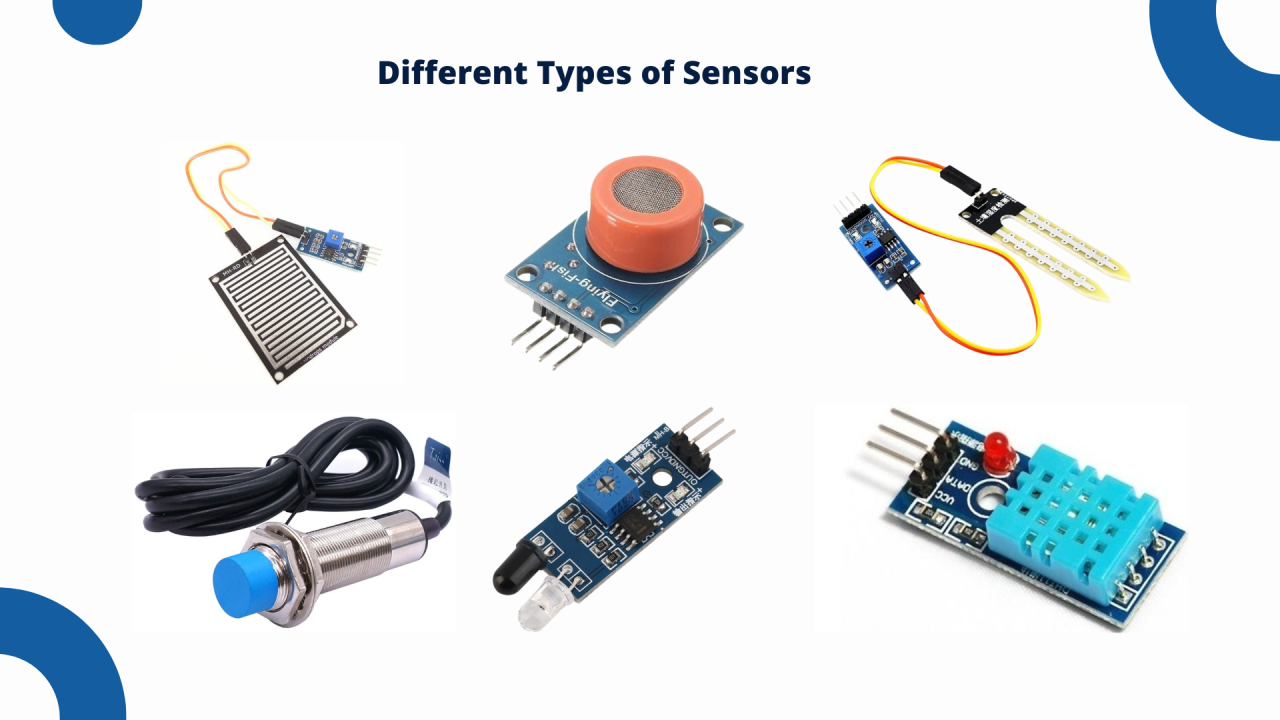
There’s no fixed number of sensors in a fluidized bed dryer, as it depends on the machine’s size, design, and level of automation. Some advanced FBDs may have 50 or more sensors, while smaller or simpler units have far fewer.
However, most FBDs include a set of essential sensors that monitor temperature, airflow, pressure, and material flow to ensure safe and consistent drying. Here’s a list of these essential sensors:
1. Temperature Sensors
In a Fluidized Bed Dryer, maintaining the right temperature is crucial for a successful drying process. If the temperature is too low, the material won’t dry properly. On the other hand, if it’s too high, the product can overheat, degrade, and ruin the batch.
Temperature sensors prevent this by continuously monitoring the process. They make sure that both the inlet (air entering the FBD) and outlet (air leaving the FBD) temperatures stay within the optimal range for safe and uniform drying.
2. Pressure Sensors and Gauges
Pressure sensors and gauges are another crucial part of a Fluidized Bed Dryer. As the name suggests, they measure the air pressure inside the system. This pressure is what ensures proper fluidization of the bed and helps maintain the desired airflow rate.
Without stable pressure, the drying process can become unsuccessful, which leads to uneven drying or machine malfunctions.
3. Moisture Sensors Monitor
Measuring the moisture content of solid particles in the bed is essential for knowing when the drying process is complete. Moisture sensors provide real-time feedback, and help operators avoid under-drying (risks microbial growth or poor stability) and over-drying (wastes energy and damages product quality).
In advanced FBDs, this is done using electrostatic sensor arrays, which detect changes in particle charge fluctuations to estimate moisture levels with high accuracy.
4. Particle Size Sensors
Particle size sensors are used to monitor the size and distribution of granules or particles during the drying process. The reason to monitor them is that particle size directly affects the quality of the final product. If the particles are too large, they may not dry evenly or could cause poor compressibility during the tableting process.
5. Level & Flow Sensors
There are also level and flow sensors in the Fluidized Bed Dryer, which are used to monitor the amount of material inside the chamber and the movement of air or solids during the process. The main purpose of these sensors is to prevent overfilling or underloading, as both situations can affect the drying process and the quality of the final product.
6. Supporting Sensors and Indicators
As we’ve mentioned, the number of sensors in the Fluidized Bed Dryer (FBD) depends on the design, scale, and application of the equipment.
You might find many machines equipped with only the essential sensors for basic operation. At the same time, advanced models that are used in large-scale pharmaceutical manufacturing may have dozens of additional sensors for enhanced monitoring and automation.
Here’s the list of a few of those supporting (or additional) sensors:
- Vibration sensor: Detects unusual vibration patterns that indicate mechanical issues or system imbalance.
- Current and voltage sensor: Monitor the electrical supply to ensure the machine operates within safe power limits and to detect faults early.
- Leakage sensor: Identify air or material leaks in the system that can affect performance, product quality, and safety.
- Oxygen sensor: Monitor oxygen levels for safety, especially in processes involving solvents, to minimize the risk of combustion or explosion.
- Gas composition sensor: Measure the concentration of gases in the dryer to maintain a safe environment and optimize drying conditions.
- Safety alarms: Provide real-time alerts for overheating, overpressure, or equipment faults to prevent accidents and downtime.
Factors Affecting Sensor Count in FBD
Many factors affect the number and type of sensors installed in a Fluidized Bed Dryer (FBD). Most of the time, this happens because of company-specific requirements. And sometimes, the machines are available in both basic and advanced configurations. Let’s discuss these scenarios in detail below:
1. Company-Specific Requirement
The custom machinery market is booming worldwide. In fact, it was valued at $21.1 billion in 2024, and the pharmaceutical sector makes up a significant portion of this growth.
Most pharma companies prefer customized FBDs instead of off-the-shelf models because every process has unique requirements. Companies may need additional moisture sensors or safety-related sensors (such as oxygen or leakage sensors) in their machines. This customization is one of the biggest reasons why the number of sensors in FBD varies so widely.
2. Material Properties
Many materials go through a Fluidized Bed Dryer. Each material behaves differently when exposed to airflow and heat. For example, highly hygroscopic materials may require some additional moisture sensors. In short, the type of material being processed directly influences the number and type of sensors required in an FBD.
3. Level of Automation
Similar to many other machines, the level of automation is a key factor in deciding how many sensors an FBD will have. In fully automated models with AI modules, you’ll often find dozens of sensors working together to provide real-time monitoring and optimization.
This combination isn’t just about convenience; it has proven to be successful. One study using an AI-assisted preheating model reported time savings of 37 minutes per batch and energy savings of around 4,000 kWh per year.
FAQs
1. Can the number of sensors in an FBD vary?
Yes, the number depends on the FBD model, batch size, automation level, and regulatory requirements.
2. How often should FBD sensors be calibrated?
Sensors should be calibrated regularly, typically every 6–12 months, depending on usage and criticality.
3. Can sensor upgrades improve FBD performance?
Yes, upgrading to high-accuracy or wireless sensors can improve control and enhance product quality.
Get the Best FBD Machines for Your Process Needs
Always remember, the right question isn’t how many sensors are in an FBD? The real questions are how many do you actually need, and what level of automation fits your process?
Every company’s requirements are different. That’s why choosing the right Fluidized Bed Dryer (FBD) with the right sensor setup can make the difference between smooth operations and costly bottlenecks. You need to think beyond the number of sensors and consider your product type, production scale, and energy saving goals.
At Finetech, we offer an extensive range of Fluid Bed Dryers built for energy savings and reliable performance. Get in touch with our team today for a custom quote tailored to your process needs.
References:
Artificial Intelligence Used to Optimize Fluid Bed Drying.
Machine Learning for Energy-Efficient Fluid Bed Dryer Pharmaceutical Machines.
How Many Sensors in FBD Fluidized Bed Dryer 2023.
Copyright Notice:
You may not reproduce, modify, publish, display, transmit, or in any way exploit any content on this website, or use such content to construct any kind of database without prior express written approval by Finetech Group. For permission to use the content, please contact: info@pharmamachinecn.com
Disclaimer:
The information contained in this article is for general information purposes only. The Company does not guarantee the accuracy, relevance timeliness or completeness of any information, and the Company assumes no responsibility for errors or omission in the content of this article.