English
  Russian
  Turkish
  Spanish
  French
  German
  Japanese
Biodegradable pharmaceutical packaging is made from natural, compostable polymers. It’s environmentally friendly and doesn’t add to the world’s plastic waste, which currently totals a staggering 400 million tons per year.
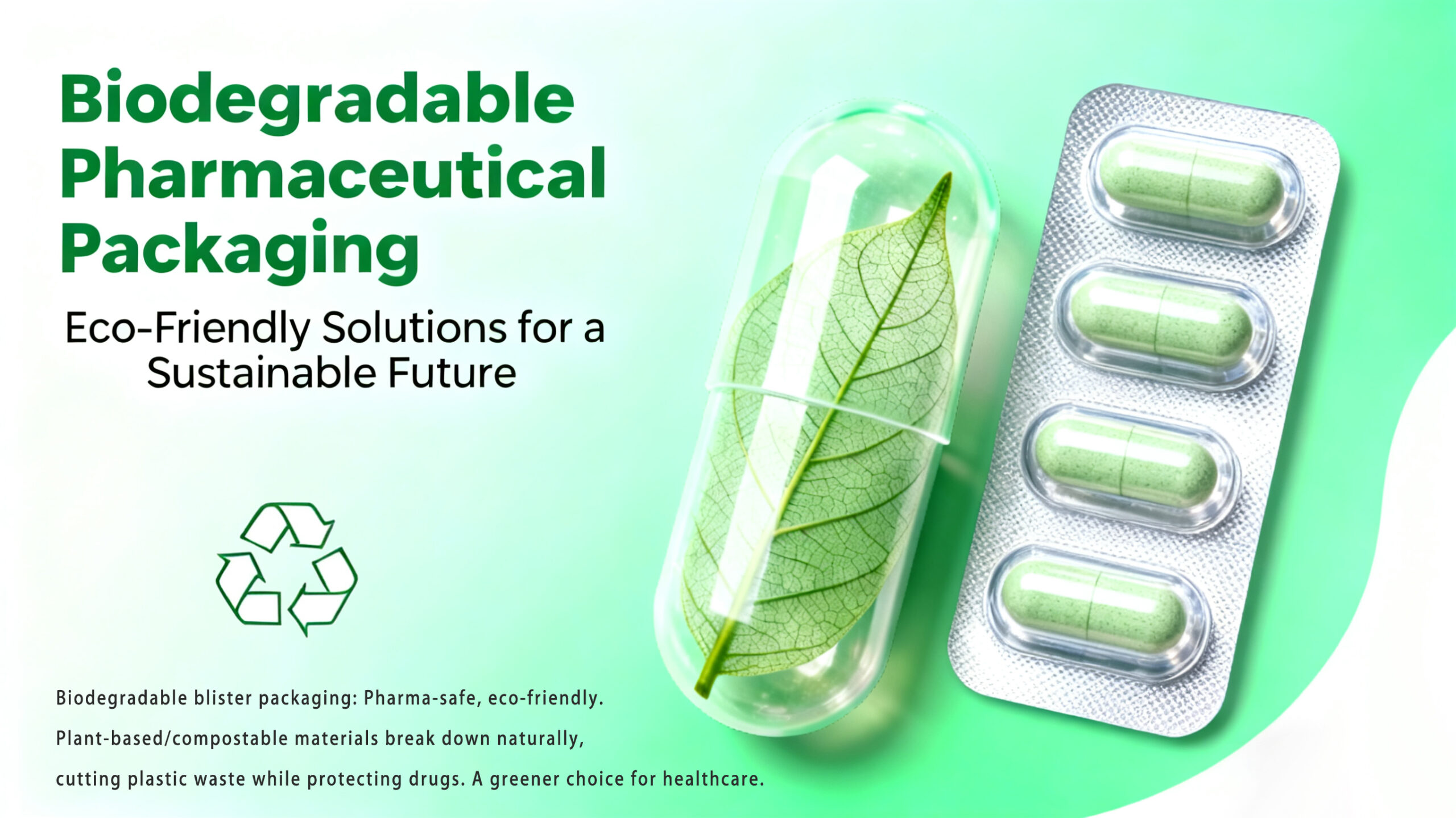
Beyond reducing waste, it lowers the carbon footprint, meets strict safety standards, and supports sustainability initiatives. However, like any innovation, it also has its limitations.
In this blog, we’ll cover what biodegradable pharmaceutical packaging is, the raw materials used, its limitations, and the challenges faced by the industry.
What is Biodegradable Pharmaceutical Packaging?
Biodegradable pharmaceutical packaging uses materials that break down naturally. These materials usually decompose within a year or less. Once broken down, they return to their natural state without leaving harmful residues.
Microorganisms, fungi, and enzymes convert these materials into water, carbon dioxide, and biomass. Compared to traditional petroleum-based plastics, these options are safer and more sustainable.
However, adopting biodegradable packaging requires striking a balance between eco-sustainability and patient safety. This means companies must have key global certifications and follow strict regulatory rules.
One notable example is Astellas Pharma. In 2021, Astellas Pharma adopted biodegradable primary packaging. This shows that the pharmaceutical industry can adopt sustainable options without risking safety and efficacy.
Materials Used in Biodegradable Pharmaceutical Packaging
Biodegradable packaging utilizes plant-based plastics, natural fibers, and innovative polymers like PHAs. Let’s take a closer look at each of them.
1. Polylactic Acid (PLA)
Polylactic acid is a popular biopolymer made from sugarcane, maize, corn starch, and cassava. It is clear, stiff, and biodegradable, which makes it an ideal choice for pharmaceutical packaging. PLA breaks down within one to two years, helping to reduce the carbon footprint.
It is used in blister packs, injection molded objects, and packaging films. PLA resists gas and moisture, so it works well for drugs with a long shelf-life. However, it lacks thermal resistance, which limits its use in high-temperature conditions.
2. Polyhydroxyalkanoates (PHA)
PHAs are a family of polyesters made by bacterial fermentation of glucose and acetic acid. They offer stronger resistance and better performance than PLA in certain conditions.
Recent advances in microbial fermentation and low-cost feedstock have made PHAs more widely available. They are versatile and can be used for primary packaging, wraps, sachets, and even rigid medicinal jars.
3. Cellulose
Cellulose films come from renewable sources, such as wood pulp and cotton. They offer excellent oxygen barrier properties under low humidity conditions. Coatings such as zein or nanocellulose composites make them stronger. These coatings also improve heat sealability and moisture resistance, which further enhances their function.
In pharmaceuticals, cellulose films are used in blister packs, secondary packaging, and overwraps. They decompose within 28 to 60 days in the soil. However, in high humidity, their barrier properties may weaken without added protection.
4. Starch
Starch-based films are some of the most cost-effective biopolymers. Sourced from rice, legumes, corn, and wheat, starch is naturally biodegradable. When blended with other polymers, it becomes stronger and more flexible.
Pure starch films are brittle and sensitive to moisture. However, adding biodegradable plasticizers like glycerol or urea reduces the brittleness. This makes the films stronger and more functional. While starch is less durable than PLA and PHA, additives can improve its performance. It is commonly used in blister packs, cushioning wraps, and transport packaging.
5. Paper
Paper is one of the most used renewable resources in pharmaceutical packaging. It is widely used in cartons, boxes, and labels. Resin coatings or waxes are often added to improve their protective qualities. Furthermore, paperboards, available in white, chip, and solid grades, also serve as secondary packaging due to their added strength and durability.
Additionally, paper is also highly recyclable. It can be reused up to six times before disposal, and can decompose within two to six weeks. This makes it one of the fastest-degrading materials.
6. Chitin
Chitin comes from crustacean shells or fungi. Its derivative, chitosan, is also biodegradable. Both chitin and chitosan offer antimicrobial properties. These features make them useful for packaging non-sterile devices and secondary protective layers.
However, regulatory approval for direct drug-contact packaging remains a challenge. Allergen risks associated with shellfish-derived chitosan also require careful consideration.
Benefits of Biodegradable Pharmaceutical Packaging
Biodegradable pharmaceutical packaging goes beyond sustainability. It offers multiple benefits for both the environment and the industry. Here are some key benefits of adopting biodegradable packaging:
1. Reduces Plastic Waste
Healthcare contributes 4-5% of global greenhouse gas emissions. Thus, for pharmaceutical companies, reducing single-use plastic waste should be a priority.
Biodegradable packaging helps companies better manage their waste. Switching cartons, wraps, and shipping material to certified bio-materials helps reduce plastic waste. This prevents long-term pollution and ecological damage.
2. Improves Brand Image
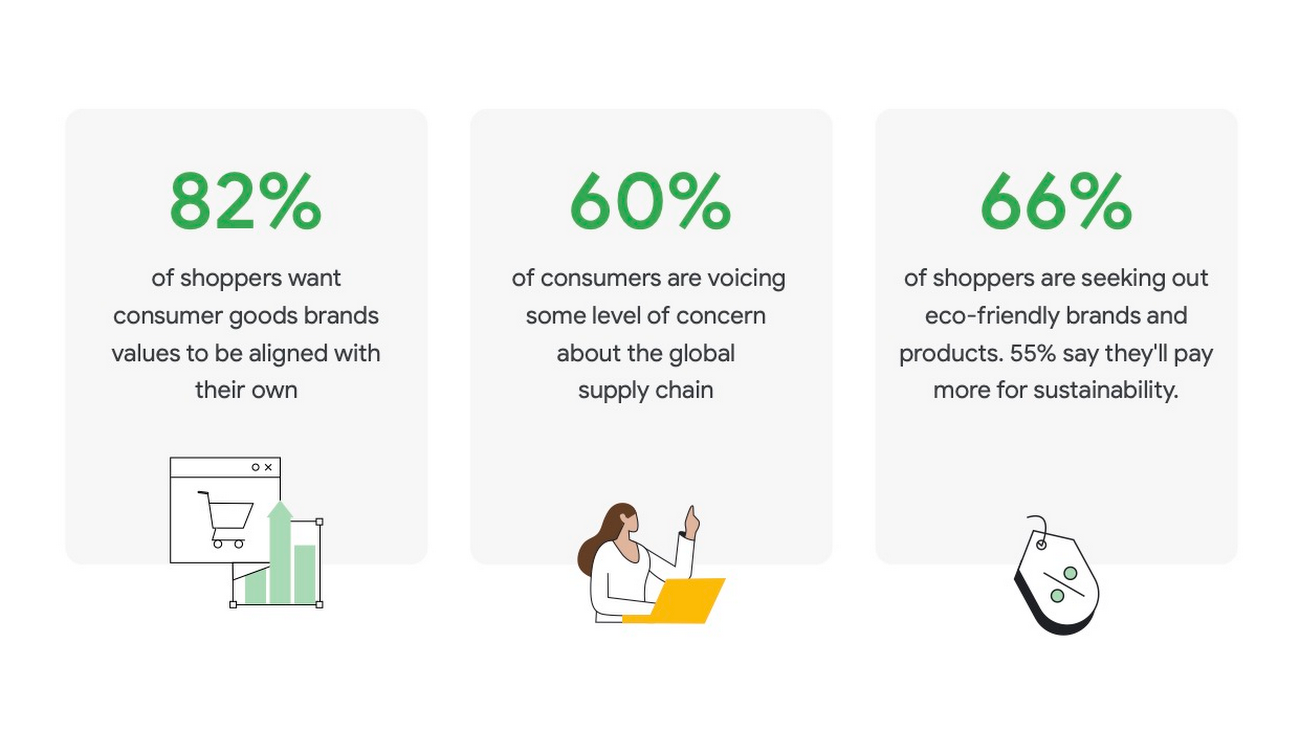
Consumers and healthcare providers are now more aware of how their choices affect the environment. Surveys suggest that about 66% of buyers consider sustainability before making a purchase. For pharmaceutical companies, using biodegradable packaging shows responsibility and commitment to ethical environmental values.
This enhances brand reputation and builds consumer loyalty and trust. Companies that prioritize biodegradable solutions attract eco-conscious customers. This helps boost their sales and improve the Return on Investment (ROI).
3. Regulatory Compliance
Regulatory authorities like the FDA, EMA, and WHO have strict environmental regulations. They emphasize safety, performance, and stability in pharmaceutical packaging. According to these bodies, packaging must keep medicines sterile, tamper-resistant, and well-protected.
At the same time, many governments are banning single-use plastics and pushing for greener policies. Therefore, companies that switch early to biodegradable pharmaceutical packaging can stay compliant with these rules.
Limitations of Biodegradable Pharmaceutical Packaging
Biodegradable packaging has many eco-friendly benefits. But it also has practical limitations that can’t be ignored. Let’s take a look at the key limitations of biodegradable packaging:
1. Moisture Sensitivity
At elevated relative humidity, biodegradable materials lose some of their barrier properties. This increases the risk of drug degradation through exposure to oxygen and water vapors. Hybrid laminates and PHA films help stabilize the packaging. But they also make packaging more complex.
2. Cost Concerns
Biopolymers such as PHAs are resource-intensive. This makes them more expensive than conventional plastics. Over time, biodegradable packaging has become more affordable due to increased global production. However, the financial gap persists. This limits the adoption of biodegradable packaging in an overly competitive market.
FAQs
What are examples of biodegradable pharmaceutical packaging?
Some common biodegradable packaging materials for pharmaceuticals include PLA and PHA films, starch, cellulose, and paperboard packaging. Additionally, proteins, gluten, xylans, gelatin, and pullulan may also be used to package medicines and supplements.
What material is 100% biodegradable?
100% biodegradable packaging materials include paper, cardboard, PLA, and PHA fibres. The microorganisms break down the packaging material into natural components without leaving toxic residue behind.
What is the market for biodegradable packaging?
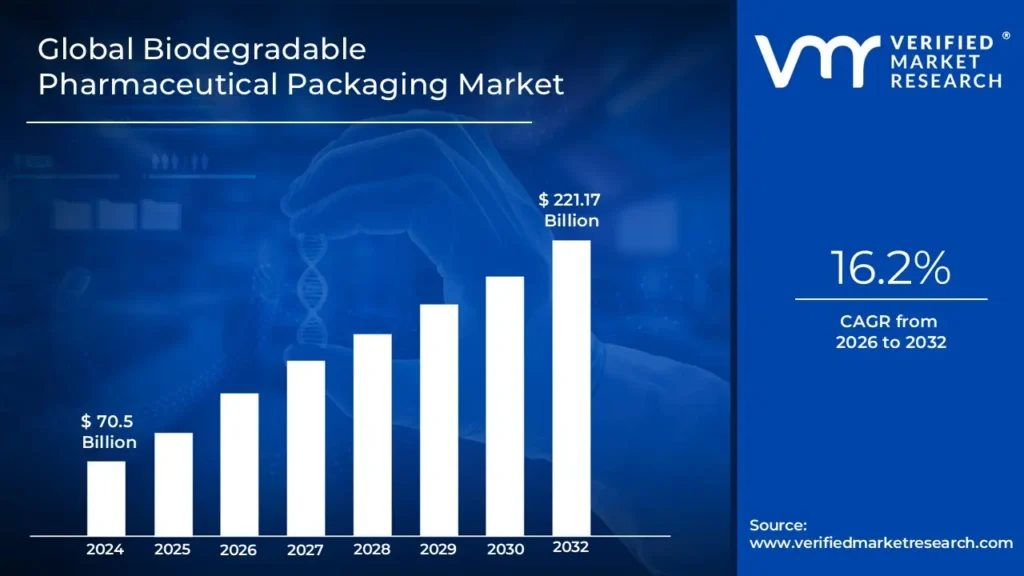
The biodegradable packaging market is expanding rapidly and is expected to reach USD 921.95 billion by 2034. It is estimated to have a Compound Annual Growth Rate (CAGR) of 8.87% from 2025 to 2034. This shows the increased demand for eco-friendly solutions in the healthcare industry.
The Future of Biodegradable Pharmaceutical Packaging
Biodegradable pharmaceutical packaging is a significant step towards global sustainability goals. While it may not fully replace conventional plastics just yet, it has the potential to reduce plastic waste significantly.
For large-scale adoption, a stronger infrastructure is needed for collecting and recycling biodegradable materials. This requires closer collaboration between packaging experts, regulators, researchers, and drug manufacturers.
At Finetech, we offer a huge range of sustainable pharmaceutical equipment. Our experts guide you in making the right choice and even customize the equipment to match your production capacity.
Visit Finetech and take the first step towards a greener future!
Explore the Sustainability in the Pharmaceutical Industry trend.
Copyright Notice:
You may not reproduce, modify, publish, display, transmit, or in any way exploit any content on this website, or use such content to construct any kind of database without prior express written approval by Finetech Group. For permission to use the content, please contact: info@pharmamachinecn.com
Disclaimer:
The information contained in this article is for general information purposes only. The Company does not guarantee the accuracy, relevance timeliness or completeness of any information, and the Company assumes no responsibility for errors or omission in the content of this article.