 English
  Russian
  Turkish
  Spanish
  French
  German
  Japanese
A tablet production line is an integrated system of machinery designed to manufacture tablets on an industrial scale, primarily for the pharmaceutical, nutraceutical, food, and cosmetic industries . The primary goal of these lines is to produce tablets that are uniform in weight and drug content, strong enough to withstand packaging and shipping, and chemically and physically stable over time. This guide will help you understand how tablets are made from start to finish.

Tablet Production Line Equipments
Mixing Equipment: Where It All Begins
Mixing is the first step in tablet production. Different machines handle this important task.
Double Cone Blender
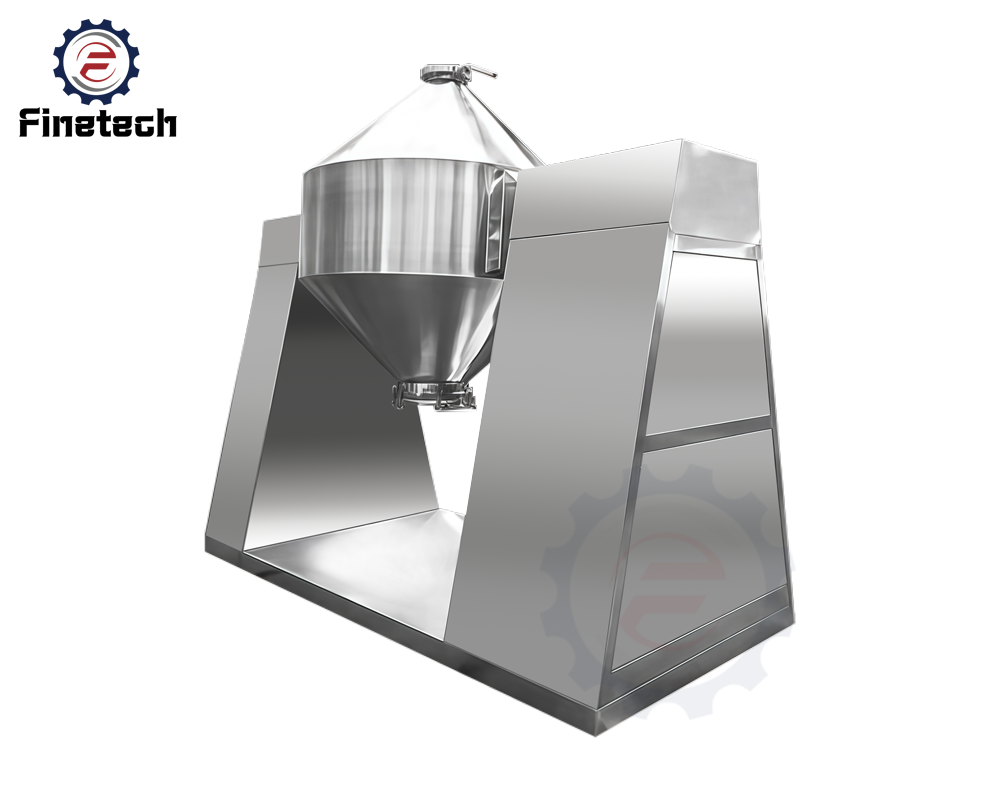
The double cone blender mixes dry powders perfectly. It has a cone shape that tumbles materials gently. This creates an even mixture without damaging delicate ingredients.
These blenders work well for basic mixing jobs. They’re reliable and easy to use. Many factories start their production with these machines.
Rapid Mixer Granulator (RMG)

The RMG is a powerful machine. It can mix dry ingredients and make granules too. This saves time and space in production.
The machine has spinning blades that mix materials fast. It can also add liquids to create wet granules. This versatility makes it very popular.
V-Blender

V-blenders have a V-shape design. They mix powders by tumbling action. The unique shape ensures thorough mixing.
These machines work great for heat-sensitive materials. They mix gently without creating heat. This protects delicate ingredients.
Other Mixing Options
Factories also use pneumatic mixers, diffusion mixers, and convective mixers. Each type serves different needs. Some work better for specific materials or batch sizes.
Granulation Equipment: Creating the Right Size
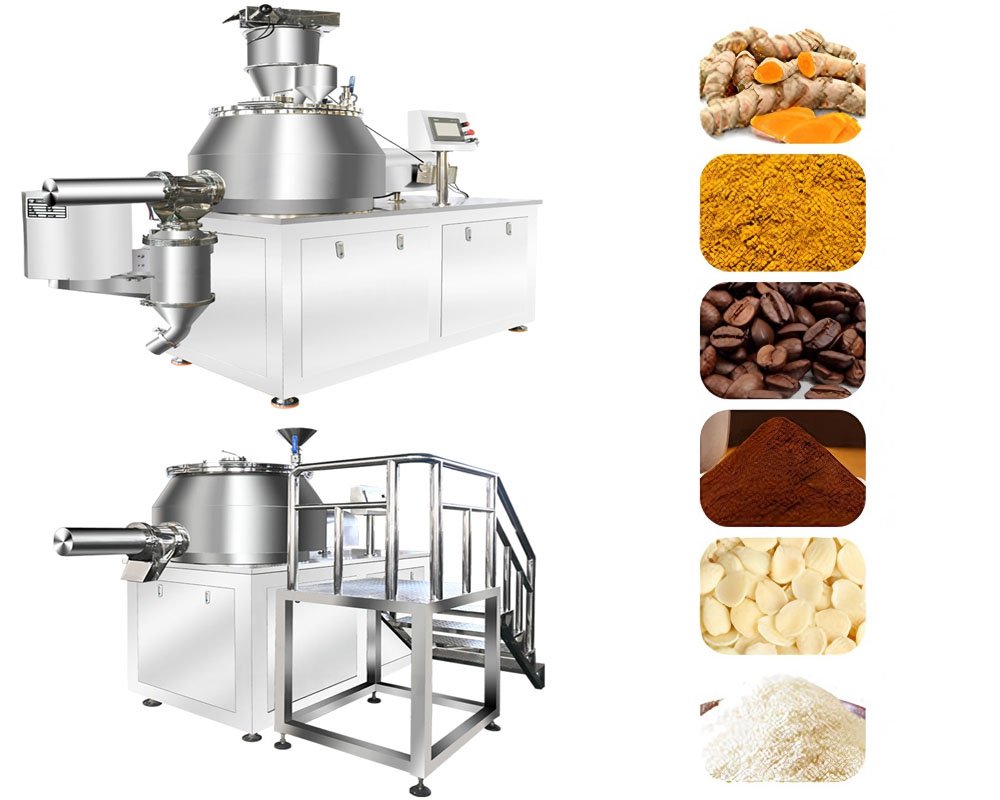
Granulation makes powder particles stick together. This step is crucial for good tablets.
Horizontal Granulator
This machine makes uniform granules. It uses a horizontal mixing action. The result is consistent particle sizes.
Uniform granules lead to better tablets. They compress more evenly. This reduces defects and waste.
Drying Equipment: Removing Moisture
Wet granules need drying before compression. Too much moisture causes problems.
Fluid Bed Dryer

This is the most common drying machine. It uses hot air to dry granules. The air makes granules float and tumble. This movement ensures even drying. The machine controls temperature carefully. This protects the active ingredients.
Tray Dryer
Tray dryers work differently. They dry materials in trays. Hot air circulates around the trays. These machines handle larger batches. They’re good for materials that can’t be fluidized.
Tableting: The Heart of Production
Tableting machines compress granules into solid tablets. This is where the magic happens.
Single Punch Tablet Press
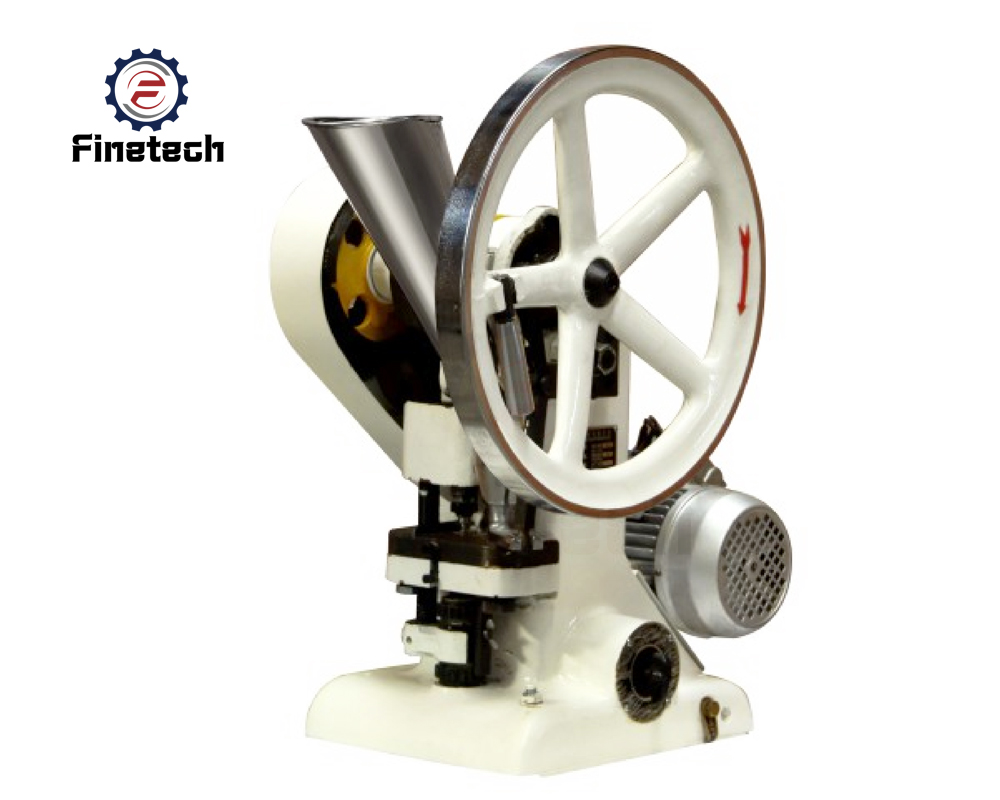
These machines make one tablet at a time. They’re perfect for small batches or research work. The machine uses one set of punches and dies. It’s simple to operate and maintain. Many companies use them for testing new formulas.
Rotary Tablet Press
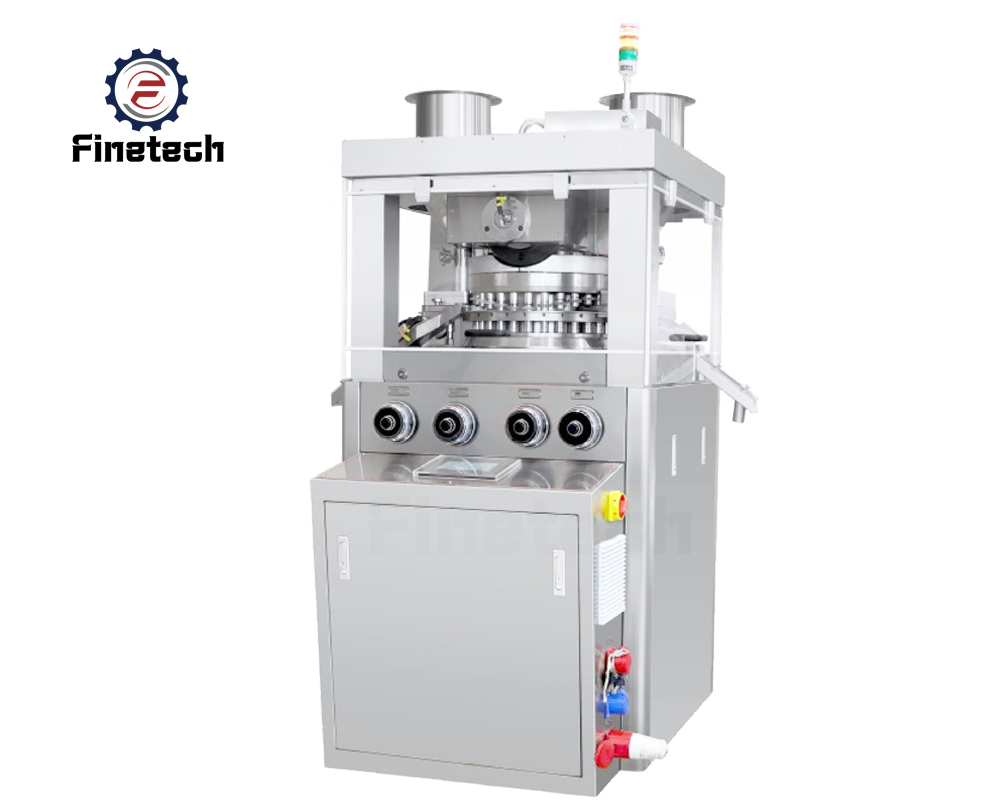
For large production, rotary presses work better. They have multiple punch stations. This means many tablets form at once. These machines can make thousands of tablets per hour. They’re efficient and reliable for commercial production.
Dies and Punches

These parts shape the tablets. Dies form the tablet outline. Punches compress the material. Different shapes and sizes are possible. Round, oval, and specialty shapes all work. The choice depends on the product needs.
Coating Equipment: Adding Protection
Many tablets need coatings. Coatings can mask taste, control release, or improve appearance.
Tablet Coating Machine
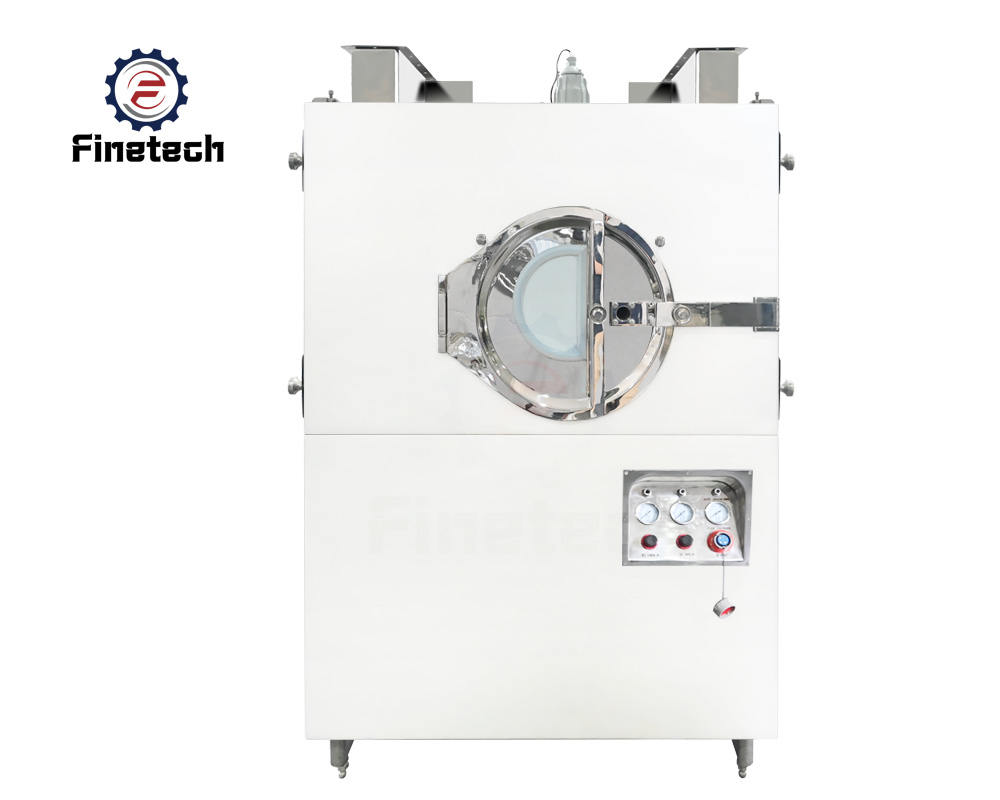
These machines spray coating material onto tablets. The tablets tumble while coating sprays on. Hot air dries the coating quickly. This creates a smooth, even surface. The process repeats until the coating is complete.
Packaging Equipment: Ready for Delivery
Finished tablets need proper packaging. Different machines handle various package types.
Blister Pack Machine
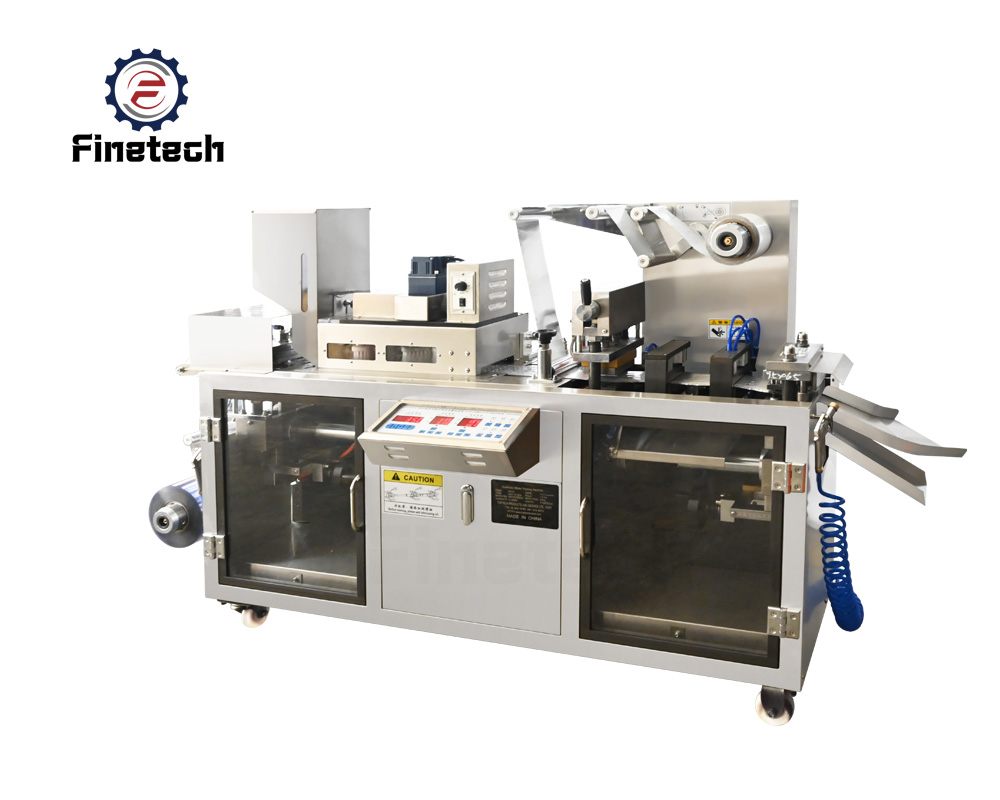
These machines create individual tablet pockets. Each tablet sits in its own space. A foil top seals everything. Blister packs protect tablets well. They also make dosing easy for patients.
Bottle Filling Machine
Some tablets go into bottles. These machines count and fill bottles automatically. They can handle different bottle sizes. Speed and accuracy are key features.
Quality Control Equipment
Quality matters in tablet production. Special equipment helps maintain standards.
Sifter
Sifters separate particles by size. Only the right-sized granules make good tablets. These machines use screens or vibration. They remove oversized or undersized particles.
Milling Equipment
Sometimes particles are too big. Mills reduce particle size. Both wet and dry mills exist. The right particle size improves tablet quality. It also helps with mixing and compression.
Metal Detector
Safety is crucial in medicine. Metal detectors find any metal contamination. These machines check tablets before packaging. They reject any contaminated products automatically.
Inspection Equipment
Inspection belts let workers examine tablets. They can spot defects like cracks or chips. Good inspection prevents bad tablets from reaching patients.
Environmental Control Equipment
The production environment matters too. Special equipment maintains proper conditions.
Dust Extractor
Tablet making creates dust. Dust extractors remove it from the air. Clean air protects workers and products. It also prevents cross-contamination.
Dehumidifier
Humidity affects tablet quality. Dehumidifiers control moisture levels. The right humidity prevents problems during production. It also protects finished products.
Laminar Flow Unit
These units provide ultra-clean air. They’re essential for sterile products. Clean air flows in one direction. This prevents contamination during sensitive steps.
Conclusion
Tablet production needs many specialized machines. Each one has an important role. Together, they create safe, effective medicines. Understanding this equipment helps appreciate the complexity of tablet making. It also shows why quality control matters so much. Modern tablet production combines technology and precision. The result is the reliable medicines we depend on every day.
Recommend Readings:
List Of Equipment Used in Tablet Manufacturing.
How Are Medicine Tablets Made? A Simple Guide to the Manufacturing Process.


2 thoughts on “Essential Equipment Used in Tablet Production Line: A Complete Guide”
Добрый день, мы планируем начат производство витаминов и БАДов форме кубика. Как сырье будем использовать сахар песок и сублимированные ягоды. Нам нужно линия оборудования производства таблеток. Таблетки будет в форме кубика. (примерно, как таблетки для посудомоечных машин).
Производительность линии 50.000 штук таблеток по 15 грам.
Один час 750-1000 кг готовой продукции.
В интернете я увидел ваш сайт, мне очень интересно ваше оборудование.
Краткое описание нашего процесс производство:
1) Сахар песок дробится на дробилке в пудру фракций 200 меш.
2) Сублимированные ягоды дробится на дробилке в пудру фракций 200 меш.
3) Сахар пудра и пудра сублимата смешивается на мешалке, сахар пудра 90% и пудра сублимата 10%.
4) Полученный смесь отправляются для в Роторный таблеточный пресс.
5) Полученные таблетки в форме кубика отправляется на горизонтальную линию упаковки в пленку. Каждый кубик упакуется отдельно.
6) Полученный упакованный кубик будет упаковаться в коробочку по 15 штук. Это процесс будет делятся вручную.
7) Упакованные коробочки по 20 штук будет упаковаться в гофр коробку по 20 штук. Это процесс будем делать вручную.
Прошу Вас сделать коммерческое предложение на полный линию оборудования под ключ.
I appreciate your interest in our machine, please check your mailbox within the next 24 hours