English
  Russian
  Turkish
  Spanish
  French
  German
  Japanese
A wet granulation machine is a special piece of equipment. It helps make small particles stick together. These particles become larger chunks called granules. The machine uses liquid to bind the particles.
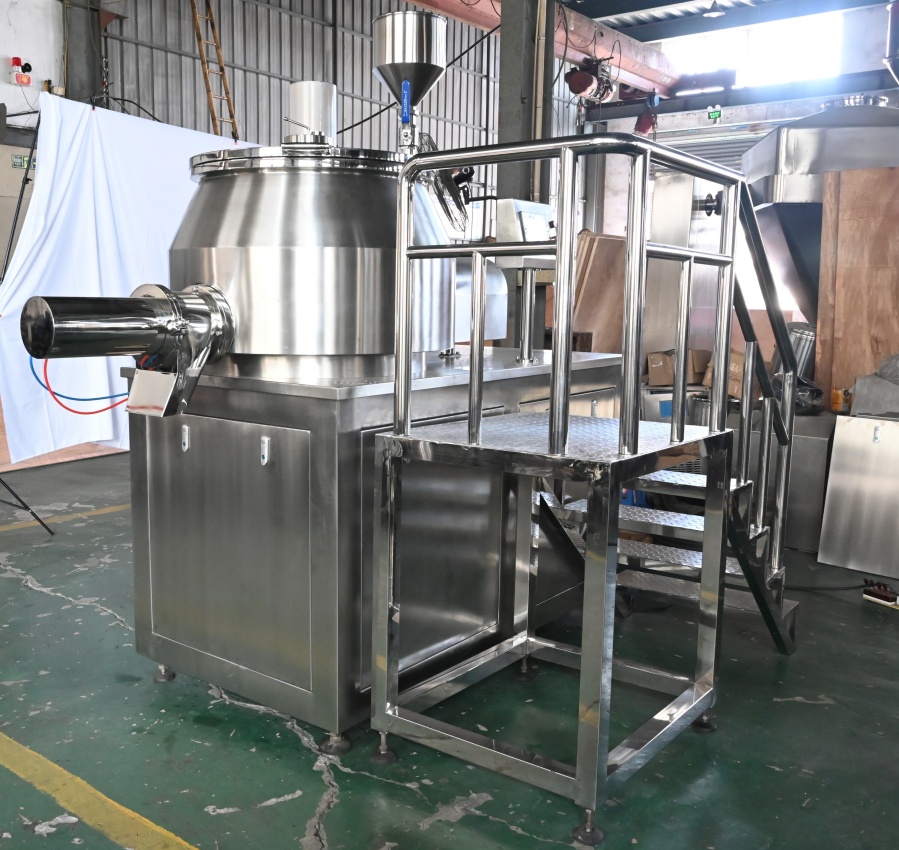
Think of it like making a snowball. You take loose snow and add water. Then you press it together. The result is a solid ball. Wet granulation works the same way. But instead of snow, we use powder materials.
Many industries use these machines. The most common use is making tablets and pills. The pharmaceutical industry relies heavily on wet granulation. It helps create medicines that are safe and effective.
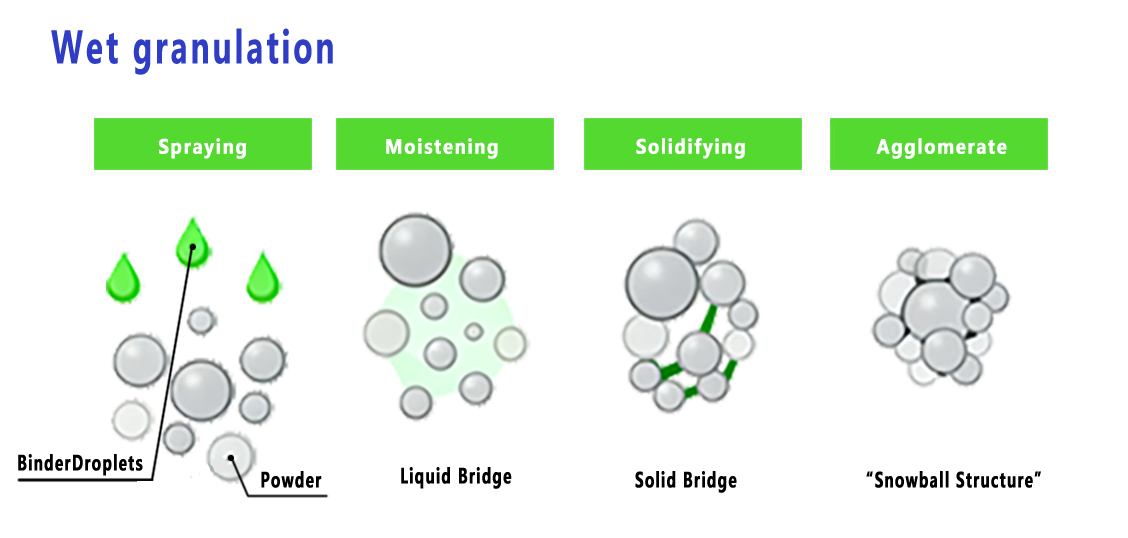
The process seems simple. But it requires the right equipment. A good wet granulation machine makes all the difference. It ensures the final product meets quality standards.
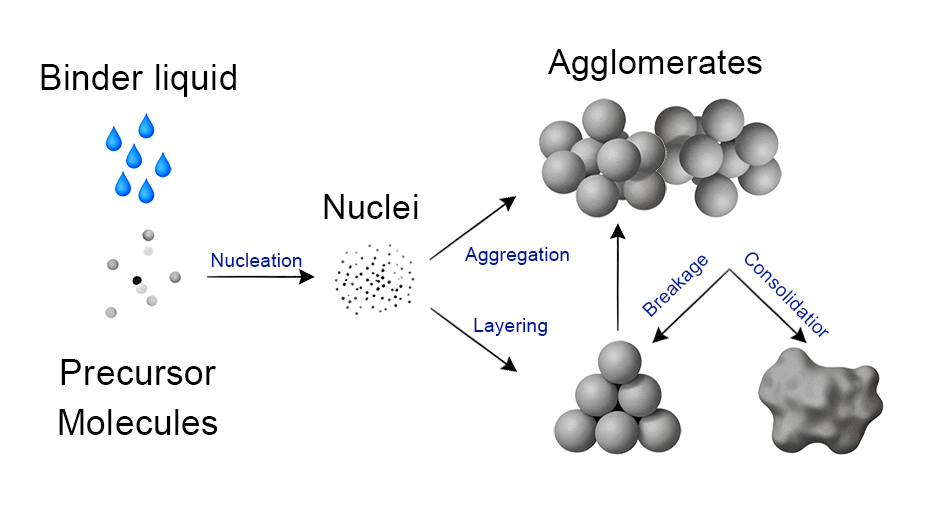
Which Machine is Used for Wet Granulation?
Several types of machines can do wet granulation. Each has its own benefits. Here are the most common ones:
High Shear Mixer Granulator
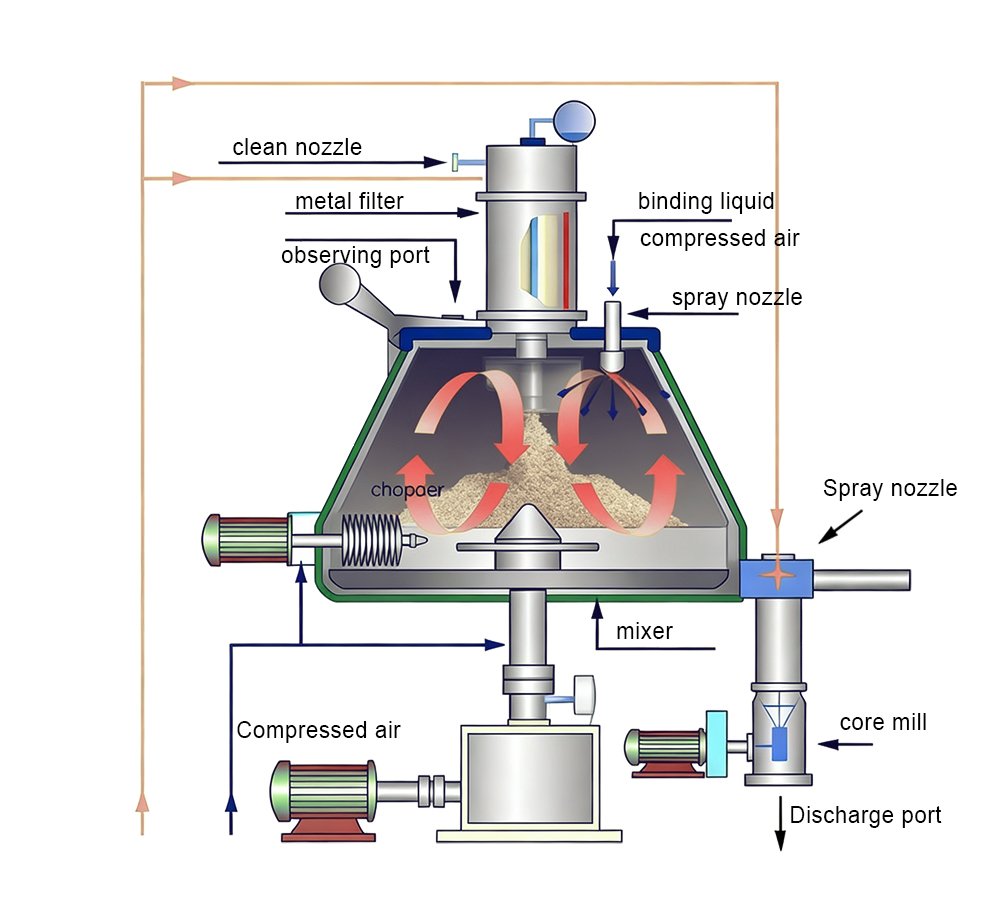
This is the most popular choice. It has a large bowl with mixing blades. The blades spin at high speed. They mix the powder while adding liquid. The high speed creates the granules quickly.

These machines work fast. They can finish a batch in 15-30 minutes. They also give consistent results. Many pharmaceutical companies prefer this type.
Fluid Bed Granulator
This machine uses hot air. It blows air up through the powder. The powder floats like it’s in water. While floating, liquid spray coats the particles. This creates granules.
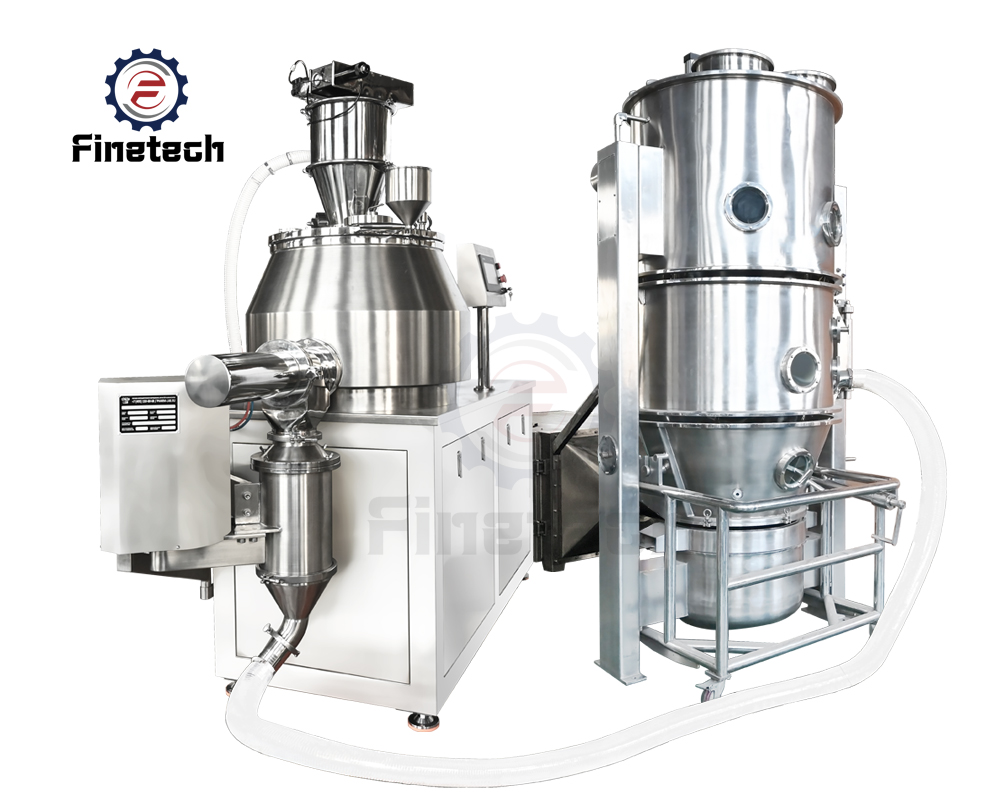
Fluid bed granulators are gentle. They work well with heat-sensitive materials. They can also dry the granules at the same time. This saves time in production.
Oscillating Granulator
This machine pushes wet mass through a screen. The screen has holes of specific sizes. As the material goes through, it forms granules. The size depends on the screen holes.
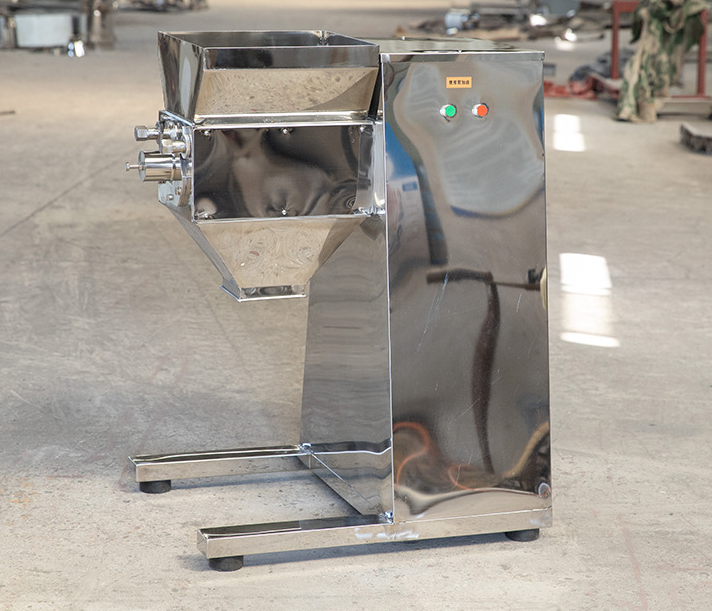
This method is simple and reliable. It works well for small batches. Many generic drug manufacturers use this type.
Roller Compactor
This machine presses powder between two rollers. The pressure creates sheets. Then the sheets break into granules. This method uses less liquid than others.
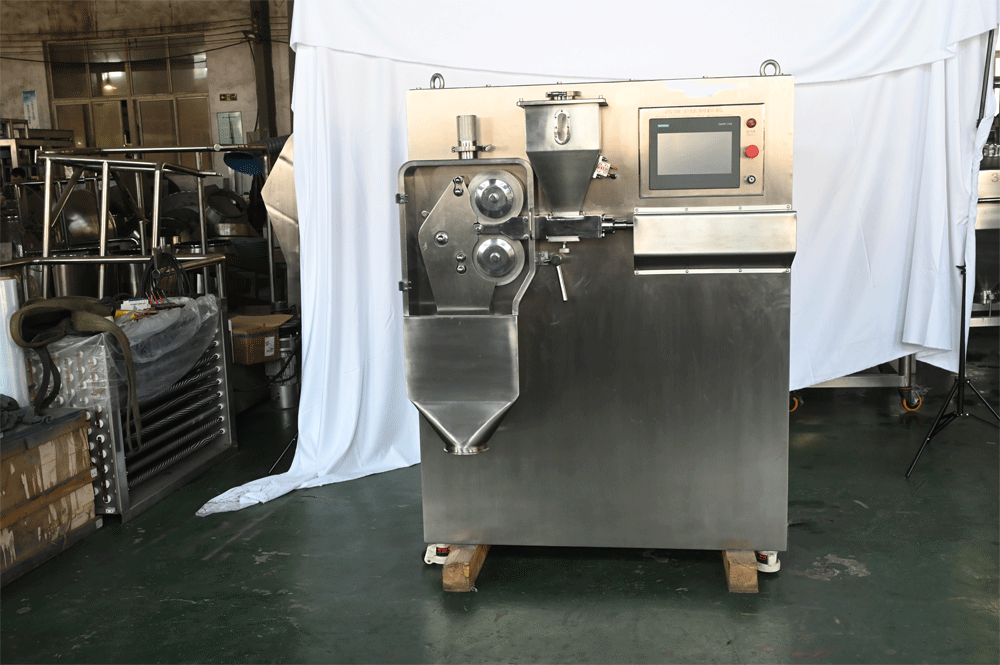
Roller compactors work well with moisture-sensitive drugs. They create very uniform granules. However, they cost more than other options.
Wet Granulation Machine Features
Wet granulation has many important uses. Here are the main reasons why companies choose this process:
Improving Flow Properties
Powders often don’t flow well. They stick to surfaces. They create uneven distribution. Granules flow much better. They move smoothly through equipment. This makes manufacturing easier.
Reducing Dust
Fine powders create dust clouds. This is dangerous for workers. It can also contaminate other products. Granules are larger and heavier. They don’t create dust problems.
Better Mixing
Some ingredients don’t mix well as powders. Different particle sizes separate easily. Granulation locks ingredients together. This ensures uniform distribution in the final product.
Controlled Release
Some medicines need to release slowly. Granulation can control this release. The binding liquid affects how fast the granule dissolves. This helps create extended-release tablets.
Preventing Segregation
Different powders have different densities. During transport, heavy particles sink down. Light particles rise to the top. Granulation prevents this separation.
Applications of Wet Granulation Machine
Wet granulation machines serve many industries. Here are the main applications:
Pharmaceutical Industry
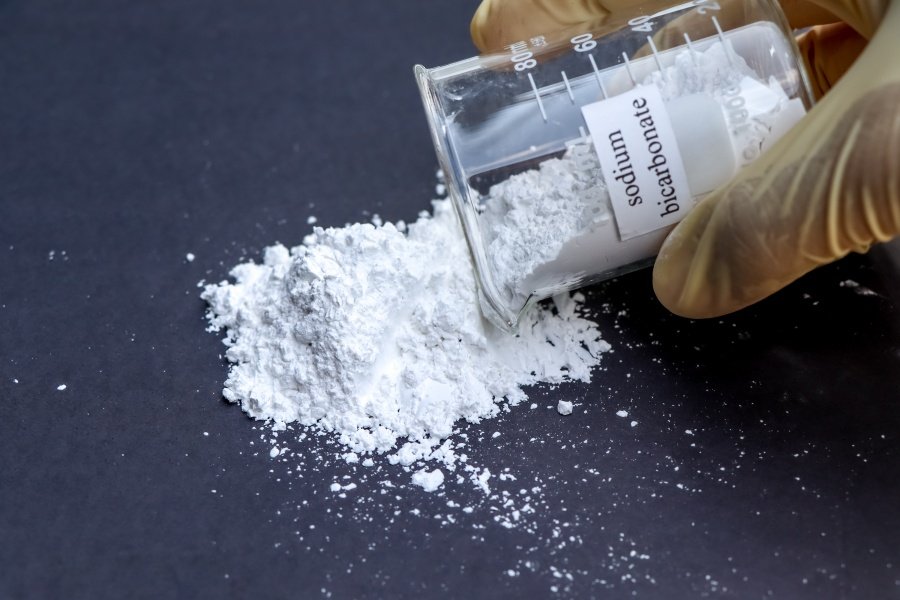
This is the biggest user of wet granulation. Almost all tablets go through this process. It helps create medicines that:
- Dissolve at the right speed.
- Have consistent strength.
- Don’t break during handling.
- Taste better for patients.
Food Industry
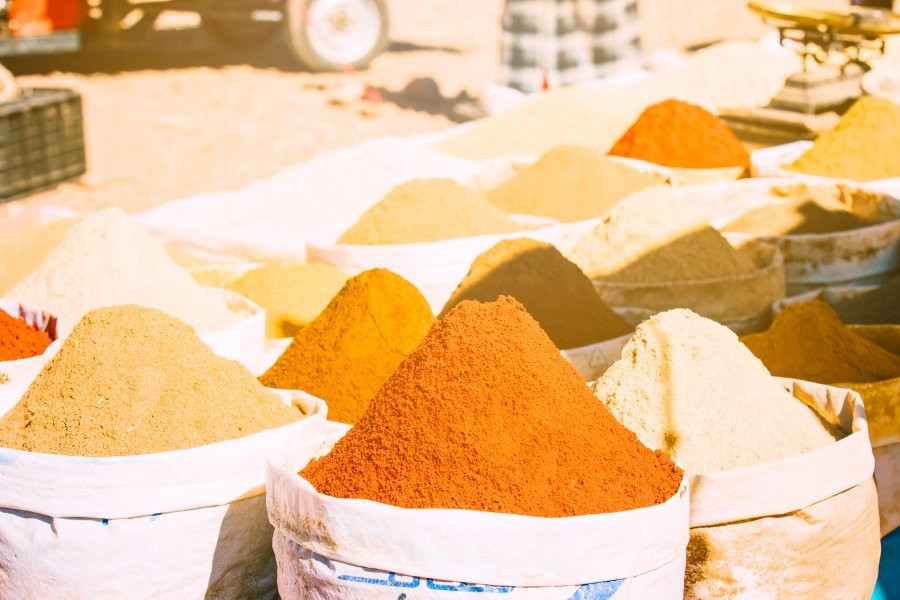
Food companies use granulation for:
- Instant coffee and tea.
- Soup mixes.
- Breakfast cereals.
- Seasoning blends.
- Baby food powders.
Chemical Industry
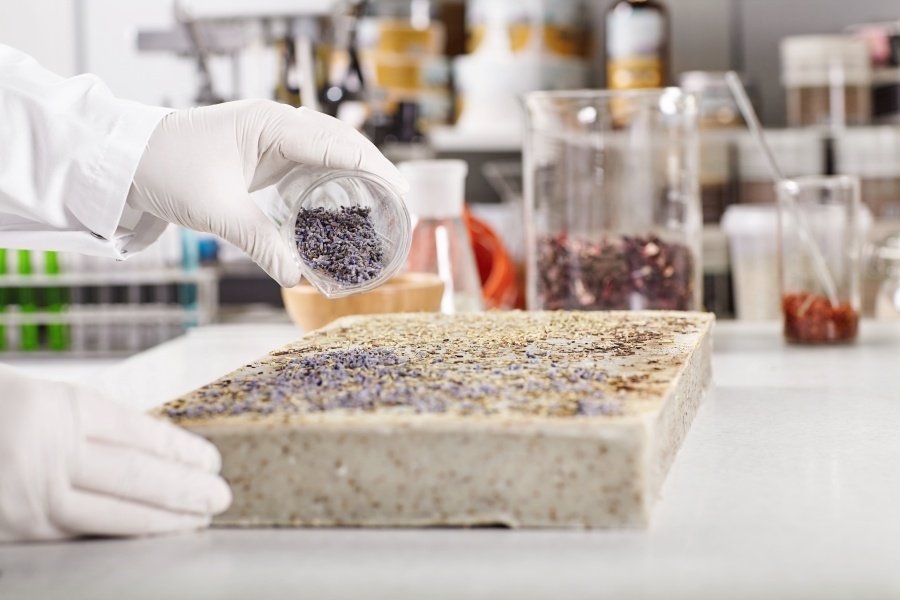
Chemical companies make:
- Fertilizers.
- Detergent powders.
- Paint additives.
- Plastic compounds.
- Agricultural chemicals.
Cosmetic Industry
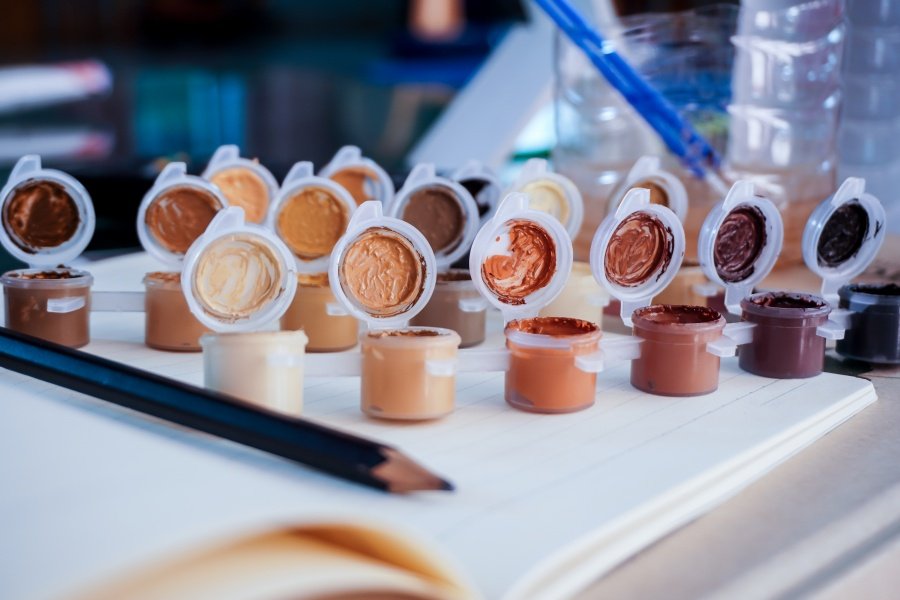
Beauty companies create:
- Pressed powder makeup
- Bath salts
- Face masks
- Perfume beads
- Skincare products
How are Tablets Manufactured by Wet Granulation?
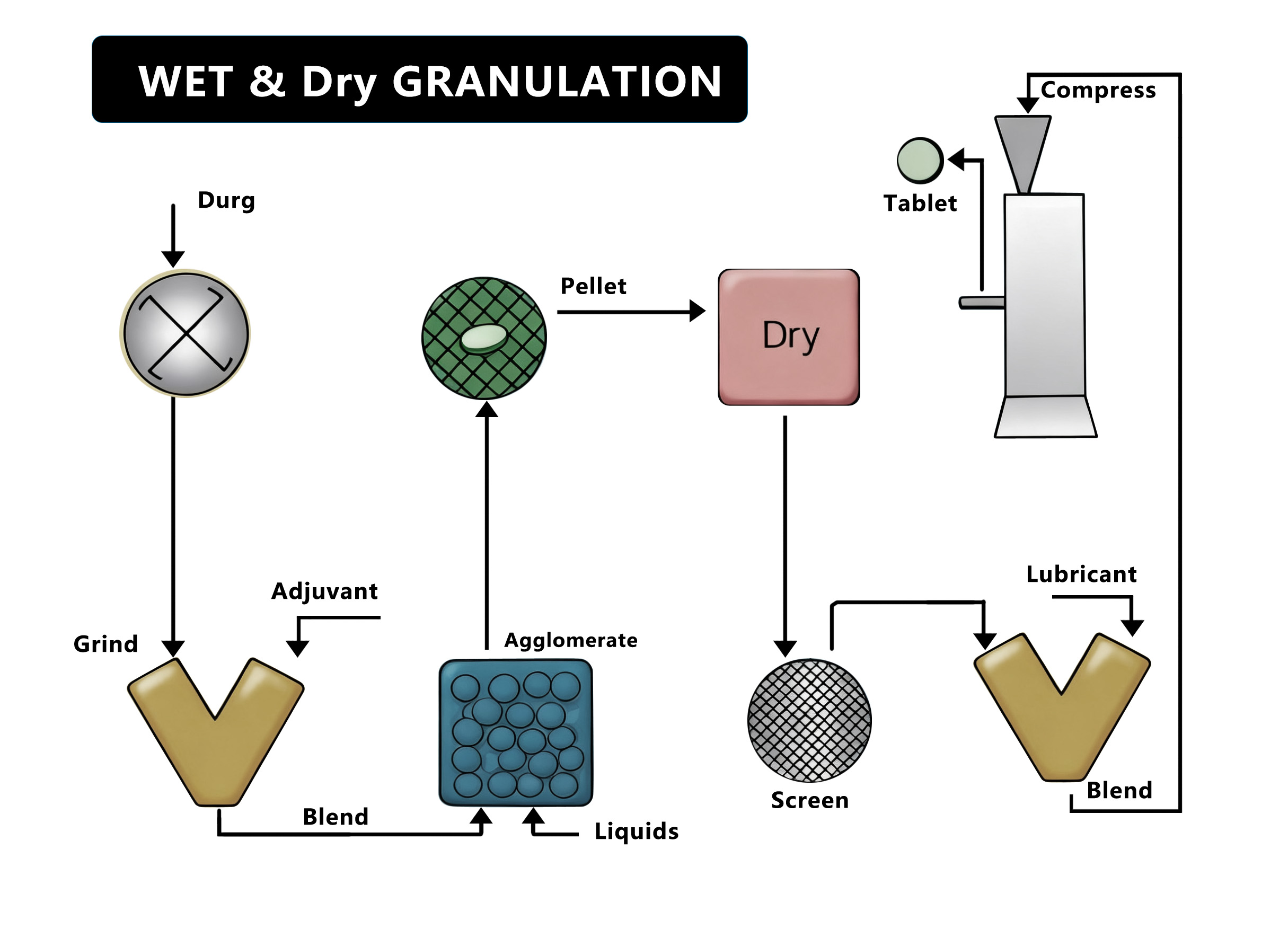
Making tablets through wet granulation follows clear steps:
Video Source: https://www.youtube.com/watch?v=wbuC6bpWQM8
Step 1: Weighing and Dispensing
First, workers measure all ingredients. This includes the active drug and helper materials. Everything must be exact. Even small errors can ruin the batch.
Step 2: Mixing Dry Ingredients
All dry powders go into the granulator. The machine mixes them thoroughly. This ensures even distribution. Mixing usually takes 5-10 minutes.
Step 3: Adding Granulating Liquid
Workers slowly add the binding solution. Common binders include:
- Starch paste.
- Gelatin solution.
- Cellulose mixtures.
- Synthetic polymers.
The liquid amount is critical. Too little won’t bind properly. Too much creates mud.
Step 4: Granulation
The machine continues mixing while adding liquid. Granules start forming immediately. The operator watches carefully. They stop when granules reach the right size.
Step 5: Drying
Wet granules contain too much moisture. They go into a drying oven. The temperature removes excess water. This usually takes 2-4 hours.
Step 6: Sizing
Dried granules may clump together. A sizing machine breaks large clumps. It also removes fine particles. This creates uniform granule size.
Step 7: Final Mixing
The sized granules mix with final ingredients. This includes lubricants and disintegrants. These help the tablet work properly.
Step 8: Compression
Finally, the granules go to a tablet press. The machine compresses them into tablets. Each tablet has the exact dose needed.
Conclusion
Wet granulation machines are essential tools in modern manufacturing. They transform loose powders into useful granules. This process improves product quality and makes manufacturing easier.
The pharmaceutical industry especially benefits from wet granulation. It helps create safe, effective medicines. The process ensures each tablet has the same strength. It also makes tablets that dissolve properly in the body.
Choosing the right machine depends on your needs. High shear mixers work well for most applications. Fluid bed granulators suit heat-sensitive materials. The key is matching the machine to your specific requirements.
Understanding wet granulation helps make better products. It also improves manufacturing efficiency. As technology advances, these machines continue to evolve. They become faster, more precise, and easier to use.
Whether you’re making medicines, food products, or chemicals, wet granulation offers clear benefits. It’s a proven process that delivers consistent results. With proper equipment and training, any company can succeed with wet granulation.
FAQS
1. What is a wet granulator, and what does it do?
A wet granulator (often a high-shear mixer-granulator) is a machine used in pharmaceutical, food, and chemical industries to agglomerate fine powder particles into larger, denser granules. This is achieved by adding a liquid binder (water, ethanol, solution) while mixing with a high-speed impeller and chopper.
2. What’s the difference between a high-shear and low-shear granulator?
High-Shear: Uses a high-speed impeller (at the bottom) and a fast chopper. Granulation is rapid, producing dense, less porous granules. Most common for pharmaceuticals.
Low-Shear: Uses a planetary or ribbon mixer. Granulation is gentler and slower, producing softer, more porous granules. Often used for sensitive materials or food products.
3. What is the “end-point” of granulation?
The end-point is the optimal moment when granules have the desired size, density, and moisture content. Determining it is critical for batch reproducibility. It can be detected by monitoring power consumption (watts or amps), impeller torque, or using advanced Process Analytical Technology (PAT) like acoustic or NIR sensors.
4. How do I choose the right binder and binder concentration?
The choice depends on the API and excipient properties. Common binders include PVP, HPMC, and starch paste. Concentration is determined through small-scale Design of Experiments (DoE) trials, balancing granule strength with dissolution requirements. Too little binder leads to weak granules; too much can cause over-wetting or hardening.
5. What are the key challenges when scaling up a wet granulation process?
Maintaining consistent binder addition time relative to batch size.
Adjusting impeller and chopper speeds (tip speed often kept constant).
Accounting for different power consumption profiles and heat generation in larger equipment.
Ensuring similar granulation endpoint across scales using the same measurement method (e.g., power consumption profile).
6. What are critical GMP considerations for wet granulators?
Equipment must be made of 316L stainless steel with smooth, non-porous surfaces.
Documentation of all parameters (speeds, times, temperatures, power) for batch records.
Calibration of all instruments (load cells, ammeters, pumps).
Preventive maintenance of seals, blades, and motors.
Change control for any process or equipment modification.
7. How does PAT (Process Analytical Technology) apply to wet granulation?
PAT tools like Near-Infrared (NIR) spectroscopy or acoustic emission sensors allow real-time, in-line monitoring of moisture content and particle size, enabling true quality-by-design and real-time release.
8. When should I consider continuous wet granulation?
For high-volume production with a robust formulation. Continuous twin-screw granulators offer better consistency, smaller equipment footprint, and are easier to scale.