Skip to content
  English
  Russian
  Turkish
  Spanish
  French
  German
  Japanese
Artificial intelligence is no longer limited to the tech sector; instead, it’s quickly getting popular in the pharmaceutical industry. It can accelerate drug delivery and optimize all manufacturing processes. That’s the reason AI is projected to generate between $350 billion and $410 billion for the pharmaceutical sector in 2025. If you want to know the role of artificial intelligence in the pharmaceuticals and the challenges you may encounter, keep reading!
Top Artificial Intelligence in the Pharmaceutical Industry Trends
The impact of artificial intelligence in the pharmaceutical industry is highly transformative, as more companies are adopting it. Here are some ways AI is going to help you:
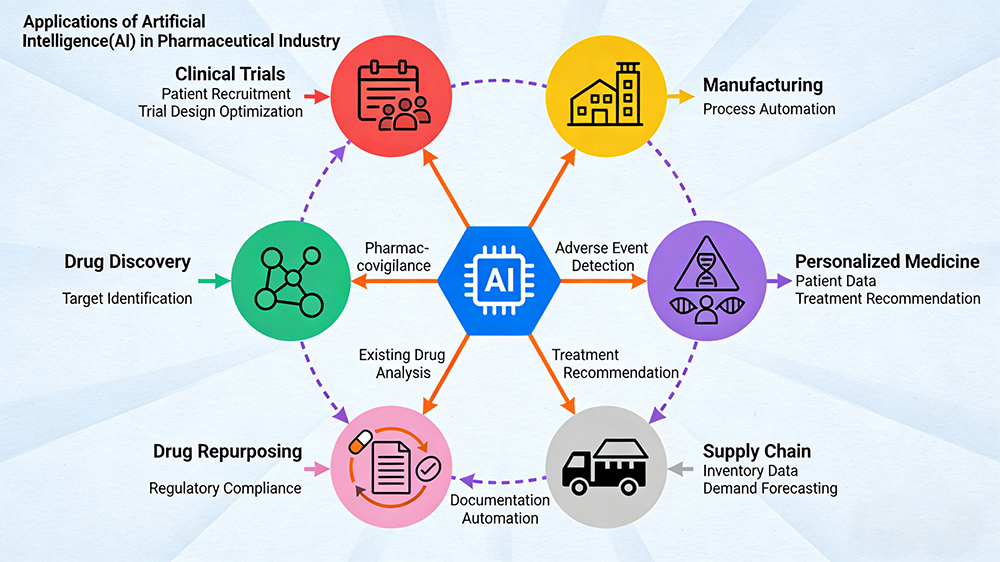
Drug Discovery and Development
In the past, discovering new drugs and making them commercially available was not only time-consuming but also very expensive. Gladly, AI has taken over this arduous task! How? Well, this technology helps you identify disease biomarkers and potential drug candidates. You can use ML algorithms to analyze vast amounts of chemical, biological, and clinical data to make faster and more accurate discoveries.
For instance, AI can scan millions of molecules and predict which one might block a cancer-related protein. A notable example of this is how MIT researchers utilized deep learning models to identify a new drug called Halicin. They trained the AI to predict the antibacterial properties of molecules and then screened vast chemical libraries to find the right option.
This drug helped overcome issues associated with resistant bacteria that traditional medicines overlooked. Even 50% of European and US pharmaceutical manufacturing companies know artificial intelligence can help bring new drugs to market more rapidly and securely. However, that’s not all; pharmaceutical businesses can also utilize AI to predict the safety profile of the developed drug, thereby minimizing risks later on.
Clinical Trials
Clinical trials are important for medical research, as they serve as the primary method for evaluating the efficacy and safety of new treatments and drugs. However, these trials present numerous challenges, including patient recruitment and regulatory compliance. So, another way artificial intelligence in the pharmaceutical industry can help you is by streamlining the entire clinical trial process.
AI can quickly go through vast amounts of data from electronic health records (EHRs) as well as social media to find out the participants who meet the set criteria. This speeds up the whole recruitment process and ensures you get the exact match. On top of this, AI guides you in designing the trial methodology, including treatment plans and data collection strategies.
It simulates various trial designs, helping you predict the most effective protocol. Once the trials are complete, there’s a huge amount of data that needs to be collected, managed, and analyzed. You can use it to identify anomalies and trends, thereby maintaining data integrity. The best part is that AI prepares and submits the regulatory documents, so your drugs comply with local and international guidelines.
Supply Chain and Manufacturing
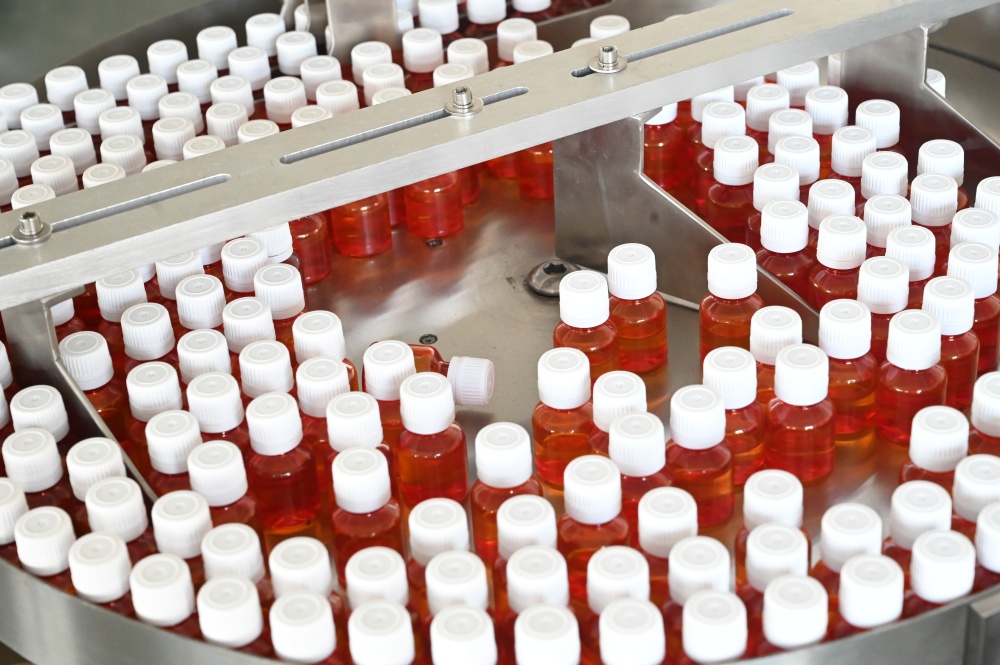
Besides drug design and trials, AI is also aiding pharmaceutical businesses in streamlining supply chain management and manufacturing processes. These advanced models analyze historical data and seasonal trends to predict what medications or treatments are in demand.
Based on that, you can then optimize inventory levels across all distribution centers. Hence, there are no stockouts or overstocking that can harm your business. With AI, you can also monitor the movement of raw materials and goods.
As a result, there’s enhanced protection against counterfeit products, which improves trust in your products. What’s truly amazing is that many pharma businesses are now implementing IoT sensors and other devices to optimize routes and avoid delays, particularly in cold chain logistics.
Personalized Medicines and Treatments
Each person has a different body chemistry; therefore, the approach of designing general medicines has become outdated. There’s no one-size-fits-all solution, particularly when it comes to pharmaceuticals.
This leads to the emergence of personalized medicines that are made for a patient considering their genetic makeup, lifestyle choices, and environmental factors.
Nonetheless, manually tracking all this data is quite difficult, but AI can make it all easy. AI-powered genomics can easily pinpoint genetic mutations responsible for certain diseases, enabling the delivery of targeted treatments and custom medicines.
Here are some other ways that AI can aid in personalization:
- AI tools can study how a patient’s body breaks down medicines so doctors can adjust the dose to avoid side effects.
- ML systems predict which patients are more likely to respond to a specific treatment, saving time and avoiding errors.
- AI helps identify patient subgroups with similar characteristics and health issues for timely and targeted interventions.
The major benefits of artificial intelligence in the pharmaceuticals include high-quality products, improved patient outcomes, and reduced costs.
Challenges of Artificial Intelligence in the Pharmaceutical Industry
While artificial intelligence in the pharmaceutical industry is beneficial, it also presents some challenges that you should be aware of, such as:
Lack of Data Privacy
One of the major challenges of artificial intelligence in the pharmaceutical industry is the lack of data security and privacy. Since AI analyzes a lot of systems and data as well as handles sensitive patient information, it needs to be protected well.
Any mistake or loophole can allow hackers to gain access, potentially leaking sensitive data that can be misused by third parties. This data can then be sold on the dark web or used for identity theft and even insurance scams, which is all very risky.
Integration with Existing Data Systems
While artificial intelligence in the pharmaceutical industry makes your daily tasks smoother, integrating it with existing data systems can be a challenging task. For instance, many pharma companies still use outdated software and systems that store data in different formats.
As you connect AI or ML solutions to that technological infrastructure, there may be compatibility or data transfer issues. The whole system can then slow down or even crash, leading to disrupted workflows.
Ethical Considerations
AI doesn’t just collect data from one source; instead, it analyzes EHRs, wearable devices, and other documents. Some of that data is incomplete or has biases, influencing the final outcomes.
For instance, if a system is trained mostly on data from patients in a specific age group or ethnicity, it might make incorrect predictions for people outside that group, leading to unfair treatment plans.
What are the Pharmaceutical Companies Using Artificial Intelligence
Nowadays, many pharmaceutical companies use AI to speed up their processes and drive innovation. Here’s an overview of some:
- Pfizer: Pfizer uses AI to accelerate drug discovery by analyzing vast datasets and automating regulatory processes.
- Sanoff: Sanoff utilizes AI to select lipid nanoparticles that make up the base of mRNA vaccines, thereby reducing production times. In addition, they use it to improve the overall design and execution of clinical trials.
- Bayer: Bayer also uses AI to reduce supply chain disruptions and minimize drug waste, enabling it to deliver drugs in a timely manner to end customers.
FAQs
Does AI replace human experts in pharma?
No, AI is not replacing human experts; rather, it serves as a powerful tool to support their decisions and judgments.
What is the future of AI in pharmaceuticals?
The future of AI in pharmaceuticals is promising, with advancements in predictive analytics, in silico trials, and AI-generated drugs.
What type of data does AI need in the pharmaceutical industry?
The types of data AI needs include electronic health records, chemical structures, genetic data, and real-world patient information.
Conclusion
Artificial intelligence in the pharmaceutical industry is much-needed, whether you are a small or a big pharma company. Wondering where you can get top-notch equipment for your business? Get in touch with Finetech’s Pharmaceutical Equipment today and explore our massive range of durable products!
Copyright Notice:
You may not reproduce, modify, publish, display, transmit, or in any way exploit any content on this website, or use such content to construct any kind of database without prior express written approval by Finetech Group. For permission to use the content, please contact: info@pharmamachinecn.com
Disclaimer:
The information contained in this article is for general information purposes only. The Company does not guarantee the accuracy, relevance timeliness or completeness of any information, and the Company assumes no responsibility for errors or omission in the content of this article.