Skip to content
  English
  Russian
  Turkish
  Spanish
  French
  German
  Japanese
If you’re researching how to buy a blister machine, you’re already past the basics. What you need now is clarity on which machine will actually work for your production, compliance, and budget, as well as which ones to avoid.
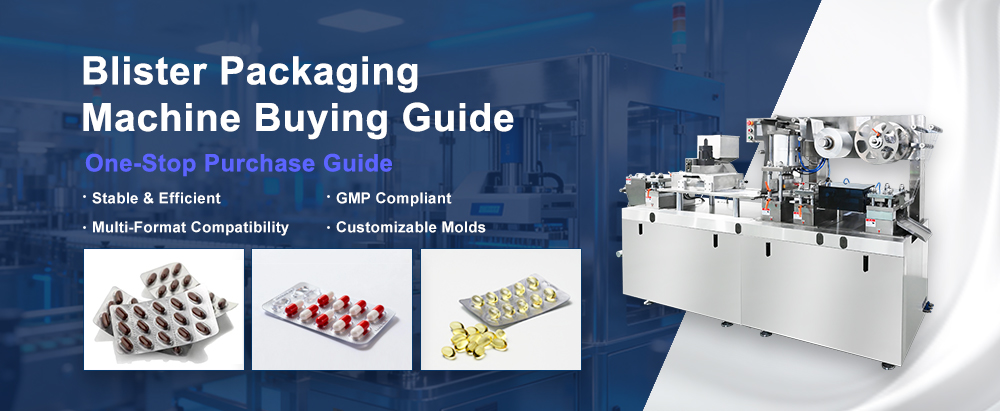
Blister machines vary widely in forming methods, sealing accuracy, output speed, and material compatibility. A poor buying decision can result in failed stability tests, audit issues, production bottlenecks, or expensive retrofits, especially in pharmaceutical and food-grade environments.
But don’t worry!
Below, we’ve created a blister machine buying guide for pharmaceutical and food-grade applications. By following the key factors outlined in this guide, you’ll be able to make a confident, compliant, and cost-effective purchasing decision.
Before You Buy: 10 Blister Machine Factors That Matter (Pharma & Food Sectors)
Selecting a blister packaging machine in 2026 demands careful attention to product requirements, regulatory compliance, and production capacity. Whether investing in high-speed pharmaceutical machinery or equipping a food-grade facility, the chosen equipment must meet current industry standards while remaining adaptable to evolving manufacturing demands.
To help make an informed decision, here are ten essential factors to consider before purchasing your next blister packaging machine.
1. Industry-Specific Requirements
The first step in selecting a blister packaging machine is to understand your specific industry requirements.
Pharmaceutical manufacturing facilities operate under a highly sterile environment to maintain product purity and biocontainment. Strict regulatory compliance remains non-negotiable, as microscopic contamination carries life-threatening risks and legal liabilities.
On the other hand, food-grade operations focus on maximizing speed and cost efficiency. The machine you choose must deliver high-volume output while maintaining the best hygiene standards to prevent spoilage.
2. Core Working Mechanism
Blister packaging machines operate using two primary methods: roller-type and flat plate. Choosing the right type depends on your product’s shape, size, and production needs.
Roller-type machines use rotating cylindrical molds to heat and form plastic into blisters. A heat-sealing device then bonds the cover film to the blister at a precise temperature and pressure.
These machines are ideal for shallow blisters, such as tablets and small capsules, where vacuum forming is sufficient to create uniform pockets.
Flat plate machines, on the other hand, use stationary molds with compressed air to achieve positive-pressure forming. Compressed gas pushes the softened film into the mold before the product is loaded. This method creates deep or irregular-shaped pockets, making flat plate machines best suited for items like medical syringes, surgical kits, or specialty chocolates that require customized mold shapes.
3. Ideal Forming Technology
The next factor is selecting the right forming technology between thermoforming and cold forming.
Thermoforming packaging machines heat plastic films, typically PVC, PET, or PP, to shape the blisters. This method is cost-effective and produces clear, transparent pockets, which makes it ideal for products where visibility matters, such as OTC drugs, candies, or cheese portions.
Cold forming, in contrast, uses a multi-layer aluminum laminate that is mechanically pressed into shape without heat. Alu-Alu blister packaging machine creates a total barrier against light, oxygen, and moisture, offering maximum protection. Such a level of defense is essential for life-saving antibiotics and highly sensitive pharmaceutical compounds that degrade under environmental exposure.
4. Production Output Demand
What is your required production volume, or how much do you need to package daily? Output is decided by how many blister packs the machine can produce within a specified duration.
A manual machine can handle between 200 and 600 packs per hour. Conversely, a fully automated system can produce thousands of packs per hour.
It is best to choose a machine capable of exceeding current demand by at least 15% to allow for future production scaling.
5. Verify Material Compatibility
Material compatibility is another key factor in the selection of the best packaging equipment. There are numerous materials used in blister packaging, such as PVC, PET, PP, and aluminum foil. As a manufacturer, you must verify that the chosen machine handles specific film thicknesses and foil compositions without compromising seal integrity.
Modern machines must be compatible with sustainable materials like Polypropylene (PP) and bio-based films like PLA. Also, check if the heating and sealing stations offer specific temperature control for handling sensitive, eco-friendly alternatives.
6. Product Size and Geometry
Do you handle simple geometric shapes or complex product profiles? Pharmaceutical products are relatively uniform, whereas food and medical articles are diverse and often require customized feeding systems.
Irregularly shaped items, such as gummies, syringes, and lollipops, require specialized handling to prevent product damage during the “drop” into the cavity.
Advanced machines use dedicated vibratory or planetary feeders to maintain 99.5% filling accuracy regardless of product shape. Accurate placement prevents product misalignment, which can lead to leaks or contamination during the high-pressure sealing stage
7. Regulatory Compliance (FDA/GMP)
For the pharmaceutical and food industries, regulatory compliance is non-negotiable. Blister packaging machines must be designed to consistently produce safe, high-quality products while minimizing contamination, mix-ups, and errors.
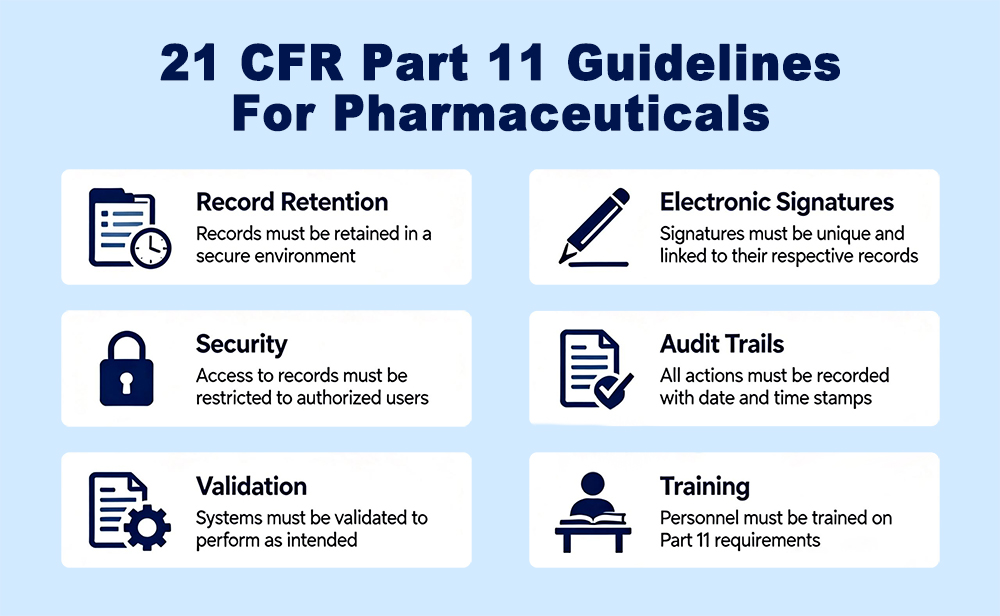
Pharmaceutical-grade equipment must adhere to Good Manufacturing Practices (GMP) and meet FDA 21 CFR Part 11 standards for electronic records. Comprehensive validation packages, including IQ, OQ, and PQ, are essential to pass audits and maintain regulatory approval.
Food manufacturers should also prioritize machines that support Global Food Safety Initiative (GFSI) standards, ensuring products meet international safety requirements and maintain market access.
8. Ease of Operation
Selecting a blister machine with an intuitive HMI (Human-Machine Interface) is critical for reducing the learning curve and minimizing human error. Clear, user-friendly dashboards allow operators to manage the machine efficiently, even under high-pressure production schedules.
Remember, productivity suffers during downtime, so machines with tool-less changeover designs are highly recommended. Quick-release mechanisms enable components to be swapped without specialized tools, ensuring faster product transitions.
Additionally, machines that are easy to maintain support routine inspections on schedule, which reduces costly interruptions and keeps production running smoothly.
9. Analyze Total Cost of Ownership (TCO)
The initial purchase price of a blister packaging machine is only one part of the investment. Total Cost of Ownership (TCO) includes not just the sticker price, but also energy consumption, spare parts, maintenance, and labor requirements.
You should clearly research and estimate all of these ongoing costs before making a purchase decision. Compare energy efficiency between models, evaluate the availability and cost of replacement parts, and understand how often routine maintenance is required.
Labor requirements, such as the need for specialized operators or frequent changeovers, can also add to operating expenses.
It’s also recommended to invest in premium machinery. High-quality components help minimize emergency repairs and part replacements. They also bridge the gap between higher upfront costs and sustained profitability.
10. Manufacturer Support
Once you have finalized all the specifications, it’s time to choose a reliable manufacturer. You should choose an industry partner that guarantees long-term part availability and expert technical support.
Conduct thorough market research to confirm whether a vendor provides on-site installation, operator training, and online maintenance services.
Modern systems equipped with IoT connectivity allow manufacturers to perform remote diagnostics and predictive maintenance. Such digital integration identifies mechanical issues before they escalate into costly shutdowns. Strong manufacturer support and quick response times protect your production continuity and brand reputation.
Procurement Checklist: Pre-Purchase Evaluation
Before finalizing your equipment investment, verify these critical operational factors with your manufacturer. This thorough assessment ensures the machine aligns perfectly with your specific facility requirements and production goals.
| Category | Verification Points |
| Material Integrity | Does the machine use 316L stainless steel for all product-contact parts? |
| Tool-less Efficiency | Can changeovers be performed by a single operator without specialized tools? |
| Data Compliance | Does the HMI support 21 CFR Part 11 for encrypted audit trails (Pharma)? |
| Forming Versatility | Is the heating station capable of handling both PVC and eco-friendly PP? |
| Facility Integration | Does the machine footprint include the necessary clearance for maintenance? |
| Scalability | Can the feeding system be upgraded to handle different product geometries later? |
| Support & Parts | Does the vendor guarantee spare part availability for the next 10 years? |
FAQs
1. How do plug-assist mechanisms ensure uniform wall thickness in deep-draw blisters?
Mechanical plugs prestretch the film before vacuum application occurs. This technique prevents localized thinning at cavity corners. Uniformity remains vital for maintaining structural robustness in deep-draw applications, such as those required for pre-filled syringes or vials.
2. What feeding systems best manage irregular food products versus standardized tablets?
Standard tablets utilize vibratory feeders with brush assemblies for alignment. Irregular food items, like gummies, often necessitate specialized flood feeders or multi-head weighers. These systems prevent product sticking and make sure accurate cavity filling for non-uniform shapes.
3. How do tool-less changeover systems improve Overall Equipment Effectiveness (OEE)?
Quick-release handles and pre-aligned components reduce changeover downtime from hours to minutes. This efficiency allows manufacturers to run multiple small batches economically. Active production time is maximized, which is vital for facilities managing numerous SKUs.
Secure Long-Term Operational Success
Finalizing a blister packaging machine is a high-stake decision that dictates your factory’s output for the next decade. Success depends on moving beyond a simple comparison and understanding how a machine integrates with your unique facility layout and labor force
Blister machine buying guide for pharmaceuticals and food-grade serves as a starting point. The long-term professional success relies on scalability, material flexibility, and regulatory resilience.
For long-term professional growth choose an equipment partner that offers more than just hardware. Finetech serves as your one-stop solution for comprehensive packaging excellence. From high-performance machinery to localized technical support, our experts provide the specialized help you need to succeed in 2026.
Visit our website and see how our tailored solutions can enhance your production standards and secure your market position.