Skip to content
  English
  Russian
  Turkish
  Spanish
  French
  German
  Japanese
Many people often confuse the terms “drug” and “medicine,” using them interchangeably. However, both differ in their composition and mode of action in the human body. You must properly understand the difference between a drug vs medicine to ensure you provide the right options for different patients’ conditions. Want to know more about their unique properties? Continue reading!
What is a Drug?
A drug is actually a chemical substance that changes biological functions, leading to physiological and biochemical changes. It contains active pharmaceutical ingredients and can be used to treat diseases and promote overall well-being. It’s taken via different ways, including injection, inhalation, and ingestion. Here’s an overview of the classification of drugs:
- Therapeutic Drugs: Therapeutic drugs treat and prevent certain medical illnesses as well as lower symptoms. For instance, respiratory tract agents treat respiratory issues such as asthma and pneumonia.
- Mechanism of Action (Analgesics, Antidepressants, and Antibiotics): Some drugs are categorized based on how they work in the body. Analgesics treat pain by targeting the central or peripheral nervous system, and aspirin is a good example. In addition, antibiotics are drugs that kill or stop bacterial growth, preventing infections.
- Natural Drugs: Natural drugs, as the name implies, are derived from living organisms such as plants, animals, and microorganisms that help manage diseases. Examples include penicillin and morphine from opium.
- Over-the-Counter Drugs: Over-the-counter drugs are readily available at nearby drug stores and don’t require a prescription for purchase, like ibuprofen.
What is Medicine?
A medicine is a drug or other composition used to treat, diagnose, cure, prevent, or alleviate diseases or other disorders in humans and animals. It can either be a biological or chemical compound and comes in various forms like pills, injections, and creams. Here are some key types of medicines:
- Essential Medicines: Essential medicines, as said by the World Health Organization (WHO), are those that fulfil the priorityhealthcare needs of a population. Examples include Paracetamol and Amoxicillin.
- Generic Medicines: These are off-patent drugs, and authorization is based on their efficacy and safety data from studies.
- Biologics and Biosimilars: Biologics are derived from living organisms, while Biosimilars are versions of already approved biologics, and both don’t have much clinical difference.
Drug vs Medicine: Key Differences
Now that you are aware of the basics of drugs and medicines, let’s discuss the difference in a drug vs medicine so you can make informed decisions:
Core Definition and Purpose
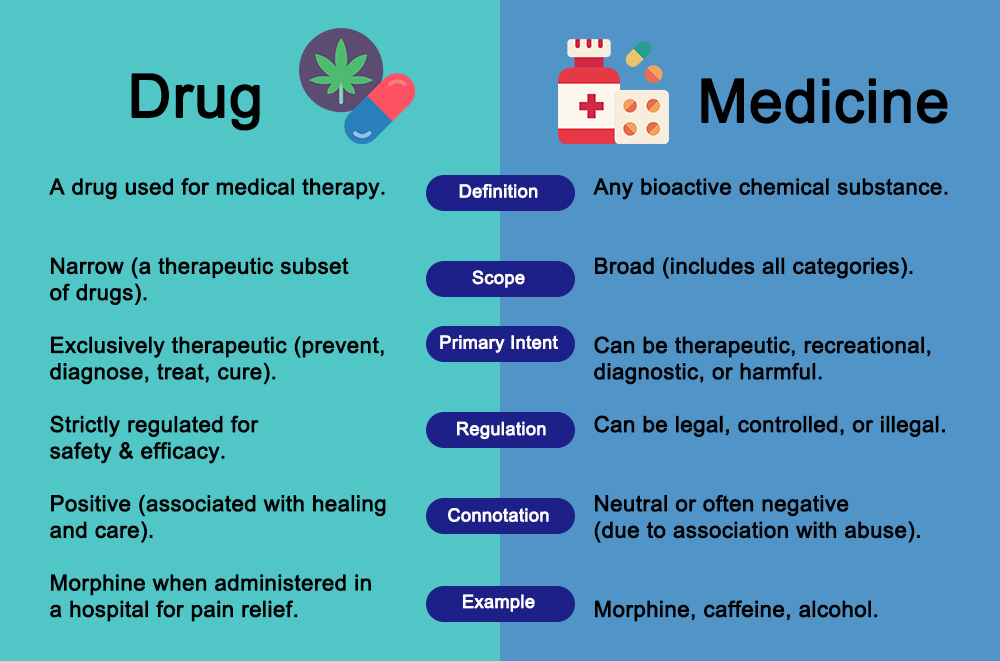
- Drug: A drug is actually a wider term that includes medicines, alcohol, tobacco, or any other illicit substances. It can be used for therapeutic and recreational purposes, including legal or illegal activities and research.
- Medicine: On the other hand, in a drug vs medicine, the latter are chemical substances that help human bodies physically and mentally, curing and preventing different diseases. It can also be used to lower symptoms and promote overall well-being.
Prescription
- Drug: Drugs can be easily taken either through a proper prescription or without one (illegally).
- Medicine: Medicines are purchased with a verified prescription to avoid misuse. Some over-the-counter drugs are available without it, too, for immediate relief.
Dosage Form
- Drug: In a drug vs medicine, the former is available in various dosage forms, including powders, pills, and injections.
- Medicine: Medicines are also versatile and commonly present in capsule, syrup, cream, and pill form.
Regulations
- Drug: Usage of a drug might be regulated like alcohol or medicinal ones, and also non-regulated like heroin.
- Medicine: Contrarily, medicines are strictly regulated by top bodies, including the FDA, CDSCO, and the EU, and are used only after approval.
Side Effects
- Drug: If anyone uses drugs for a long time, there are some concerns, such as habit forming, antibiotic resistance, and unexpected changes in the body. For instance, excessive alcohol consumption can lead to weight loss.
- Medicine: In a drug vs medicine, the latter’s side effects include nausea, vomiting, and liver failure. For instance, taking too much paracetamol can lead to acute liver failure and irreversible liver injury.
| Aspect | Drug | Medicine |
| Definition and Purpose | Substances including medicines, alcohol, tobacco, or illicit drugs. Can be used for therapy, recreation, and research. | Chemical substances that treat, prevent, and diagnose different diseases. |
| Prescription | Doesn’t always require a prescription. | Require a prescription, just sometimes not for over-the-counter medications. |
| Dosage Forms | Available as powders, pills, or injections. | Available as capsules, syrups, creams, or pills. |
| Regulations | Can be regulated or non-regulated. | Always regulated by the FDA, CDSCO, and EU. |
| Side Effects | Long-term use can cause addiction, antibiotic resistance, and bodily changes. | Lead to nausea, vomiting, and liver failure if misused. |
Conclusion
Whether you are a patient or a pharmaceutical manufacturer, it’s important to understand the difference between a drug vs medicine so you can provide the right solutions and navigate regulatory affairs. Looking for top-notch manufacturing equipment for your pharmaceutical needs? Contact Finetech Pharmaceutical Equipment today to discover our extensive range of certified, high-quality equipment.