English
  Russian
  Turkish
  Spanish
  French
  German
  Japanese
If you work in the pharmaceutical industry, you must have heard the word API (Active Pharmaceutical Ingredient). It’s an important component of a drug and delivers the intended therapeutic effect. But what actually is an API in pharmaceuticals? What are its types and composition? Let’s find out!
What is API in Pharmaceutical Industry?
API in the pharmaceutical industry is a biologically active component within drug formulations. It’s a chemical compound that’s known to exert a therapeutic response on the body.
Whether it’s eliminating inflammation or relieving pain, APIs are helpful in all.
They come in various forms, including liquid, powder, and crystals. However, know that APIs aren’t complete drugs; rather, they need an excipient for the safe and efficient clinical application.
Types of API in Pharmaceutical Industry
The pharmaceutical industry deals with multiple types of APIs, ranging from peptide APIs to Oligonucleotide APIs, among others. Here’s an overview of each:
- Peptide APIs: These APIs, as the name implies, are made of short-chain amino acids linked by peptide bonds. They are highly selective and quite effective at low doses. Not only this, but peptide APIs also accumulate in the body at low levels to reduce overall toxicity. They are often administered parenterally, as their oral bioavailability is low. You’ll commonly see these APIs in anti-aging, anti-inflammatory, and fat-burning medicines.
- Oligonucleotide APIs: Oligonucleotide APIs are short, synthetically produced sequences of DNA and RNA that serve as the active component. They target genetic materials precisely, treating various diseases, including genetic disorders and cancers.
- Small Molecule APIs: Another type of API in pharmaceuticals is the small-molecule APIs. These are chemical compounds with low molecular weight, typically less than 900 Daltons. Overall, they are scalable and affordable, and also treat a variety of diseases, ranging from headaches to body pain and cholesterol issues. Common medicines that use small-molecule APIs include ibuprofen, amoxicillin, and atorvastatin.
How Pharmaceutical APIs are Manufactured?
Now that you are aware of the core definition and types of API in pharmaceuticals, you must wonder about their composition and manufacturing.
Well, the composition of the API varies depending on the source and intended drug action. For instance, it can be peptides, nucleic acids, or proteins.
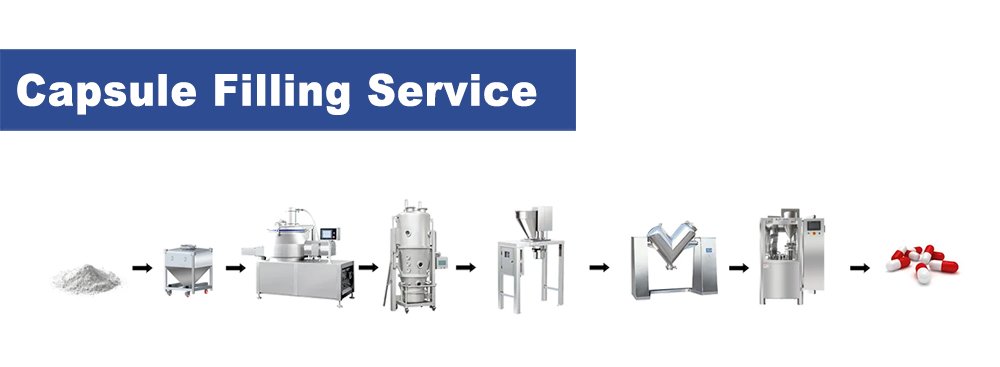
To help you better understand this, here’s an explanation of the APi manufacturing process:
Step 1: Feed Handling
The initial step in the manufacturing process is feed handling, which involves the collection and transportation of raw materials, such as peptides and nucleotides, for further reactions.
Step 2: Chemical Reactions
The raw materials are then placed in a reactor, and certain chemical reactions or biotechnology mechanisms change the feed into API. Here are the types of reactors that you can use:
- Batch Reactor: In a batch reactor, you provide feed in small batches and extract product at regular intervals. It’s made of stainless steel, and the size varies from 500 litres to 16 cubic meters. Agitation is applied in this for proper mixing of raw materials and heat transmission.
- Loop Reactor: Loop reactor is a continuously stirred reactor that’s employed for high-pressure gas-liquid processes. It’s much smaller than a batch reactor but produces the same quantity of products.
However, for biological processes like the fermentation of antibiotics, a fermenter is employed.
Step 3: Purification
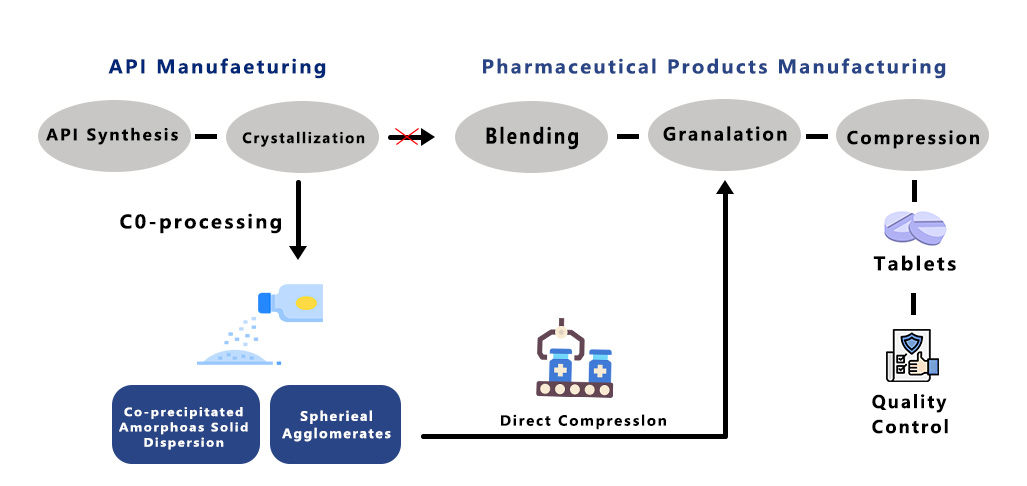
Once the chemical and biological processes are over, you get not only the API in pharmaceuticals but also unwanted byproducts. So, to purify your desired product, you can use crystallization, filtration, and distillation. However, if you aim for high purity, HPLC (High-Performance Liquid Chromatography) is a suitable option.
Step 4: Drying
After purification, your API may be in a wet state and need drying. For this purpose, you can use vacuum dryers or spray dryers, which remove moisture without affecting the API’s efficiency.
Step 5: Milling
Finally, milling is done to achieve a uniform particle size. Quality control is also performed at this stage, where every API is tested against parameters such as assay, purity, and heavy metals.
Conclusion
The role of API in pharmaceuticals is impressive as they ensure a drug’s efficacy and safety. If you are in search of reliable equipment for API manufacturing, look no further than Finetech. We have a wide range of pharmaceutical machinery that’s certified and competitively priced, streamlining your operations.
References:
APIs Active Pharmaceutical Ingredients: A guide to the pharma API market.
What Is an Active Pharmaceutical Ingredient (API)? All You Need to Know.
What Are APIs in Pharmaceutical Manufacturing?
Copyright Notice:
You may not reproduce, modify, publish, display, transmit, or in any way exploit any content on this website, or use such content to construct any kind of database without prior express written approval by Finetech Group. For permission to use the content, please contact: info@pharmamachinecn.com
Disclaimer:
The information contained in this article is for general information purposes only. The Company does not guarantee the accuracy, relevance timeliness or completeness of any information, and the Company assumes no responsibility for errors or omission in the content of this article.