...

Professional supplier of overall solutions for pharmaceutical manufacturing and packaging

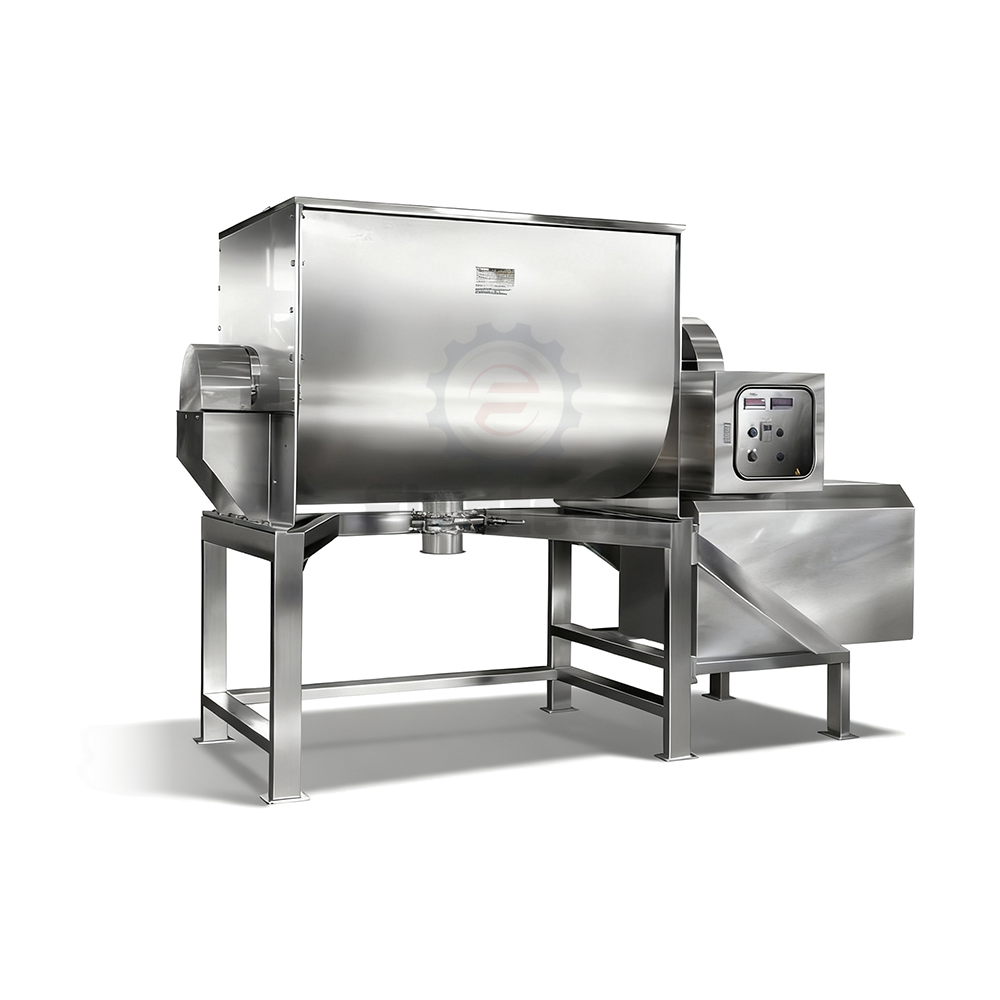
FTCH-200/400/600 Ribbon Mixer Machine

This Ribbon Mixer is applied for the pharmaceutical, chemical, and food industries; it will evenly mix powdered or pasty materials. It has a classic trough structure with high-efficiency mixing blades to achieve uniform mixing of powders, granules and micro-powder materials.

Mixing uniformity rate over 99% and residual materials of 0.1%, in full compliance with GMP standards. It meets the needs of research laboratories and small to medium-sized pharmaceutical factories.

It is used in the production of tablets, capsules, powders, and nutritional supplements.

Need a Custom Quote?

Or More information About this product? Contact our sales stuff today!

Key Features

Technical Data

Machine Details

FAQ

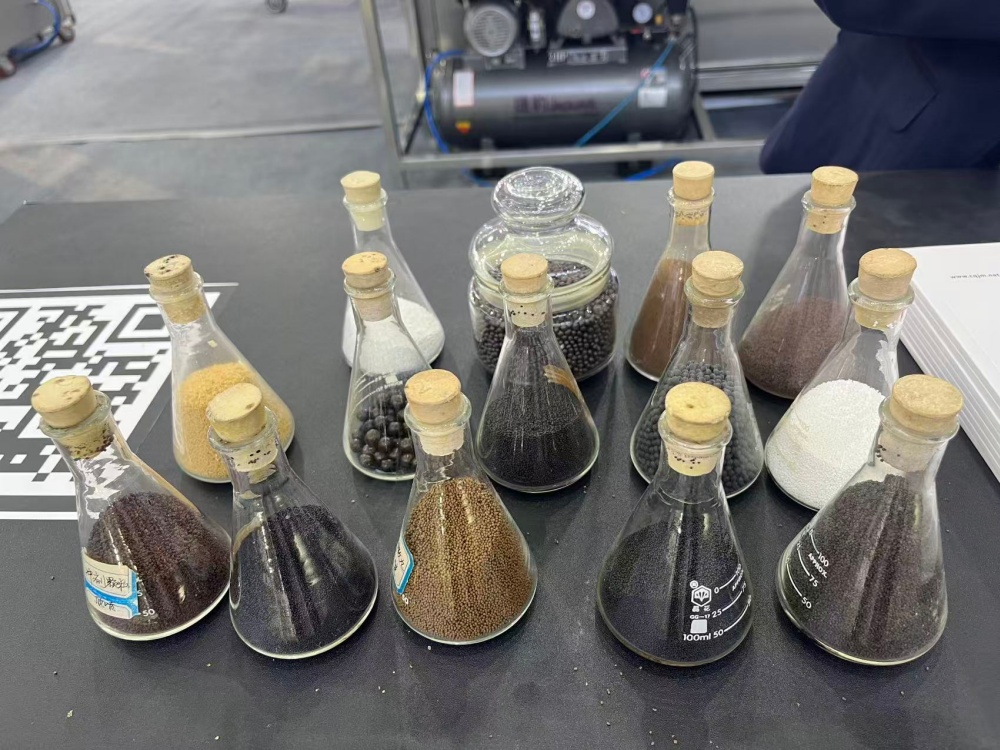
Application Powder Types

1. This Ribbon Mixer is widely used in dry powder mixing in the pharmaceutical, food, and chemical indutries.

Ribbon Blender Drawing
Ribbon Blender Drawing.

2. This product is more compact than other mixers and features simple operation, a beautiful appearance, small footprint, easy cleaning, and a great mixing effect.

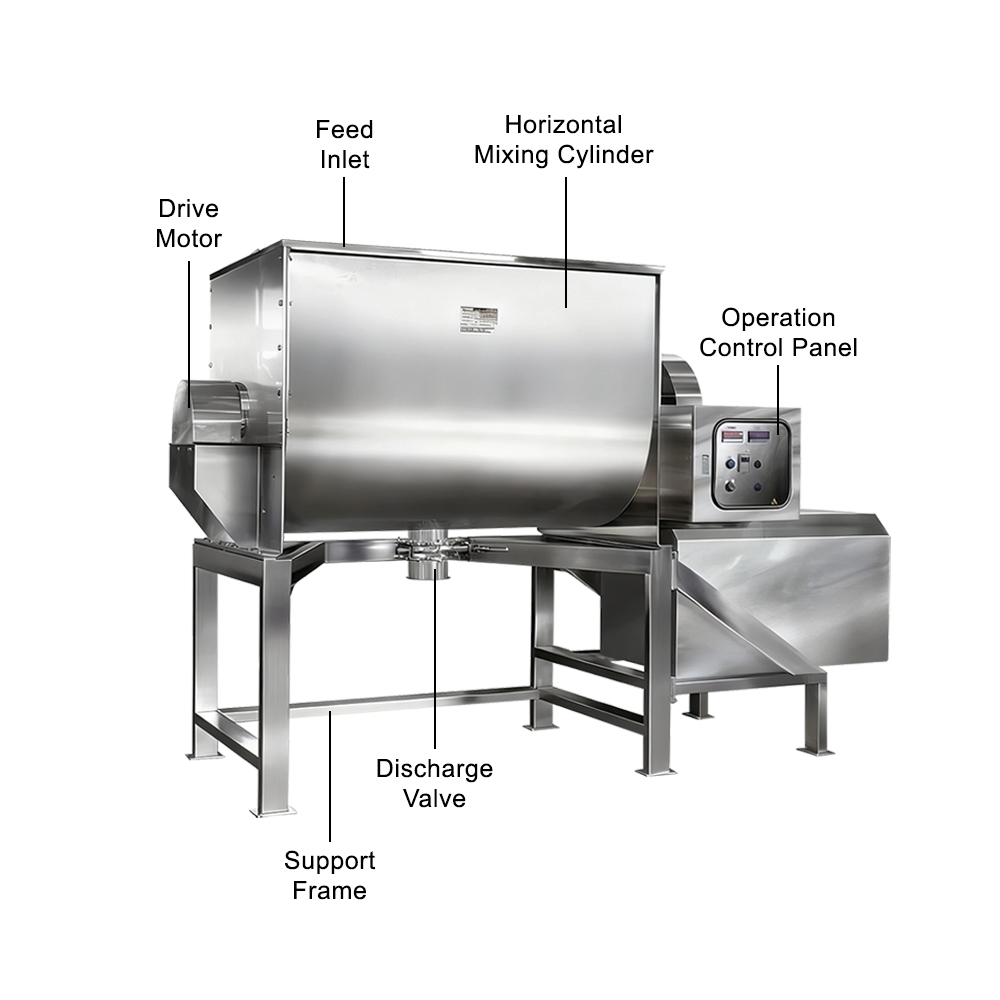
3. The product uses mechanical transmission to rotate the S-type stirring blade, pushing the material to flip back and mix evenly.

4. Horizontal trough single-paddle mixing is achieved with the stirring paddle, a through-shaft type, which is easy to clean. Parts in contact with materials are made of 5.0 stainless steel with good corrosion resistance.

5. It has a control panel operating system with consistent performance, supports processing customization, and meets the tracking and traceability for the FDA/GMP certification process and other relevant requirements.

6. It is applied for powders with a high uniformity requirement.

Model unit FTCH-200V FTCH-400V FTCH-600V
Working Volume L 200 400 600
Mixing Speed rpm 24 24 20
Stirring Motor kw 4 5.5 11
Reverse Motor kw 0.75 1.5 2.2
Overall DimensionL*W*H mm 1720*600*1012 2120*650*950 2250*770*1360
Weight kg 530 570 840
Local Operation Box
Local Operation Box
Screw Feeder
Screw Feeder
Sealed Discharge Valve Assembly
Single-Shaft Stirring Chamber
tirring Chamber (with Double Helical Mixing Paddle)
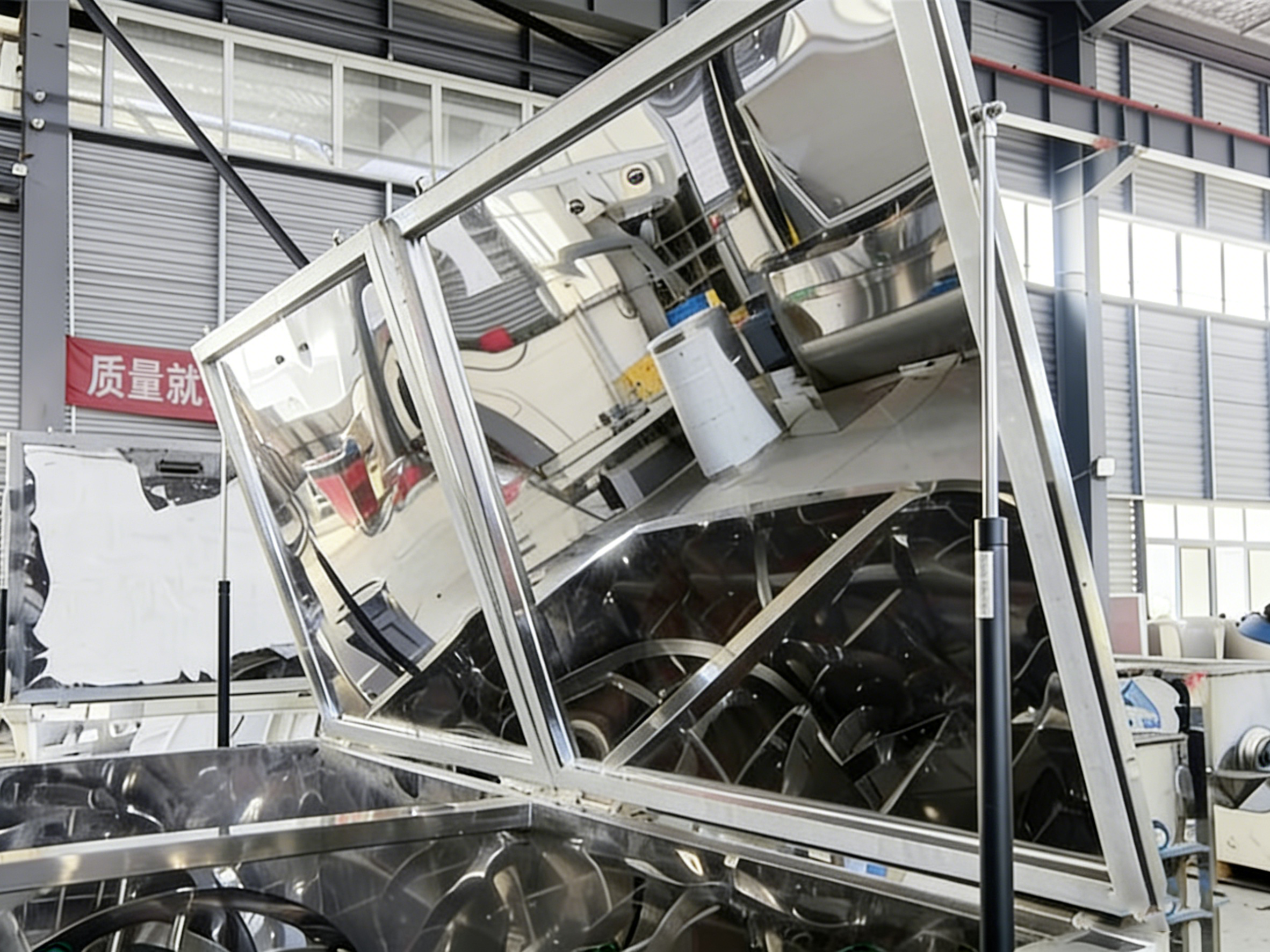
Top Sealed Access Cover
What is a ribbon mixer used for?

Ribbon mixers are used for dry or wet blending of powders, granules, and pastes in industries like food, pharmaceutical, chemical, and cosmetics. They ensure homogeneous mixing of solid-solid or solid-liquid materials.

How does a ribbon mixer work?

It consists of a U-shaped trough and inner & outer helical ribbons (agitators) rotating on a horizontal shaft. The ribbons move materials in opposite directions—outer ribbon moves material toward the center, inner ribbon moves it outward—creating intense cross-blending.

What types of ribbon mixers are available?
  • Standard Ribbon Mixer: Basic design for general mixing.

  • Sanitary (Food/Pharma Grade): Polished stainless steel, easy to clean.

  • Jacketed Ribbon Mixer: For heating/cooling during mixing.

  • Vacuum Ribbon Mixer: For mixing under vacuum to remove air/moisture.

  • Screw Conveyor Discharge/Plow Discharge: For easier unloading.

How do I choose the right size?

Choose based on working capacity (typically 30–70% of total volume) and material bulk density. Consider future needs, and ensure the motor power matches material characteristics (density, flowability, viscosity).

What is the typical mixing time?

Usually 5–20 minutes, depending on material properties, batch size, and required homogeneity. Test runs are recommended.

Can I add liquids during mixing?

Yes, via spray nozzles in the lid. For optimal dispersion, add liquids gradually while the mixer is running.

What foundations are required?

A level, vibration-damping concrete foundation is recommended. Foot-mounted or flange-mounted designs vary—follow manufacturer guidelines.

How do I clean the ribbon mixer?
  • Dry Cleaning: Use brushes, air blowers, or vacuum.

  • Wet Cleaning: Use food-safe cleaners and water; sanitary models have CIP (Clean-in-Place) options.

  • Manual Cleaning: Ensure lockout/tagout before entering.

Are ribbon mixers compliant with FDA/USDA?

Sanitary models with 304 or 316 stainless steel, polished finishes, and proper seals can meet FDA/USDA standards for food/pharma.

What are ribbon mixers used for?

1. Pharmaceutical & Healthcare

  • Medicine manufacturing: Mixing active drugs with fillers, binders, and lubricants for tablets/capsules

  • Nutritional supplements: Protein powders, vitamin blends, meal replacements

  • Medical products: Antibiotic powders, contrast agents, surgical powders

  • Dental products: Tooth powder formulations

2. Food & Beverage

  • Instant products: Soup mixes, drink powders (coffee, tea, chocolate), dessert mixes

  • Spices & seasonings: Blended spices, gravy powders, seasoning packets

  • Bakery mixes: Cake mixes, bread premixes, icing sugar blends

  • Nutritional products: Infant formula, sports nutrition, fortified foods

3. Chemicals & Industrial

  • Detergents & cleaners: Laundry powder, dishwasher detergent, industrial cleaners

  • Construction materials: Dry mortar, tile adhesives, cement additives

  • Plastics & polymers: Color masterbatches, filler compounds, polymer blends

  • Explosives & pyrotechnics: Firework compositions (safely engineered)

  • Agriculture: Fertilizer blends, pesticide powders, seed coatings

4. Cosmetics & Personal Care

  • Makeup: Foundation powders, eyeshadows, blush

  • Skincare: Talcum powder, medicated body powders

  • Cosmetic additives: Pigment blends, glitter mixtures

5. Advanced Materials

  • Metal powders: Alloy preparations for 3D printing (additive manufacturing)

  • Ceramics: Technical ceramic formulations

  • Batteries: Electrode material blends for lithium-ion batteries

  • Electronics: Conductive paste powders, solder blends

Pharmaceutical Industry
Pharmaceutical & Healthcare Industries
Food Products
Food Products
Feeds
Feeds
Chemical Industry
Chemical Industry
Metallurgy
Metallurgy
Building Materials
Building Materials
Scroll to Top