...

医薬品製造および包装の総合ソリューションを提供する専門サプライヤー

The Critical Role of the Blending Process in the Pharmaceutical Industry

目次

The core success of pharmaceutical manufacturing relies on three non-negotiable pillars: formulation design, process control, and, above all, precise blending. This is a foundational process that determines the quality and efficacy of the final product.

Blending Process in the Pharmaceutical Industry

If the 有効医薬品成分 (API) is not perfectly distributed, the resulting drug is worthless. Not only does it threaten patient safety, but it also leads to certain regulatory rejection and costly batch failure.

In other words, blending can make or break your drug.

Keep reading as we break down the blending process in the pharmaceutical industry. You’ll learn the core principles, proven methods, and advanced equipment that guarantee precision and compliance.

Blending Process in the Pharmaceutical Industry

The blending process is a prerequisite and an integral step in the formulation of any solid pharmaceutical product. It is the process of thoroughly mixing active pharmaceutical ingredients (APIs) with different components to create a uniform and homogenous mixture.

This may include binders, fillers, lubricants, and disintegrants. It is typically performed using specialized equipment, such as V-blenders, cone blenders, or ribbon blenders.

Different Methods of Pharmaceutical Blending

There are two primary methods used for pharmaceutical blending: dry blending and wet blending. Below, we will explore how each of these critical processes works.

1. Dry Blending

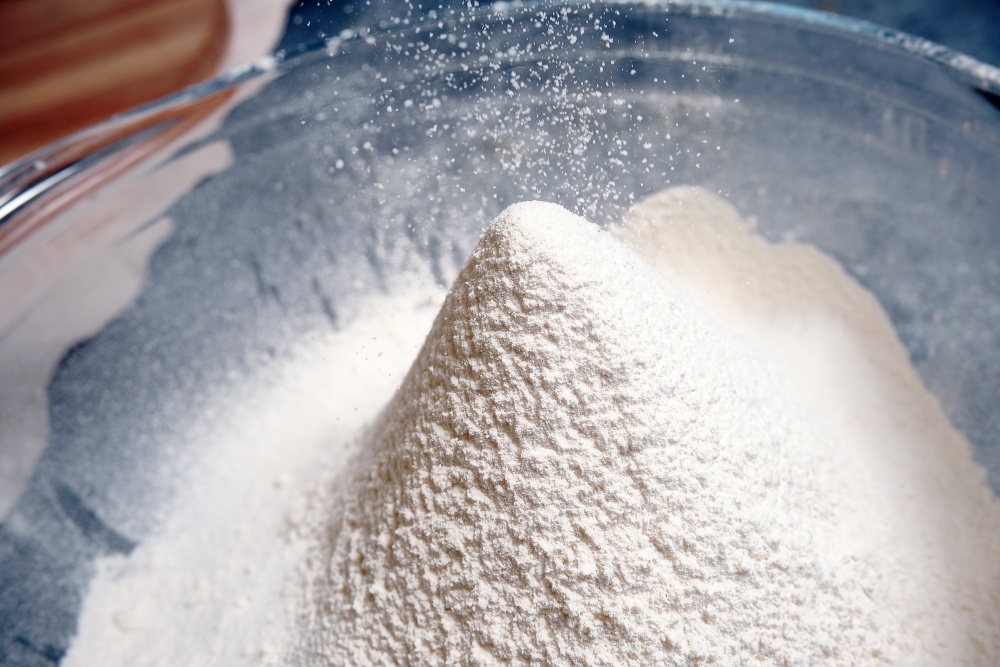
Dry blending is the simple mixing of dry powder together without adding any liquid. It is the preferred method for APIs that are sensitive to moisture and heat, such as aspirin または omeprazole.

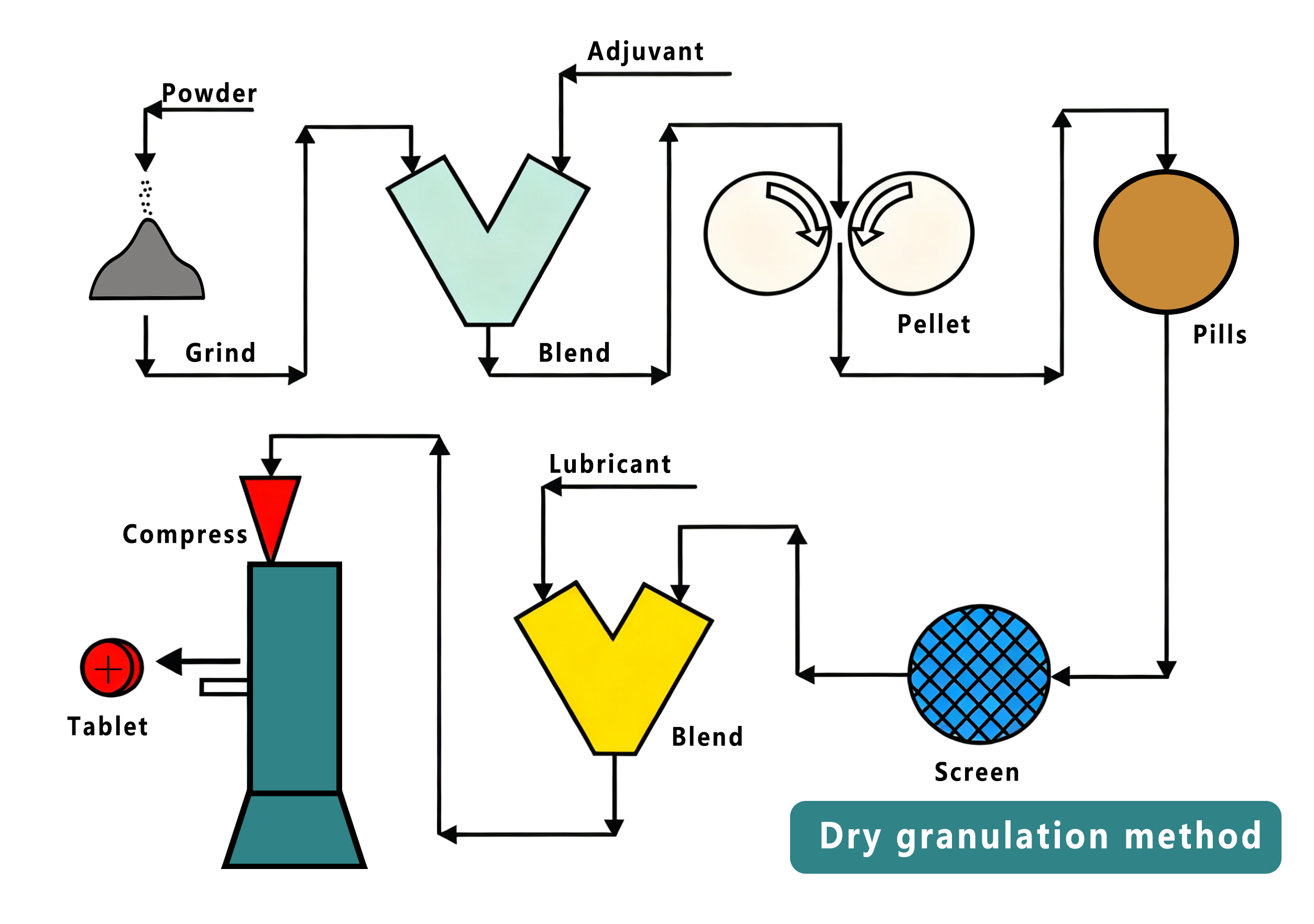
錠剤製造における乾式造粒法
錠剤製造における乾式造粒法

Powders (APIs and excipients) are mixed in a dry state, typically using tumble blenders (like V-blenders or double cone blenders). Dry blending relies on the inherent particle size, shape, and density of the powders to achieve a uniform mix.

2. Wet Blending

Wet blending is a particular part of the wet granulation process. It uses a liquid binder such as water, ethanol, or a solvent to form larger, denser, and more uniform granules. This process is generally used for non-hygroscopic APIs that require granulation to improve flow, e.g., griseofulvin and dexamethasone.

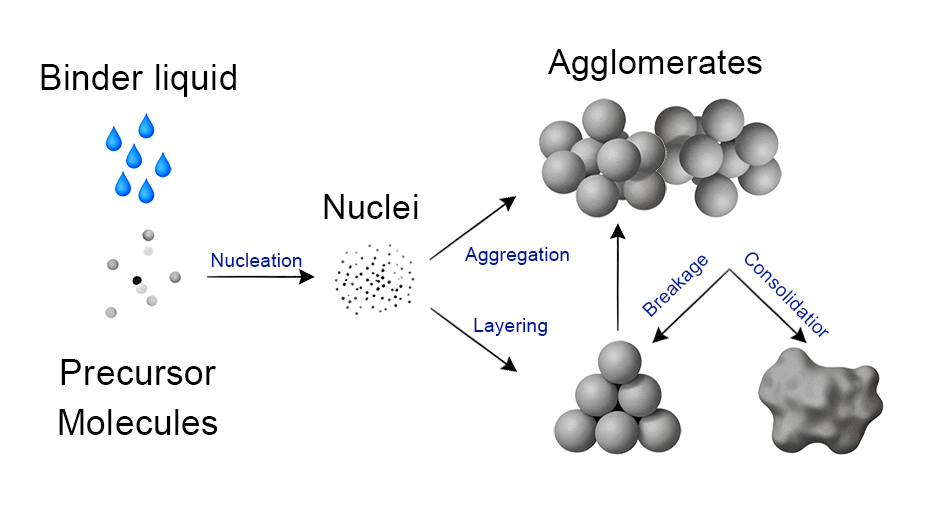
湿式造粒法
Wet granulation method.

After the initial dry blend, a liquid binder is added to the powder mass, often in a high-shear mixer. The resulting mixture demonstrates enhanced flowability, uniformity, and compressibility, which ensures consistent tablet quality during compression.

Key Aspects and Benefits of Pharmaceutical Blending

Blending is the fundamental requirement in the production of most pharmaceutical products. Its benefits extend far beyond simply mixing different powders. A well-controlled blending process guarantees product performance and compliance.

Here are some key aspects and benefits of pharmaceutical blending:

1. Uniform Distribution of API

Every medicine is formulated to deliver a specific therapeutic effect to the patient. This desired effect requires a specific amount of API to be present within every single dose. Blending is the mechanism that ensures the equal distribution of the API throughout the larger volume of excipients.

​This process guarantees that the powder mass is perfectly homogenous and delivers the intended therapeutic dose.

2. Dosage Accuracy

Dosage accuracy is highly critical to patient health and safety. Blending maintains an accurate dosage of APIs and other functional components. Inconsistency in blending leads to underdosing and overdosing.

​Underdosing might render the medicine’s effect, which means it will not deliver the necessary therapeutic action. On the other hand, overdosing poses significant risks, potentially causing adverse effects like dizziness, nausea, and vomiting, or more serious complications.

3. Quality Assurance

Every medicine has to pass quality assurance tests mandated by bodies like the USP (United States Pharmacopeia) or the FDA (Food and Drug Administration). These tests verify different attributes such as Identity (is the product what it claims to be), Potency (is it present in the right amount), and Purity (is it free from unwanted contaminants).

Achieving these standards demonstrates that blending is more than just a mixing step. It is a controlled process for validating the drug’s fundamental quality.

4. Optimizing Flow and Compressibility

Proper blending is critical for the stability, visual appeal, and consistency across さまざまな種類の錠剤 and tablets. The uniform distribution of excipients, such as flow agents and lubricants, maintains the correct flow and compressibility. This controlled process minimizes any processing defects and enhances the tablet’s final appearance and quality.

Common Blenders Used in the Pharmaceutical Industry

A variety of pharmaceutical blenders are available, each designed to handle specific material properties and production volumes. Understanding these different types helps you choose the best equipment to achieve optimal quality products.

1. V Blenders

FTV-50-100-150-200-300-500-1000 Vシェイプミキサー(ブレンダー)

V blenders have a fixed outer shell in a V shape, made by connecting two hollow cylinders at an angle of 75° to 90 °. As the blender rotates, the angled design causes ingredients to tumble continuously from side to side, resulting in an excellent blending action.

​The rotation repeatedly divides and recombines the contents. This slow, gentle mixing motion is ideal for materials that are sensitive to mechanical shear.

Some of the key benefits of V blenders are:

  • Achieve a homogeneous blend of multiple ingredients.
  • Improve product quality and batch consistency.
  • Prevent segregation of blended materials.

2. Ribbon Blenders

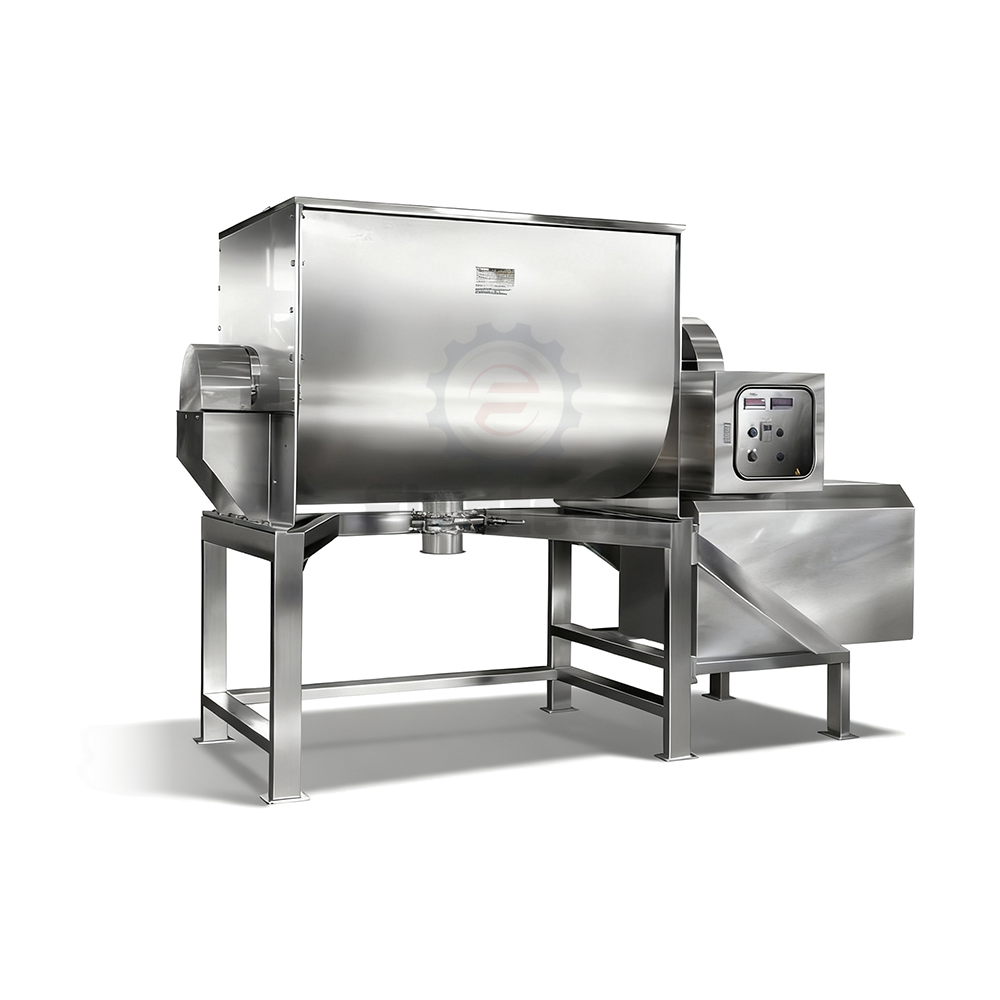
ステンレス水平リボンブレンダー
ステンレス水平リボンブレンダー

A ribbon blender features a horizontal, U-shaped container that holds the materials to be mixed. It works via two sets of inner and outer spiral ribbons that are attached to a central rotating shaft.

The outer ribbon rotates, pushes material toward the center, and moves it in one direction axially. Similarly, the inner ribbon moves the material radially and in the opposite axial direction. This differential movement creates turbulence and shear stress, leading to a perfectly blended mixture.

Here are some prominent benefits of ribbon blenders:

  • Perfect for mixing a specific, precise quantity of ingredients.
  • Ideal for handling high-volume batches quickly.
  • Excellent for mixing materials with varying particle sizes and densities.

3. Bin Blenders

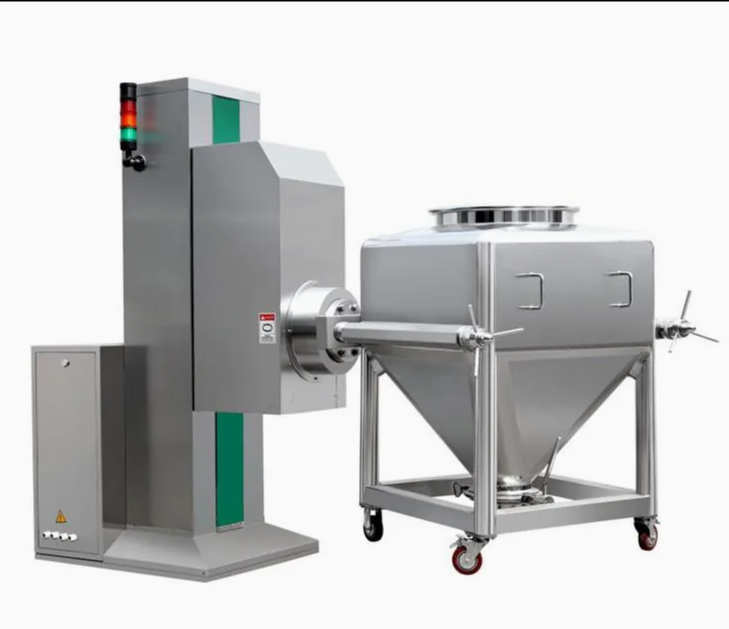
Industrial bin mixer machine equipment
ビンミキサー

Bin blenders are one of the most popular blenders in the pharmaceutical industry. They utilize a rotating container, or bin, which is securely clamped and rotated on a platform to control the mixing process. The blender rotates the sealed bin, which blends the mixture inside through tumbling action.

Bin blenders are highly preferred by manufacturers because:

  • Eliminates product transfer and the risk of cross-contamination.
  • Ideal for various batch sizes due to detachable bins.
  • Simplifies cleaning and validation processes.

4. High Shear Mixers

噴霧 乾燥 造 粒 機
High Speed Rapid Mixer Granulator.

They are high-performance machines that can quickly mix powders, granulating materials, and dispersing liquids. High shear mixers use a high-speed rotor and stator system to create intense shear forces. These forces break down lumps and reduce particle size. This action is essential to ensure consistent, high-quality granules used in both tablet and capsule manufacturing.

​High shear mixers stand out among their competitors because:

  • Achieves very rapid mixing times compared to tumble blenders.
  • Used for both dry mixing and wet granulation.
  • Produces dense, strong granules with excellent flow properties.

Factors to Consider for Pharmaceutical Blending Process

Before initiating any pharmaceutical blending process, there are some critical factors to consider. These decisions regarding equipment choice, duration, and environment deeply impact the quality of the final product. Here is how:

1. Choosing the Right Equipment

The blender is one of the most critical pieces of equipment used in tablet manufacturing. The choice of a blender depends upon the specific material’s characteristics and batch size.

For instance, a V blender is ideal for shear-sensitive, friable materials, while a ribbon blender excels at mixing high volumes quickly. A high shear mixer is a better choice if the APIs require liquid binders.

2. Blending Time and Speed

You must maintain strict control over the speed and timing of blending. Time must be sufficient to achieve true homogeneity (uniform distribution) but not so long that it causes over-blending.

Over-blending can create a film on the particle, which can cause hardness or delayed dissolution. ​Similarly, optimize the speed (RPM) to provide enough energy for mixing without causing particle segregation or excessive heat generation. Both factors can damage heat-sensitive APIs and degrade the quality of the final product.

3. Cleanliness

Cleanliness is an absolute necessity of a well-prepared blending environment in pharmaceuticals. Make sure the processing area is clean with sanitized surfaces.

Implement multi-level cleaning to prevent equipment contamination, whether microbiological or from residual materials. It reduces the risk of cross-contamination between different batches and safeguards the purity of the medicines.

よくある質問

1. How do you determine the optimal blending time for a formulation?

The ideal blending time is determined through blend uniformity studies, which analyze content uniformity at different time intervals. Over-blending can cause segregation, while under-blending leads to uneven drug distribution.

2. What is blend uniformity testing, and why is it important?

Blend uniformity testing evaluates how evenly the active ingredient is distributed throughout the batch. It’s required by regulatory bodies like the FDA and EMA to confirm process consistency before compression or encapsulation.

3. What is the significance of scale-up in pharmaceutical blending?

When moving from laboratory to production scale, blender geometry and fill volume must be carefully adjusted to maintain the same mixing dynamics. Scale-up validation ensures consistent quality across batch sizes.

Optimal Blending Needs the Right Equipment and Support

The blending process in the pharmaceutical industry is the defining stage that sets the foundation for drug quality, safety, and regulatory success. While understanding methods like dry and wet blending, optimizing speed, and ensuring cleanliness are crucial, achieving excellence requires more.

To consistently achieve the required uniformity and dosage accuracy, you need the right tools supported by the right supplier and equipment. And that’s exactly what we provide.

At Finetech, we offer a wide selection of powder mixing machines and blenders to ensure you get the best batch quality. Our team provides technical support, on-site machine training, and professional installation.

お問い合わせ to get the complete service for lasting performance and regulatory compliance.

参考文献:

What Is The Importance Of Blend Uniformity In The Pharmaceutical Industry.

From Fine Powders to Perfect Pills: Your Guide to Pharmaceutical Blending.

著作権について 

ファインテック・グループの書面による事前の明示的な承認がない限り、本ウェブサイト上のコンテンツを複製、変更、公開、表示、送信、その他の方法で利用したり、そのようなコンテンツを使用して何らかのデータベースを構築したりすることはできません。コンテンツの使用許可については、こちらまでお問い合わせください: info@pharmamachinecn.com

免責事項:

本記事に含まれる情報は、一般的な情報提供のみを目的としています。当社は、いかなる情報についても、その正確性、妥当性、適時性、完全性を保証するものではなく、また、本記事の内容の誤謬または脱漏について一切の責任を負いません。.

コメントする

メールアドレスが公開されることはありません。 が付いている欄は必須項目です

今すぐ投稿を共有:
Hey there, I’m Tony Taoの写真

こんにちは、トニー・タオです

私はファインテックのCEOで、製薬機器業界で10年以上の経験があります。私の専門知識を活かし、中国から製薬加工機器を輸入したいとお考えの方々を少しでもサポートできればと思っています。

関連している 記事

紙コップ製造機価格表

紙コップ製造機価格表

カップ成形機 標準紙カップ成形機$10,000〜$45,000 高速カップフォーマー $55,000〜$120,000 超音波紙コップ成形機

上部へスクロール