...

医薬品製造および包装の総合ソリューションを提供する専門サプライヤー

A Guide to Project Management in the Pharmaceutical Industry

目次

Project management is the backbone of any successful industrial operation, and the pharmaceutical domain is no exception. Drug development and manufacturing face numerous challenges and complexities that are beyond the scope of traditional business models.

In these high-stakes environments, project managers take up the challenge to enable innovation while maintaining a structured framework. They act as the strategic engine that drives a molecule from a laboratory concept to a life-saving reality.

Let’s explore the critical role of project management in the pharmaceutical industry and how it shapes the future of global healthcare.

What is Project Management In the Pharmaceutical Industry?

Project Management in the Pharmaceutical Industry
Project Management in the Pharmaceutical Industry.

Pharmaceutical project management is the specialized application of processes, knowledge, and skills to manage drug development processes. This lifecycle begins with initial discovery and preclinical research and continues through clinical testing until final regulatory approval and market launch.

Pharmaceutical project managers work through high-stakes, long-term timelines by balancing strict global compliance with multi-million dollar budgets. Think of them as the critical link between laboratory innovation and commercial viability.

Key Aspects of Pharmaceutical Project Management

In the pharmaceutical industry, project management is a framework for a life-changing mission. Professionals have to oversee the critical transition from molecular research to patient distribution. Here are the key aspects and working scope of project management:

1. Pre-clinical Planning

It is the first phase in which scientists identify potential drug candidates and evaluate a drug’s safety before human testing begins. Project managers coordinate laboratory resources and supervise critical safety testing on non-human subjects. Their oversight ensures that early-stage data is robust enough to justify the massive investment required for clinical trials.

This stage culminates in the preparation of extensive documentation. Teams must compile findings to submit an Investigational New Drug (IND) application to the FDA or equivalent global regulatory authorities.

2. Clinical Trial (Phases I-III)

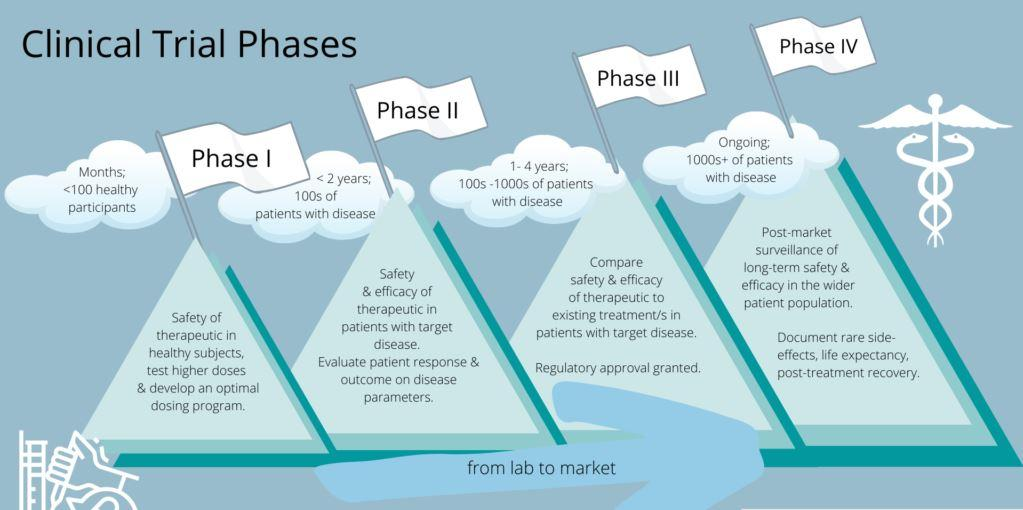
Clinical trials
Clinical trials. ソース: Anatomise biostas

Clinical trials represent the second major phase and typically span six to seven years across three distinct stages. Phase I focuses on initial safety in small groups, Phase II evaluates performance, and Phase III confirms results through large-scale testing.

Project management in this stage involves volunteer recruitment, site monitoring, and data integrity across diverse global locations. Project managers have to validate that every protocol adheres strictly to FDA and WHO guidelines to maintain the highest clinical standards.

3. 規制遵守

Fulfilling the strict requirements of agencies such as the FDA or the EMA remains a core responsibility for pharmaceutical teams. Every project milestone requires perfect documentation to uphold Good Clinical Practice (GCP) and 適正製造規範(GMP) の基準を満たす。.

For example, during a manufacturing scale-up, project managers must verify that every batch record is properly logged. Similarly, during clinical trials, informed consent forms should be signed and stored correctly to protect patient rights and data integrity. This accurate level of oversight validates that the final product is consistently safe, pure, and effective for public consumption.

4. Cross-Functional Coordination

Pharmaceutical projects frequently operate in silos, where scientific research may become disconnected from business realities. Project management serves as the bridge between R&D, legal counsel, manufacturing, and marketing teams.

It is an alignment that keeps the scientific progress consistent with corporate strategy and commercial goals. By synchronizing these diverse departments, managers minimize communication gaps between specialized teams.

5. Post-Market Surveillance (Phase IV)

Post-market surveillance, or Phase IV, begins after a drug receives regulatory approval and enters the general population. Project managers supervise long-term safety monitoring and gather real-world evidence regarding the drug’s performance across diverse patient groups. This phase focuses on identifying rare side effects and assessing long-term efficacy.

Importance of Project Management in the Pharmaceutical Industry

Project management provides the infrastructure to plan, organize, and monitor drug development and manufacturing progress. This discipline allows firms to allocate resources while proactively managing risks throughout the drug lifecycle.

Let’s take a deeper look at the importance and impact of strategic oversight in this industry:

1. Improving Time-to-Market

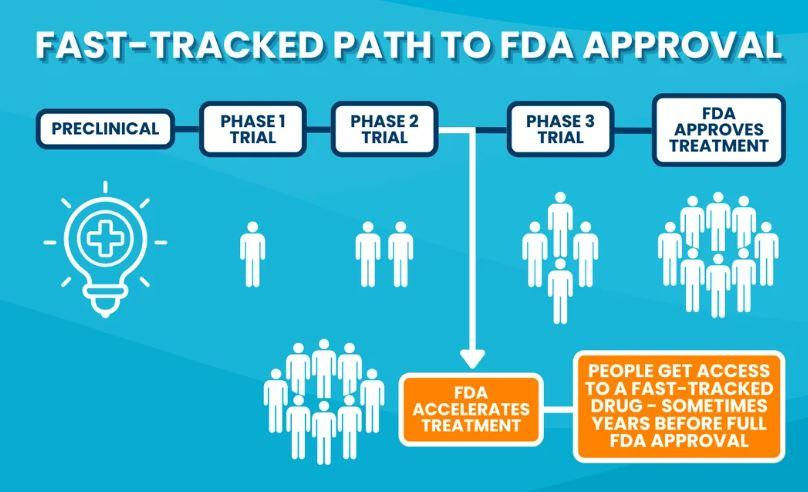
Pharmaceutical Time-to-market
Pharmaceutical Time-to-market. ソース: レディット 

Drug development can span up to 15 years, which makes timing a critical competitive advantage. Project management makes it possible to streamline this lengthy journey by accelerating a drug’s time-to-market.

It is done through targeted technical and strategic improvements. Teams implement continuous manufacturing and automation to replace slow, manual processes with faster production. They also utilize strategic CDMO partnerships to access specialized expertise and increase operational speed.

Furthermore, project managers utilize expedited regulatory pathways, such as “Fast Track” status, to shorten total review timelines. These coordinated efforts significantly reduce the years required to deliver a drug to the global market.

2. Cost Management

Bringing a new drug to the market is a highly expensive venture. Recent reports show that it can take up to $2.6 billion per approved compound. This investment covers successful research, but also the high price of failed trials and complex regulatory hurdles.

To regulate these massive budgets, project management teams implement strict cost-control strategies. They use real-time financial tracking to identify and resolve discrepancies before they escalate into major overruns. Incorporating contingency planning and resource optimization also helps them to prioritize capital allocation.

3. Strategic Risk Management

Proactive risk management is one of the most crucial aspects of any pharmaceutical venture. Given the high probability of clinical failure or regulatory rejection, the project managers system must identify potential threats at the earliest possible stage.

Well-planned strategies allow teams to anticipate and mitigate major risks, such as unexpected toxicities or shifting patent laws. Professionals in this field are also responsible for implementing ICH Q9 guidelines. It is a formal framework for Quality Risk Management (QRM) to link scientific decisions directly to patient protection.

Challenges in Managing Pharmaceutical Projects

Modern advancements in digital modeling and AI support have significantly enhanced the pharmaceutical industry’s ability to innovate. Having said that, there are still many deep-seated challenges that continue to hinder the process of delivering life-saving treatments to public health systems. Below are some prominent examples:

1. Changing Regulatory Requirements

Regulatory compliance requirements are in a state of constant flux as agencies like the FDA and EMA update safety standards and data submission protocols. New mandates, such as the EU’s AI Act or updated GMP guidelines, force companies to redesign internal workflows mid-project. It is a critical necessity for pharmaceutical firms to quickly adapt to these shifting legal requirements to avoid costly delays.

2. High Attrition Rates

The pharmaceutical industry suffers from one of the highest attrition rates in any sector, frequently ranging between 20% and 30% in later stages. Only one or two out of every 10,000 compounds synthesized in laboratories successfully make it to the market.

This high probability of failure forces project managers to implement fail-fast protocols throughout the development cycle. These strict measures identify unviable candidates early and ensure that firms do not consume excessive resources on products meant for clinical rejection.

3. Global Supply Chain Complexity

Managing a pharmaceutical supply chain involves coordinating raw materials and manufacturing across dozens of international borders. Geopolitical tensions or new tariff policies can suddenly obstruct the flow of APIs and cause widespread shortages.

For instance, a disruption in a single European glass vial supplier can disrupt the global distribution of injectable biologics. These specialized containers maintain the sterility and stability of sensitive liquid medications. Any shortage in such an essential component directly impacts patient access to life-saving therapies worldwide.

よくある質問

1. What is the role of a project manager in a CDMO?

In a Contract Development and Manufacturing Organization (CDMO), the project manager acts as the primary liaison between the client and the internal production teams. They oversee the chemistry, manufacturing, and controls (CMC) milestones to guarantee the Active Pharmaceutical Ingredient (API) meets quality specifications and delivery schedules.

2. What are the primary regulatory constraints in pharma projects?

Projects must adhere to Good Manufacturing Practices (GMP), Good Clinical Practices (GCP), and Good Laboratory Practices (GLP) to maintain data integrity and product quality. Any deviation from these standards during the project lifecycle can result in FDA warning letters, rejected applications, or total product recalls.

3. Can Agile methodologies be applied to pharmaceutical projects?

While the core drug development path is sequential (Waterfall), Agile is increasingly used in digital health, data analytics, and laboratory software development. In these sub-sectors, iterative “sprints” allow teams to adapt to evolving data without disrupting the rigid, validated manufacturing processes.

4. What is the significance of the “Critical Path” in pharma?

The critical path represents the longest sequence of dependent tasks, such as patient recruitment or long-term stability testing, that determines the earliest possible launch date. Delays in any critical path activity can postpone a New Drug Application (NDA), potentially costing millions in lost patent exclusivity revenue.

Deliver Life-Saving Treatments With The Best Systems

Project management is a discipline that enables medical breakthroughs to move successfully from bench to bedside. This proactive framework allows professionals to figure out attrition rates and volatile regulatory shifts. Through integrating clinical expertise with operational discipline, project management can transform scientific potential into tangible patient outcomes.

Just as expert management keeps drug development on track, a high-performance pharmaceutical manufacturing system helps you dominate the market. ファインテック produces pharmaceutical machinery and equipment ready to support your entire operation.

Starting from specialized manufacturing equipment to packaging lines, we provide reliable, high-capacity systems customized to your specific production requirements. Our commitment ensures your long-term success through comprehensive onsite training and dedicated technical support.

著作権について 

ファインテック・グループの書面による事前の明示的な承認がない限り、本ウェブサイト上のコンテンツを複製、変更、公開、表示、送信、その他の方法で利用したり、そのようなコンテンツを使用して何らかのデータベースを構築したりすることはできません。コンテンツの使用許可については、こちらまでお問い合わせください: info@pharmamachinecn.com

免責事項:

本記事に含まれる情報は、一般的な情報提供のみを目的としています。当社は、いかなる情報についても、その正確性、妥当性、適時性、完全性を保証するものではなく、また、本記事の内容の誤謬または脱漏について一切の責任を負いません。.

コメントする

メールアドレスが公開されることはありません。 が付いている欄は必須項目です

今すぐ投稿を共有:
Hey there, I’m Tony Taoの写真

こんにちは、トニー・タオです

私はファインテックのCEOで、製薬機器業界で10年以上の経験があります。私の専門知識を活かし、中国から製薬加工機器を輸入したいとお考えの方々を少しでもサポートできればと思っています。

関連している 記事

シーラー機のスペアパーツ名

シーラー機のスペアパーツ名

シーラー機を長時間使い続ければ、部品は摩耗してしまいます。各部品のシーラー機用スペアパーツの名称を把握しておくこと

上部へスクロール