 Skip to content
  English
  Russian
  Turkish
  Spanish
  French
  German
  Japanese
Key Takeaways: Pharmaceutical Turnkey Solutions
- What It Is: Pharmaceutical turnkey solutions deliver a complete, ready-to-operate manufacturing facility, managed by a single provider.
- Problems It Solves: They eliminate project delays, vendor conflicts, and compliance risks caused by fragmented systems and poor coordination.
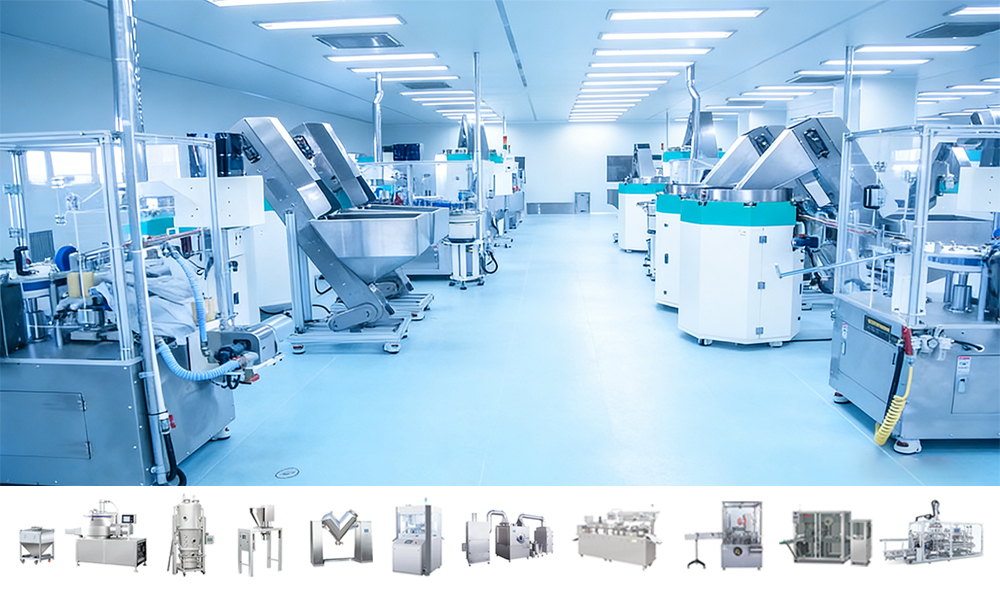
- How It Works: All elements, including cleanrooms, production lines, packaging systems, HVAC systems, and validation, are integrated into a single setup.
- Why It Matters: This approach improves consistency, supports smooth expansion, and lowers operational risks for growing facilities.
- Who It Benefits Most: Ideal for manufacturers looking to scale, meet strict regulations, and achieve reliable production without operational complexity.
What Are Pharmaceutical Turnkey Solutions?
Pharmaceutical turnkey solutions provide a complete manufacturing setup that is ready to operate. One provider manages the entire process, which includes design, equipment supply, installation, testing, and final handover.
When the project is complete, the facility is fully functional and compliant. Instead of working with multiple vendors, you only have to deal with one coordinated team. This reduces confusion, improves control, and keeps every stage aligned.
In simple terms, pharmaceutical turnkey solutions give manufacturers a ready-to-run facility without the stress of managing every detail themselves.
The Real Problems Turnkey Solutions Solve
Pharmaceutical manufacturing is tightly regulated, time-sensitive, and highly dependent on coordination. When processes are fragmented across multiple vendors, problems start to multiply.
That’s why you need to understand the issues solved by turnkey solutions, which include:
1. Project Delays
One of the major reasons for project delays is usually unplanned equipment downtime, which has been shown to cost facilities over $260,000 per hour. This highlights the importance of hiring a single contractor to handle the entire process and hand over a completed facility to you.
If not, it can lead to misaligned schedules, late equipment deliveries, and design changes that push projects past their deadlines.
Even small delays can disrupt product supply and affect market availability, especially for high-demand or life-saving medicines.
2. Vendor Conflicts
Handling multiple vendors often leads to overlapping responsibilities and unclear accountability. One contractor’s delay can affect another’s installation process.
Miscommunication between suppliers can cause incompatible systems, repeated rework, or missed technical requirements. These coordination failures increase operational instability and complicate troubleshooting.
3. Compliance Failures
Regulatory compliance is one of the most critical challenges in pharmaceutical manufacturing. Errors in facility layout, HVAC systems, cleanroom installation, or documentation can trigger regulatory warnings or forced redesigns.
This also includes cold-chain failures, which cost the global industry approximately $35 billion in losses annually, largely due to spoilage and handling errors.
The Complete Scope of a Pharmaceutical Turnkey Project
As you know, a pharmaceutical turnkey project is a delivery method where an expert team takes full responsibility for planning, developing, and handing over a complete pharmaceutical facility. This way, you don’t have to manage separate contractors.
Below is a clear breakdown of what a true turnkey project actually includes.
1. Concept Development
Concept is the first step of a turnkey project. It shares the foundation on which everything is built. Before any drawings are created, the project undergoes deep analysis to determine its practicality.
Site conditions, regulatory expectations, and operational intent are carefully examined at this stage. During this period, assumptions are challenged, and potential risks are uncovered.
The vendor also assesses financial liability, defines scope perimeters, and clarifies operational goals. As a result, a carefully validated roadmap emerges, ready for execution.
2. Facility Design and Engineering
Here, strategy turns into structure. The focus shifts from conceptual vision to technical precision, where every spatial element is designed with purpose. Architectural layouts define movement logic, while engineering plans introduce the functional infrastructure.
Attention is usually given to airflow dynamics, pressure zones, regulated pathways, and environmental controls. Each design decision is reviewed through the lens of compliance and long-term usability.
3. Procurement and Resource Coordination
With planning complete, attention moves to sourcing and coordination. The turnkey provider takes full control of supplier engagement, material acquisition, and resource scheduling. This oversight prevents unnecessary delays that often occur when multiple parties operate independently.
Moreover, quality consistency becomes easier to maintain when one authority manages the flow of goods and services. For the client, there’s now no complexity, and the project firmly remains on track.
4. Construction and Implementation
This is where vision becomes physical reality. On-site activity begins with structured execution guided by precise planning. In fact, every element follows a controlled sequence that respects both design intent and compliance obligations.
Rather than activity occurring in isolation, each task interconnects with the next. The best part is that momentum is maintained without sacrificing accuracy, which allows the project to remain both steady and reliable.
5. Validation and Regulatory Compliance
No facility reaches readiness without proven compliance. That’s why, at this stage, the vendor carefully examines the operational integrity. They test each component against predefined regulatory benchmarks to confirm compliance with ISO and GMP standards.
Documentation has a key role here. It includes formal records, qualification protocol, and compliance evidence. All of these are prepared to support audit processes.
6. Testing, Commissioning, and Final Handover
Before delivery, the completed space undergoes real-condition performance checks. Here, the vendor observes the reliability, stability, and safety of the facility to make sure nothing is left unresolved.
Once these processes confirm success, the facility transfers to the client in a fully prepared state. In the end, you get documentation, operational guidance, and readiness to control the facility with ease.
7. Post-Handover Support
If you think a turnkey project ends once the facility is handed over, you cannot be more wrong. Ongoing technical guidance remains available to help navigate complexities during initial operation.
This continued involvement protects long-term performance and reassures stakeholders that expert support is still within reach when required.
Turnkey vs Traditional Manufacturing Approaches
Traditional manufacturing relies on multiple independent vendors for design, equipment, installation, and validation. Meanwhile, turnkey manufacturing takes a unified approach where one provider manages the entire process.
To understand the entire difference, here’s a comparison table of both:
| Aspect | Turnkey Approach | Traditional Approach |
| Project Management | Single provider controls the entire process | Multiple vendors handle separate stages |
| Coordination | Fully integrated and aligned workflow | Disconnected processes with communication gaps |
| Accountability | Clear responsibility under one team | Responsibility is spread across multiple parties |
| Compliance Handling | Built-in compliance planning from the start | Compliance is often managed after setup |
| Risk of Errors | Lower due to unified control and design | Higher due to misalignment and reword |
| Long-Term Scalability | Easier expansion and future upgrades | More complex and disruptive to modify |
FAQs
1. How long does a turnkey pharmaceutical project usually take?
Timelines vary by size, but small facilities may be completed within a few months while complex sterile or vaccine plants can take a year or more from design to approval.
2. Do turnkey solutions help with regulatory compliance?
Yes. Reputable providers design facilities according to GMP, FDA and EU requirements. They also prepare validation documents and help teams understand compliance expectations.
3. What role does automation play in turnkey pharmaceutical facilities?
Automation helps with repeatable production, reduces manual errors and collects digital batch data for audits. Turnkey providers integrate automation from the start.
Start Building Your Facility the Right Way
Pharmaceutical turnkey solutions offer the most reliable path when building or upgrading a manufacturing facility. Instead of managing disconnected suppliers, you gain a complete system guided by a single expert.
However, if you’re currently looking for machines and not a complete facility setup, Finetech is your best choice.
With decades of industry experience, we deliver complete pharmaceutical manufacturing and packaging solutions. We don’t just supply equipment, but also guide your entire facility toward long-term performance.