Skip to content
  English
  Russian
  Turkish
  Spanish
  French
  German
  Japanese
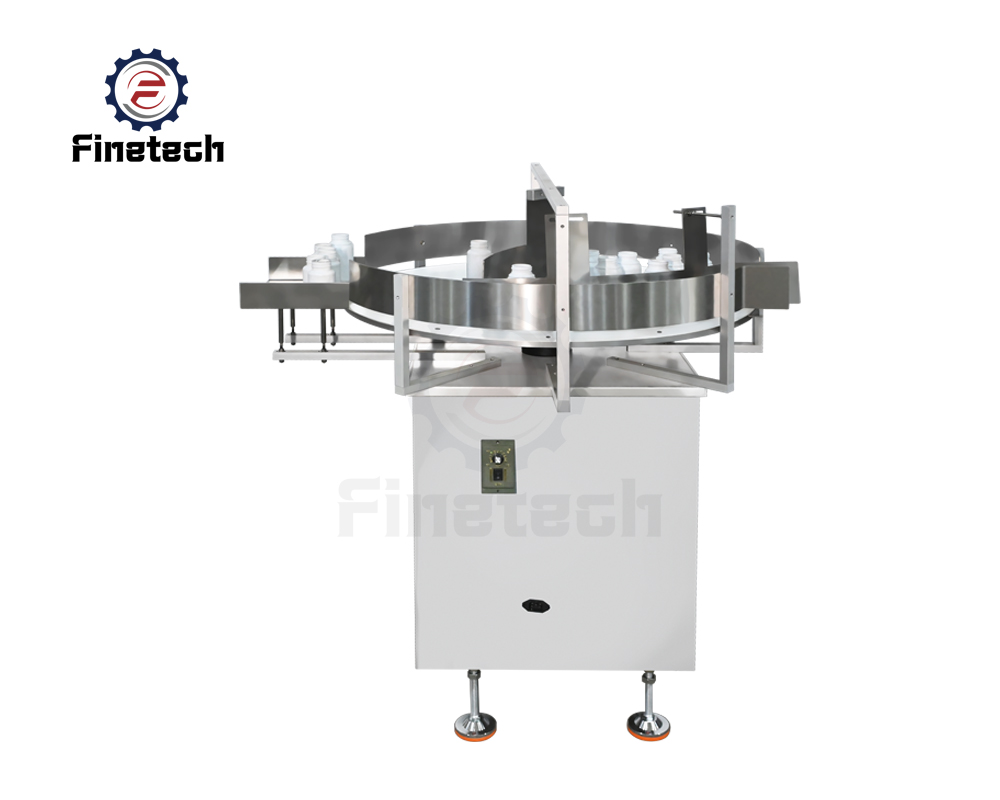


Rotary Bottle Unscrambler
A Rotary Bottle Unscrambler is an automated bulk handling machine designed to orient and feed empty containers (bottles, jars, vials, etc.) from a chaotic bulk state into a single-file, upright, and correctly aligned position for downstream packaging operations (filling, capping, labeling, etc.).
It is a critical first-step automation component in high-speed liquid packaging lines, replacing manual loading and increasing efficiency by 300-500%.
Need a Custom Quote?
Or More information About this product? Contact our sales stuff today!
Key Features
Technical Data
Machine Details
FAQ
Application Product Types
The Rotary Bottle Unscrambler is a key piece of equipment in bottled packaging lines. It is suitable for health supplement manufacturers that handle a wide variety of product types and bottle specifications, but have relatively low production volume for each individual product.
Bottles are manually placed neck‑up onto the rotary unscrambler, which then automatically delivers them at a preset speed and quantity to the downstream counting device.
Workflow:
Manual Bottle Loading → Automatic Sorting → Automatic Alignment → Automatic Dispensing.
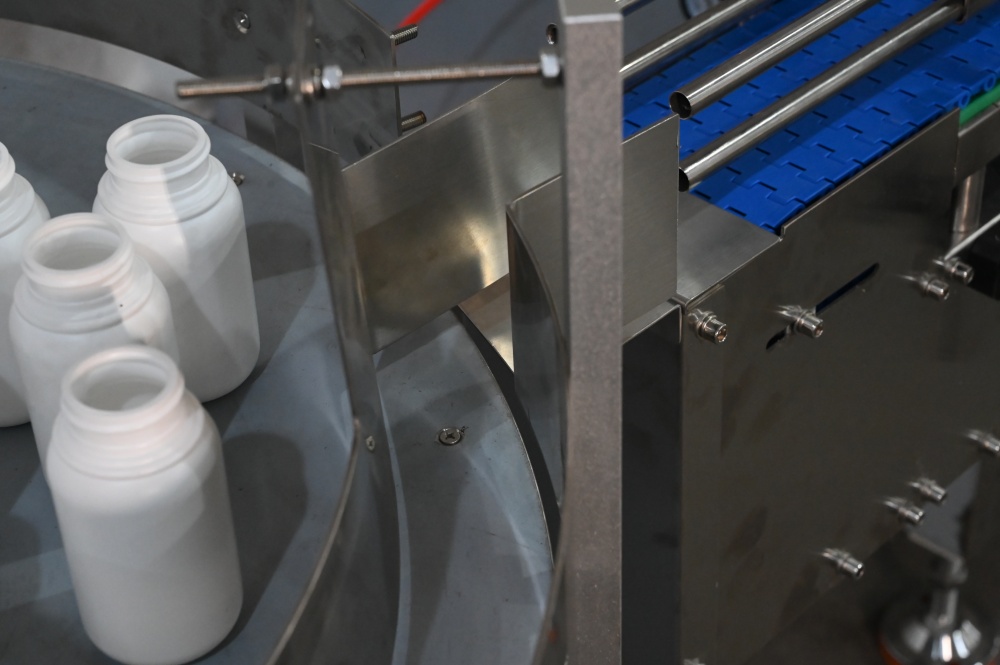
Operators place bottles neck‑up on the rotating table. The table rotates at a constant speed, while the sorting mechanism automatically orients the bottles and then guides them orderly into the discharge track.
| Applicable Bottles: | 20-1000ml Round/Flat bottle |
| Bottle Size (mm): | diameter: 50-95 bottle height: 165-310 |
| Power Source: | 1220V/380V 0.37Kw |
| Capacity: | 6000 bottles/hour |
| External Dimension: | Ф1000mm × 1600mm (Diameter×Height) |
| Weight: | 200 KG |
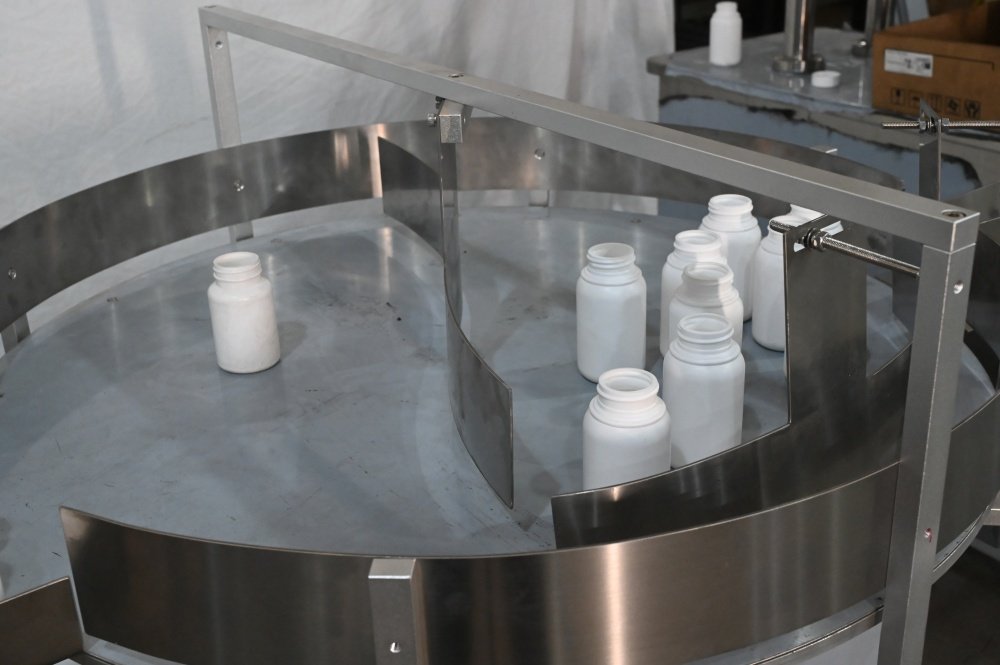
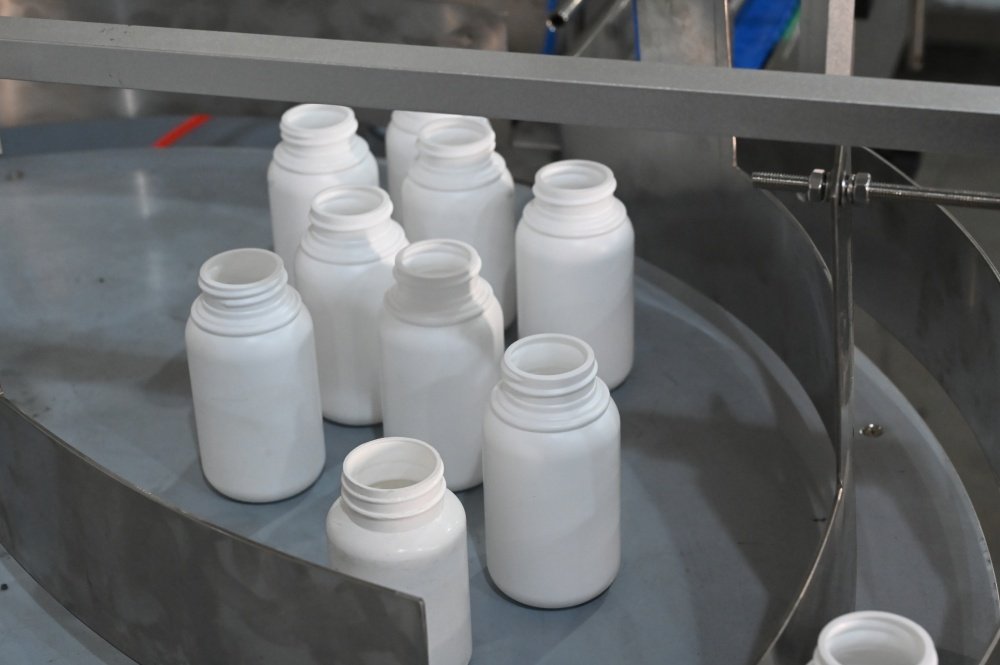
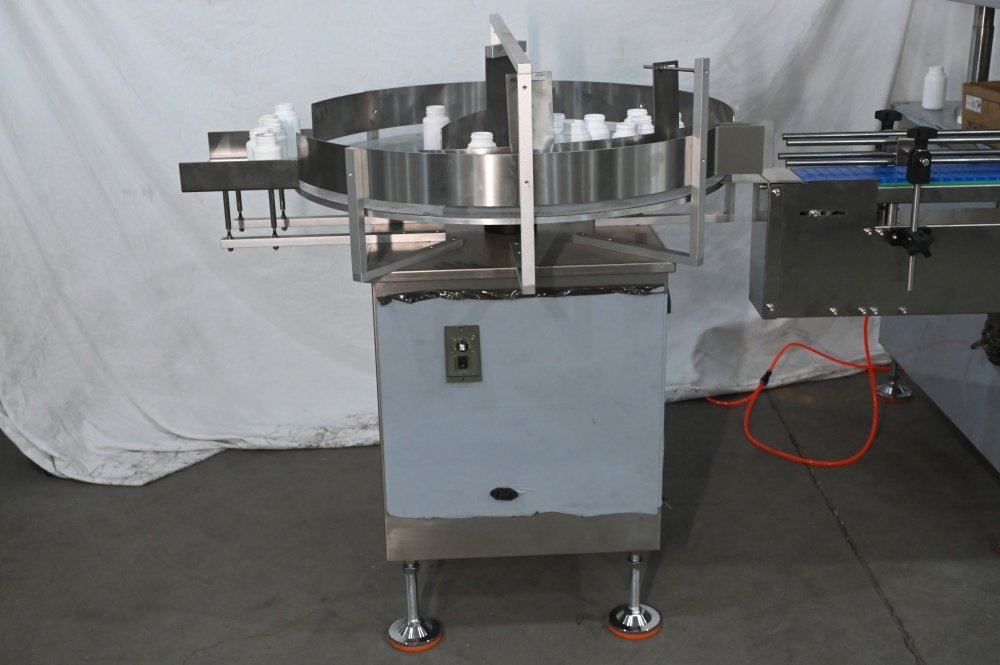
It's a machine that takes bulk, randomly oriented plastic bottles from a hopper, orients them upright, and feeds them in a single-file, organized stream onto a conveyor for the next packaging machine (like a filler or capper).
Rotary: Uses a rotating table/disc. Generally higher speed, gentler handling, and better for a wider variety of bottle shapes. More common in pharmaceutical and high-speed lines.
Linear/Belt: Uses a vibrating hopper and inclined belt. Often simpler, lower cost, and smaller footprint, but may be less gentle and have lower capacity.
It means to take a disordered, jumbled mass of bottles and convert it into a perfectly ordered, singular line of bottles, all facing the same direction (upright).
Bulk Hopper: Holds the supply of empty bottles.
Rotating Disc/Table: The main component that turns, carrying bottles.
Orientation Blades/Wheels: Adjustable guides that interact with bottle geometry to flip them upright.
Outlet Starwheel or Guide: Transfers upright bottles to the takeaway conveyor.
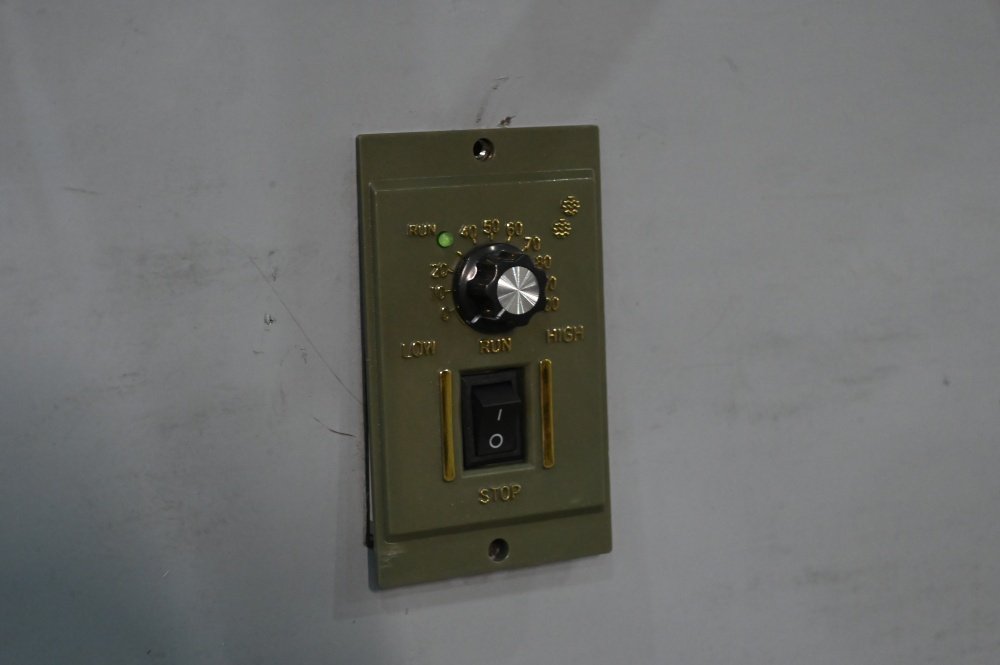
Drive System: Motor, gearbox, and controls.
Frame & Safety Guards.
Key adjustments are mechanical and manual:
Orientation Blades: Position and angle are changed to contact the specific bottle's neck, shoulder, or body.
Guide Rails: Width is adjusted to control bottle flow.
Rotational Speed: Changed via the control panel.
Change parts (like specific starwheels) may be needed for drastically different bottles.
No. A single rotary unscrambler is designed to handle a range of sizes and shapes (within its specified limits) through adjustments and sometimes change parts. Major changes (e.g., from vials to large bottles) might require a different machine or significant modification.
Control Hopper Level: Use an automated hopper level sensor or manual discipline to maintain an optimal, steady supply—not too full.
Use Compatible Bottles: Some bottle designs (thin walls, specific curves) are prone to nesting. Testing during packaging development is key.
Proper Adjustment: Ensure all guides are set correctly for the bottle's path.