Skip to content
  English
  Russian
  Turkish
  Spanish
  French
  German
  Japanese
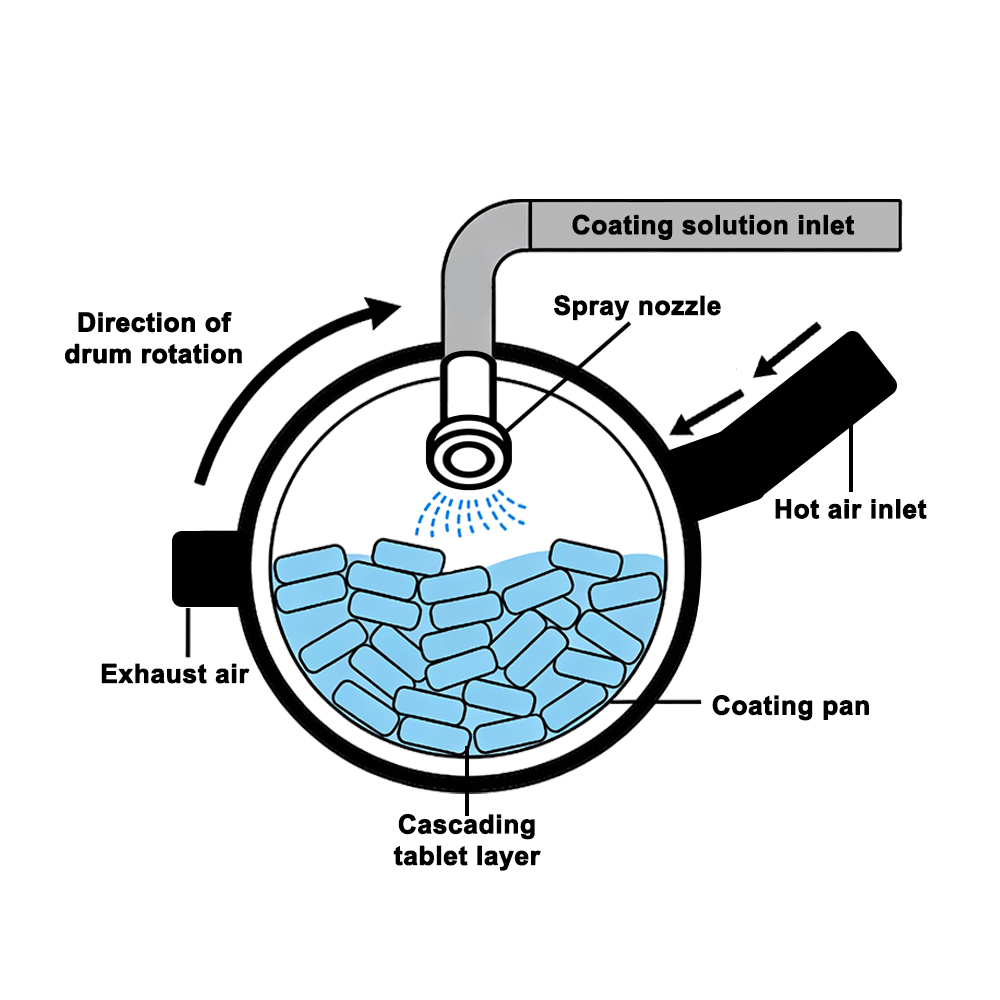
Tablet coating may look simple on the surface, but anyone in pharma manufacturing knows it’s where things usually go wrong. Cracks, peeling, uneven colors, or rough textures make the tablets look unappealing.

In fact, tablet coating defects are among the most common quality issues flagged during inspection. But the good news? Most of these problems can be traced back to specific causes, and once you know them, they can be fixed or prevented.
So, in this guide, we’ll break down the major tablet coating defects and remedies you can apply.
Key Takeaways: Tablet Coating Defects and Remedies
- Tablet Coating Defects: These include defects like sticking, cracking, color variation, and erosion due to poor process control and improper drying. Each can be fixed by adjusting spray rates, airflow, or handling speed.
- Tablet Compression Problems: Issues such as capping, sticking, chipping, or weight variation mainly result from poor granule properties, high speed, or inadequate binding. Remedies include better granulation and proper binder levels.
- Processing Problems Before Coating: Moisture, weak cores, or size inconsistency lead to coating failures. You can eliminate these issues by controlling moisture and strengthening the core.
Common Tablet Coating Defects and Remedies
Tablet coating is a delicate balance of science and process control. These defects reduce the product’s aesthetic appeal and even drug stability in some cases. Here are the most common tablet coating defects and remedies.
1. Picking and Sticking
Sometimes the coating doesn’t stay on the tablet and instead sticks to the pan, the spray nozzle, or even to other tablets. This is referred to as picking and sticking. It leaves behind rough patches, spots, or even holes where the coating is missing.

The primary reason is overwetting, where excessive solution is sprayed without sufficient drying. Remember, sticky coating materials or high humidity can exacerbate the problem.
Remedy: Reduce the spray rate to avoid overwetting, and increase the drying airflow slightly so the coating film sets faster.
2. Cracking
Cracking shows up as fine, hairline fractures that appear across the coating layer. They usually result from the film being too brittle because there isn’t enough plasticizer content, or the machine is drying the tablets too fast.
Remedy: Increase the amount of plasticizer in the formulation and slow down the drying rate to maintain the film’s flexibility.
3. Color Variation
Instead of a uniform look, tablets may show uneven patches of color or darker and lighter spots. This can make tablets look old or poorly made. Pigments failing to fully merge in the solution create this issue. Uneven spray distribution can also trigger this problem.
Remedy: Make sure pigments are dispersed evenly in the coating suspension, often by using high-shear mixers or milling equipment.
4. Orange Peel / Surface Roughness
As the name suggests, the tablet surface may appear bumpy or textured, similar to an orange peel. A coating liquid that’s overly thick, poorly atomized, or quick-drying leads to this defect.
Therefore, instead of forming a smooth film, the coating dries in uneven layers, which gives a rough finish on the tablets.
Remedy: Lower the viscosity of the coating solution by adjusting the solvent ratios or using a lower solid content.
5. Core or Edge Erosion
When tablets show worn-out edges or exposed cores, it’s a sign of erosion. Tablets that absorb too much coating liquid develop a weakened core. This excess moisture leaves the inner material soft and fragile.
High pan speed or rough handling can worsen the problem, physically rubbing away the edges during rotation.
Remedy: Fine-tune spray rate and drying conditions to avoid softening, and keep pan rotation moderate to reduce friction.
6. Chipping
Here, small pieces of the coating break away from the edges of the tablet. This gives the tablet a damaged, broken look. It often occurs due to high pan speed, rough handling, or fragile cores that can’t handle stress. Weak edges on the core make the problem more common.
Remedy: Reduce pan speed slightly and check core hardness before coating.
7. Peeling
Peeling is more severe, where entire sections of the coating detach from the tablet surface. The tablet looks as though its skin is shedding. In this defect, the coating doesn’t stick well to the core surface due to poor adhesion or dust on the tablet.
Remedy: Adjust the formulation to improve the coating’s adhesion to the tablet surface.
8. Blistering
Trapped air or moisture can expand beneath the coating layer. This expansion creates bubbles on the tablet surface during drying. These bubbles can later burst and leave behind rough patches.
Remedy: Lower the drying temperature and allow for gradual solvent evaporation, allowing gases to escape smoothly.
9. Logo Bridging
Logo bridging hides or distorts imprints, logos, or letters on the tablet surface. Instead of being sharp and clear, the markings look filled in or blurred.
Remedy: Increase atomization pressure for finer droplets, so the coating flows around details without covering them.
Different Tablet Compression Problems
Before coating, tablets go through compression, and that’s just as important. This is where powders or granules are pressed into solid tablets using punches and dies. Let’s take a look at the problems that occur at this stage.
1. Capping and Lamination

When the top of a tablet peels away, it’s called capping. On the other hand, if tablets are divided into layers, manufacturers call it lamination. Both defects weaken the tablet, usually caused by trapped air in the powder during compression.
Poor binding capacity in the formulation can make tablets fragile and prone to damage during coating. The issue worsens if the coating machine operates at high speed, as the mechanical stress increases.
Remedy: Improve granule flow by optimizing granulation and applying a slightly higher compression force.
2. Weight Variation
In some cases, tablets from the same batch differ noticeably in weight. These weight variations indicate that there’s an inconsistency in production. This directly affects dosage accuracy and product quality.
The main reason is the poor flowability of granules, which prevents the die cavity from filling consistently. Sometimes, improper feeder settings or worn-out machine parts can also cause uneven filling.
Remedy: Use flow agents like colloidal silica and regularly calibrate feeder settings.
Processing Problems Before Coating
Here are the common processing challenges that appear before coating and how they affect the final product.
1. Improper Drying
One of the most overlooked steps is drying the tablets correctly. If tablets hold too much moisture, the coating process becomes unstable. This high moisture then causes blistering, sticking, or cracking once the coating is applied.
On the other hand, if tablets are over-dried, they may become brittle, increasing the chances of chipping or breaking during coating.
Remedy: Apply controlled drying conditions and monitor moisture content consistently.
2. Poor Tablets Core Properties
The coating process depends heavily on the quality of the tablet core. If the cores are irregular in shape, have high porosity, or have rough surfaces, the coating will not spread evenly across them.
Porous tablets absorb the coating solution unevenly. That’s why tablets form blotches or thin spots on the surface. Tablets with rough surfaces show a similar problem, as the coating struggles to spread smoothly across the surface.
Remedy: Optimize granule density to reduce porosity and design tablets with uniform geometry.
FAQs
1. Why do my tablets keep breaking during coating?
This usually happens because the tablet cores are too weak before coating. It’s because of low binder levels, poor granulation, or over-drying. When the coating pan tumbles them, they chip or crack. The best way to prevent it is by improving binder concentration, optimizing the drying process, and checking hardness before initiating the coating step.
2. What should I do if my tablet logos are not visible after coating?
If your tablet logos are not visible, it’s because the coating layer has filled in or bridged the embossed logo. If you’re struggling with the same, reduce coating thickness, optimize spray parameters, and use engraving-friendly coating solutions.
Stop Tablet Defects Before They Cost You
For manufacturers, it’s mandatory to know about tablet coating defects and remedies to keep production running. Remember, these defects don’t just affect quality; they directly impact your revenue and reputation.
But the good news is Finetech can help you eliminate these coating defects.
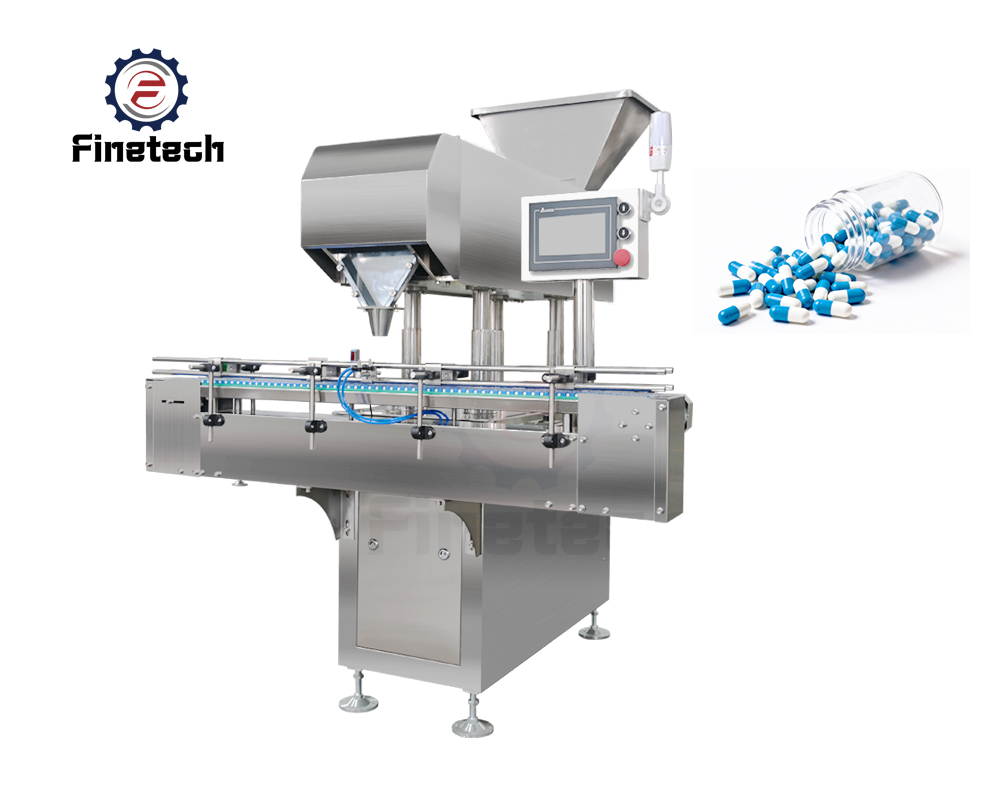
Our advanced pharmaceutical manufacturing and packaging machines are designed to minimize errors and keep your production line running smoothly.
Get in touch to see how Finetech can future-proof your manufacturing process!