 Skip to content
  English
  Russian
  Turkish
  Spanish
  French
  German
  Japanese
Many products, especially medicines, need careful packaging before they reach you. Companies use highly specialized equipment like blister packaging machines to do this vital work. These machines create secure and convenient packs for all sorts of small items.
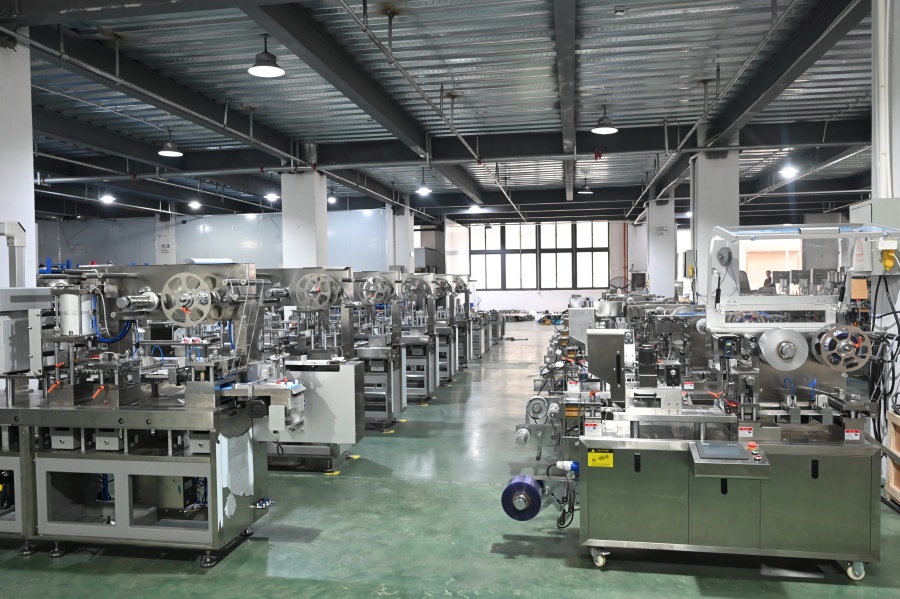
Blister packaging machines create those common packages with plastic bubbles holding individual items. They carefully form the plastic, place the product inside, and then seal it, often with a foil or paper backing. This type of packaging is great for pills because it protects each one until it is used.
| Company Name | Year Founded | Country |
| Uhlmann Pac-Systeme GmbH & Co. KG | 1948 | German |
| IMA Group | 1961 | Italy |
| Syntegon Technology GmbH | 1969 | German |
| Marchesini Group | 1974 | Italy |
| Romaco Group | 1989 | Germany |
| ACG Worldwide | 1961 | India |
| Multivac Group | 1961 | Germany |
| Finetech | 1992 | China |
| Zhejiang Hualian Machinery Co., Ltd. | 1989 | China |
| Pharmaworks | 1993 | USA |
Uhlmann Pac-Systeme GmbH & Co. KG
Year Founded: 1948
Main Products:
- Blister packaging machines.
- Bottle packaging lines.
- Cartoning machines
- End-of-line packaging systems.
- Track & trace solutions.
- Serialization equipment.
- Smart production technologies.
Uhlmann Pac-Systeme GmbH & Co. KG is in Laupheim, Germany. This firm is known worldwide. It makes drug packaging systems. Josef Uhlmann started it in 1948.

At first, Josef Uhlmann made very exact molds. These molds were for items like suppositories. He also made fence parts. He worked from a place he rented.
A big step for the firm was in 1956. Josef Uhlmann made the HS30 machine then. It was known as the world’s first strip wrapper for all uses. This machine could wrap many types of items.
This new machine helped Uhlmann focus its work. The firm began to work mainly on packaging tech for medicines. Soon, Uhlmann moved to its current main spot in Laupheim.
The firm grew a lot there. It went from one plant to a large site. This site now covers over 40,000 square meters.
Friedrich Uhlmann was Josef’s son. He joined the firm in 1963. He kept up the family’s work. They created new ideas for drug packaging.
Later, in 2007, Tobias Uhlmann became chairman. He is from the family’s third generation. Tobias Uhlmann has aimed to grow the firm in other lands. He also works on its digital business.
Uhlmann has much skill in blister pack machines. The firm offers full systems for pills, capsules, and other drug items.
For instance, its Blister Express Center 500 came out in 2012. This machine shows Uhlmann’s top tech. It can make 500 foil blisters each minute. The firm has sent over 8,000 pack machines worldwide.
Uhlmann has seventeen sales and service spots in many lands. It also owns smaller firms, called subsidiaries. These are in places like the USA, Brazil, the UK, and China.
More than 40 agents around the world also help this network. This large setup helps people who use Uhlmann gear. They get good support for their machines for as long as they own them.
Uhlmann’s way with blister packs is more than just single machines. The firm gives complete, joined-up systems to its buyers.
The firm has a plan called 360° PHARMA PACKAGING. This means buyers get advice, project help, setup, and services. They also get digital tools, all from Uhlmann.
This full solution helps all types of drug firms. It helps those making generic drugs. It also helps contract packers. They can handle new needs, like very trusty and low-cost machines. Tracking items is also a key need, now a rule in many lands.
IMA Group
Year Founded: 1961
Main Products:
- Tea bagging machines.
- Pharmaceutical packaging equipment.
- Cosmetics processing machinery.
- Food packaging systems.
- Automatic machines for powdery products.
IMA Group is in Bologna, Italy. This firm is a key maker of machines. These machines package medicines and food. It started in 1961 as I.M.A. Industria Macchine Automatiche.

The firm’s first job was a machine for packing powders. These powders went into folded paper bags. This was IMA’s start in packing.
In 1963, the Vacchi family bought 52% of IMA. This changed IMA into a joint-stock firm. This change was vital for IMA’s growth.
It allowed the firm to grow as a business. It also helped IMA sell in other lands. IMA could then aim for bigger goals with its tech. It found new ways to reach markets.
Between 1967 and 1972, IMA began making tea bag machines. This was a very key move for the firm.
By making auto tea bag machines, IMA became a world leader. It was the top firm for this special type of packing.
The C20 machine packed tea in filter bags. Its launch helped IMA enter markets outside Italy. This opened doors for many years of growth around the world.
Many people know IMA Group for its tea pack machines. It leads in that area. But the firm also has strong skills in gear for drug packing.
Its know-how includes making blister pack systems for medicines. These systems help meet the needs of the world’s drug industry. This industry always wants packing that works well, is trusty, and follows all rules.
The part of IMA for drug packing focuses on auto machines. These machines must meet the hard rules of making medicines.
Their blister pack options use new tech. This tech helps make sure items stay safe. It stops them from being spoiled. It also helps meet world rules for drug packing.
IMA carefully makes its drug pack machines. The firm makes sure these machines are very trusty. They are built to handle many kinds of drug items.
These items include pills, capsules, and other solid drugs. The main goal is to keep packing quality high. It also keeps production running with no hitches.
IMA works on many continents. The firm pays special mind to places where people drink lots of tea. It also focuses on areas with much drug making.
Looking at both these markets has given IMA good ideas. It knows packing needs for different items. It also knows how to handle various rules.
IMA keeps putting money into R&D (research and development). This helps its pack machines stay modern and work well.
The firm adds the latest updates in automation and quality checks. It also works on making production faster and better. This helps meet the new needs of drug makers worldwide.
Syntegon Technology GmbH
Year Founded: 1969
Main Products:
- Pharmaceutical processing equipment.
- Food packaging machinery.
- Capsule filling machines.
- Inspection systems.
- Horizontal packaging machines.
- Vertical bagging systems.
- Isolator technology.
Syntegon Technology GmbH is in Germany’s Stuttgart area. The firm has a past of over 160 years of joined skills. These skills are in tech for making drugs and food.
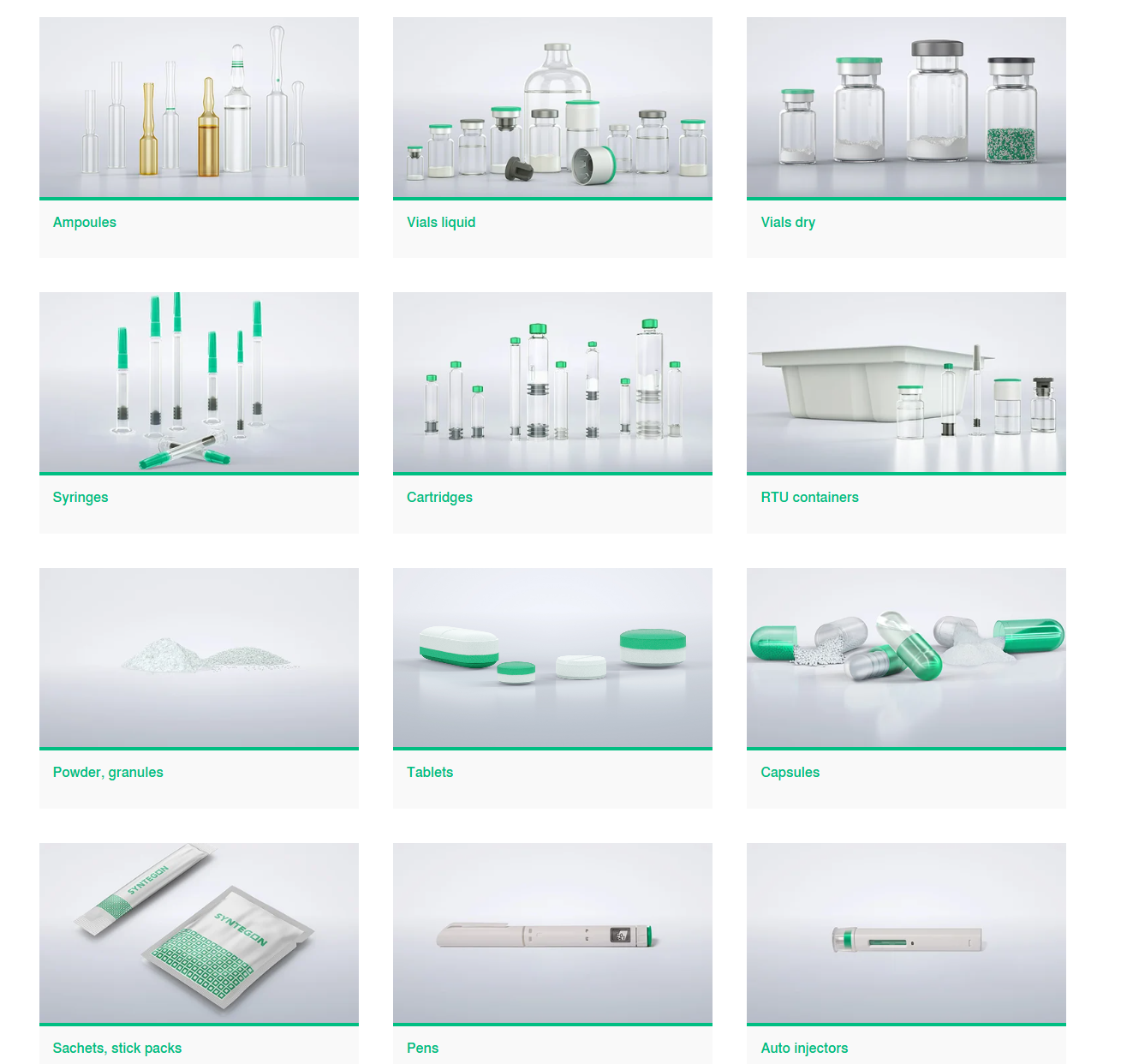
It started in 1969 as Robert Bosch Apparatebau GmbH. It was part of the Bosch Group. In 2020, it became its own firm, Syntegon.
Syntegon’s long past includes buying other key firms. These firms add to its wide range of tech.
For example, Geiger & Hesser started in 1861. It’s seen as a start for German pack machine making. This firm joined Syntegon in 1977.
Höfliger + Karg showed the first auto capsule filler in 1933. This firm, with its vital know-how, joined Syntegon in 1970.
Syntegon is skilled in blister packs and drug processing. This skill comes from many years of new ideas in pack machines.
The firm was key in making isolator tech for drug uses. Isolators are sealed spots that keep things clean.
Buyers have set up hundreds of these isolators. They are used for filling and closing ampoules. Ampoules are small glass drug holders. This tech is vital for stopping germs when making drugs.
Syntegon makes full, joined lines for drug packing. These lines help drug firms make, process, fill, check, and pack medicines. This is for both liquid and solid drugs. It is done safely and well.
Their blister pack skills include new systems. These are made for large-scale drug making. They also keep up with strict quality rules and laws.
Syntegon has made new tech steps. One is using linear motor tech in flat pack machines. This takes the place of older chain belts.
It lets firms change pack styles with just a button press. This is a big help for drug makers with many product lines. It makes work more flexible and saves time.
You can find Syntegon in over 20 lands. It has more than 47 work sites around the globe. This network offers full service help for its drug pack gear.
Drug makers can get quick tech help and fixes. This is very key for keeping work going in the drug industry. This industry has many rules.
Syntegon also works on packing that is better for our earth. The firm creates new green pack materials and tech.
Its research aims to make packing that harms the earth less. These options must still meet the tough safety and good results rules for drug packing.
Marchesini Group
Year Founded: 1974
Main Products:
- Cartoning machines.
- Blister packaging equipment.
- Tube filling machinery.
- End-of-line packaging systems.
- Track & trace solutions.
- Case packing equipment.
Marchesini Group has its main office in Pianoro, Italy. This town is near Bologna. The firm started small. Massimo Marchesini was a skilled tech. He left his job to chase his own business dream.

The firm began in 1974. Marchesini started making pack machine ideas in his home garage. He worked with a keen group of young techs. Their first firm name was 2M.
The firm’s first big win was making different pack solutions. These included a machine for vials. It also made an auto clipper for biscuits, and a bagging machine.
A key time came with an order for a special cartoning machine. It was model BA50. The Gariboldi rice mill in Pavia ordered it. This order helped make Marchesini’s name in the pack machine field.
Marchesini grew from a small start to a major industry name. This happened quite fast in the next ten years.
The BA 400 was a big step. It was the first continuous cartoner with its carton supply at the bottom. This made it easier for workers.
This new design showed how Marchesini thought. The firm aimed to think in new ways. It wanted to set higher marks for pack machines.
To grow, the firm bought other special craft firms. These included Gamma, Smabo, Packservice, and Tonazzi.
These buys brought in expert know-how. This covered areas like blister packs, filling tubes, and end-of-line systems. This helped make a full range of “Made in Italy” pack tech. This tech is known for quality.
In 1989, the firm became Marchesini Group S.p.A. This joined all its firms under one brand. This move helped the firm reach more of the market. It also helped improve its tech better across all pack areas.
Marchesini Group is skilled in making new blister pack machinery. This machinery is for both drug and beauty uses.
The firm’s blister pack systems use modern tech. These are for forming, filling, and sealing packs. They make sure items stay safe. They also follow world drug rules.
Marchesini Group does much business in other lands. Over 85% of all its sales are exports.
Nine foreign firms help this global reach. A wide network of 44 agents worldwide also gives support. This ensures buyers get good help and tech service in major drug markets.
Maurizio Marchesini took over from his father Massimo. Under Maurizio, the firm has used modern Industry 4.0 ways. It has also set up more ordered firm plans.
At the same time, Marchesini Group keeps making its own parts. This lets it have full control over quality and how things are made.
Romaco Group
Year Founded: 1989
Main Products:
- Blister packaging machines.
- Tablet presses.
- Capsule filling equipment.
- Granulating and coating systems.
- Cartoning machines.
- Track & trace systems.
- Heat-sealing machines.
- Rigid tube filling equipment.
Romaco Group is in Karlsruhe, Germany. It is a worldwide seller of gear for processing and packing. The firm focuses on tech for making drugs.

Romaco started in 1989. It has grown to offer full answers for drug making. This growth came from buying other firms and its own work.
Romaco Group includes seven known product brands. Each brand adds special skills. These go into the firm’s wide range of drug pack products.
Noack and Siebler are in Karlsruhe, Germany. They sell blister pack machines and heat-seal gear. They also sell systems for filling hard tubes. These brands show many years of German skill in drug pack tech.
The firm also works in Italy. Macofar, in Bologna, is known for tech that fills powders and liquids. These can be sterile or not.
Promatic, also in Bologna, makes machines for cartoning. It also focuses on track and trace systems. Plus, it makes case packing gear. Promatic offers full end-of-line pack answers for drug makers.
Kilian is in Cologne, Germany. This part of Romaco is expert in making pill presses. These are key machines for early steps of drug making.
Innojet is in Steinen, Germany. It works on tech for granulating fine solid bits. It also coats them. Tecpharm, in Barcelona, Spain, offers new ways to coat pills.
Romaco’s skills in blister packs cover different techs. These include thermoforming, which uses heat to shape plastic. They also use cold-forming, often for aluminum packs.
This means the firm can meet many drug pack needs. Its gear handles drug items like pills, capsules, syringes, and medical tools. It always makes sure to follow strict drug making rules.
Romaco has a presence around the world. Nine Sales & Service Centers help with this. Many local agent groups also give support.
These support networks help with over 12,000 Romaco machines. These machines run in more than 180 lands. So many machines show Romaco’s market reach. They also show its gear is trusty.
Romaco Group is part of Truking Group. Truking is a global high-tech firm in Changsha, China. This link gives Romaco more funds. It also offers better ways to reach world markets for growth.
This tie-up helps Romaco serve drug makers in new markets. It also helps Romaco keep its European engineering ways and quality.
The firm is set on top-notch drug packing. This means more than just single machines. Romaco offers complete “turnkey” answers.
These answers join many processing and packing techs. The multi-brand system lets drug makers get whole work lines from one seller. They also get special skills in each tech area.
ACG Worldwide
Year Founded: 1961
Main Products:
- Empty hard capsules.
- Blister packaging machines.
- Capsule filling equipment.
- Tablet processing systems.
- Cartoning machines.
- End-of-line packaging solutions.
- Inspection systems.
- Analytical equipment.
ACG Worldwide is in Mumbai, India. The firm started in 1961. Brothers Ajit Singh and Jasjit Singh founded it. They aimed to make empty hard capsules for Indian drug firms.

This early focus on capsules gave ACG much insight into drug forms. It also helped them learn about packing needed to keep items high quality. These items also needed to work well.
ACG grew from making capsules to offering many drug pack answers. This shows ACG’s aim to serve all kinds of drug making needs.
ACG moved into related drug sector works. These include making gear, packing, checking, testing, and R&D. This has made ACG a firm that can help drug makers from start to end.
In 1971, ACG set up the SciTech Centre in Mumbai. This is its special place for R&D. This center is key to ACG’s power to create new things.
It trains about 2,000 drug industry workers each year. It also holds science meetings. These events help the industry learn more about making and packing medicines well.
ACG has grown in other lands by buying firms and through its own work. A key step was in 2007. ACG bought Lukaps’ capsule shell plant in Croatia.
This was ACG’s first move into European markets. It made ACG the first Indian drug firm with making plants in Croatia. The plant did well. This led to more plans for growth in Europe.
ACG makes new blister pack machines. These are made for high-speed drug making. They also keep strict quality.
The BQS blister pack machines use a flat-seal, ongoing process. These machines handle all sorts of thermoform films and cold-form foils. This gives drug makers flexible pack options.
ACG kept buying firms. In 2017, it bought Nova Nordeplast. This Brazilian firm makes films and foils for drug packing.
It also bought In2trace. This Croatian startup works on track-and-trace tech. These buys help ACG control more of its own supply. They also offer full pack material and item tracking services.
The firm works in 100 lands on six continents. About 90% of what its Croatian plant makes goes to the USA, Russia, and Europe.
This wide world presence makes ACG a global drug pack answers provider. It can serve large drug firms with steady quality and service worldwide.
Multivac Group
Year Founded:1961
Main Products:
- Thermoforming packaging machines.
- Tray sealing equipment.
- Vacuum chamber machines.
- Hygienic design packaging systems.
- Modular packaging solutions.
Multivac Group is in Wolfertschwenden, Germany. This town is in the Unterallgäu area. The firm has had great growth making pack machinery.
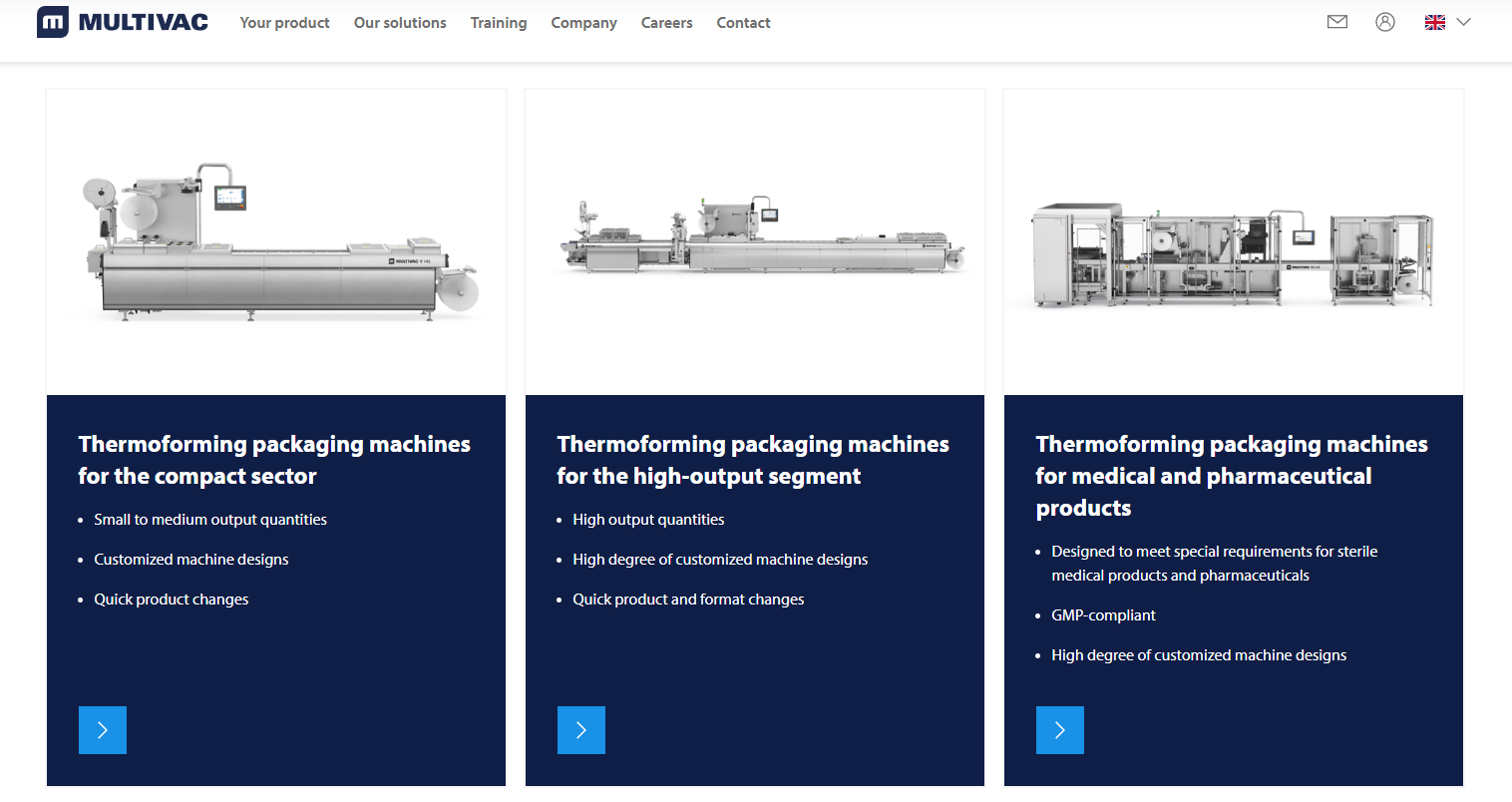
It started in 1961. Sepp Haggenmüller made the first vacuum chamber machine. He did this in his parents’ garage in Böhen. He worked with his friend Artur Vetter. This work began a global pack tech leader.
The firm changed from a two-man garage shop to a huge world business. This shows great vision and hard work. Multivac moved to Wolfertschwenden in 1970.
That same year, it launched its first thermoform pack machine. This machine used a modular design. This means it had parts that could be swapped. This modular idea became key to Multivac’s engineering. It allowed for flexible pack systems.
Multivac began making pack tech for drug uses in the 1980s and 90s. The Espace traysealer was a semi-auto machine. It came out in 1984. This was its start in tray packing.
In 1992, Multivac sold its first stainless steel thermoform pack machine. This showed its aim to meet drug industry needs. These needs included clean gear that stops germs.
A big step came in 2007 with Multivac Hygienic Design. The R535 thermoform pack machine was made to meet rules for clean design.
This directly met the drug industry’s very strict rules. These rules apply to gear that touches drug items.
Multivac mainly focuses on food packing. But its tech also offers good answers for drug pack needs.
The firm’s thermoform skills include shaping plastic spots for drug items with care. Its sealing ways make sure items are safe and clean.
The firm’s world growth has been very strong, mostly in recent years. From 2010 to 2021, Multivac more than doubled its workers and sales.
By 2021, its total sales hit 1.37 billion euros. This growth shows the rising need for new pack tech. This need is in many fields, including for drug uses.
Multivac has 84 sales and service firms around the world. This large network gives full help for its pack gear. This help covers many markets and uses.
This ensures drug makers get the tech help and fixes they need, where they are.
The firm’s modular design way helps drug makers. They can set up pack systems for their own item needs.
It also gives them freedom to change. They can adjust to new work demands and new rules. This is key in the fast-moving drug industry. This ability to adapt is very useful.
Finetech
Year Founded: 1992
Main Products:
- Blister packaging machines.
- Capsule filling machines.
- Cream filling machines.
- Ampoule filling and sealing machines.
- High shear mixers.
- Complete pharmaceutical equipment solutions.
CEO Tony Tao leads Finetech, which started in 1992. The company is in Ruian City in Zhejiang Province. This area is a world-famous center for making precision machines. Finetech uses the industrial strength of the Yangtze River Delta. It also uses the shipping benefits of the nearby Ningbo and Shanghai Ports.

From the start, Finetech focused on making good equipment that saves money. The company makes machines for drugs and packing. Its spot in the “China Packaging Machinery City” gives it a big edge. This allows the firm to use top research and good supply chains, leading to 30% faster delivery and 15% lower costs.
Finetech has over 30 years of experience. It is now a top equipment maker in China. The company has finished more than 1,000 projects and has served over 500 clients. Finetech sends its products to more than 60 countries.
The company’s work is done in a large production plant of over 10,000 square meters. It has special workshops for making different machines. For instance, the workshop for blister machines is over 1,000 square meters. It can make up to 20 machines each day.
Finetech also has a 1,500 square meter workshop for putting capsule fillers together. This workshop makes more than 25 NJP series machines every day. The company uses modern tools and imports top CNC equipment from Germany and Italy. This helps to make each machine with great care.
A skilled team helps Finetech succeed. The company has a strong team of experts in tech support, R&D, and sales. Its technical workers have a lot of experience. On average, they have worked for the company for more than 7 years.
Finetech offers many different products for the drug industry. It gives full solutions, from processing to packaging. Key solutions include lines for solid-dose drugs and systems for sterile fluids. The company also makes cream filling machines and high shear mixers.
The company is serious about quality and customer satisfaction. All equipment is made following cGMP standards. The machines are also CE and ISO certified. This focus on high standards helps clients pass global safety checks.
Finetech helps customers start their work fast. The company keeps a large stock of thousands of drug molds. This stock covers almost all shapes of solid pills and tablets. Because of this, Finetech can make custom orders very quickly.
Zhejiang Hualian Machinery Co., Ltd.
Year Founded: 1989
Main Products:
- Continuous band sealers.
- Horizontal sealing machines.
- Solid-ink coding systems.
- Packaging machinery components.
Zhejiang Hualian Machinery Co., Ltd. is in Wenzhou, China. This city is in Zhejiang Province. The firm started in 1989 as the Wenzhou band sealer factory.

This was also when the first “Hualian“ brand continuous band sealer came out. The firm began when China’s economy was changing. This helped it grow with China’s making sector. There was also more need for pack machines.
The firm first tried world markets at a show in Malaysia. This was the Malaysia International Packaging Machinery Expo. This early world step showed Hualian wanted to sell outside China. It set the base for later world growth.
Hualian made its tech better in 1995. It created the FR-1120W flat continuous band sealer. This added to its products beyond basic sealing gear.
The firm went to the Cairo International Expo that same year. This showed it was looking at Middle East markets. It was a smart way to grow in other lands.
A key new idea came in 1996. Hualian added special solid-ink coding systems to its band sealers. This earned the firm three national patents.
This tech step made Hualian’s gear different. It also gave drug makers key product ID tools. These are needed for rules and for tracking items.
The firm’s growth in size showed its success. In 1997, it moved to a high-tech park in Wenzhou.
A 3,000 square meter workshop let it make its own spare parts. This gave more control over quality. It also helped with delivery times for its drug pack gear buyers.
The firm became Zhejiang Hualian Machinery Co., Ltd. in 2000. This gave a stronger structure for more growth.
In 2003, Hualian focused on both Chinese and world markets. It changed its International Trade Department. It also boosted business in other lands. This doubled its export sales that year.
More growth came in 2004. Hualian moved to the Ouhai Gaoxiang Industrial Zone site. This greatly grew the firm’s making size.
Being named a national high-tech firm showed its tech skills. It also showed its part in China’s new making sector.
In 2005, Hualian set up a research center for high-tech work in its province. This showed its drive for new ideas and tech progress.
This ensures its pack machinery keeps meeting drug industry needs. These needs include good output, being trusty, and following all rules.
Pharmaworks
Year Founded: 1993
Main Products:
- Thermoforming blister machines.
- Cold form blister machines.
- Integrated blister and cartoning lines.
- Automated feeding systems.
- Machine rebuilds and upgrades.
Pharmaworks is a key U.S. maker of package gear. It is in Odessa, Florida. The firm focuses on blister pack answers for the drug and medical fields. Peter Buczynsky and Ben Brower started it in 1993. They used their deep market knowledge to build the firm.
At first, Pharmaworks grew its name by fixing older blister machines. This unique start gave the firm great insight. It learned about many machine designs. This knowledge helped it create its own line of new gear.
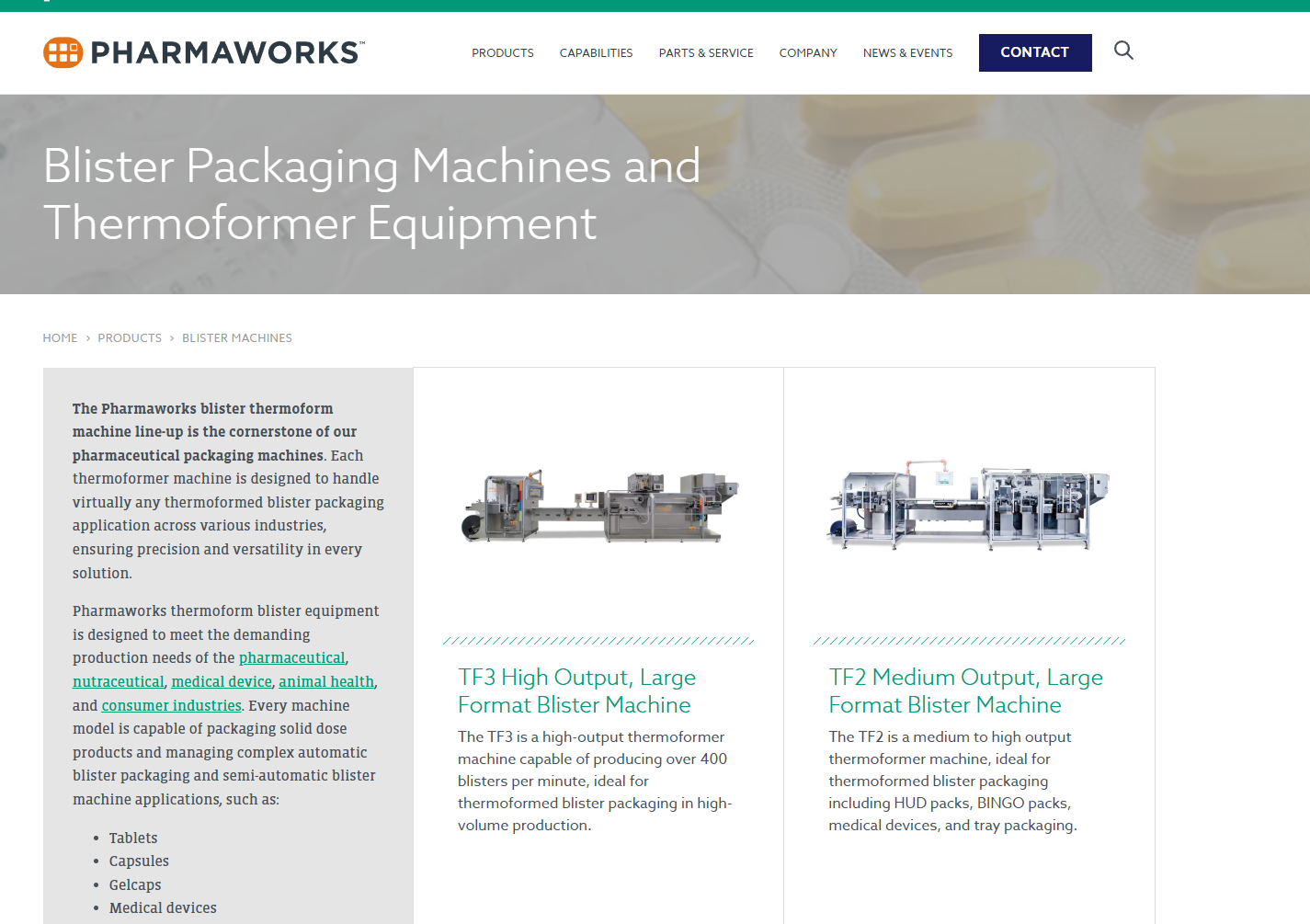
The move to making its own machines was a big step. Pharmaworks became known for its TF series of thermoformers. These machines are made to be trusty and work well. They can handle many product and package types. This gives drug makers flexible options.
Pharmaworks gives more than single machines. The firm is good at offering full package lines. These systems join blister packing with auto feeding and cartoning. This method helps smooth out the whole package process for buyers.
A key part of the firm’s way is easy use and fast tool changes. This is vital in the drug industry. Makers often run many products on one line. Pharmaworks’ designs help cut downtime and raise total output.
As part of ProMach, Pharmaworks has grown its reach. ProMach is a world leader in package machine answers. This link gives Pharmaworks a wider sales and support network. It ensures buyers get good service for their gear.
The company keeps making new things. It focuses on meeting strict cGMP (current Good Manufacturing Practices) rules. Its machines are built to be strong and simple to clean. This is key for a clean work area. This focus makes Pharmaworks a trusted name for packing health items.
Conclusion
Making blister packages for items like pills relies on some smart and precise technology. The machines and processes used for blister packaging are constantly getting better to ensure product safety and improve how well the packaging works. This focus on careful production helps make sure medicines and other small goods are well-protected and dependable when you need them.

1 thought on “TOP 10 Blister Packing Machine Manufacturers From USA, Germany, Italy, India and China”
This is an incredibly comprehensive and unbiased roundup of blister machine manufacturers from the USA, Germany, Italy, India, and China! So helpful for global buyers.