Skip to content
  English
  Russian
  Turkish
  Spanish
  French
  German
  Japanese
If you’ve ever read about medicine manufacturing, you’ve probably come across the terms sterile and aseptic. At first, they sound like the same thing, but they actually describe two very different approaches.
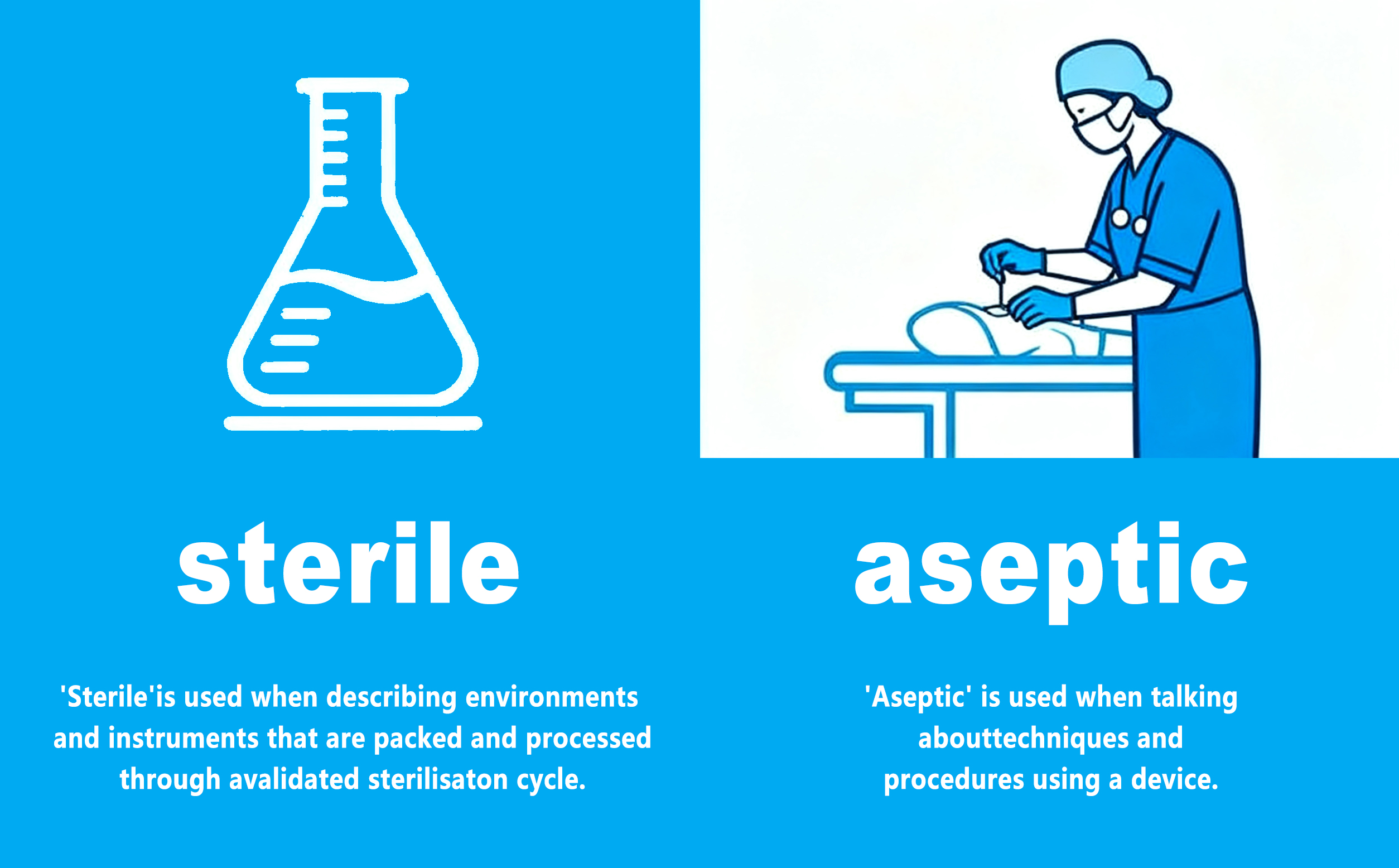
Simply put, sterile is the end result, while aseptic is the process. Both matter equally, but knowing when and why each is used can save lives.
Here’s a comparison between sterile vs aseptic to help you understand more.
What Does “Sterile” Mean?
When something is described as sterile, it means that it is completely free from all living microorganisms. This includes bacteria, viruses, fungi, and even spores that are often resistant to normal cleaning.
Sterility is not about reducing germs to a safe level. It is about making sure there are absolutely none left. That’s why sterility is so crucial in healthcare and pharmaceuticals. In such industries, even a single containment can put lives at risk.
What Does “Aseptic” Mean?
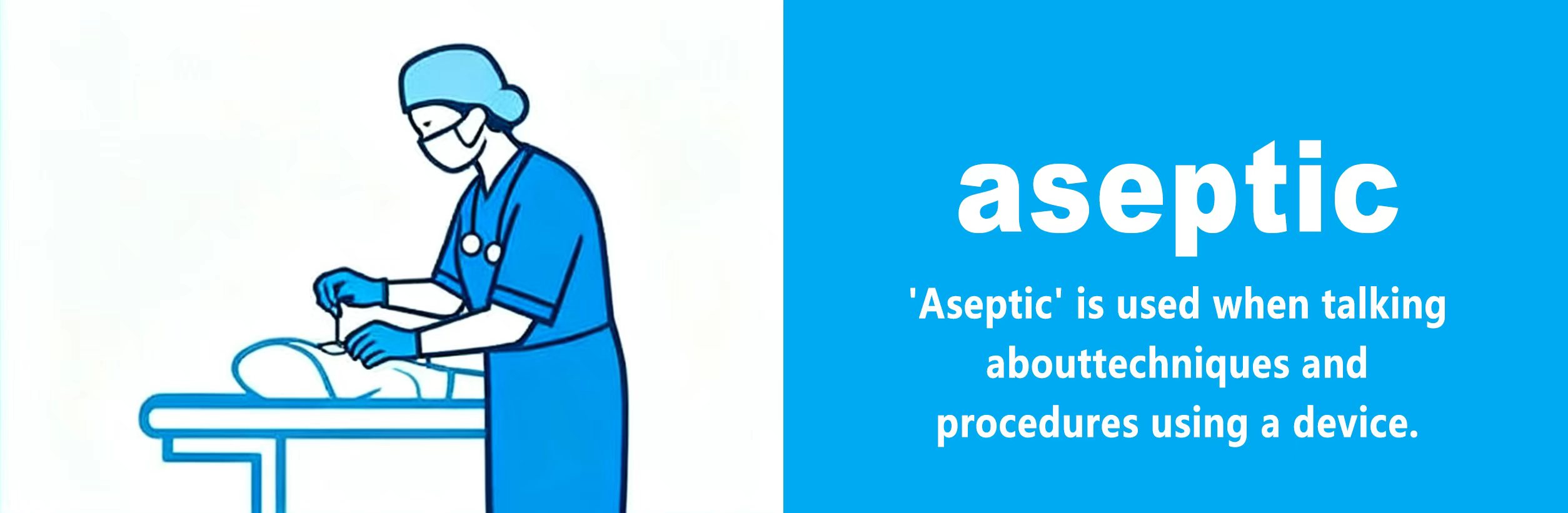
Aseptic refers to the practices and techniques used to prevent contamination during processes. Though it does not guarantee that a product is already sterile, it ensures that sterility is maintained when handling products.
These aseptic techniques are especially important in environments where even tiny contamination can ruin a product or harm a patient. For instance, in pharmaceutical manufacturing, aseptic filling keeps medicines safe when placed into vials or syringes.
Sterile vs Aseptic: Key Differences
Now that we’ve covered both terms individually, let’s understand the main differences. Many people mix them up, but sterile and aseptic are not the same thing. Here’s how they differ at multiple levels:
| Aspect | Sterile | Aseptic |
| Definition | Free from all microorganisms (bacteria, fungi, viruses) | A process or technique that prevents contamination by microorganisms. |
| Focus | End state or condition | Method, environment, and handling |
| How It’s Achieved | Autoclaving, radiation, filtration, and chemical sterilants | Cleanrooms, laminar airflow hoods, aseptic gowning, and sterile gloves |
| Example | A sealed, packaged syringe with zero microorganisms | Preparing IV fluids in a sterile room without exposing them to contamination |
| Limitation | Once opened, it can lose sterility | It cannot sterilize on its own, only maintains it. |
| Role in Safety | Keeps the starting materials safe | Ensures sterility is preserved during handling and use |
Even though the debate between sterile vs aseptic has been going on for a long time, you should know they are, in fact, partners. Without sterility, safety cannot begin, and without aseptic techniques, sterility cannot last.
Why the Difference Matters in Pharma and Healthcare
Here are some reasons why knowing the difference between the two matters in the pharmaceutical and healthcare industries:
Regulatory Compliance: Sterile vs Aseptic Standards
Agencies like the FDA, EMA, and WHO set strict guidelines to ensure products meet safety standards like GMP. Failing to distinguish between the two can lead to non-compliance, fines, or product recalls.
In fact, the FDA reports that almost 37% of drug recalls in the US are due to contamination issues. This highlights how crucial it is to adhere to both practices.
Patient Safety: The Real-World Risks
Mixing up sterility and aseptic practices isn’t just a regulatory issue; it directly affects patient safety. Using non-sterile syringes or implants, or handling sterile products without proper aseptic technique, can introduce infections.
The CDC also estimates that healthcare-associated infections (HAIs) affect 1 in 31 hospital patients in the US. Interestingly, many of these issues could have been prevented with proper sterile and aseptic practices. So, clearly, knowing the difference can save lives.
Learning from Industry Failures
There are numerous examples where misunderstanding sterile vs aseptic led to serious consequences.
For instance, multi-dose vial contamination often occurs when aseptic technique is ignored, even though the product itself is sterile. Similarly, improper sterilization of surgical tools has caused outbreaks in hospitals worldwide before.
These incidents show how important sterility is as the foundation and aseptic technique as the ongoing safeguard.
Practical Applications and Industry Examples
Let’s explore how each is applied in pharmaceuticals, medical devices, and other sectors. And why knowing the distinction matters.
1. Pharmaceuticals: Sterile Injectables vs Aseptic Filling Lines
In the pharmaceutical industry, sterility is crucial for products that are injected directly into the body. Sterile injectables, such as vaccines or intravenous drugs, must be completely free of microorganisms before use.
Aseptic techniques come into play during pharmaceutical production and handling. It ensures that the product remains uncontaminated as it is filled into vials or prefilled syringes.
For instance, a sterile antibiotic solution must be manufactured in a cleanroom environment using strict aseptic procedures to maintain its integrity. Failure in either process can lead to contamination, product recalls, or serious patient harm.
2. Medical Devices: Sterile Implants vs Aseptic Packaging
Medical devices offer another clear example. Sterile implants, such as pacemakers, orthopedic screws, or catheters, are sterilized before leaving the factory. However, the way they are packaged, handled, and stored often relies on aseptic techniques to prevent contamination.
Hospitals and surgical teams follow aseptic protocols during insertion to maintain sterility. A single lapse can cause infections or post-surgical complications, which underscores the importance of understanding both concepts.
3. Food Industry and Laboratory Applications
Beyond healthcare, the food and lab industries also highlight the practical differences.
In food processing, sterile environments are sometimes required for products like baby formula or canned goods. Meanwhile, aseptic techniques are used when packaging these items to prevent contamination.
Similarly, in laboratory work, researchers handle sterile instruments in aseptic conditions. They use gloves, laminar flow hoods, and sterilized equipment to avoid contaminating experiments.
Common Misconceptions About Sterile vs Aseptic
Many people mistakenly believe that sterile and aseptic mean the same thing, but this isn’t accurate. Sterile refers to something completely free of all microorganisms, while aseptic describes the methods used to prevent contamination during handling or production.
For example, a sterile syringe has been sterilized and contains no microbes, but if it’s handled in a non-aseptic way, it can become contaminated before use.
Misuse of these terms can also lead to real-world problems. In hospitals, for instance, staff may assume an item is safe simply because it is labeled sterile. But this neglects aseptic handling protocols, which can increase infection risk.
FAQs
1. How can I tell if a product is truly sterile?
To confirm sterility, look for certification from recognized authorities such as the FDA, EMA, or WHO. Sterile products often undergo validated sterilization methods like autoclaving, gamma radiation, or filtration. Also, don’t forget to check the product labeling, batch documentation, and expiration date.
2. What’s the difference between sterilization and disinfection?
Sterilization completely removes all forms of microbial life, including spores, while disinfection only reduces harmful microbes to safe levels. For example, surgical tools are sterilized before use, whereas hospital surfaces are disinfected regularly.
3. What are examples of sterile and aseptic products?
Sterile products include surgical gloves, syringes, and IV fluids that have undergone sterilization. Aseptic products include packaged food and injectable drugs manufactured under aseptic conditions to keep them free from contamination.
Ready to Upgrade Your Pharma Production?
Understanding sterile vs aseptic processes is crucial for any pharmaceutical or healthcare facility. However, it is also important to choose the right equipment workflow that ensures patient safety and consistent product quality.
We provide end-to-end solutions for both sterile and aseptic production. By partnering with our experts, you can implement systems that reduce contamination risks, streamline operations, and maximize output.
Connect with Finetech today!