English
  Russian
  Turkish
  Spanish
  French
  German
  Japanese
One of the biggest challenges in the pharmaceutical industry is to maintain the chemical integrity of the Active Pharmaceutical Ingredient (API). They are highly vulnerable to residual moisture; a variable that dictates drug stability, decides shelf life, and serves as a checkpoint for global regulatory bodies.
A drying oven for pharmaceutical products emerges as the best solution to this challenge. This specialized equipment provides a consistent, validated environment upholding the quality and performance of the final product.
This guide offers the in-depth technical knowledge required by every pharmaceutical manufacturer to select, operate, and maintain these systems within a cGMP-compliant facility.
What is a Pharmaceutical Oven?
A pharmaceutical drying oven is a high-tech thermal processing equipment used in the pharmaceutical industry. It is specifically designed to remove moisture, residual humidity, or volatile solvents from pharmaceutical materials. This may include powders, granules, and different components used in the manufacturing of medicine tablets and capsules.
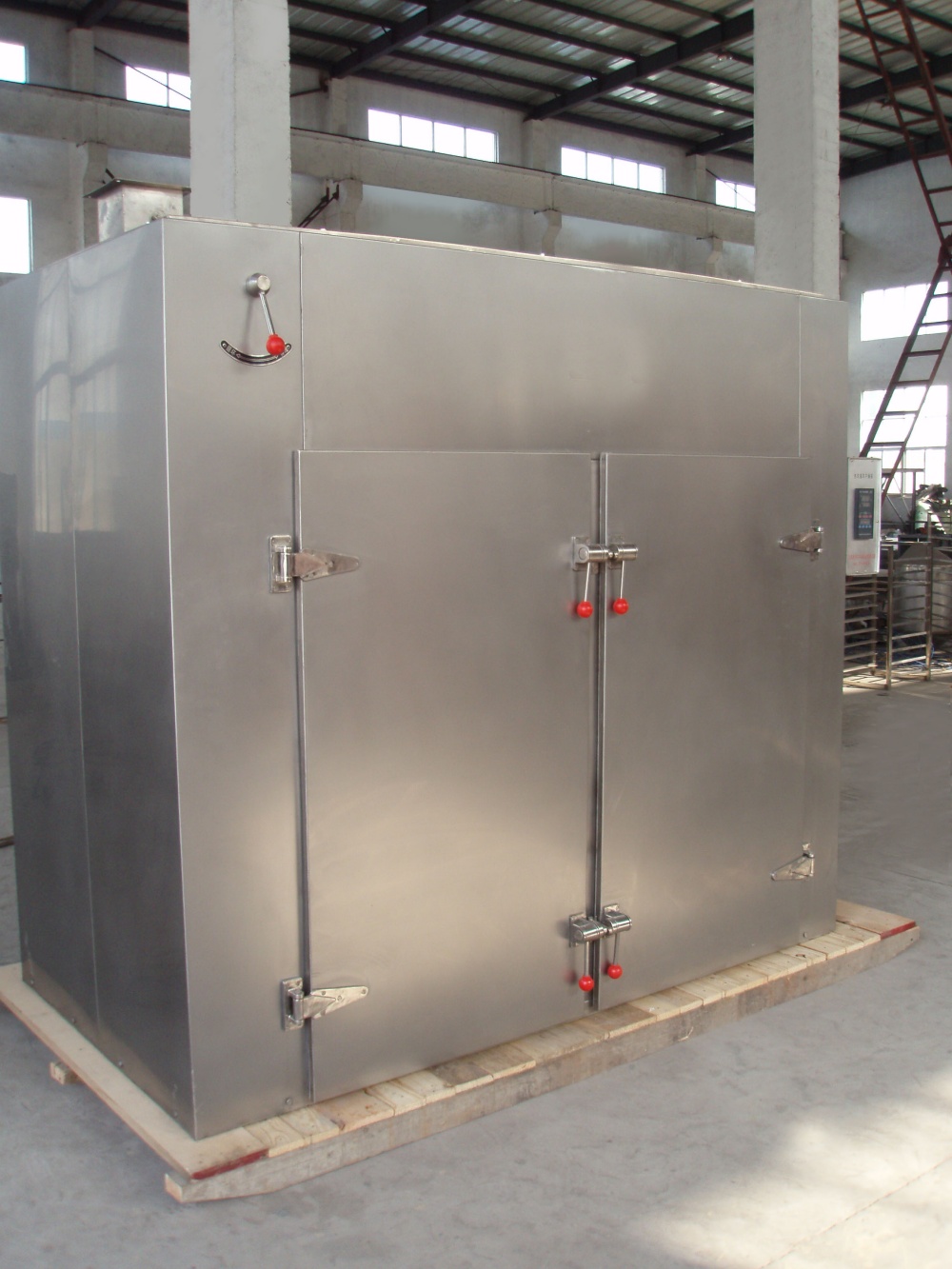
It provides a consistent, controlled temperature environment to ensure that every treated batch meets strict quality parameters. The controlled process is essential for preventing chemical degradation and extending the medication’s shelf life.
Key Components of a Pharmaceutical Drying Oven
A pharmaceutical drying oven consists of specialized parts that work together to ensure a highly controlled thermal process. The specific components included depend on the oven’s design and technology, as well as the required application capacity.
Some of the most important parts of a drying oven are the following:
1. Main Chamber
This is the primary processing area where pharmaceutical materials are placed for drying. The chamber is typically constructed from 304 or 316L stainless steel.
These grades are preferred for their superior corrosion resistance, high durability, and mechanical strength compared with other common materials. Using stainless steel maintains a non-reactive and easy-to-clean environment in the long run.
2. Shelves
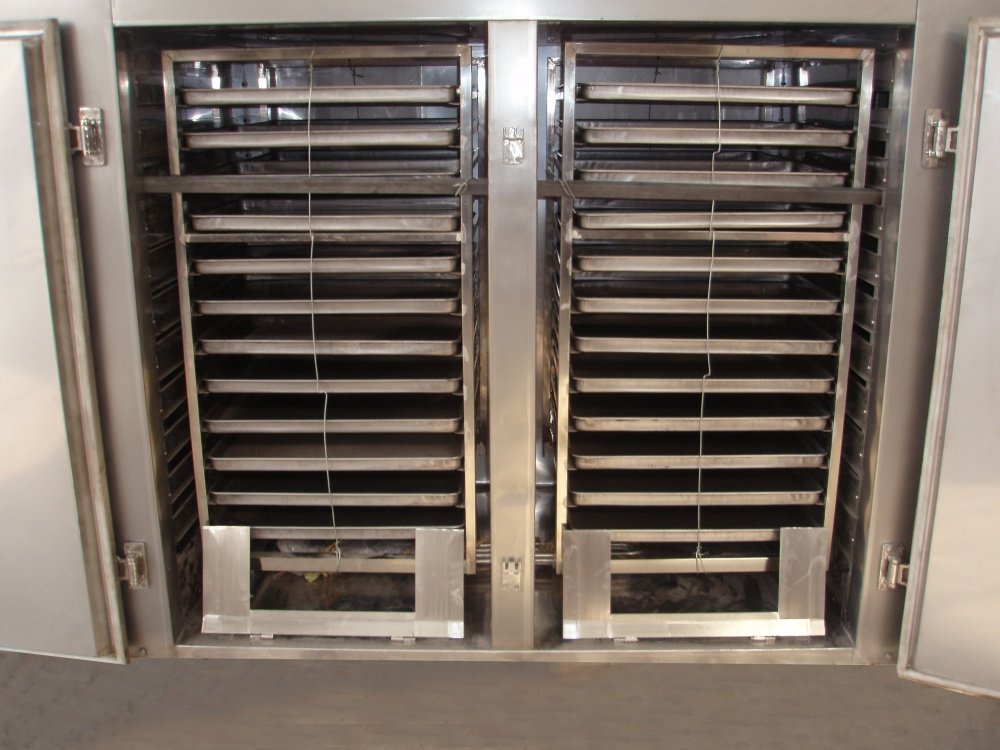
These are the trays or racks that hold the pharmaceutical products placed inside the chamber for processing. Shelves are strategically designed to allow for maximum, unimpeded airflow around the materials.
This design is important for achieving consistent drying results and preventing moisture pockets within the batch.
3. Door and Gasket
The door provides access to the chamber, and the gasket creates an airtight seal when the oven is operating. Gaskets can be a source of contamination and cracks, and compromise the seal by allowing unfiltered air or bacteria.
Therefore, gaskets must always be made of durable, non-shedding, FDA-approved materials.
4. Heating system
A stable, uniform source of heat is essential for properly drying pharmaceutical products. The source of thermal energy in pharmaceutical ovens can come from vapor (steam), electricity, or specialized infrared emitters. The actual degree of heat achieved within the chamber depends on the type and capacity of the heating elements.
5. Air Circulation System
An air circulation system typically includes a fan or blower that circulates the heated air throughout the entire chamber.
There are three primary purposes of this air circulation system. First, to guarantee a uniform temperature distribution across all shelves and materials. Second, effective heat transfer to the products carries evaporated moisture away from the product surfaces to the exhaust ports.
Lastly, the continuous circulation reduces the drying time and produces consistent batch results.
6. Temperature Control System
Each pharmaceutical drying oven is equipped with a sophisticated temperature control system. It integrates various components, including sensors (RTDs or thermocouples), a high-accuracy thermostat, and a controller.
The temperature control system continuously monitors the chamber’s temperature and adjusts the heating elements to maintain the desired set point.
How Does a Pharmaceutical Drying Oven Work? Step-by-Step Process
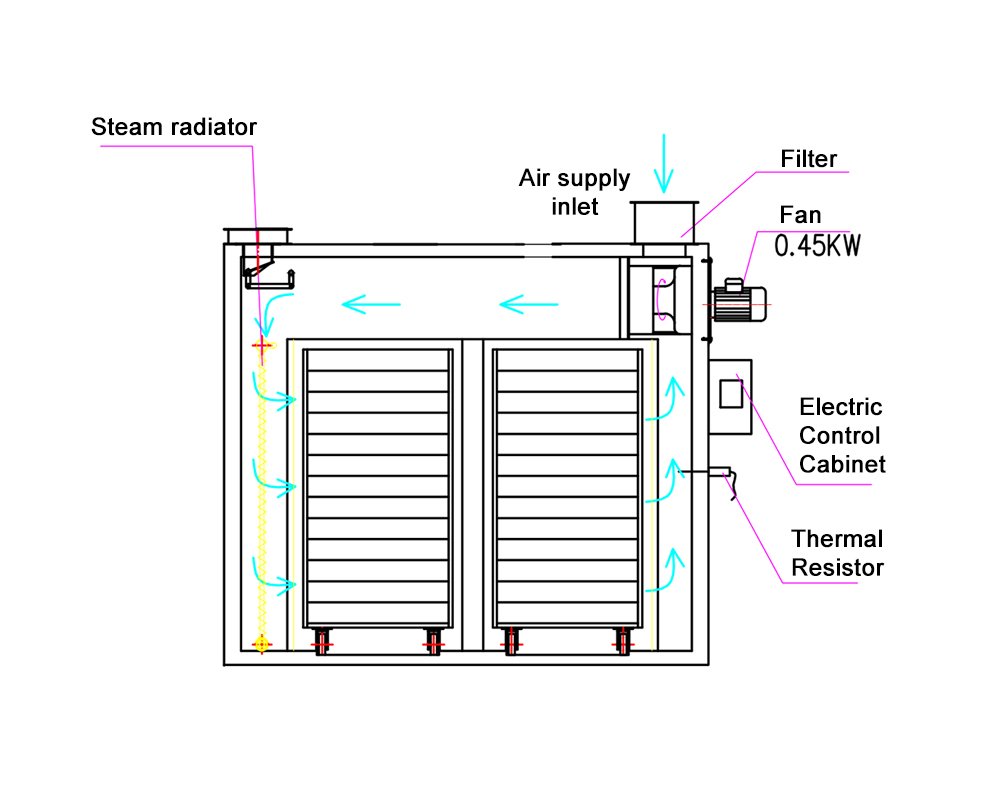
A drying oven for the pharmaceutical industry works by applying heat to a material within a sealed chamber. Here is the complete step-by-step process:
Step #1: Material Loading
The operator places the pharmaceutical materials (powders or granules) onto specialized drying trays. These trays are then carefully loaded onto the racks inside the main chamber.
Step #2: Heat Transfer
The heating element transfers thermal energy to the material placed inside. It is done through convection (hot air moves the heat), conduction (touching hot surfaces), or radiation. The goal is to raise the product temperature just enough to evaporate the moisture.
Step #3: Air Circulation
Many pharmaceutical ovens use forced air circulation (mechanical convection) via an internal fan. A blower or fan circulates the hot air to maintain uniform heating across all material surfaces. This circulating air speeds up moisture evaporation from the products.
Step #4: Moisture Removal
As the moisture evaporates, the moisture-laden air is continuously removed from the chamber via an exhaust or ventilation system. This process is essential for maintaining a dry internal environment. It prevents the evaporated moisture from recondensing, so the product is ready for solid dosage formation.
Step #5: Control and Monitoring
Pharmaceutical drying ovens allow time and temperature control through digital controllers and sensors. Safety features, such as audible and visual alarms for over-temperature or pressure deviations, are also a part of the control and monitoring system. These enhanced features keep the cycle running exactly according to the validated protocols.
Four Benefits of Using a Pharmaceutical Drying Oven
Drying ovens are mainly used for drying, sterilizing, and depyrogenating different pharmaceutical materials. However, they are also highly beneficial for maintaining quality, stability, and the integrity of the final product. Here are some key benefits of using pharmaceutical drying ovens:
1. Accurate Moisture Content
Each pharmaceutical API requires a specific moisture ratio based on its chemical characteristics and formulation requirements. For example, Ibuprofen powder requires 1% to 3.5% moisture as a lubricant to facilitate inter-particle bonding during compression.
Moisture levels above or below this range severely impact the quality, flowability, and final strength of the tablet. The drying oven creates a controlled environment to hit this target accurately.
2. Prevent Degradation
The temperature control system of drying ovens helps you set or adjust the thermal profile according to the material’s requirements. This level of control minimizes the risk of thermal degradation of heat-sensitive APIs. Since you only apply the necessary heat, the oven preserves the chemical structure and potency of the drug components.
3. Safety and Purity
The non-reactive stainless steel surfaces, FDA-approved gaskets, and filtered air intake reduce the risk of cross-contamination and microbial ingress. This means you can maintain the purity and integrity of the product during this critical manufacturing phase.
4. Consistent Batch Production
The pharmaceutical drying oven’s uniform temperature distribution and programmable cycles ensure the drying process remains identical from batch to batch. No deviation in thermal treatment means no variation in product characteristics. Therefore, it is much easier for manufacturers to meet the strict Good Manufacturing Practice (GMP) standards.
Different Types of Drying Ovens for the Pharmaceutical Industry
Drying ovens for the pharmaceutical industry come in several specialized designs. Each is used for different purposes, depending on factors such as the material’s heat sensitivity, volatile solvent content, and product volume. We have listed some of the most commonly used drying oven technologies below:
1. Forced Convection Oven
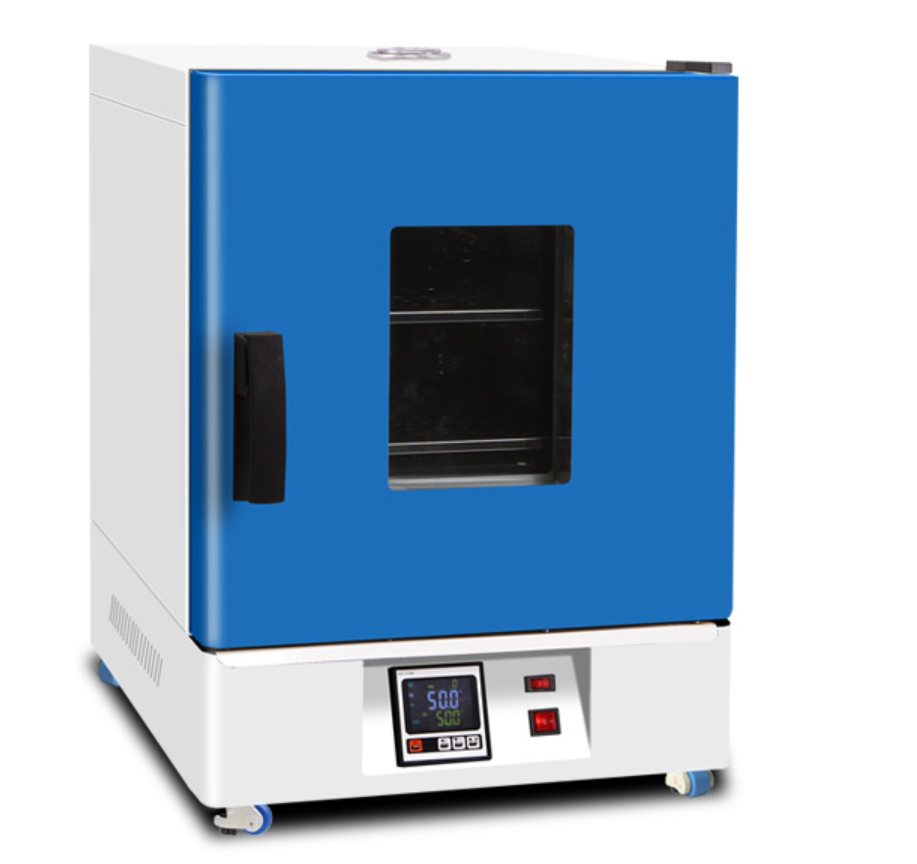
A forced convection oven uses an internal fan or blower to push and circulate heated air in the chamber actively. The mechanical circulation maintains a highly consistent temperature distribution and rapid heat transfer to the product. It is primarily used for general drying of robust powders and granules, or for glassware sterilization.
2. Natural Convection Oven
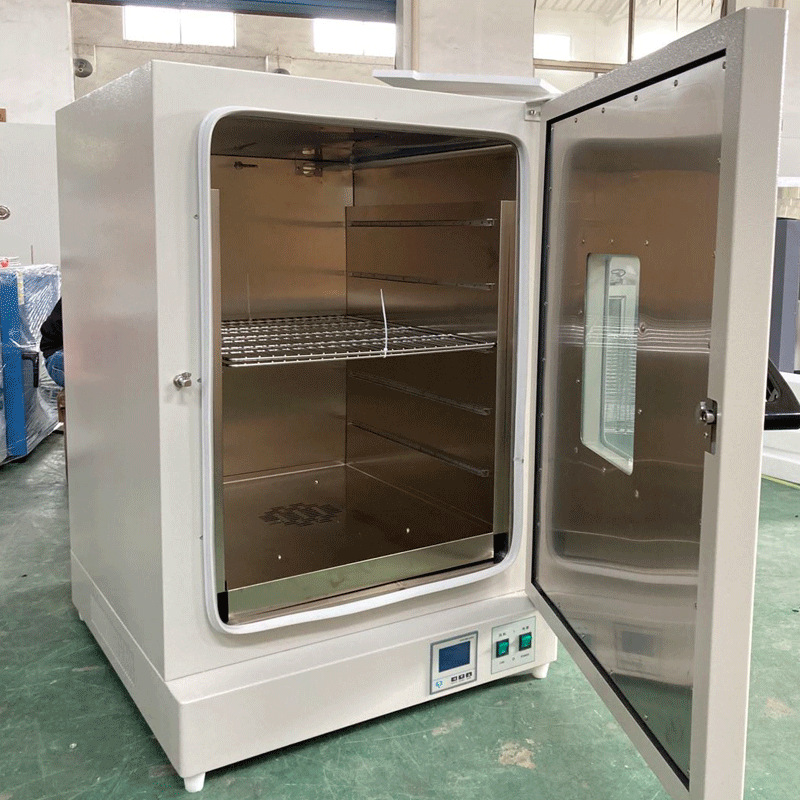
A natural convection oven operates without a fan and relies on natural thermal principles. In this process, hot air near the heating elements becomes less dense and rises, displacing the cooler, heavier air above it. The process creates very gentle air movement.
This oven type is best suited for drying fine, light powders or heat-sensitive materials that could be disturbed or scattered by forced airflow.
3. Vacuum Drying Oven
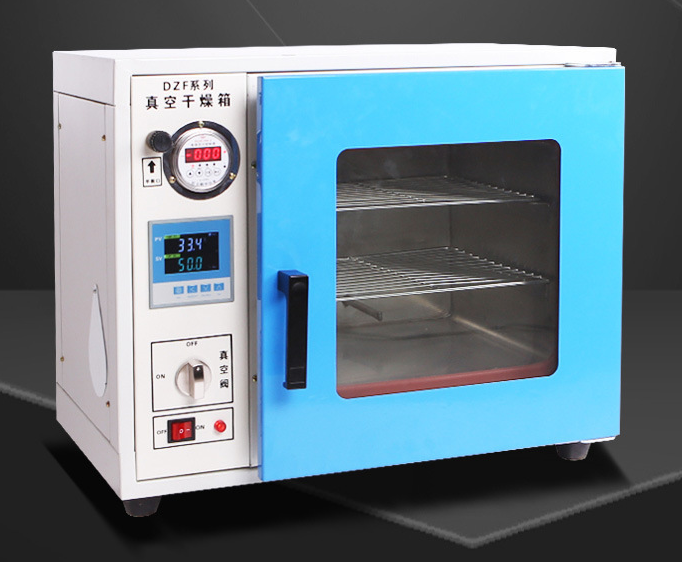
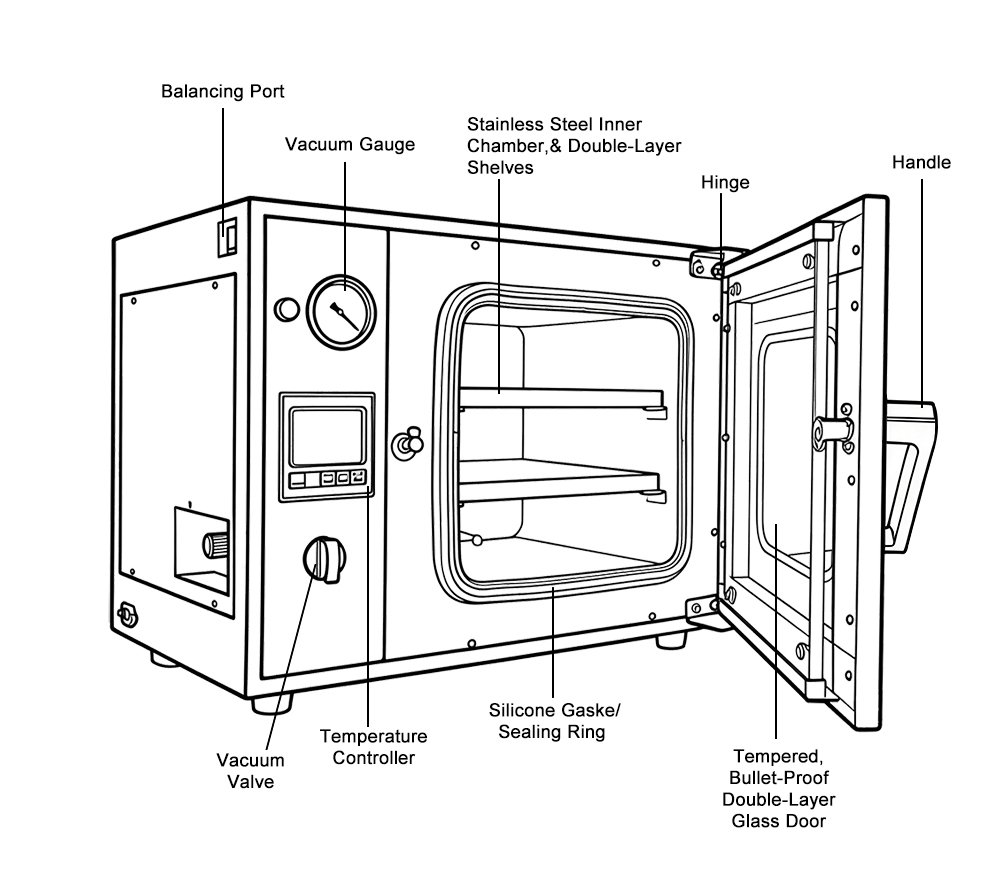
The vacuum drying oven works by creating a vacuum in a sealed chamber. It lowers the boiling point of water and allows the moisture to evaporate at significantly lower temperatures. Heat is mainly transferred to the material through heated shelves or plates. Vapors are quickly removed by the vacuum pump for an effective drying process.
Vacuum ovens are best suited for highly heat-sensitive APIs, as they minimize the risk of thermal degradation.
FAQs
1. How long does drying typically take?
It depends on load size, product moisture, airflow, and temperature. Some batches take an hour while others require several hours.
2. Why do some ovens use HEPA filters?
HEPA filters keep airborne contaminants out of the chamber during drying, which is essential for sterilized components and high-purity materials.
3. What types of drying ovens are commonly used in pharma plants?
Hot air ovens, vacuum ovens, tray dryers and fluid bed dryers are the most common depending on product sensitivity and drying speed needs.
Choose the Best Technology for Your Business
The drying oven for the pharmaceutical industry is a fundamental tool for product quality and regulatory compliance. Choosing the correct technology is important, but you must maintain strict cleaning and maintenance checkups to uphold the performance. Regular gasket inspections maintain the airtight seal, and routine temperature mapping ensures the thermal uniformity for every batch.
Whether it is a drying oven, a mixer, or a packaging machine, the core principle of pharmaceutical manufacturing remains the same. The goal is to provide unparalleled process control, meet strict GMP standards, and guarantee the stability and safety of the final medication.
Finetech helps you achieve this excellence. We provide the best equipment, expert installation, and comprehensive training to optimize your production and quality outcomes.
Visit our website and connect with our experts for optimal solutions!