English
  Russian
  Turkish
  Spanish
  French
  German
  Japanese
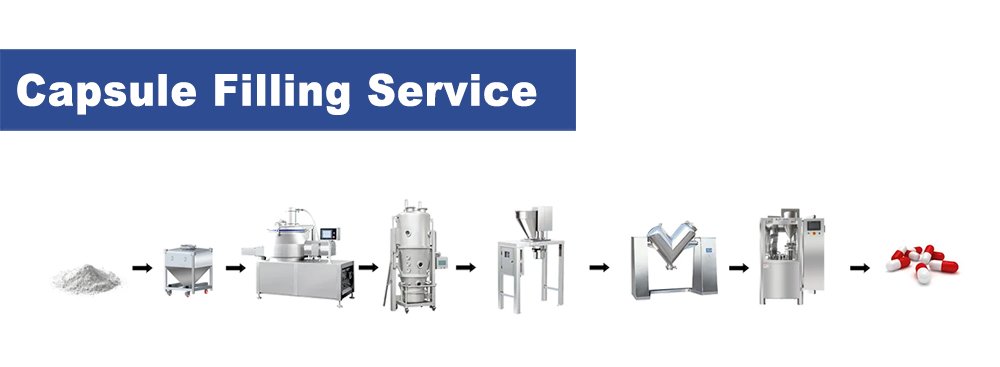
Commercial capsule-filling machines are designed as semi-automatic or fully automatic systems. Unlike manual equipment, they automate most stages of the filling process. By combining electronic, pneumatic, and mechanical components, these machines can handle large production volumes while delivering significantly higher output and consistency.
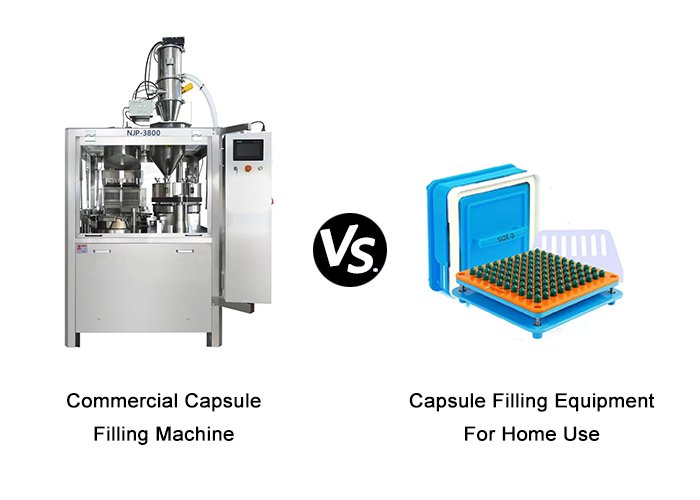
Semi-automatic capsule filling machines require limited operator involvement, mainly for loading and unloading the capsules. Automatic capsule filling machines, in contrast, complete the entire process with little to no human intervention.
Most commercial capsule filling machines are automatic, with an output capacity of 24,000 to 432,000 capsules per hour. A 2021 market survey reveals that automatic capsule filling machines held the largest share of the market that year. They handle capsule sorting, orientation, filling, locking, and ejection automatically, typically accommodating capsule sizes from 00# to 5#.
Commercial vs Home Capsule Filling Machines: The Key Differences
Features | Commercial Capsule Filling Machines | Home Capsule Filling Machines |
Production Speed | High output for large-scale production | Low output for small-scale production |
Output Capacity | 24,000-432,000 capsules/hour | 1800-5000 capsules/hour |
Accuracy | Greater | Lesser |
Cost | Higher upfront cost | Lower upfront cost |
Size Compatibility | From 00# to 5# | From 000# to 5# |
Manual Labor | Only requires manual supervision | Requires workers for every stage |
Capsule Loading & Unloading | Automatic | Manual |
Flexibility | Complex changeovers | Simple changeovers |
Footprint | Larger | Smaller |
Commercial and home capsule filling machines perform the same fundamental function: filling capsules accurately and efficiently. However, because they are designed for very different production environments, their capabilities and output levels vary significantly. The expected rise in the empty capsules market to $6.58 billion by 2034 highlights the importance of capsule filling machines.
Here’s an in-depth comparison of commercial vs. home capsule filling machines:
1. Production Speed & Output Capacity
Production speed is a critical factor when planning for business growth. Slower machines limit how many capsules you can produce, which can delay supply and make it harder to meet market demand. Because manual (home) capsule filling machines rely entirely on human effort, their output capacity (1800 to 5000 capsules per hour) is naturally lower.
For small businesses, research labs, or R&D work, this level of production is usually sufficient. However, if your goal is to scale operations, a commercial capsule filling machine becomes necessary.
Mid-range commercial machines can produce around 24,000 capsules per hour, while high-end automatic models can exceed 432,000 capsules per hour.
2. Accuracy, Consistency & Dosage Control
Pharmaceutical, nutraceutical, and supplement manufacturing require precise dosing and consistent quality. Maintaining uniform capsule weight is challenging with manual filling machines, as it relies heavily on the skill and diligence of the operator. Even small variations can affect product quality and compliance.
Commercial capsule filling machines simplify this process by automating every step. They use vacuum separation and precision metering plates to ensure accurate measurement and filling.
Many automatic capsule filling machines also feature real-time monitoring systems that detect and automatically reject capsules that fail to meet quality standards. This ensures consistent output and compliance with industry regulations.
Cost Breakdown: Upfront vs Long-Term ROI
The cost of capsule filling machines is often the biggest challenge for small and growing manufacturers. While manual capsule filling machines may cost as little as $200-$1,000, their output is limited, typically 500-1800 capsules per hour.
Automatic capsule filling machines, on the other hand, can range from $10,000 to over $50,000, but they deliver much higher production rates (up to 432,000 capsules per hour). Additionally, manual machines require a worker at each stage, and higher production means hiring more staff, which can add $30,000-$50,000 annually per operator in wages.
This means commercial automatic machines, despite the higher upfront cost, offer far greater efficiency, lower labor expenses, and a significantly faster return on investment (ROI). However, if you’re just starting out or producing small batches, manual or semi-automatic machines can be a cost-effective way to enter the market.
When Should You Upgrade from Home to Commercial Capsule Filling Machine?
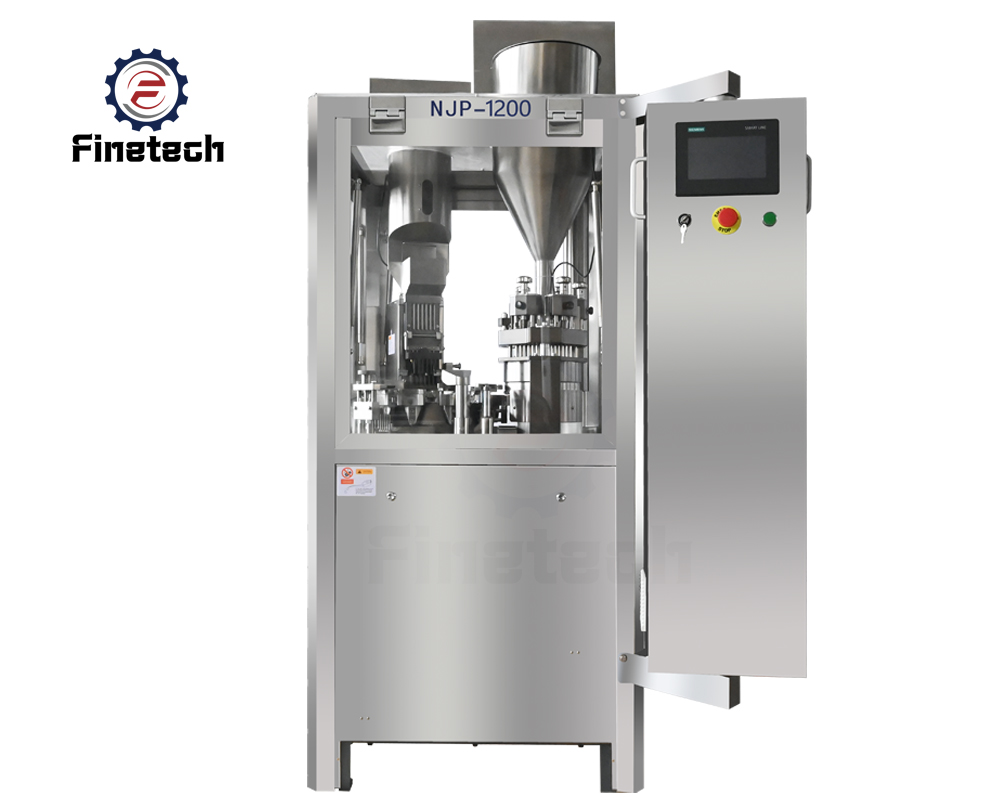
You should upgrade to a commercial capsule filling machine once your production demands consistently exceed the capacity of home or manual equipment.
Manual machines are great for beginners and small businesses due to their low upfront cost and simple operation. However, they produce fewer capsules, require more labor, and can cause weight inconsistencies.
As your business scales, commercial machines become essential. They automate the entire process, maintain precise dosing, handle high volumes, and reduce labor costs. Manual machines are still useful for small batches, but for efficiency and scalability, commercial systems are the better choice.
Which One Should You Choose?
Choosing the right capsule filling machine isn’t just about features or price. The real question is: what matches your current production and can scale with your growth?
Below is a quick guide to help you decide which machine fits your business scenario.
- Evaluate Your Production Volume.
- Manual machine→ Suitable if production is <2,000 capsules/hour.
- Commercial machine→ Needed if production is >20,000 capsules/hour.
- Factor in Labor and Space.
- Manual machine → Low labor, small footprint.
- Commercial→ Reduces labor per batch, needs more setup space.
- Consider Future Growth.
- Manual machine → Works for small, steady batches.
- Commercial→ Ideal if you plan to expand output and scale operations.
Quick Rule of Thumb (Easy to Remember) Daily demand > 2,000 capsules AND you plan to grow in 12–24 months → Go Commercial |
FAQs
1. How does production capacity differ between commercial and home capsule filling equipment?
Industrial capsule fillers can produce 30,000 to 200,000+ capsules per hour, depending on machine configuration. In contrast, manual or home-use fillers typically handle only 2,000–4,000 capsules per hour under optimal conditions
2. Are commercial capsule filling machines more accurate than home capsule fillers?
Yes. Commercial machines use automated dosing systems such as tamping-pin or dosator mechanisms, delivering consistent fill weights within tight tolerances. Manual equipment depends on hand-tamping and powder spreading, which can introduce variability.
3. What is the typical cost difference between commercial and home capsule filling equipment?
Manual or home-scale capsule fillers may cost a few hundred dollars, whereas commercial pharmaceutical machines often range from $20,000 to over $200,000 depending on capacity and automation level.
4. Are commercial capsule filling machines capable of continuous production?
Yes. Industrial capsule fillers are designed for continuous or batch-based production with high throughput. Home capsule fillers are batch-oriented and limited by manual workflow.
5. What industries commonly use commercial capsule filling machines?
Commercial capsule fillers are widely used in pharmaceutical, nutraceutical, herbal medicine, and contract manufacturing organizations (CMOs) that produce capsules at scale.
Enhance Your Production Line with Professional Capsule Filling Equipment
Once you understand the differences between commercial capsule filling machines and home equipment, the next step is choosing the right solution for your facility. At Finetech, we help you make that choice with confidence.
With over 30 years of experience delivering premium-quality pharmaceutical equipment, we provide solutions that meet your exact production and quality requirements. Simply tell us your goals, and we’ll customize a plan tailored to your needs. Our team of specialists is here to guide you every step of the way.
Let’s work together to take your production line to the next level. Get in touch with us today!
References:
100, 200, 300, 400 Holes Capsule Machines Compared.
10 Tips to Choose a Capsule Filling Machine, 101 Guide.
The Best 7 Types of Automatic Capsule Filling Machine Recommended for Your Business (2026 Review).