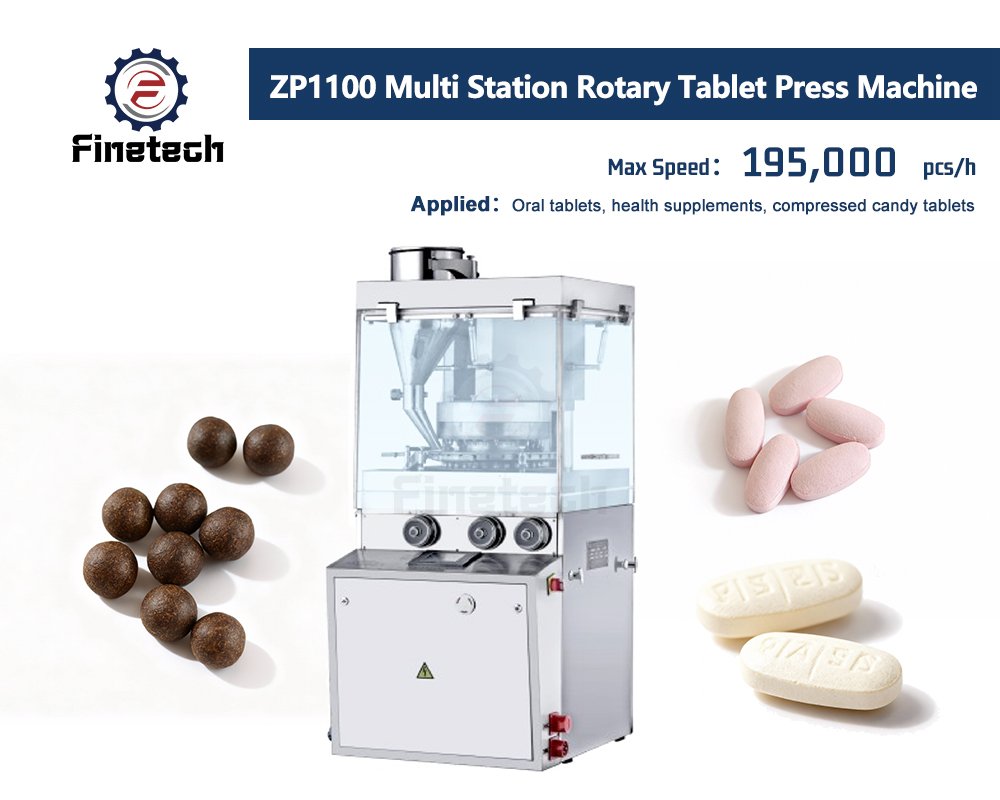
...

Professional supplier of overall solutions for pharmaceutical manufacturing and packaging

ZP17 Rotary Tablet Press Machine

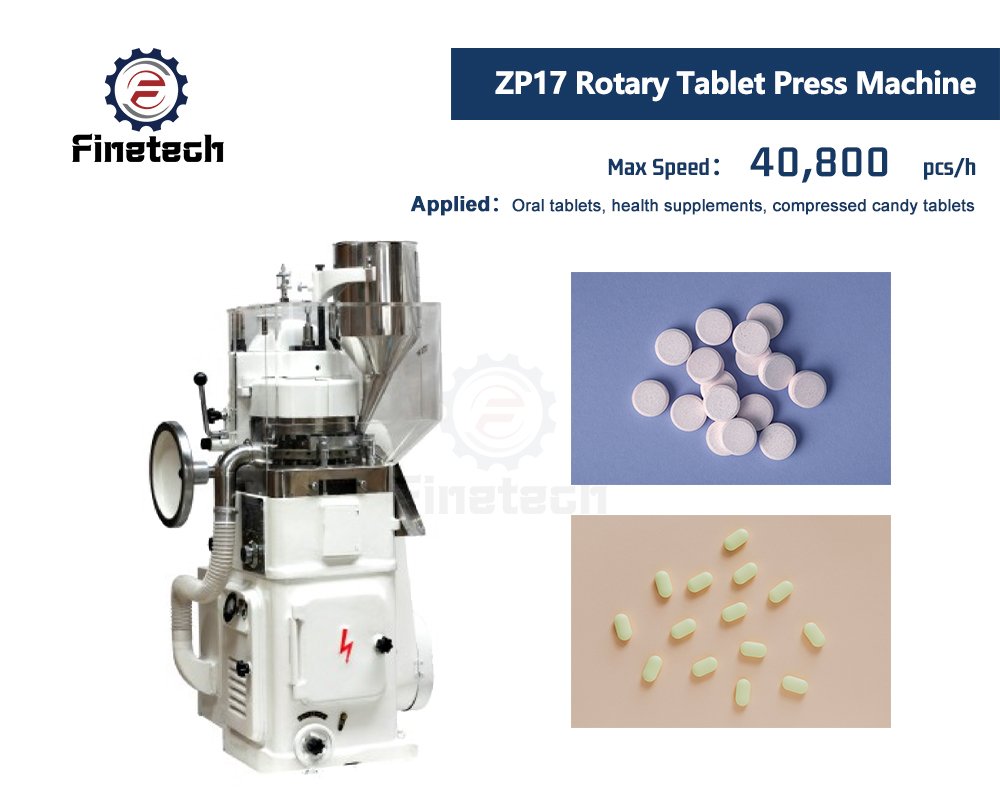
This ZP17 Rotary Tablet Press Machine is designed for small to medium pharmaceutical companies, health supplement makers, and research institutions. It is easy to operate, performs reliably, and provides great value for the price. The machine compresses various granular raw materials into round tablets and can also make tablets in different shapes, making it perfect for small-batch production.

It uses a rotary multi-punch tablet press and intelligent pressure control system to ensure consistent tablet weight, hardness, and appearance. It meets the needs of process development and small to medium-scale production. This is an economical and practical mid-range tablet press solution.

Need a Custom Quote?

Or More information About this product? Contact our sales stuff today!

Key Features

Technical Data

Machine Details

FAQ

Application

1. The outer casing is fully enclosed, and the internal work surface is made of stainless steel to keep it smooth and prevent cross-contamination.
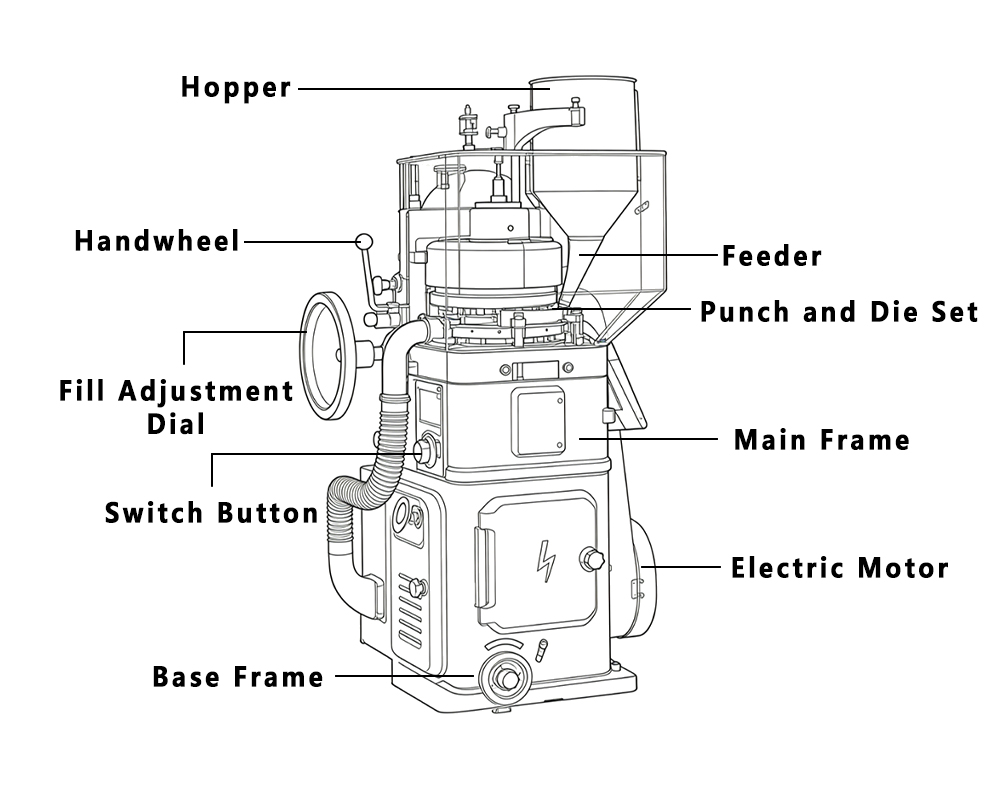
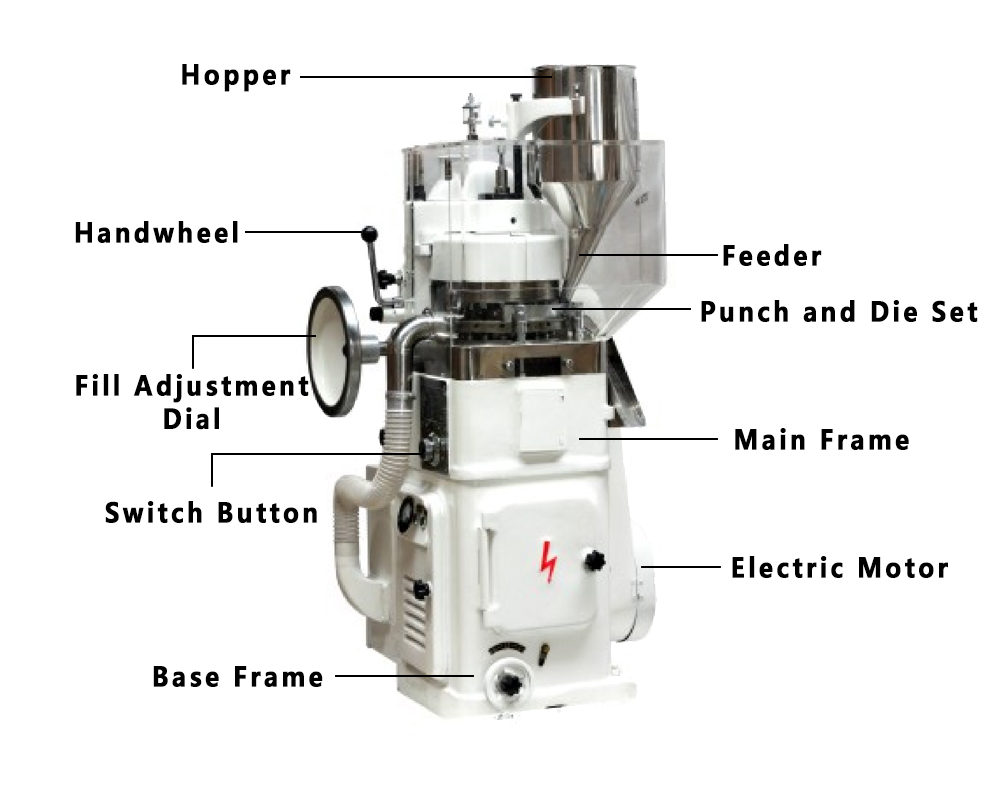
ZP17 Rotary Tablet Press Machine Diagram
ZP17 Rotary Tablet Press Machine Diagram.

2. The protective cover is made of transparent acrylic, so you can clearly see the tablet compression process. It opens fully for easy cleaning and maintenance.

3. It uses variable frequency speed control, allowing a wide range of speed adjustment and easy operation.

4. The machine has a rotation speed display and overload pressure protection.

5. A pre-compression device removes air from the filled material during compression, increasing compression time and optimized tablet quality.

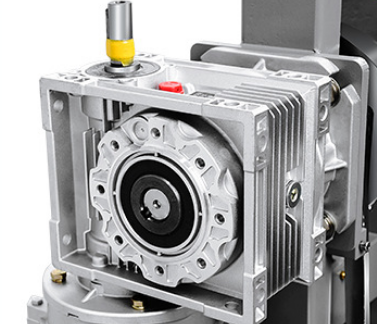
6. The transmission system is sealed inside an oil tank under the machine. It is a separate, safe unit that prevents contamination, dissipates heat well, and resists wear. A forced feeding device is available as an option.
Model ZP17
Number of Stations 17
Max Main Pressure (KN) 50
Max Pre-pressure(KN) 10
Max Tablet Diameter(mm) Round tablet 20
irregular tablet 22
Max Filing Depth(mm) 15
Max Tablet Thickness (mm) 6
Max Turret Speed(r/min) 40
Max Production Capacity(pcs/h) 40800
Motor Powwer(kw) 2.2
Overall Size(mm) 950*770*1740
Machine Weight(kg) 900
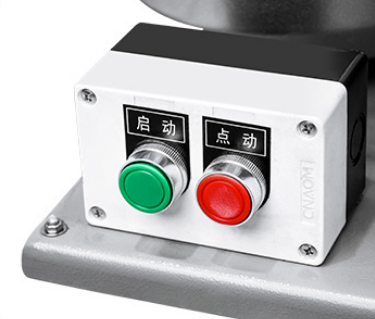
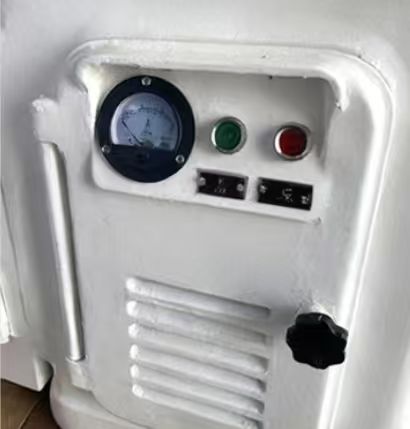
Control Panel
Control Panel
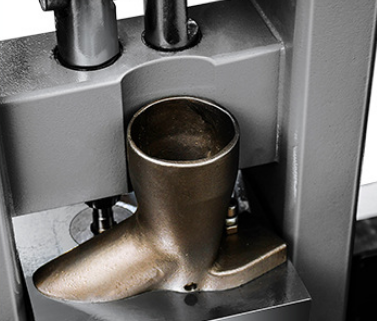
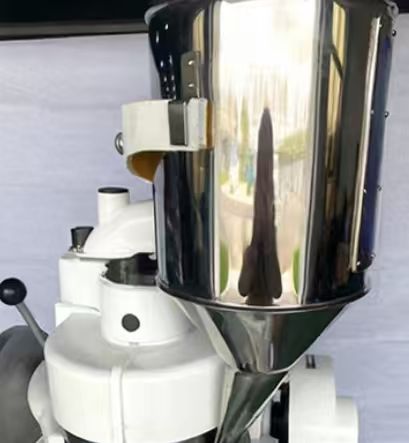
Feed Hopper
Feed Hopper
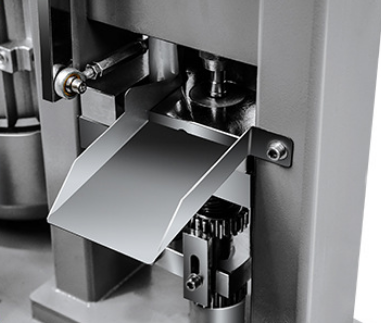
Tablet Outlet
Tablet Outlet
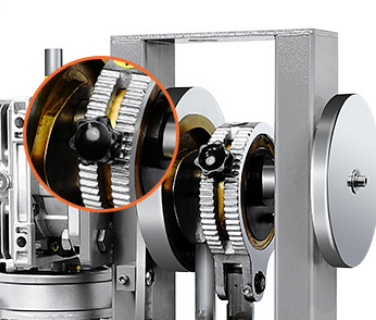
Tablet Press Turret
Tablet Press Turret
What is the maximum pressure the ZP17 can apply?

The ZP17 is technically capable of high pressure (often rated around 40-50 kN), but its primary limiting factor is turret strength. For hard, abrasive materials or very small tablets requiring extreme pressure, the turret can flex or be damaged. It is best suited for medium-pressure applications.

How do I adjust the tablet weight?

Tablet weight is primarily controlled by the fill depth.

  1. Loosen the fill cam lock screw.

  2. Rotate the large handwheel to adjust the position of the fill cam.

    • Clockwise raises the lower punch before it enters the feed frame, creating a deeper cavity and increasing weight.

    • Counter-clockwise creates a shallower cavity and decreases weight.

  3. Tighten the lock screw and check the weight using a precision scale.

How do I adjust the tablet hardness/thickness?

Hardness and thickness are controlled by the main compression roller.

  1. Loosen the lock nut on the compression adjustment bolt.

  2. Turn the bolt:

    • Clockwise lowers the upper roller, increasing compression force, resulting in a harder and thinner tablet.

    • Counter-clockwise raises the upper roller, decreasing compression force, resulting in a softer and thicker tablet.

  3. Tighten the lock nut. Note: Weight and hardness adjustments are interdependent; you often need to iterate between them.

Why are my tablets not ejecting properly or sticking to the punches?

This is usually caused by:

  • Sticking: The formulation is adhesive. This may require re-formulating with more lubricant (e.g., Magnesium Stearate).

  • Poor Punch Cleaning: Residue buildup on the punch tips. Clean the punches thoroughly.

  • Worn Tooling: Scratched or pitted punch tips increase sticking. Inspect and replace if necessary.

  • Incorrect Ejection Setting: Ensure the ejection cam is correctly positioned to lift the lower punch fully at the end of the cycle.

Can I use other tooling standards like D or B?

No. The ZP17 turret is machined to accept only B/BB Tooling. Using the wrong standard will damage the machine, the turret, and the tooling itself.

What is the typical production output of a ZP17?

Output is highly dependent on tablet size and speed, but it typically ranges from 40800 tablets per hour.

Is the ZP17 suitable for producing bilayer tablets?

No. The ZP17 is a single-sided (single compression) press. It cannot accommodate the two separate fill stations and specialized compression mechanism required for bilayer tablets.

What are the main limitations of the ZP17?
  • Scale: Not suitable for large-scale industrial production.

  • Turret Rigidity: Not ideal for extremely high-pressure tableting.

  • Manual Controls: Lacks the automated feedback systems of modern, larger presses.

  • Single-Sided: Cannot make complex tablets like bilayers.

Scroll to Top