English
  Russian
  Turkish
  Spanish
  French
  German
  Japanese
A cellophane packaging machine is a device that use cellophane film to wrap products. It can usually be boxes or other items. This wrapping offers added protection along with presentation. You can find cellophane packaging machines commonly in food, pharmaceuticals, tobacco, cosmetics, and many other industries.

What Is Cellophane in Packaging?
Cellophane is a thin, transparent film. It’s made from natural materials like wood pulp or cotton. In packaging, it protects products while showing them clearly. It keeps items safe from dust, moisture, and tampering.

Traditional cellophane is biodegradable and eco-friendly. However, modern “cellophane” packaging often uses plastic films. These offer better durability and lower costs.
Key benefits of cellophane packaging include:
- Crystal-clear product visibility.
- Excellent moisture protection.
- Professional appearance.
- Tamper-evident sealing.
- Extended shelf life.
Key parts of the Cellophane Packing Machine
1. Film Unwind & Roll Stand

This is the starting point of the packaging process.
Function: Holds the large roll of cellophane or polypropylene film and allows it to unwind smoothly as the machine cycles.
Key Features: Often includes braking tension control to prevent over-spinning and ensure the film is fed without wrinkles or slack. More advanced models have an automatic splice for uninterrupted operation when one roll runs out and a new one is loaded.
2. Film Guidance System
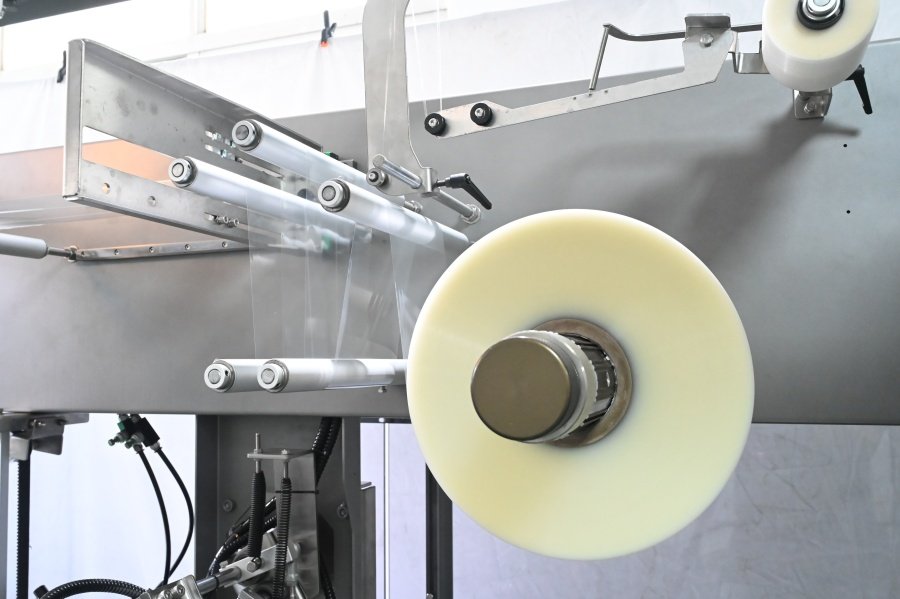
This ensures the film is perfectly aligned as it travels through the machine.
Function: Uses sensors and guide rails to keep the film centered and straight, preventing a crooked seal and material waste.
3. Product Infeed Conveyor or Chute
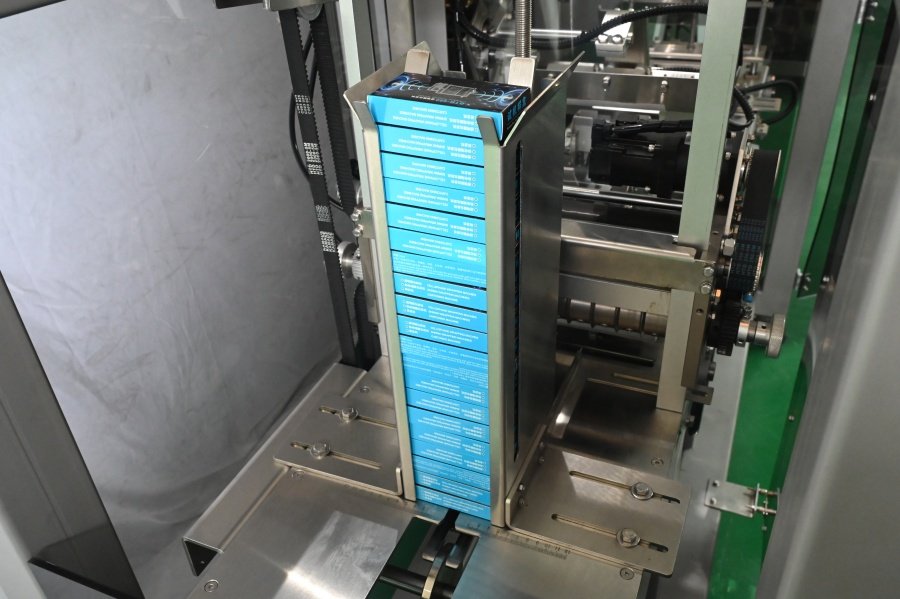
This is where the product to be wrapped is introduced.
Function: Moves the products (e.g., boxes, bottles, baked goods) into the machine at a consistent and timed interval.
Types: Can be a flat belt, a flighted conveyor (with lugs to space products), or a simple gravity chute.
4. Sealing Jaws (Longitudinal & End)
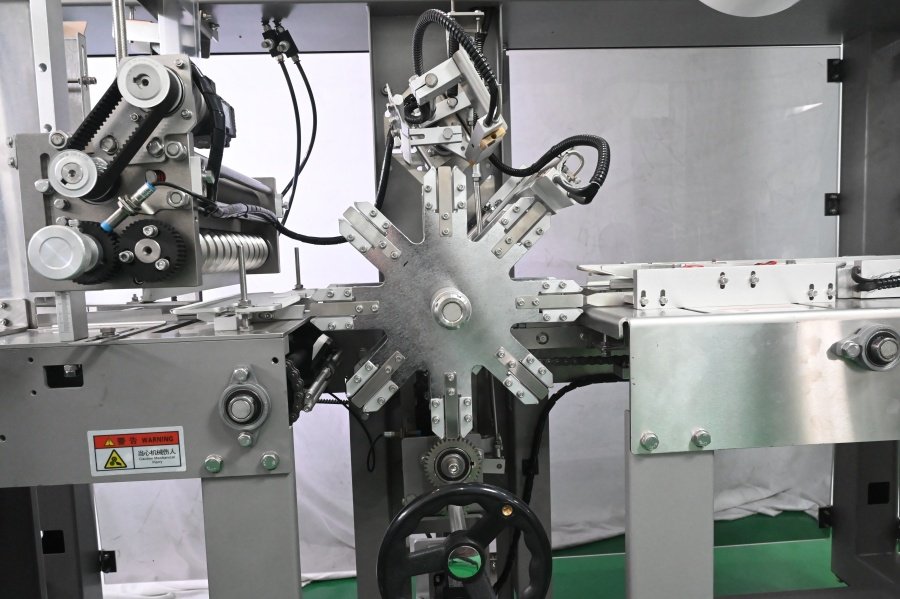
The heart of the sealing process, responsible for creating the airtight seams.
a) Longitudinal Sealing Jaws (Long Seal):
Function: Creates the long, vertical seam that turns the flat film into a tube around the product. This happens before the end seals.
b) End Sealing Jaws (Cross Seal):
Function: Creates the sealed ends of the package. They perform two critical tasks simultaneously:
Seal: They press together with heat to melt the film’s polymer layer and fuse it.
Cut: They contain a blade to cut the film, separating the finished package from the trailing web and creating the leading seal for the next product.
5. Film Folder / “Forming Box”
A deceptively simple but vital mechanical component.
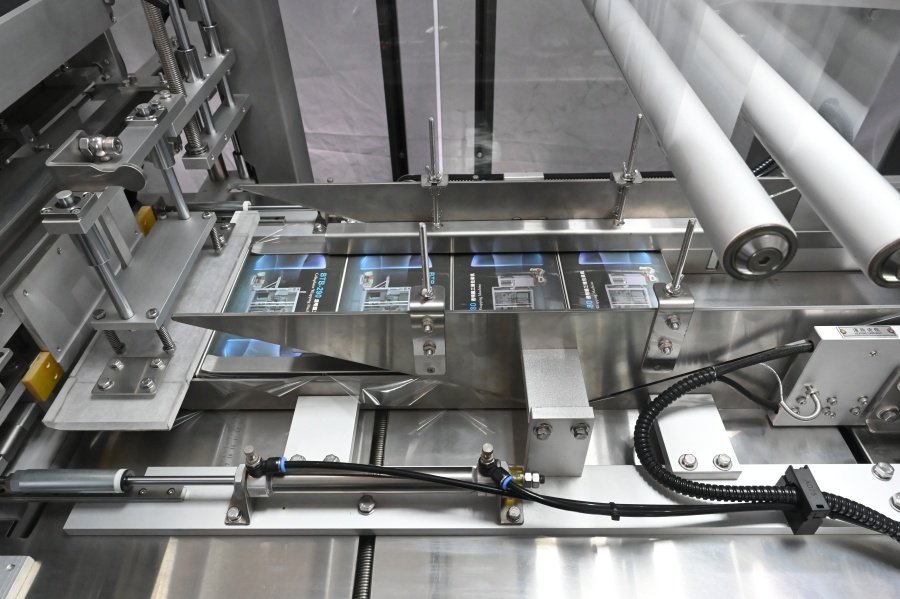
Function: This stationary assembly is shaped to gradually fold the flat sheet of film around the product as it is pushed through, forming it into a loose tube before it reaches the longitudinal seal. A properly adjusted forming box is crucial for a wrinkle-free wrap.
6. Drive System (Motor & Gears)
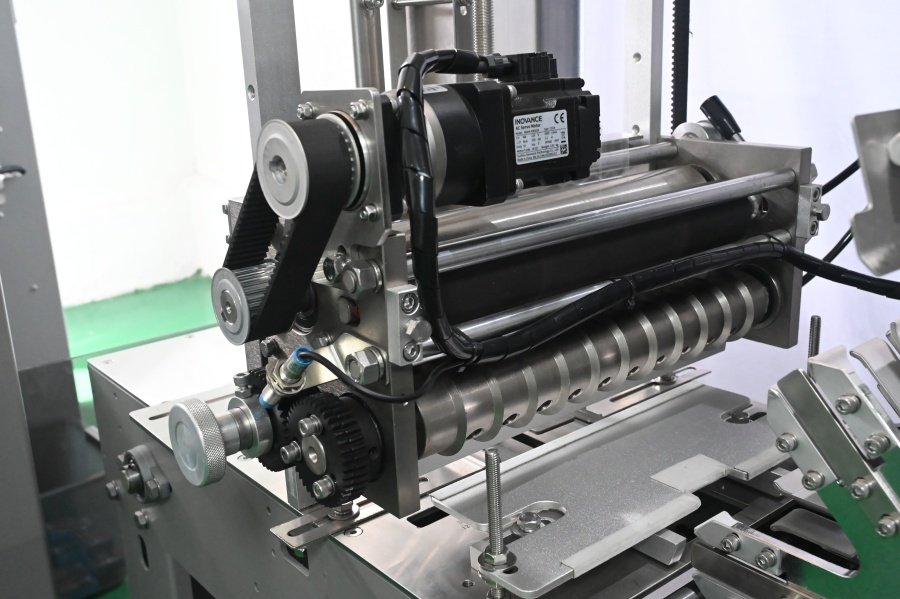
The powerhouse of the machine.
Function: Provides the mechanical power to run the conveyors, sealing jaws, and cutter. It ensures all moving parts are synchronized for a smooth, continuous operation.
7. Control System (The Brain)
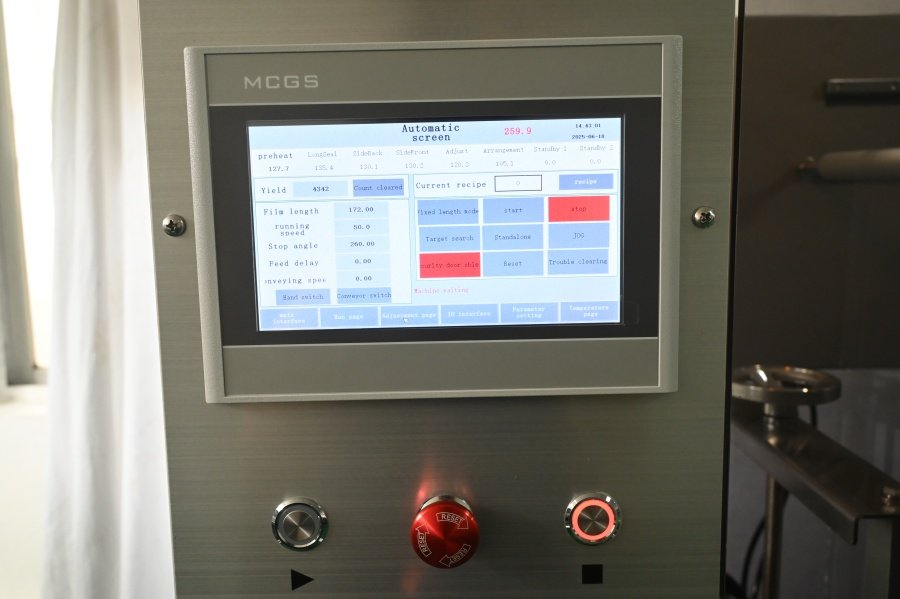
The user interface for operating and monitoring the machine.
Function: Allows the operator to set parameters like temperature, speed, and timing.
Components: Typically includes a PLC (Programmable Logic Controller), HMI (Human-Machine Interface) touchscreen, and temperature controllers. It also manages safety interlocks.
8. Heating Elements
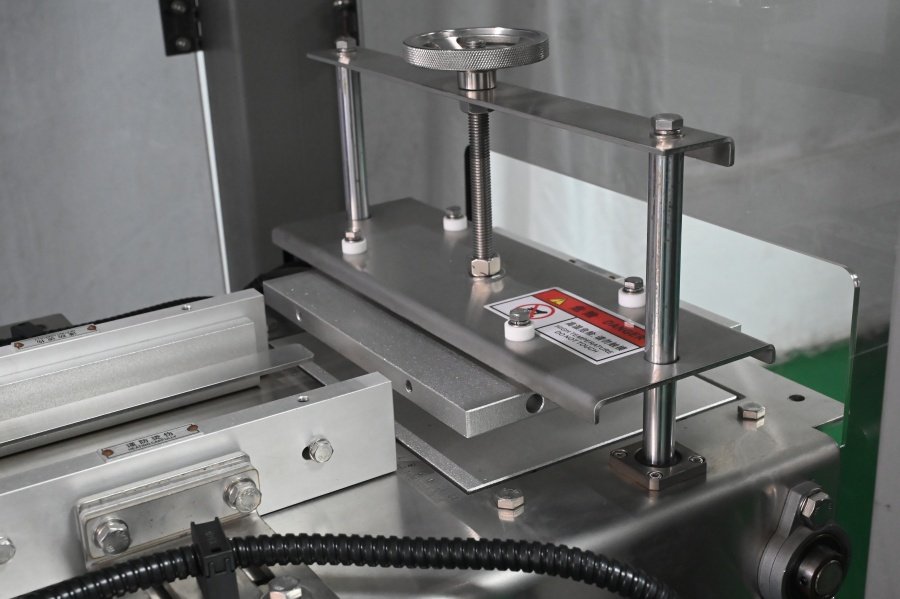
Located within the sealing jaws.
Function: Provide the precise heat needed to melt the inner layer of the film to create a seal. Temperature is carefully controlled based on the film type and machine speed.
9. Outfeed Conveyor
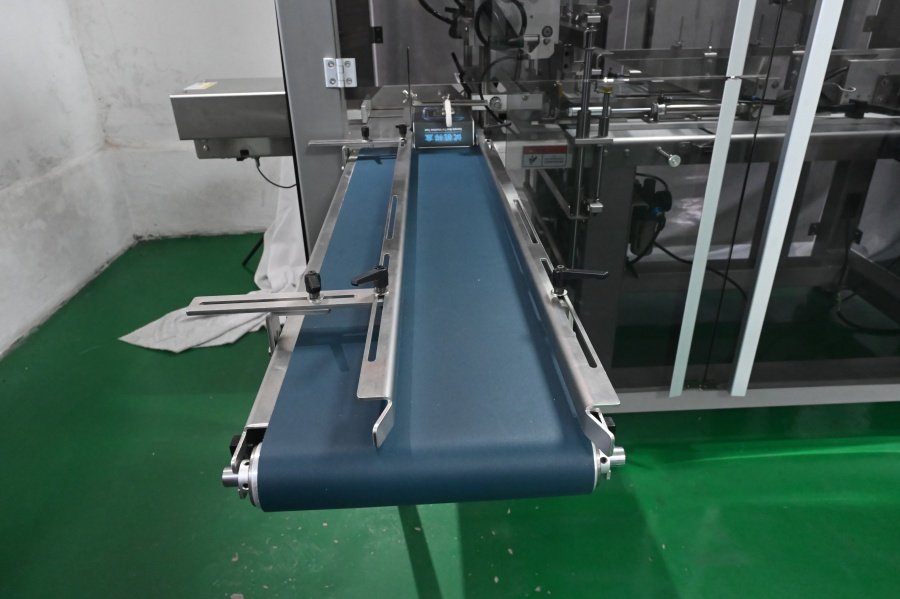
The end of the line.
Function: Gently carries the finished, wrapped packages away from the machine for collection, inspection, or further handling (e.g., case packing).
10. Safety Guards & Interlocks
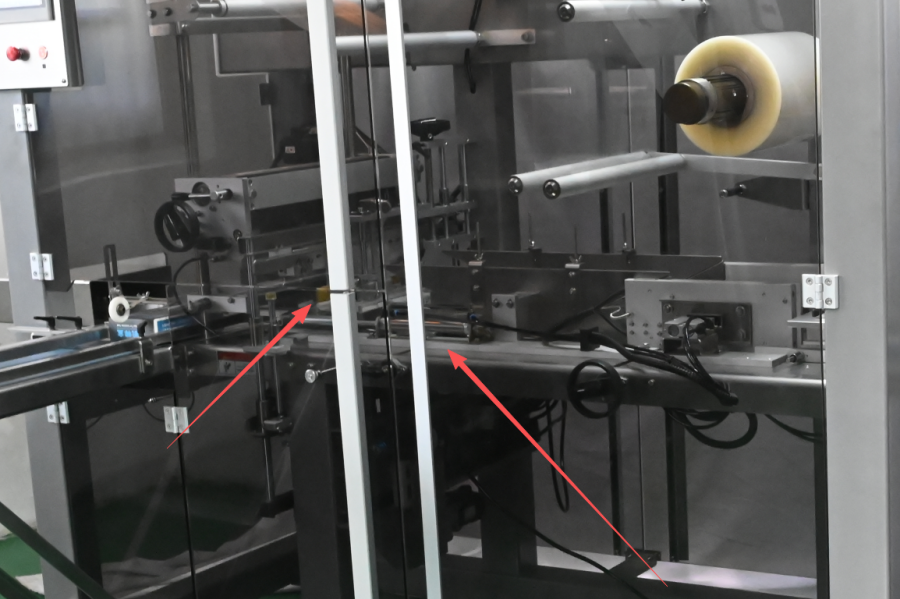
A critical non-negotiable component.
Function: Physical guards enclose moving parts like sealing jaws and chains. Safety interlocks are switches that immediately cut power when a guard is opened, preventing injury during maintenance or clearing a jam.
What Is the Difference Between Cellophane and Shrink Wrap?

Many people confuse cellophane with shrink wrap. But they’re quite different:
Cellophane packaging:
- Uses pre-formed film.
- Wraps without heat shrinking.
- Creates tight seals through mechanical wrapping.
- Works at room temperature.
- Ideal for delicate items.
Shrink wrap:
- Requires heat to shrink and conform.
- Uses plastic films that contract when heated.
- Creates extremely tight seals.
- Needs heat guns or tunnels.
- Better for irregular shapes.
The main difference? Cellophane wraps. Shrink wrap shrinks to fit.
How Does a Cellophane Packaging Machine Work?
Cellophane packaging machines follow a simple process:
- Product Loading: Items go on the machine’s conveyor.

The box is waiting to be loaded - Film Feeding: The machine unrolls cellophane film.

Cellophane film cover box - Wrapping: Mechanical arms wrap film around the product.

Wrapping - Sealing: Heat bars seal the film edges.

Sealing - Cutting: Built-in cutters trim excess material
- Ejection: Wrapped products come out for collection

Ejection Celloophane box
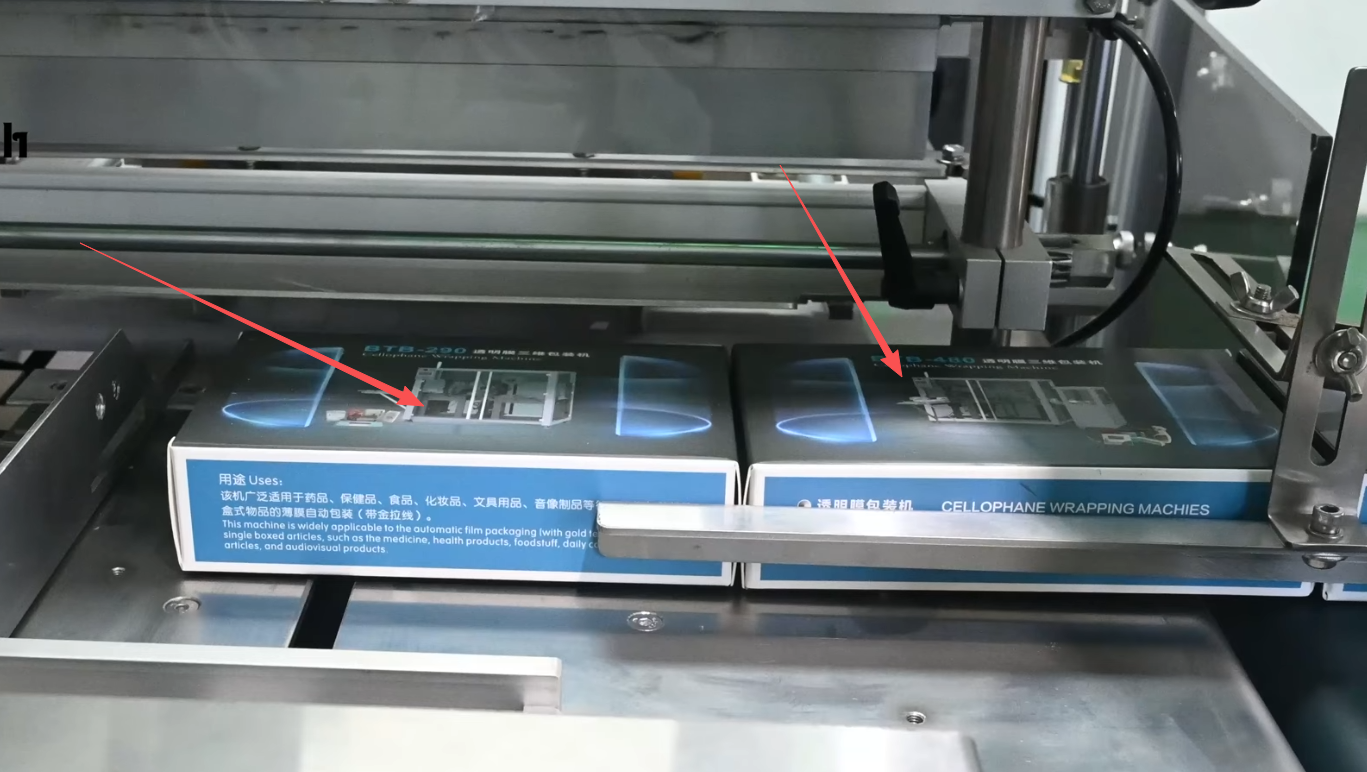
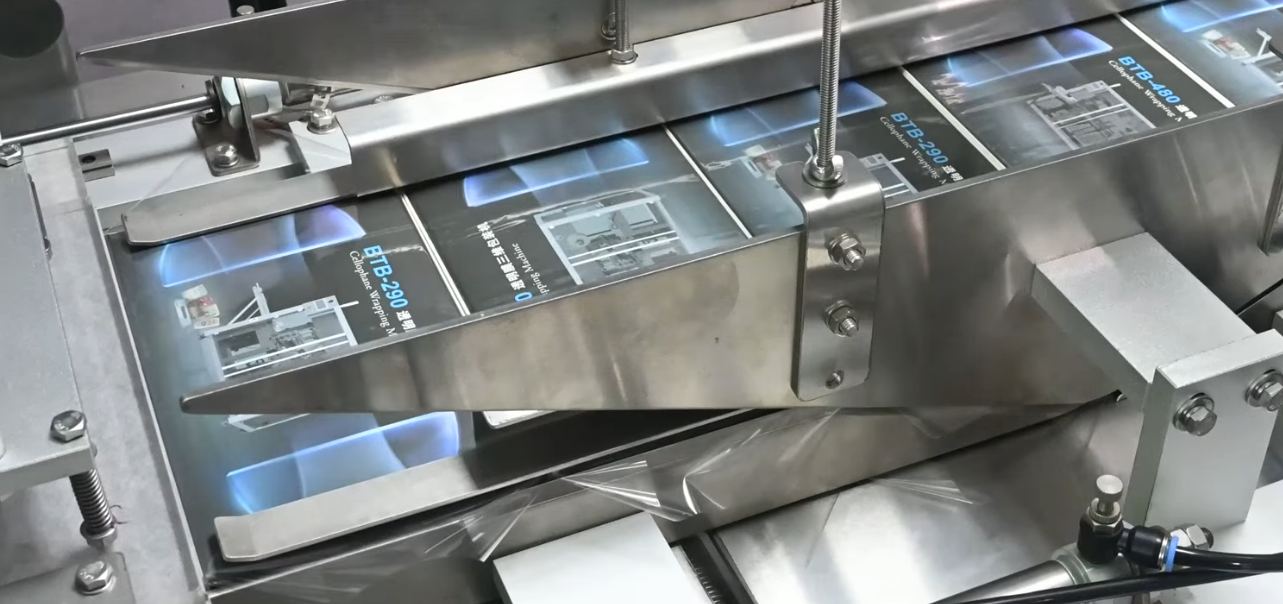
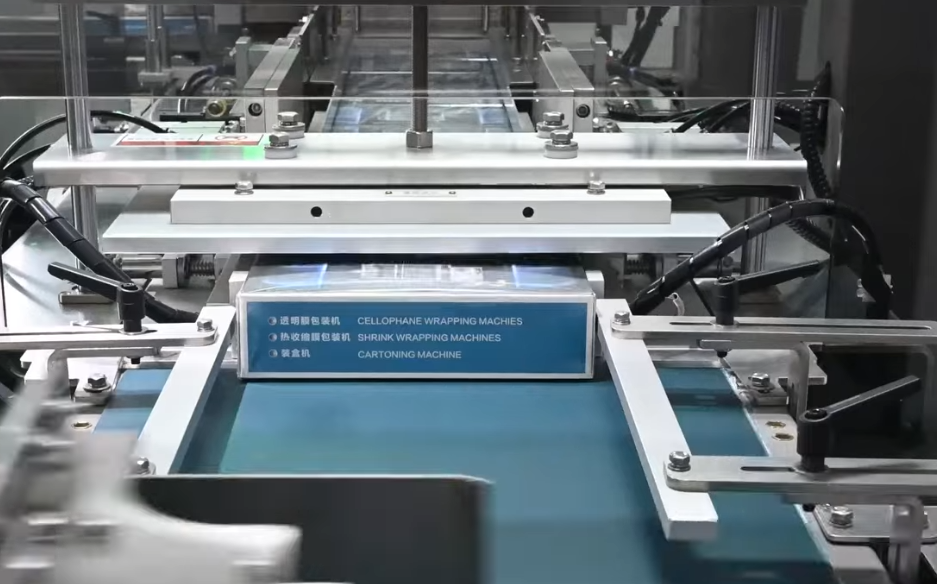
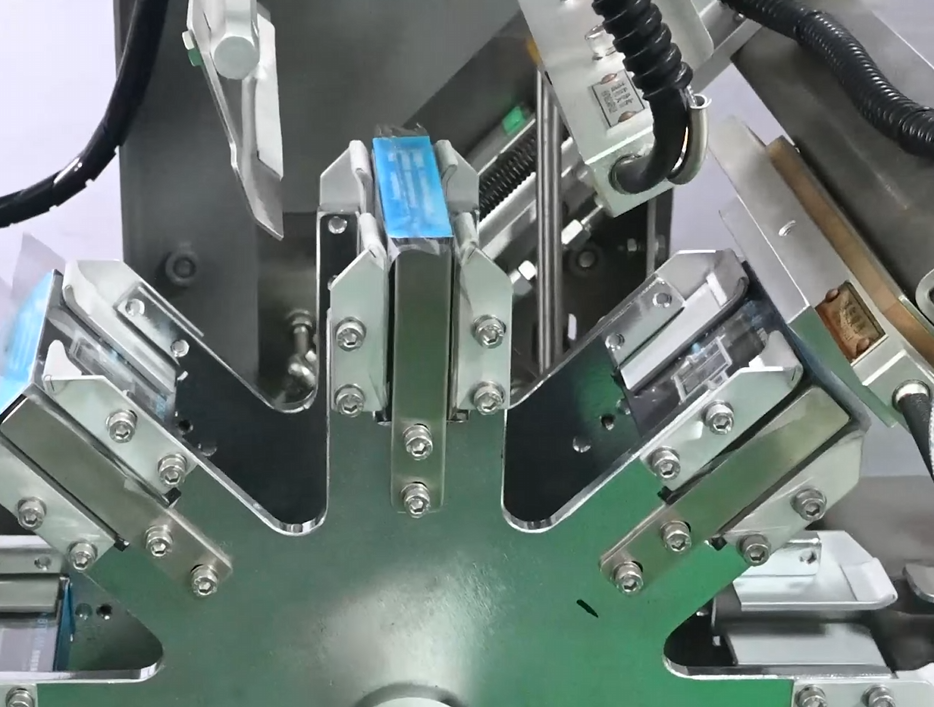
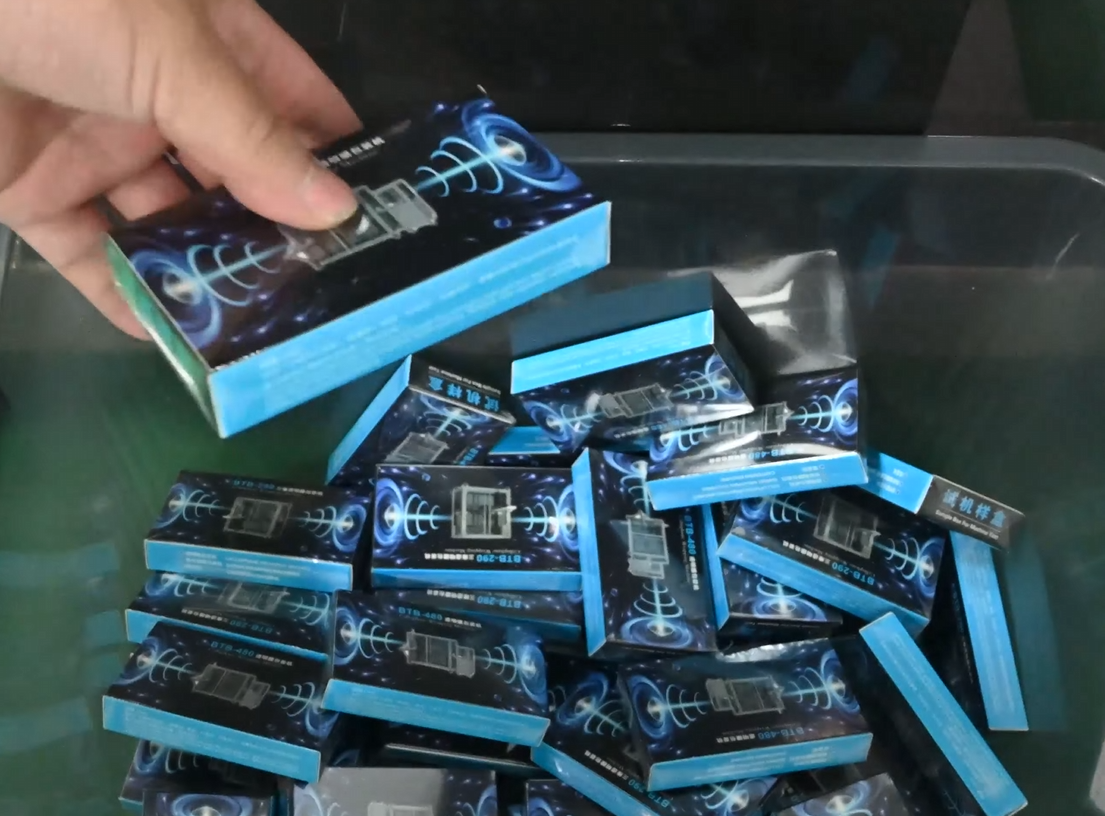
Most modern machines are automatic. They can handle dozens of products per minute. Results are consistent every time.
What Is the Use of Cellophane Packaging Machine?
Cellophane packaging machines serve many industries:
Food Industry:
- Candy and chocolate wrapping.
- Baked goods protection.
- Fresh produce packaging.
- Snack food sealing.
Consumer Products:
- Cosmetics and toiletries.
- Books and magazines.
- Gift items and crafts.
- Pharmaceutical products.
Commercial Benefits:
- Faster production speed.
- Consistent packaging quality.
- Lower labor costs.
- Professional product look.
- Better product protection.
These machines help businesses that need high-volume packaging. They maintain consistent quality standards.
Takeaway
Cellophane packaging machines are essential for modern businesses. They provide professional and efficient packaging solutions. They offer clear product visibility. They give excellent protection. They’re cost-effective too.
You can package food items, consumer goods, or industrial products. These machines give reliable results. They enhance your brand image. They protect your products.
Know the difference between cellophane and shrink wrap. This helps you choose the right packaging method. Consider your volume needs. Think about your product types. Check your budget.
The right cellophane packaging machine improves your packaging efficiency. It makes your products look more professional.