English
  Russian
  Turkish
  Spanish
  French
  German
  Japanese
Medicines have become an inseparable part of our lives. Yet, few stop to consider what happens after popping a pill or how a chemical “knows” exactly where to go within the human body.
There is an entire science behind these moments called pharmacology, which acts much like a high-security screening process. This discipline scrutinizes every compound long before it reaches a patient and makes sure that each dose is both purposeful and safe.
If you are a pharmaceutical manufacturer or a healthcare professional, this guide will help you understand the journey from laboratory discovery to patient recovery. Starting with the pharmacology definition and its particular real-world applications, here’s everything you need to know.
What is Pharmacology?
Definition of Pharmacology: Pharmacology (from the Greek, pharmakon, ‘poison’ and -logia ‘study of’) is the study of the behavior of drugs in biological systems. |
Pharmacology is the scientific study of how drugs and chemicals affect living organisms. A drug can be defined as any chemical substance that can alter a biological function. The core focus lies on the relationship between these substances and the body to understand their full impact.
Pharmacologists work to discover how substances interact with organisms to prevent, treat, or diagnose diseases. These experts also manage symptoms and improve patient outcomes through extensive research.
Such efforts remain a critical part of medical progress and pharmaceutical manufacturing, where every breakthrough ensures patient safety and effective healing.
Two Main Branches of Pharmacology
Scientific research in pharmacology is divided into two sub-specialties: pharmacokinetics and pharmacodynamics. Both of these areas work together to provide a complete picture of a drug’s performance. Let’s take a look at them:
1. Pharmacokinetics
Source: YouTube
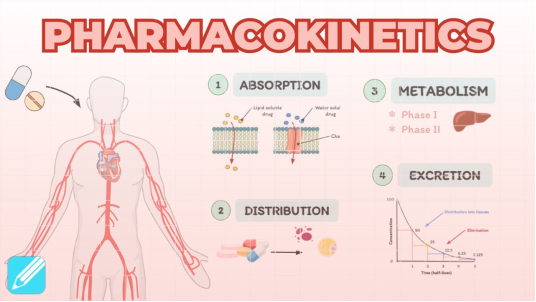
Pharmacokinetics involves the analysis of how the body reacts to a drug after its administration. Simply put, this field examines what the body does to the drug. The main goal of this research is to enhance the efficiency of drug therapy while minimizing potential side effects. Experts use the ADME framework to track this journey.
This process begins with absorption, where the drug moves into the bloodstream. Distribution then describes how the medicine travels through fluids to reach its destination.
During metabolism, the liver breaks down the substance chemically. Finally, excretion ensures the removal of the drug via the kidneys or the gut.
2. Pharmacodynamics
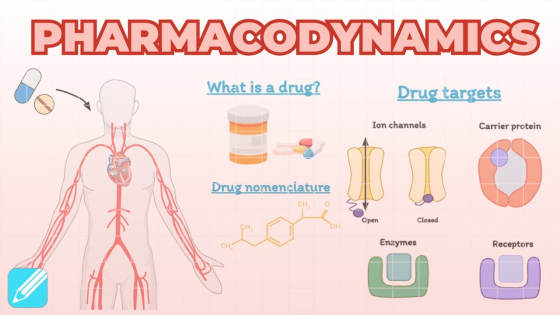
Pharmacodynamics looks at the biological impact of a medication, or what the drug does to the body. Research in this area focuses on the molecular interactions between a drug and its specific target.
Most medications work by binding to receptors, enzymes, or ion channels within the cells. These interactions trigger a chain reaction of cellular events that lead to the desired therapeutic effect. Understanding these pathways helps researchers design targeted therapies that address the illness and protect healthy cells.
Key Aspects and Working Areas of Pharmacology
Pharmacology acts as the link between laboratory research and clinical practice. Within this field, pharmacologists collaborate with multidisciplinary teams, including physicians, chemists, and biologists, to refine how medicines are used. Some of the core working areas of pharmacology are:
1. Drug Discovery and Development
Drug research and development is a highly complex and lengthy process. It often takes 10 to 15 years before a new treatment reaches patients. Pharmacologists in this sector identify new chemical compounds with the potential to treat specific diseases.
The process begins with preclinical studies in cells and animals to assess basic safety and efficacy. It is followed by three-phased clinical trials.
- Phase 1focuses on safety and dosage in healthy volunteers.
- Phase 2tests efficacy and side effects in patients to find the optimal dose.
- Phase 3involves large-scale confirmation of effectiveness.
If results remain positive, the data undergoes a final regulatory review for official approval.
2. Therapeutic Use
Pharmacology dictates how doctors prescribe treatments in the real world. They analyze the biological effects of chemicals on living systems to ensure medications are both safe and effective. It helps practitioners decide the correct dosage form and set accurate safety limits for each patient.
For example, when prescribing Aspirin, pharmacologists have determined that low doses can prevent blood clots, while higher doses are needed to reduce inflammation. The analysis of how different concentrations affect the body maximizes healing while avoiding toxicity.
3. Data Analysis
Modern pharmaceutical research depends heavily on the careful analysis of data to validate the results of drug studies. Experts use various statistical models, such as SPSS, ANOVA, or T-tests, to predict how different populations will react to a specific treatment.
Reviewing large clinical datasets helps identify rare side effects that might not appear in smaller groups. For example, a medication might cause a specific heart complication in only one out of every ten thousand patients. Timely detection of these rare events helps health agencies provide accurate warnings or adjust dosage guidelines to protect the public.
4. Personalized Medicine
The need for personalized medicine has become more evident than ever. Pharmacogenomics is a rapidly evolving field in 2026 that is shifting healthcare away from a one-size-fits-all approach.
Pharmacological professionals perform genetic profiling to enable DNA-tailored dosing for patients. They analyze specific genetic markers to predict how an individual will metabolize certain chemicals. It helps doctors select the right drug at the optimal dose that matches the patient’s unique biology.
Importance of Pharmacology in Modern Healthcare
Research indicates that over 70 percent of U.S. adults take at least one prescribed medication daily. The scope of pharmacology goes far beyond simply creating pills; it is a shield that protects patient safety and maintains global healthcare standards. Below are some of the primary ways this discipline impacts our lives:
1. Patient Safety
Pharmacology acts as the final checkpoint in the medical chain. Experts’ research on chemical properties to identify potential toxicities and adverse drug reactions (ADRs) early in the research process. Their vigilance helps prevent thousands of hospitalizations and ensures that medications do not cause more harm than good.
2. Optimizing Drug Performance
The goal of pharmacological research is to provide the best possible results for patients. It refines how a drug interacts with the human body, cells, and biological systems. Scientists enhance the healing process and decrease the side effects that often cause patients to abandon their treatment.
3. Proactive Healthcare
Advanced drug therapies are the foundation of proactive healthcare. Modern medications allow doctors to treat conditions before they become severe, which leads to shorter hospital stays. Illness management through drug therapy often prevents the need for expensive, invasive surgeries and reduces the overall burden on the medical system.
4. Combating Global Health Threats
Pharmacology provides the primary defense against evolving pathogens that threaten communities worldwide. From developing vaccines for viruses to creating new treatments for antibiotic-resistant bacteria, the entire healthcare system relies on pharmacological innovation.
Through constant research and innovation, healthcare providers have the tools necessary to respond to emerging health crises effectively.
FAQs
1. What does pharmacokinetics (PK) involve?
Pharmacokinetics is the study of how an organism affects a drug, often summarized by the acronym ADME: Absorption, Distribution, Metabolism, and Excretion. This branch quantifies how a drug enters the bloodstream, moves through tissues, undergoes chemical transformation in the liver, and is eventually eliminated from the body.
2. How is pharmacology used in drug discovery?
Pharmacology guides the identification and validation of molecular targets, such as enzymes or receptors, that are involved in specific disease processes. Scientists use high-throughput screening and molecular modeling to find “lead compounds” that can effectively modulate these targets with minimal off-target effects.
3. How do pharmacologists assess drug-drug interactions (DDIs)?
Pharmacologists study how one medication may alter the effects of another, often through the induction or inhibition of metabolic enzymes like the Cytochrome P450 family. Identifying these interactions is vital for preventing accidental toxicity in patients who are prescribed multiple medications simultaneously.
Supporting The Next Generation of Medicine
Pharmacology serves as a foundation that supports global health and patient safety through scientific validation. As the industry leads a global shift toward proactive and preventive care, these advancements continue to protect public health and enhance long-term recovery. Every breakthrough depends on this discipline to transform complex chemical research into reliable, life-saving medical treatments.
Premium pharmaceutical machinery is essential to materialize these scientific discoveries in the best possible way. To bring your research to life, choose Finetech.
We provide a comprehensive production line that covers every stage from preparation and manufacturing to packaging and safe delivery.
Contact our team now to lead the future of medicine.
References:
Copyright Notice:
You may not reproduce, modify, publish, display, transmit, or in any way exploit any content on this website, or use such content to construct any kind of database without prior express written approval by Finetech Group. For permission to use the content, please contact: info@pharmamachinecn.com
Disclaimer:
The information contained in this article is for general information purposes only. The Company does not guarantee the accuracy, relevance timeliness or completeness of any information, and the Company assumes no responsibility for errors or omission in the content of this article.