Skip to content
  English
  Russian
  Turkish
  Spanish
  French
  German
  Japanese
Drying granules might seem simple, but it’s one of the most important steps in pharmaceutical manufacturing. The right drying process determines how your product flows, compresses, and performs in subsequent stages.
When done incorrectly, it can result in poor quality or wasted batches.
For manufacturers and plant managers, this step can make or break production. That’s why choosing the right drying equipment matters so much.
In this guide, we’ll answer a key question: Which equipment is used for the drying of granules? Let’s get into it.
Key Takeaways: Equipment Used for Granule Drying
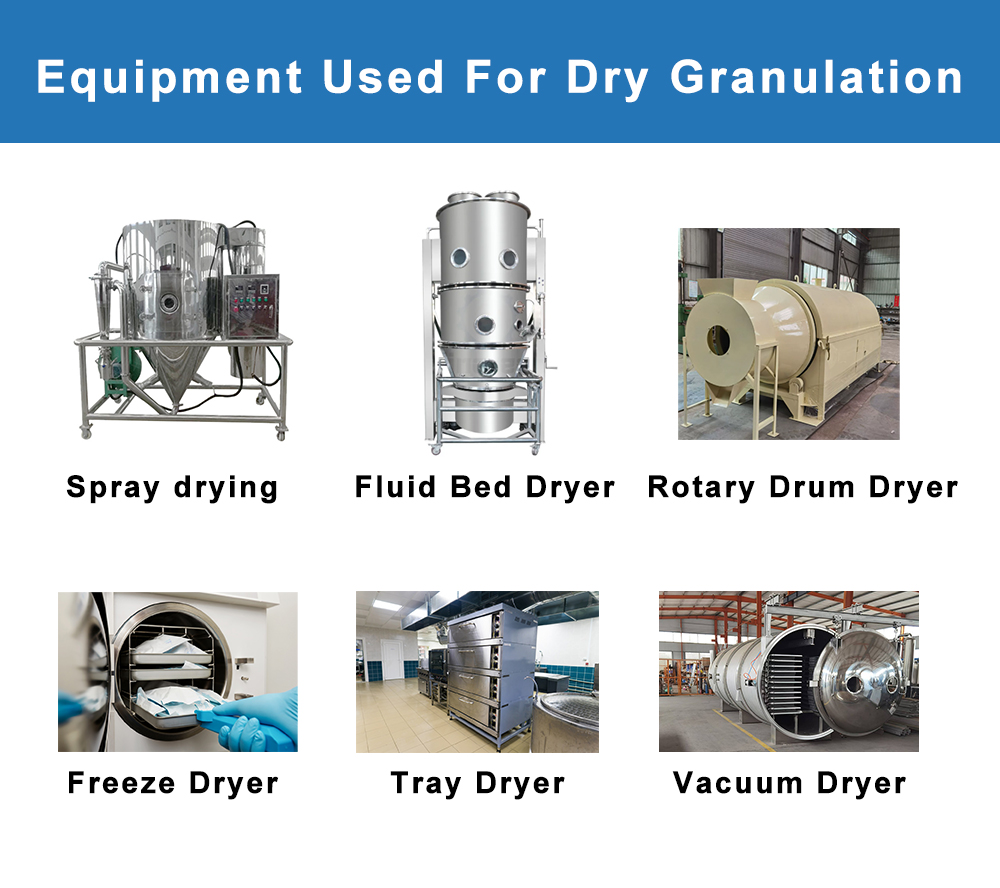
Here’s a quick summary of the equipment used for granule drying:
Dryer Type | Working Principle | Best For |
Fluid Bed Dryer | Hot air passes through a perforated plate, fluidizing the granules for uniform drying. | Most pharmaceutical granules and medium to large batches. |
Tray Dryer | Heated air circulates over trays of granules arranged in layers. | Small to medium batch production and R&D. |
Vacuum Dryer | Low pressure lowers the boiling point, allowing drying at lower temperatures. | Heat-sensitive or solvent-containing materials. |
Rotary Dryer | Granules tumble in a rotating drum while hot air passes through. | Large-scale, continuous drying. |
Spray Dryer | Atomizes liquid or slurry into fine droplets, dried instantly by hot air. | Producing powders directly from liquids or suspensions. |
Freeze Dryer | Frozen water sublimates under a vacuum without melting. | Highly sensitive APIs and biologics. |
Why Drying Granules Is Important in Manufacturing
In pharmaceutical manufacturing, the drying stage determines whether your final product succeeds or fails. It’s not about removing moisture; it’s about controlling it precisely. Granule drying helps achieve the ideal balance between stability, strength, and flow.
When granules hold too much moisture, they tend to clump together, degrade faster, and cause uneven tablet hardness. On the other hand, if they’re over-dried, they can become fragile and break apart during handling.
Controlled drying keeps the moisture level uniform and allows granules to move freely, while compressing evenly during production.
Types of Equipment Used for Drying of Granules
Different materials and production scales demand different drying solutions. Below are the main types of equipment used for drying granules in the pharma industry.
1. Fluid Bed Dryer (FBD)
Air flows through a perforated plate and lifts the granules into a “fluidized” state, where each particle moves like a small fluid. The hot air comes into direct contact with every particle, allowing moisture to leave quickly and evenly.

To prevent granule breakage or dust formation, the drying speed can be fine-tuned by adjusting air temperature, airflow rate, and bed depth. Fluid bed dryers are pretty fast and give very uniform drying, which makes them ideal for most pharmaceutical granulations.
One downside is, however, that fragile materials can suffer attrition if the airflow is too strong. Moreover, very heat-sensitive APIs may require gentler methods.
2. Tray Dryer
In a tray dryer, products are first spread in shallow layers on trays stacked inside a heated cabinet. Warm air then passes over and between the trays, carrying moisture away from the granules.
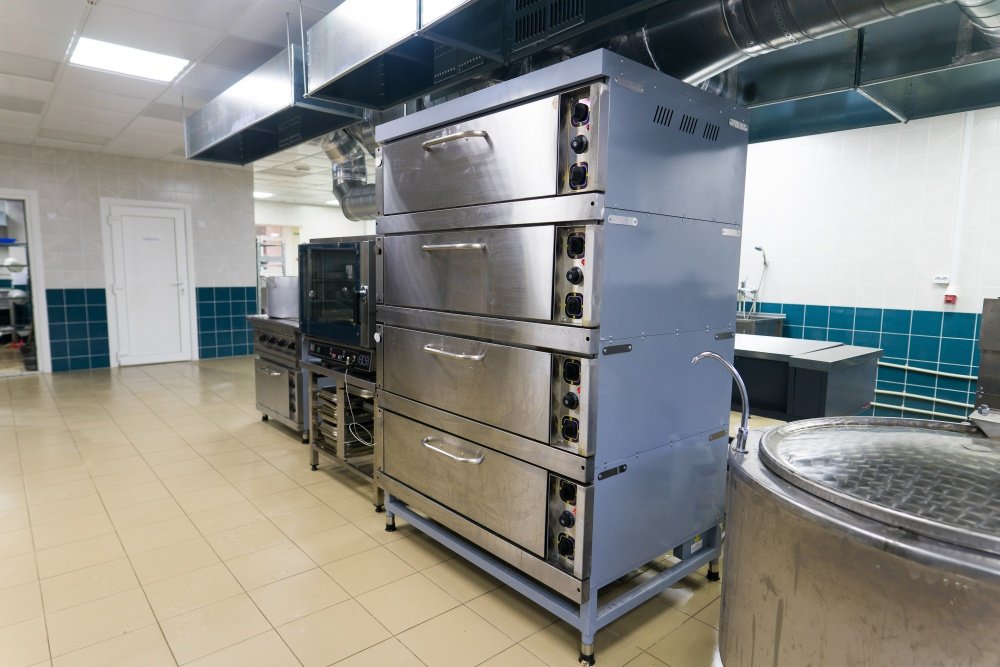
Because the materials remain stationary, tray dryers apply minimal mechanical stress, making them suitable for heat-tolerant materials or uneven batches. They’re also easy to load and clean, which makes them ideal for small production runs or R&D applications.
However, they dry granules more slowly than in a fluid bed and can be uneven if trays are overloaded or air paths are blocked. To achieve optimal drying, it’s important to manage tray spacing, air circulation, and loading patterns so each tray receives uniform airflow and temperature.
3. Vacuum Dryer
Vacuum dryers gently dry heat-sensitive APIs or excipients without exposing them to any damaging heat. This is achieved by reducing the chamber pressure, which lowers the boiling point of water and allows moisture to evaporate at a much lower temperature.
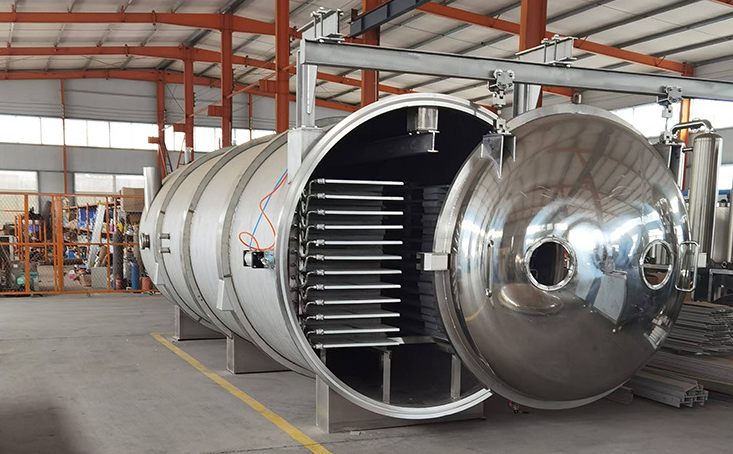
The chamber is also sealed and connected to a vacuum pump. Sometimes, even a heated jacket, vacuum conveyor, or vacuum tray is used to speed up the process.
In short, vacuum drying is excellent for preserving potency and avoiding thermal degradation. However, the only tradeoffs are slower cycle times, higher capital and operating costs, and more complex maintenance.
4. Rotary Dryer (Rotary Drum Dryer)
Continuous operation and high throughput make rotary dryers a good fit for huge production volumes. They tolerate a range of feed sizes and can remove a lot of moisture per pass.
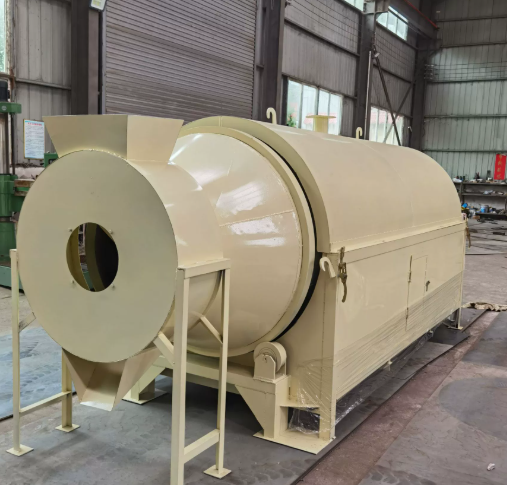
A rotating cylinder moves wet granules along a slightly inclined drum while hot air flows through or around it. Granules tumble inside and expose fresh surfaces to the drying air as they travel from feed to discharge.
However, the tumbling action can damage fragile granules, and achieving precise moisture control is more challenging than with batch dryers. Your design choices determine how gentle or aggressive the drying will be.
5. Spray Dryer
Spray drying is not a classic “granule dryer” for drying granules, however, it’s one of the best ways to make particles from solutions, suspensions, or emulsions in one step.
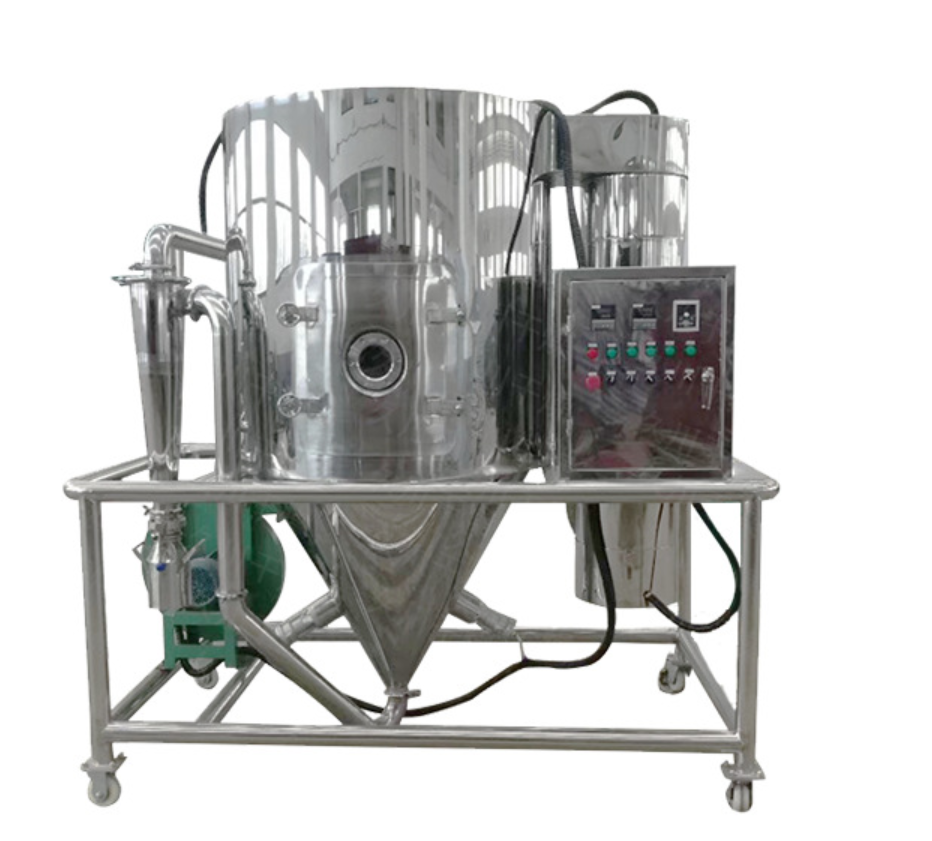
The process is quite simple. Liquid feed is atomized into a cloud of fine droplets inside a heated chamber. Each droplet dries in seconds as hot air strips moisture away, producing dry particles or powders.
This method gives excellent control over particle size and density, and it preserves uniformity in products like inhalable powders or instant formulations.
Downsides you might have to face include very high energy use and substantial equipment cost. Moreover, the operation requires expertise in atomization, temperature control, and downstream powder handling.
6. Freeze Dryer (Lyophilizer)
Lyophilization is the gold standard for highly fragile APIs, biologics, or formulations that must retain porosity and activity. It produces light, porous particles that rehydrate well under the optimal conditions.
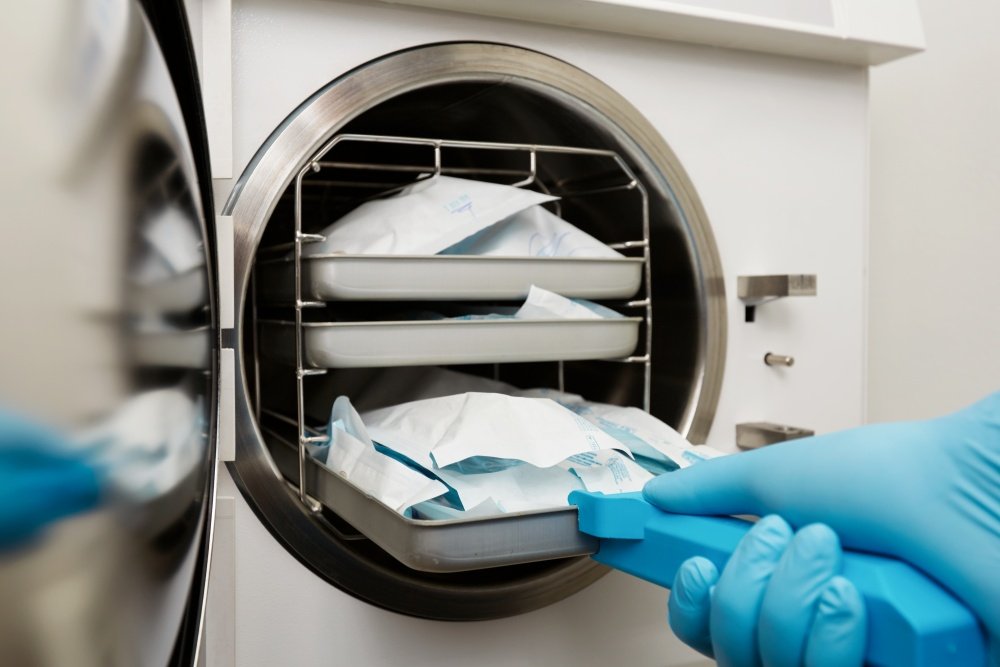
In this machine, the product is frozen first, then placed under vacuum while heat is applied gently so the ice turns directly to vapor (sublimation). This removes water without melting, which preserves structure, potency, and volatile ingredients.
The main drawbacks are long cycle times, high capital and energy costs, and limited batch size. For many standard pharmaceutical granules, freeze drying is overkill. But for niche, high-value products, it is indispensable.
How to Choose the Right Dryer for Your Granules
Let’s go through what matters most when selecting a granule dryer:
1. Batch Size and Production Scale
Start by identifying how much material you need to dry at once to produce your desired medicines. Small or medium-scale operations usually benefit from tray dryers because they are easy to manage and cost-friendly.
However, if you handle large production volumes, fluid bed dryers or rotary dryers offer faster and more uniform results. They’re actually designed for continuous operation and high throughput in a commercial setup.
2. Material Sensitivity
Different materials respond differently to heat. If your granules contain heat-sensitive ingredients, a vacuum dryer or freeze dryer is the safest choice. These technologies remove moisture gently without degrading the active ingredients.
On the other hand, if your product is robust and can tolerate higher temperatures, a fluid bed or tray dryer should be on top of your list.
3. Initial Moisture Content
The moisture content in your granules determines how powerful or fast the drying process needs to be.
Wet or semi-wet granules often need a fluid bed dryer because of its strong airflow and correct heat transfer.
FAQs
1. Can heat-sensitive granules be dried using a Fluid Bed Dryer?
Yes, but with caution. By adjusting inlet air temperature and airflow velocity, a Fluid Bed Dryer can safely dry heat-sensitive granules. For extremely temperature-sensitive products, vacuum dryers or lyophilizers are preferred alternatives.
2. How does a Tray Dryer function in granule drying?
In a Tray Dryer, wet granules are spread on trays and exposed to heated air circulating inside the chamber. This method is suitable for small batches, heat-stable materials, and lab-scale drying operations.
3. How is moisture content monitored during the drying of granules?
Moisture content is usually monitored using Loss on Drying (LOD) tests or in-line moisture analyzers. Real-time monitoring allows operators to stop the drying process at the right point to maintain granule quality.
Upgrade Your Granulation Line Today
The drying stage defines the success of your entire granulation process. When done right, it ensures the perfect balance of moisture, strength, and flow. If your goal is to build a more reliable granulation production line, Finetech has you covered.
We offer a comprehensive granulation production line, featuring advanced dryers, mixers, and processing equipment. Our experts will help you select the optimal configuration for your materials, scale, and workflow, enabling you to maximize productivity.
Stop wondering and contact Finetech’s specialists today!
Copyright Notice:
You may not reproduce, modify, publish, display, transmit, or in any way exploit any content on this website, or use such content to construct any kind of database without prior express written approval by Finetech Group. For permission to use the content, please contact: info@pharmamachinecn.com
Disclaimer:
The information contained in this article is for general information purposes only. The Company does not guarantee the accuracy, relevance timeliness or completeness of any information, and the Company assumes no responsibility for errors or omission in the content of this article.