 English
  Russian
  Turkish
  Spanish
  French
  German
  Japanese
Due to rising demand, pharmaceutical, nutraceutical, and supplement companies are under significant pressure in 2026. Every tablet must have the right weight, hardness, and dosage. Even a small mistake here can cause major defects.
This is why choosing the right tablet press machine has become a major business decision rather than just a technical one.
If you’re here for that as well, you’re in luck. By the end of this guide, you’ll be aware of all the highly recommended tablet press machine models for your business. Let’s dive right in.
Hot-Selling Tablet Press Machine Models 2026
In 2026, tablet manufacturers are not chasing speed alone. They are looking for machines that stay stable, produce consistent tablets, and run smoothly across long production shifts.
The following hot-selling machines are popular because they meet the real needs of modern tablet production.
| Machine Model | Best For | Production Level | Max Output | Max Tablet Size |
| TDP-1.5T / 5T / 6T | R&D labs, clinics, trial batches | Very low volume | 3,000–6,000 tablets/hour | 12-25 mm |
| ZP-17 | Growing nutraceutical and pharma brands | Small to medium | Up to 40,800 tablets/hour | 20 mm |
| 16-Station Tablet Press | Multi-product manufacturers | Medium | 14,400–28,800 tablets/hour | 18 and 25 mm |
| ZPW125 | Contract manufacturers, multi-brand producers | Medium to high | 30,000–88,000 tablets/hour | Varies by tooling |
| ZP420 Series | Industrial pharmaceutical plants | High volume | 139,200–196,800 tablets/hour | 25 mm |
| ZP27 / ZP29 / ZP31 | Factories needing more output in a limited space | High volume | 97,200–111,600 tablets/hour | 25 mm |
| GZP570 Series | Large pharma & contract manufacturing | Very high volume | 295,200–624,000 tablets/hour | 25 mm |
With that in mind, let’s explore each of these tablet press machines in detail.
1. TDP-1.5T / 5T / 6T Single Punch Tablet Press
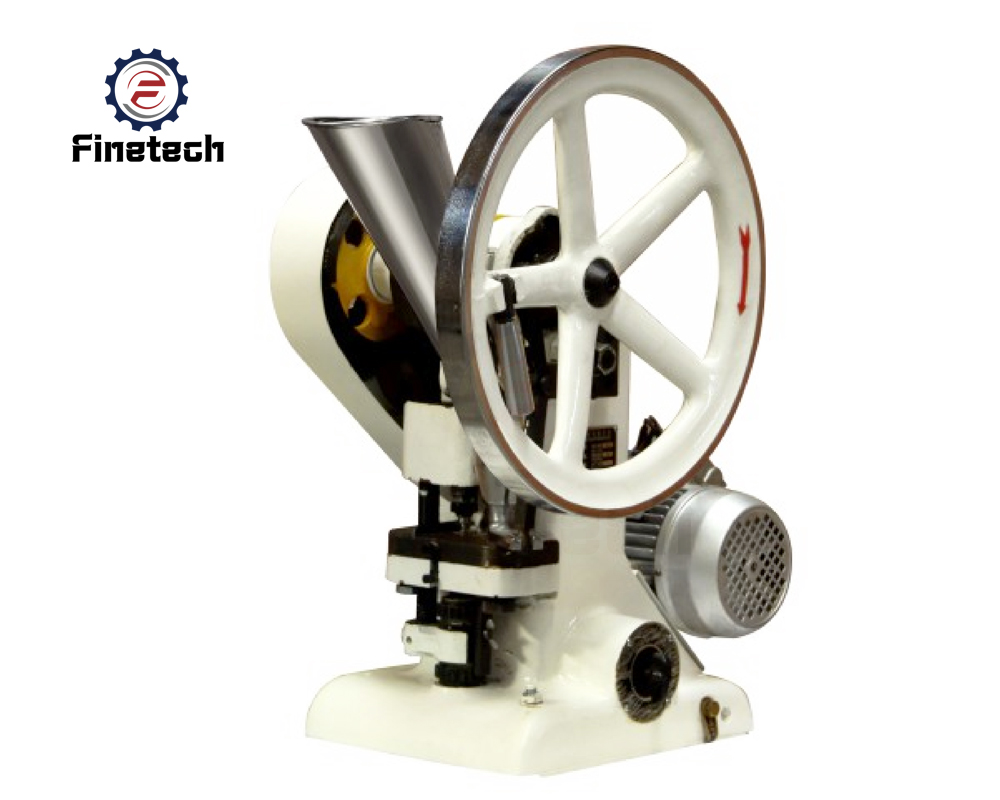
A single-punch tablet press is used when formulas are still being tested or when production volume is very low. They make one tablet per cycle. This gives full control over tablet weight, thickness, and appearance.
That level of control is important when working with new powders, expensive ingredients, or trial batches.
The three models support different tablet sizes. They can handle tablets from 12 mm to 25 mm, depending on the version. Production output for these ranges is 3,000 to 6,000 tablets per hour, enough for small clinics and laboratory work.
2. ZP-17 Rotary Tablet Press

The ZP-17 tablet press is built for small to medium pharmaceutical companies, health supplement manufacturers and research institutes. With 17 stations, it can produce up to 40,800 tablets per hour and supports round tablets up to 20 mm and irregular tablets up to 22 mm.
It features a fully enclosed stainless-steel compression area that meets hygiene requirements and prevents cross-contamination. There’s also a transparent acrylic safety cover that allows operators to view the compression process and opens fully for fast cleaning and maintenance.
You can also add in an optional forced feeder to increase the flow of powder when handling difficult materials.
3. 16-Station Tablet Compression Machine
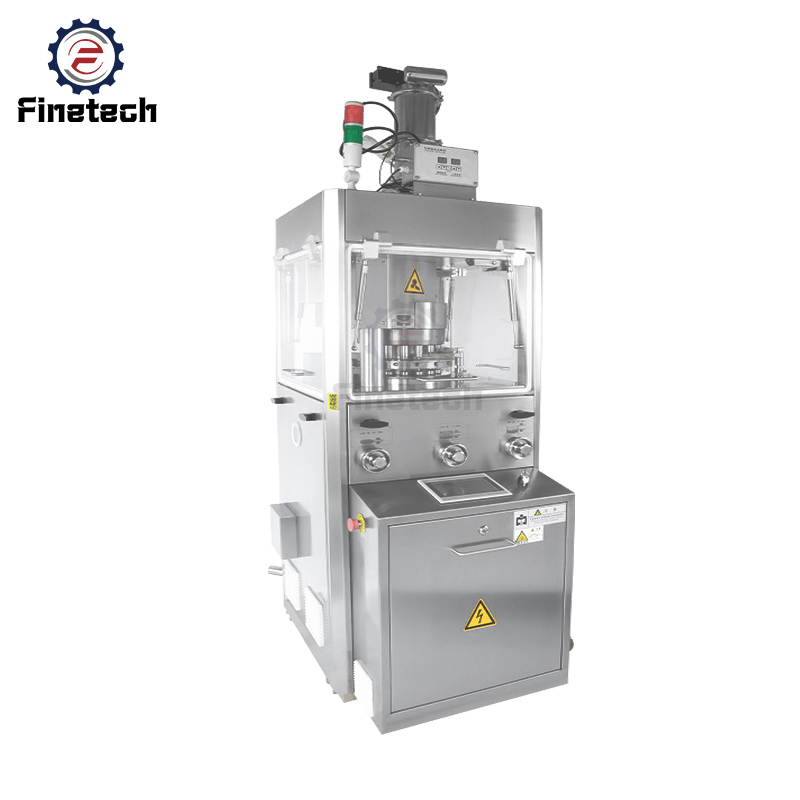
This machine is designed for steady small to mid-range production. It supports 8 to 16 stations and produces between 14,400 and 28,800 tablets per hour. As for the tablet size, the 16-Station tablet compression machine can accommodate tablets up to 25 mm in diameter. This covers most pharmaceutical and supplement products.
This machine features a fully enclosed compression area, protecting tablets from dust and contamination while improving operator safety. It also has a PLC and touch screen that provides simple control of speed, pressure, and production data.
With easy cleaning and fast changeovers, this machine is a practical choice for multi-product production lines.
4. ZPW125 Single Rotary Compression Machine

The ZPW125 is a high performance, multi-purpose tablet press designed for large-scale and multi-product manufacturing. With 25 to 37 stations, it can produce up to 88,800 tablets per hour, making it ideal for factories that handle many SKUs.
The machine can produce round, irregular, ring-shaped, engraved, and multi-layer tablets, including double-layer and triple-layer formats. Moreover, it comes with a sealed compression zone and 316L stainless steel product-contact parts to prevent contamination.
5. ZP420 (29 / 35 / 39 / 41 Stations)
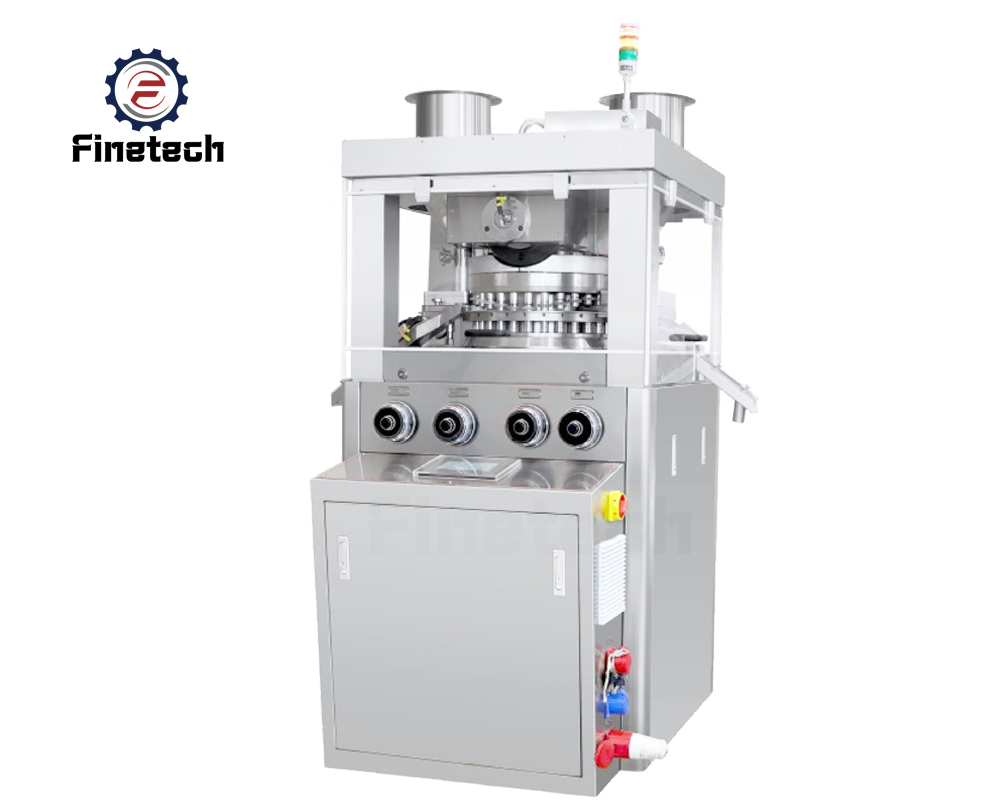
The ZP420 is built for industrial-scale tablet production. These models produce 139,200 to 196,800 tablets per hour. They support tablets up to 25 mm, including irregular shapes.
These machines are designed to run long shifts. The machine features a fully enclosed compression chamber with transparent acrylic doors that allow safe viewing. Additionally, it has a PLC-based user interface that displays real-time data such as filling depth and output.
They are also built with strong frames and smooth powder flow systems. This keeps production steady even at higher speeds.
6. ZP27 / ZP29 / ZP31 Double-Sided Rotary Tablet Press

This double-sided tablet press compresses tablets from both sides. That allows them to produce 97,200 to 111,600 tablets per hour without increasing machine size.
This design is useful when space is limited, but output must grow. It also improves tablet uniformity at higher speeds. It’s one of the reasons why many factories choose double-sided models instead of larger single-sided presses.
They are commonly used in pharmaceutical facilities seeking to increase production without changing the building layout.
7. GZP570-41 / 51 / 61 / 65 High-Speed Tablet Press

The GZP570 series, including the 41, 51, 61, and 65 station models, is built for high-output tablet production where speed and consistency go hand in hand. These machines can produce between 295,200 and 624,000 tablets per hour, making them suitable for facilities running large-scale operations.
These presses are designed to maintain smooth powder flow and stable tablet filling even at high turret speeds. Because of this stability, they are widely used in pharmaceutical and contract manufacturing environments.
How to Choose the Right Tablet Press Machine in 2026
Not every tablet press is built for the same kind of factory. Some are designed for testing and small batches, while others are built to run millions of tablets every week. The key is to choose a machine that fits where you plan to go next.
1. Start with What You Are Actually Making
Small, light tablets for supplements behave very differently from dense pharmaceutical tablets. While powders may flow easily into the die, maintaining consistent weight can still require careful control.
If your product is difficult to compress or has multiple ingredients, you need a press that can maintain stable filling and compression.
2. Think in Terms of Daily Output
A machine that can produce hundreds of thousands of tablets per hour is impressive, but it may not be the best choice if you run short batches.
Alternatively, a smaller press can quickly become a bottleneck if your demand grows. So, make sure to match the press to how many tablets you actually need to ship every day. For high volume, the GZP570 series is the ideal choice.
3. Consider How Often You Change Products
Factories that run many SKUs need presses that can switch tooling easily and return to stable production quickly. If you package tablets for multiple brands, flexibility becomes just as important as speed.
For that, you need machines with quick tooling changeovers and broad tooling compatibility. This reduces downtime and boosts overall equipment effectiveness (OEE).
4. Plan for the Future
Many manufacturers buy a press today and regret it a year later when volumes increase or new products are added. In such a case, choosing a machine that gives you room to grow is often a better investment than going for the cheapest option.
FAQs
1. How does a rotary tablet press differ from a single-punch press?
Rotary presses feature a rotating turret with multiple tooling stations for continuous filling, compression, and ejection at high speeds. Single-punch uses one station with reciprocating motion, limiting output to hundreds per hour and suiting lab-scale or low-volume needs.
2. Why are tablet presses preferred for solid oral dosage forms?
They provide accurate unit dosing, tamper evidence, stability through controlled hardness, and scalability for mass production. Tablets offer longer shelf life, easier swallowing, and compliance with serialization requirements compared to liquids or powders.
3. How do tablet presses support multi-layer tablet production?
Dedicated layering stations and sequential feeders deposit powders for bi- or tri-layer tablets. Precise timing and force control enable controlled-release or combination therapies at commercial speeds.
Find the Tablet Press That Fits Your Production
In this guide, we’ve covered the most in-demand tablet press machines for 2026. Each model serves a different purpose, and together they show what the manufacturers are really buying today.
The good news is that all of these tablet press machines are available at Finetech, so you don’t need to look in different places.
We understand what real factories need to keep their tablet lines running smoothly, drawing on 33 years of experience and 1000+ projects. When you work with us, you get access to proven tablet press technology, technical guidance, and long-term support.
Contact Finetech today and let our specialists help you select the right model!


2 thoughts on “2026 Hot Sale: Tablet Press Machine Models Recommended for Your Business”
Price on zp17 machine please
Sir,we will send the price to your email, please check your mailbox