English
  Russian
  Turkish
  Spanish
  French
  German
  Japanese
Most suppliers focus on selling you a model. However, very few help you think through whether that model truly fits your product and your needs.
That is why asking the right questions before requesting quotes matters more than comparing prices. These questions help you avoid expensive mistakes, hidden costs, and production problems that don’t appear in brochures.
The following 10 questions are designed to help you choose the right blister packaging machine with confidence.
Question 1: Can This Machine Handle My Exact Product Without Damaging It?
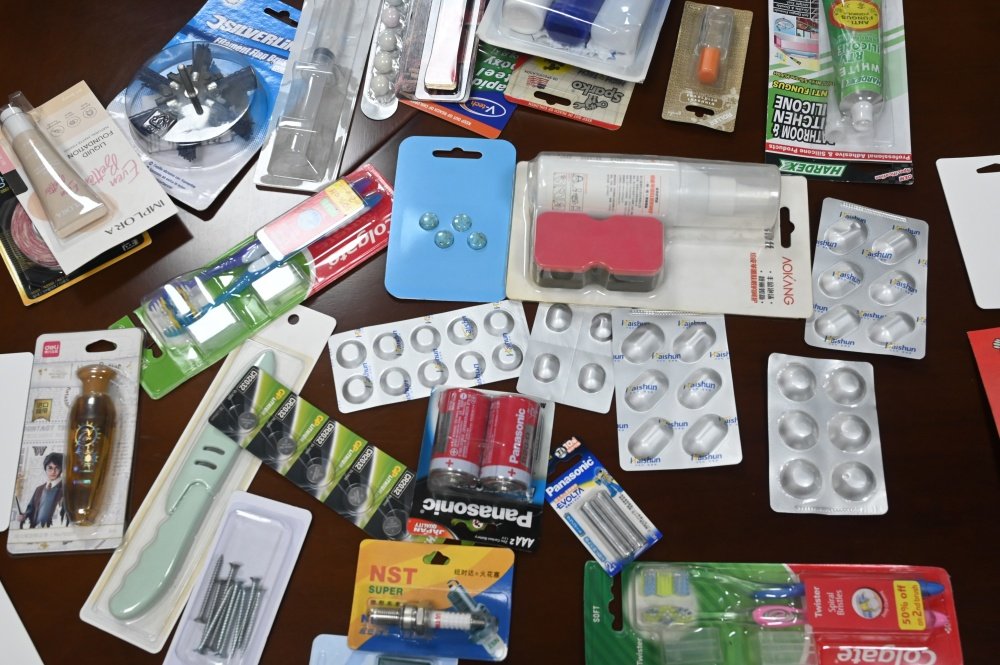
You must know if the blister packaging machine can safely handle your product. If the machine is not designed for your specific product type, you may face broken units or rejected batches.
Here are the main product types that you might have:
- Tablets: Tabletsare firm but can still chip, crack, or create dust if they drop too hard or are pushed into the blister pocket.
- Capsules: These are lighter and more delicate. They can roll, bounce, or split if the feeding system is rough.
- Liquids: Some blister machines are only built to fill liquids or gels into small cavities, mostly for single-dose medicines, cosmetics, or syrups.
- Medical Products: Items like syringes, test strips, bandages, and small medical tools are often packed in blisters.
- Consumer Goods: Products such as toys, batteries, and hardware come in many shapes and sizes and are packaged in blister packs.
Question 2: Can It Run Fast Enough for My Real Production Needs?
When suppliers elaborate on machine speed, they usually show the highest number the machine can reach under perfect conditions. This is called the brochure speed.
However, in real factories, production is never perfect.
A machine that claims to run at 120 blisters per minute might only produce 80 to 90 good blisters per minute. If you’re thinking of choosing a machine based only on the brochure claim, you may end up with a line that cannot meet your daily targets.
To avoid this problem, you should think about your actual production needs. How many blister packs do you need per hour, per shift, or per day? Once you know that, you can compare machines based on their real working speed.
Question 3: Can It Use the Blister Material I Already Bought?
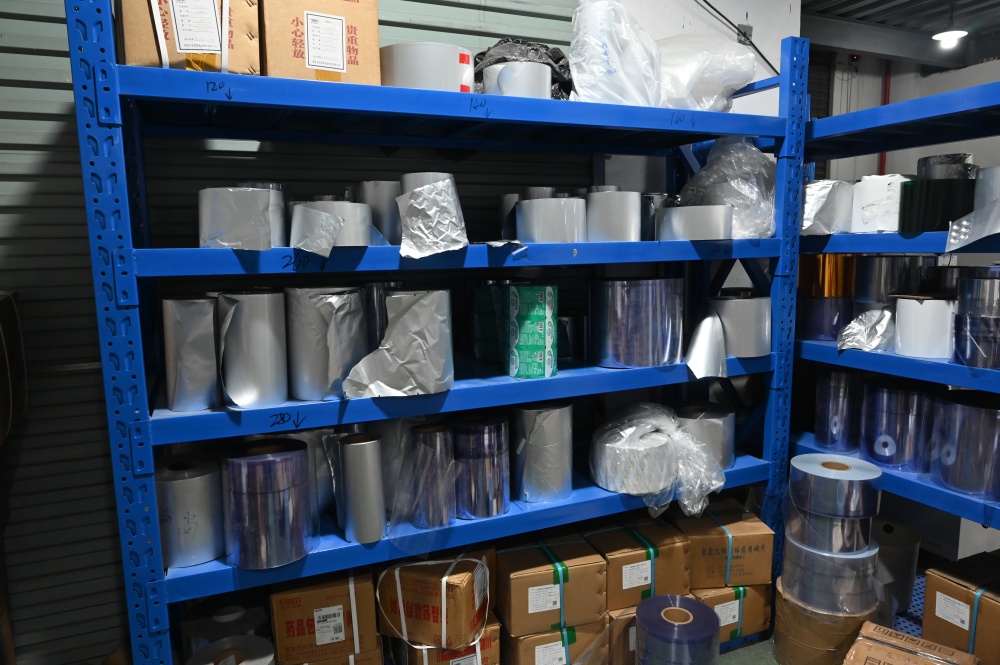
Not all blister packaging machines can run every type of blister material. If your machine is not designed for the material you use, you may get weak seals, warped blisters, or a lot of wasted film. Make sure to always confirm that the machine supports your exact blister material.
Some common materials include:
- PVC: PVC is a widely used blister film. Most standard blister machines can handle PVC, but the forming and sealing must be done under proper control to avoid thin spots or weak seals.
- PVDC-coated PVC: PVDC is added on top of PVC to improve protection against moisture and oxygen. Not every basic blister machine can handle it well, so it is important to check compatibility.
- Alu-Alu: Alu-Alu blistersuse aluminum on both sides for maximum protection. For this, you need a machine designed for cold forming, with stronger forming stations and different tooling.
- PET (Polyethylene Terephthalate): PET is a clear, strong, and impact-resistant plastic. It gives a premium look and is often used for electronics, tools, and consumer goods.
- PCTFE (Polychlorotrifluoroethylene): PCTFE is used when very high moisture protection is needed. This material requires special forming and sealing control.
- COP (Cyclic Olefin Polymers): For deep and rigid blister cavities, COP is preferred. It helps hold products firmly.
Question 4: How Long Does It Take to Change to a Different Blister Size?
Blister packaging lines often run multiple products. That means blister sizes, pocket shapes, and card formats must be changed. This process is called a format changeover. If a machine takes too long to change, it wastes valuable production time.
Some machines need only 10 to 20 minutes to switch formats. Others can take one or two hours, especially if many parts need to be removed and adjusted.
You should always go for fast changeovers, as they give you more usable production time in every shift.
Question 5: How Many People Are Needed to Run This Machine?
Labor is one of the highest ongoing costs in any packaging operation. If you’re looking to keep labor costs to a minimum, you should go for blister packaging machines that only need one trained operator.
In short, when choosing a machine, think about how many people you have available and how much you can afford to spend on labor. A machine that needs fewer operators often pays for itself faster.
Question 6: Is It Easy to Clean Between Batches?
To stay compliant with GMP standards, cleaning is non-negotiable for any company, especially a pharmaceutical organization.
Between batches, the machine must be cleaned to remove dust, residue, or traces of the previous product. That means if a machine is challenging to clean, it takes more time and increases the risk of cross-contamination.
Remember, machines designed with smooth surfaces, easy-to-remove parts, and good access points are much safer and faster to clean.
Question 7: Are the Blister Size and Pocket Dimensions Right for My Product?
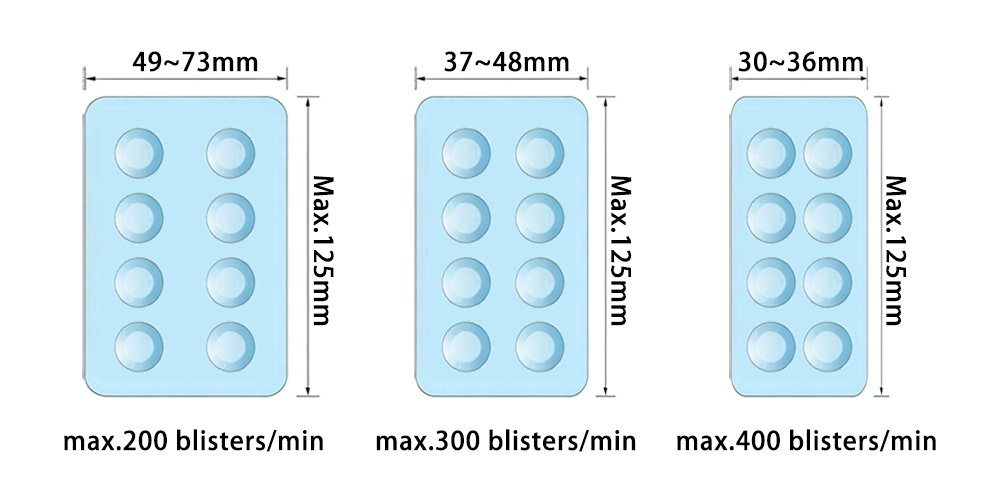
You also need to think about how the blister will be used by the customers. The key dimensions that you should know before requesting a machine include
- Length and width of the blister pack
- Depth of the blister pocket
- Space between each pocket
- Size of the card or foil backing
For instance, some products require only shallow pockets, while others require deeper forming, such as 16 mm, 22 mm, or even 25 mm. A machine that cannot form the depth you need will not be able to package your product correctly.
You should also consider who will be using the product. If your blister pack is intended for elderly people or patients with limited hand strength, the blister’s size and shape must be easy to handle.
Question 8: Does It Come With All the Tooling I Need?
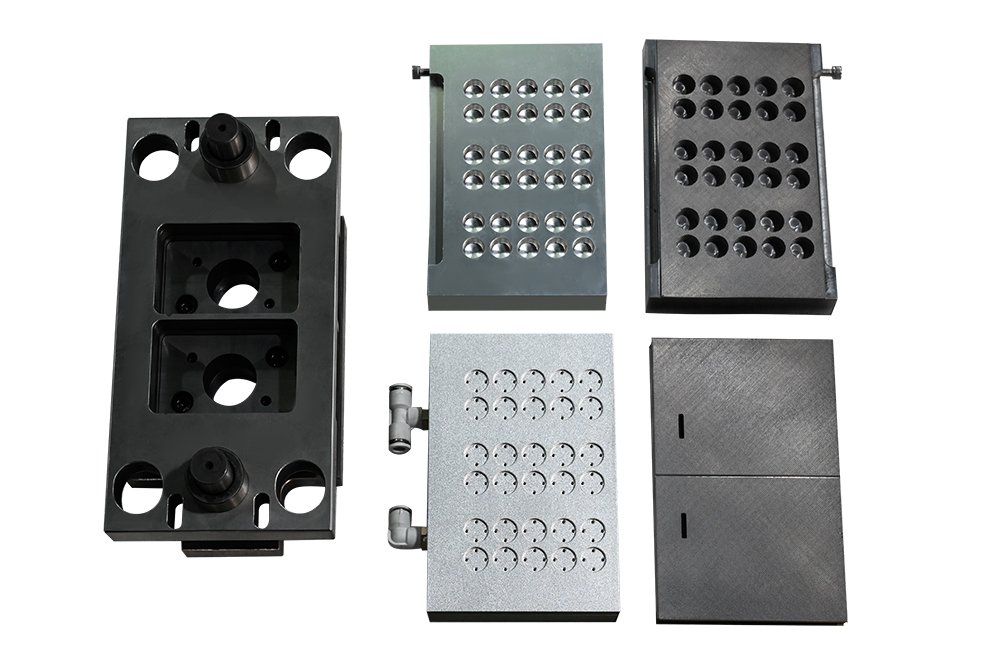
Blister packaging machines use molds and tooling to form the blister pockets and seal the packs. These tools are specific to your product size and shape. Some suppliers include basic tooling in the price, while others charge extra for each format or cavity type.
If you need to run more than one product or blister size, you may need several sets of tooling. These can be expensive and are often not included in the initial quote. Always check what tooling is included and what you will have to buy later.
Question 9: Can It Handle Both Small and Large Batch Runs?
Many manufacturers do not run the same product all day. You may have small batches for special orders and large batches for your main products. That’s why a good blister packaging machine should be able to handle both without wasting time.
Machines that are only designed for large runs are slow and inefficient when used for small batches, and vice versa. However, a flexible machine gives you more control over your production and helps you respond to customer demand.
Question 10: What Will This Machine Really Cost Me Every Month?
The price you pay for a blister packaging machine is only the beginning. Every month, the machine also uses power, compressed air, blister film, foil, and spare parts. It also creates waste when film is trimmed or blisters are rejected.
All of these costs add up over time. A machine that looks cheaper at first can become more expensive if it wastes material or consumes a lot of energy.
Bonus Question: What Happens If I Change Products Next Year?
Your business might not stay the same forever, and you might add new products, change package sizes, or enter new markets. In that case, a blister packaging machine should be able to grow with you.
Having a machine that cannot handle new product shapes or different blister sizes could go to waste, as you’ll need to buy another one.
FAQs
1. How does the integration of servo-driven technology improve indexing accuracy in high-speed blister lines?
Servo motors provide independent control over feeding, sealing, and cutting stations, eliminating the mechanical tolerances found in chain-driven systems. This synchronization ensures perfect registration of printed foils and reduces material waste during rapid start-stop cycles.
2. Why is the balcony design architecture considered a standard requirement for GMP-compliant blister packaging?
Mechanical drive components sit entirely separate from the functional packaging zone in a balcony layout. Cross-contamination risks decrease significantly under this arrangement. Furthermore, operators gain unobstructed access for cleaning, format changeovers, and routine maintenance tasks.
3. Why must procurement professionals evaluate the noise levels of blister machines during the selection process?
OSHA noise limits can be exceeded by high-speed mechanical movements. Optimized drive systems and sound-dampening materials protect operator health. Choosing quieter machinery eliminates the need for expensive acoustic enclosures or significant facility modifications.
4. What role does the pre-heating station play in optimizing the speed of a thermoforming machine?
Films reach the ideal forming temperature gradually via pre-heating stations. This staged approach allows for faster indexing speeds without causing material tears. Even thickness across the web is better maintained when the plastic is conditioned before molding.
A Blister Packaging Machine You Can Trust
In the end, it’s all about asking the right questions before you invest. When you take the time to think, you protect yourself from costly mistakes that can slow down production. The only issue left is that with so many options, finding the right machine can feel like a headache.
However, now that you have worked through the entire thing, why not give Finetech a chance?
We offer a complete range of blister packaging solutions for pharmaceuticals, medical products, food, electronics, and consumer goods. With our machines, you can package almost any product securely.
Contact Finetech today and let us help you build a blister packaging line!