English
  Russian
  Turkish
  Spanish
  French
  German
  Japanese
If you’ve spent any time around pharma manufacturing or granulation lines, you’ve probably run into a rapid mixer granulator. Knowing the rapid mixer granulator parts name for each component makes a real difference when something breaks or when you’re ordering spares.
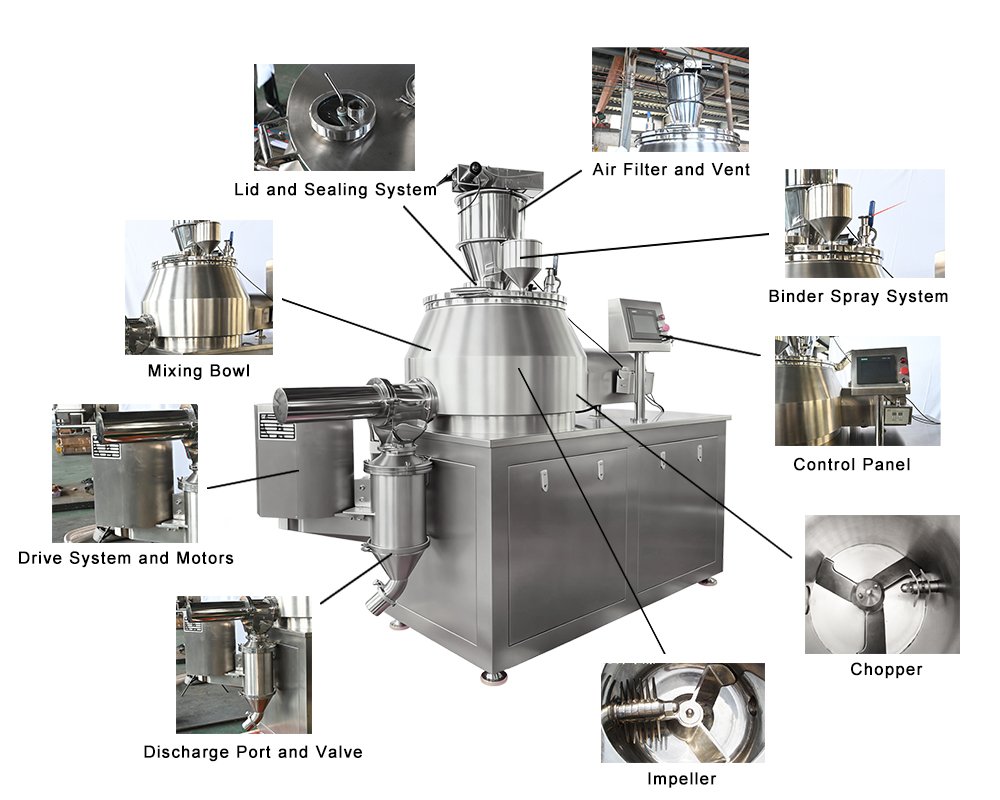
Way better than pointing at the machine and saying “the spinny thing at the bottom.”
1. Mixing Bowl
The mixing bowl is where all the action happens. Powder goes in, binder gets added, and granulation takes place right inside this one container.
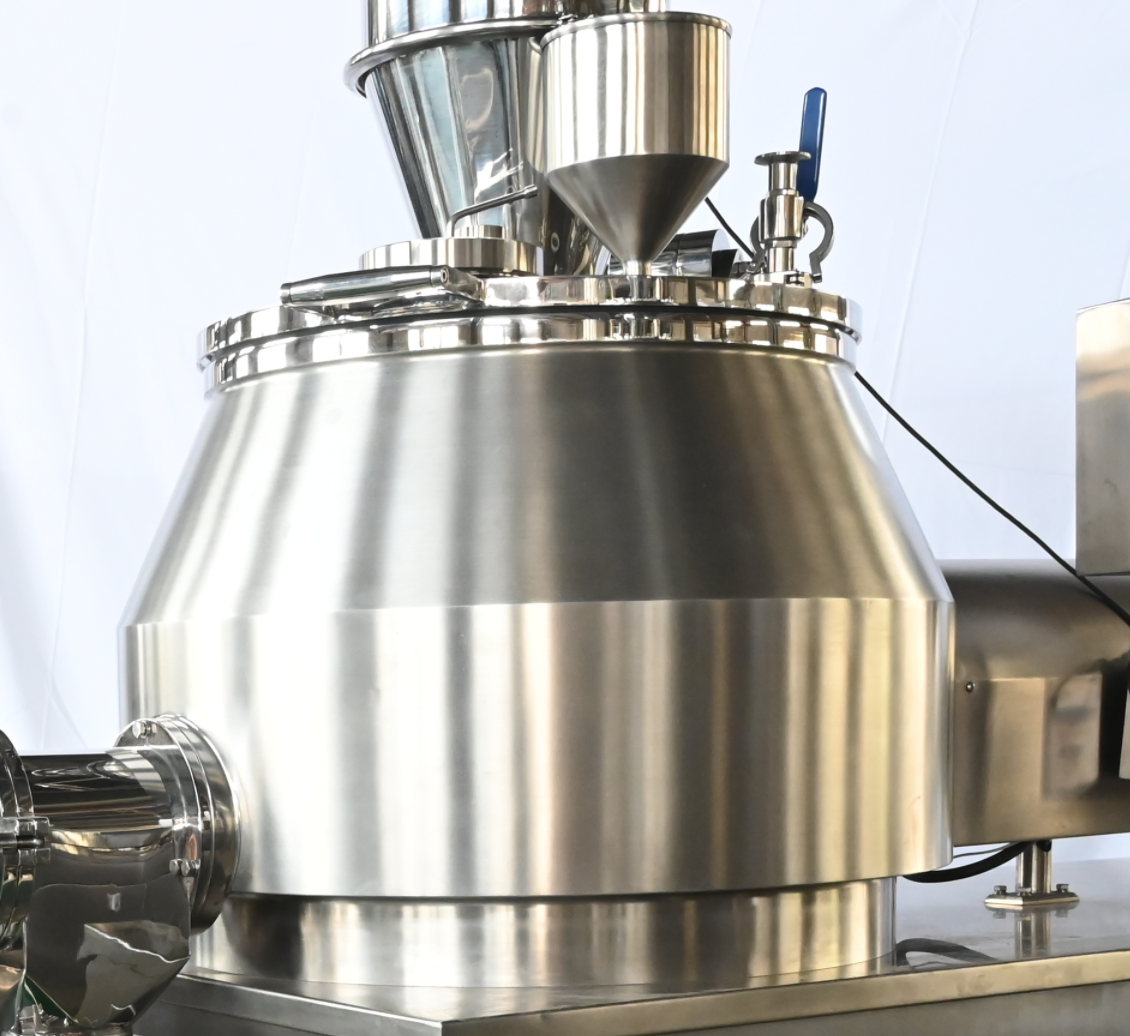
It’s a dome-shaped or conical bowl made from SS316 or SS316L stainless steel. The whole thing is formed from a single piece. No welds on the inside. That’s on purpose because welds create little pockets where product hides and contaminates the next batch.
The conical shape isn’t just for looks. It helps the powder circulate better when the impeller spins. A flat bottom would leave material sitting in the corners not going anywhere.
Bowl sizes range from a few liters on lab-scale RMGs up to several hundred liters on production units. The size you need depends on your batch volume. Going too small means more batches to hit your target. Going too big wastes time and material on partial fills.
Some bowls also have a water jacket around the outside for temperature control. Keeps things from getting too hot during high-speed mixing, which can be a problem with certain formulations.
2. Lid and Sealing System
The lid goes on top of the bowl and seals it shut during operation. Keeps powder in and contamination out.
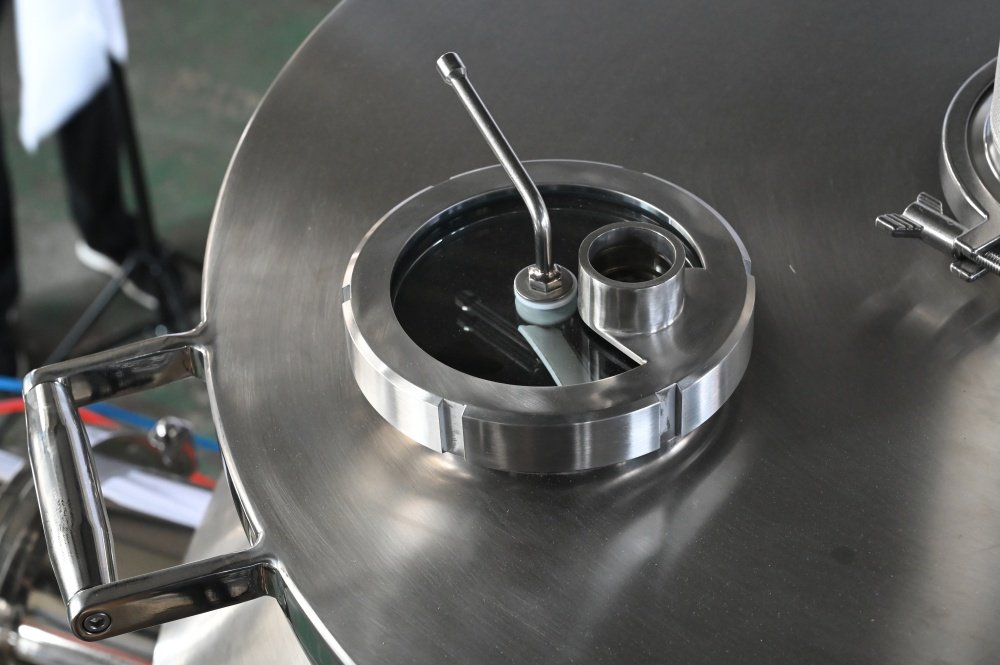
Most lids are the same stainless steel grade as the bowl. Between the lid and the bowl flange there’s a silicone or rubber gasket that makes an airtight seal. Some machines have a rotating lid, others use a hinged or pneumatic lift. Rotating is generally easier when you’re cleaning.
Lids also come with safety interlocks. Machine won’t run unless the lid is fully closed and locked. Not optional. On some units, there are also ports built into the lid for the binder spray nozzle and the vent filter, so check those connections during setup.
The gasket between the lid and bowl needs replacing every so often. A worn gasket lets powder escape during operation and can also let contaminants in. If you notice dusting around the lid rim, that’s your sign.
3. Impeller
The impeller is the main working part inside a rapid mixer granulator. Sits at the bottom of the bowl and does the heavy lifting for mixing.
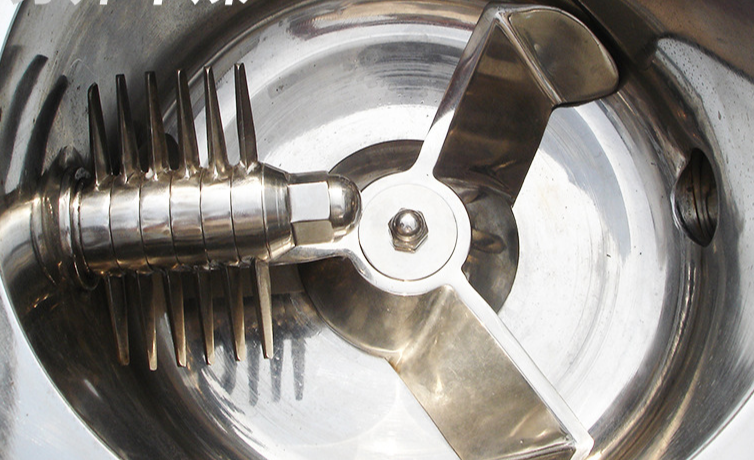
Most have three or four arms. Some are Z-shaped, some flat, some curved. The shape changes how the powder moves inside the bowl, so different machines use different designs.
When it spins, the impeller pushes powder outward and upward in a tumbling, whirling motion. That’s what mixes everything evenly. During wet granulation, it also works the binder into the powder to form a wet mass.
Speed is adjustable on most machines. Dry mixing runs slower. Once binder goes in and you’re forming granules, speed goes up.
The impeller mounts to a drive shaft at the bottom. It’s made to come off easily for cleaning, which you’ll be doing a lot in pharma because residue from one batch mixing into the next is a big problem.
4. Chopper
The chopper does a completely different job than the impeller. While the impeller mixes, the chopper breaks stuff down.
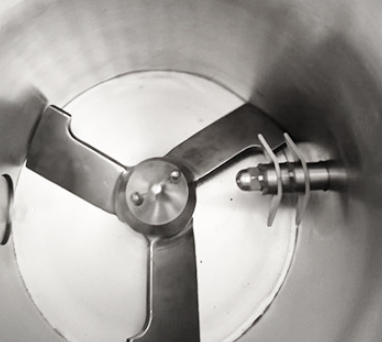
It’s a smaller blade assembly mounted on the side wall of the bowl. Spins fast. Usually between 1,400 and 3,000 RPM. Its job is to cut through wet lumps and oversized clumps that form as granulation happens.
Without it, granules come out all over the place in terms of size. Some way too big, others too small. The chopper keeps particle size more uniform, which matters when those granules eventually go into a tablet press.
Chopper blades wear out. Especially with abrasive formulations. Keep spares around so you’re not stuck waiting on a delivery when one goes dull.
The chopper design varies by manufacturer. Some use V-shaped blades, others use multi-tooth designs. What works best depends on the formulation and the granule size you’re after.
5. Discharge Port and Valve
Once granulation wraps up, the wet granules have to get out of the bowl. That’s the discharge port. It’s on the side near the bottom, angled at about 45 degrees so material slides out by gravity.
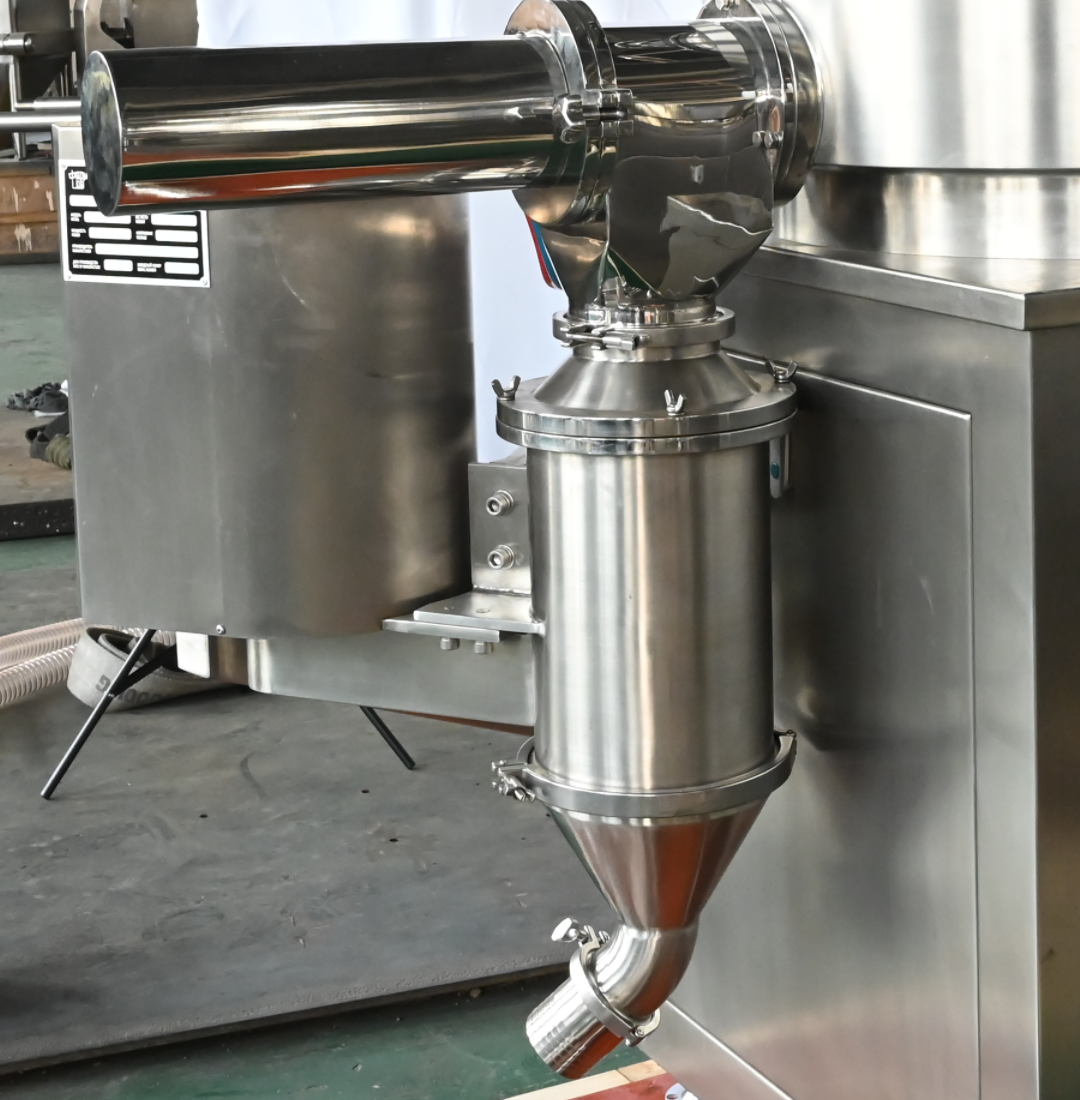
The port opening sits flush with the inside wall. No pocket for product to hide in.
A pneumatic valve controls the opening. Compressed air drives it open, and it seals tight when closed to prevent leaks during mixing. On some machines the impeller stays spinning during discharge to push granules out. On others the material just drops.
You want discharge to be fast and complete either way. Anything left behind is lost product and a contamination risk for the next batch.
6. Binder Spray System
During wet granulation, liquid binder has to get into the powder. You can’t just dump it in. It has to be sprayed so it spreads through the whole batch evenly.
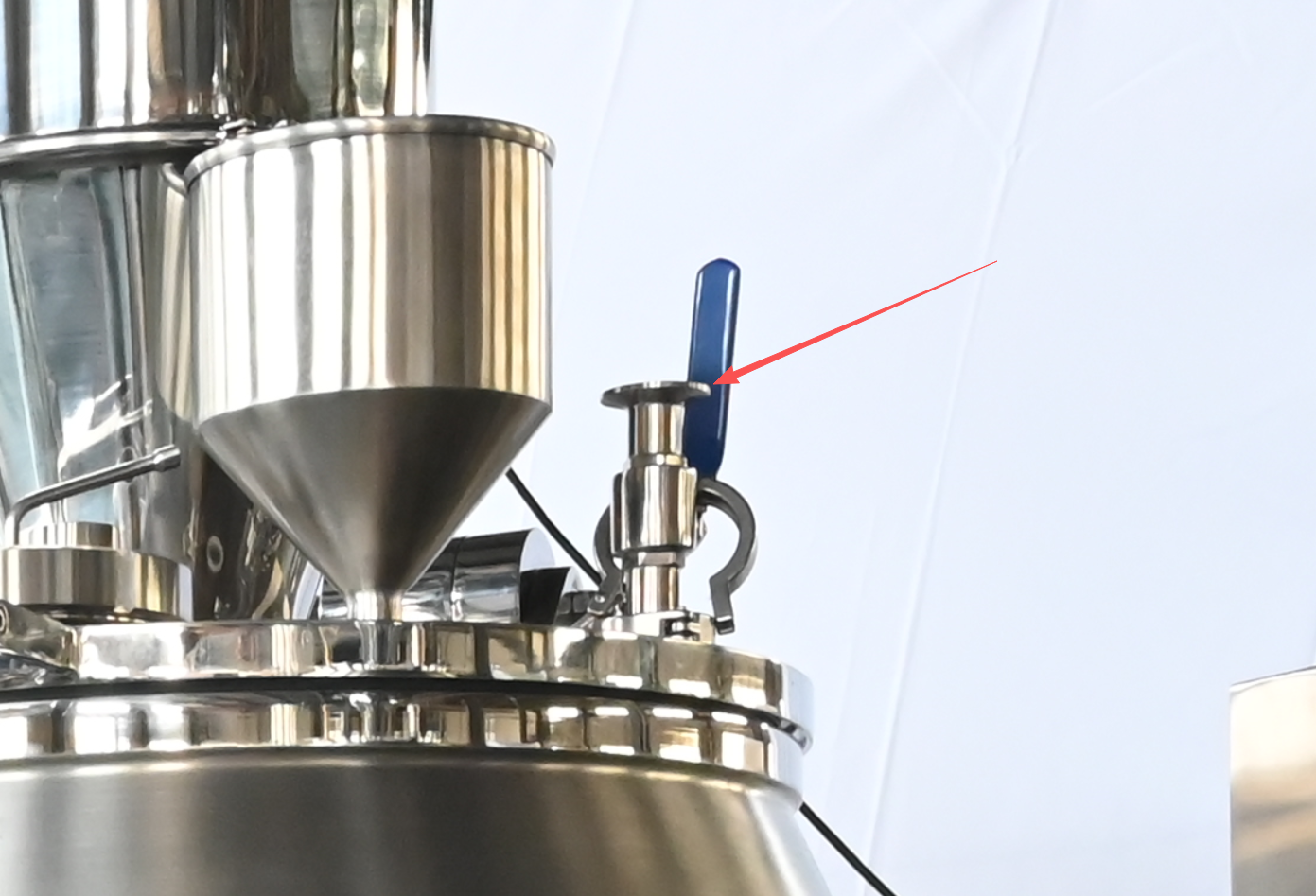
The system has a spray nozzle (usually mounted through the lid), a binder solution tank, and a pump to push liquid through. The nozzle controls droplet size and spray pattern, so it matters more than people give it credit for.
Binder going in too fast or hitting one spot creates uneven wetting. Some powder ends up too wet, the rest stays dry. That means inconsistent granules and probably rework.
Flow rate and spray duration are set through the PLC. You tweak them based on the formulation you’re running.
Some operators add binder manually through a port in the lid instead of using the spray system. It works for small batches but it’s harder to get consistent results compared to a proper spray setup.
7. Drive System and Motors
Two motors. One for the impeller, one for the chopper. They run independently because the two parts spin at very different speeds. The impeller motor is the bigger one since it has to move a heavy load of powder. Chopper motor is smaller but runs at much higher RPM.
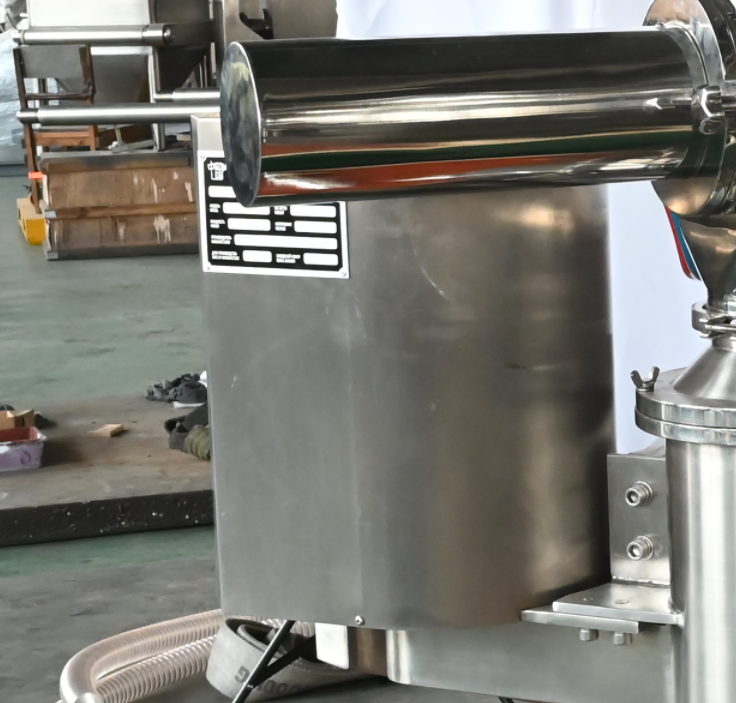
Most RMGs today use variable frequency drives on both. VFDs let you change speed without swapping hardware, which gives operators a lot more flexibility. Motors sit below or behind the bowl and connect to the blades through sealed drive shafts.
If a motor starts making unusual noise or running hot, don’t ignore it. Motor problems tend to get worse fast, and replacing one while it’s still running beats dealing with a catastrophic failure mid-batch.
Belt-driven models are less common on newer RMGs but they’re still out there. On those machines, check belt tension and condition as part of your regular maintenance schedule.
8. Shaft Seals
Shaft seals are one of those rapid mixer granulator parts nobody thinks about until they fail. Then they’re a huge headache.
The impeller shaft at the bottom and the chopper shaft on the side both pass through the bowl wall. Each one needs a seal to keep powder from leaking out and bearing lubricant from getting in.
Most machines use air-purged seals. Compressed air creates positive pressure that keeps powder away from the shaft gap.
If the air purge has problems, powder builds up around the shaft and eventually gets into the bearing. That means premature wear and an unplanned shutdown. Watch for powder residue around the shaft area during cleaning. If you see it building up, the seal is probably going.
9. Air Filter and Vent
There’s a vent filter on top of the lid. When the impeller moves product around inside the bowl, it pushes air out. That air needs somewhere to go, but you don’t want powder escaping with it.
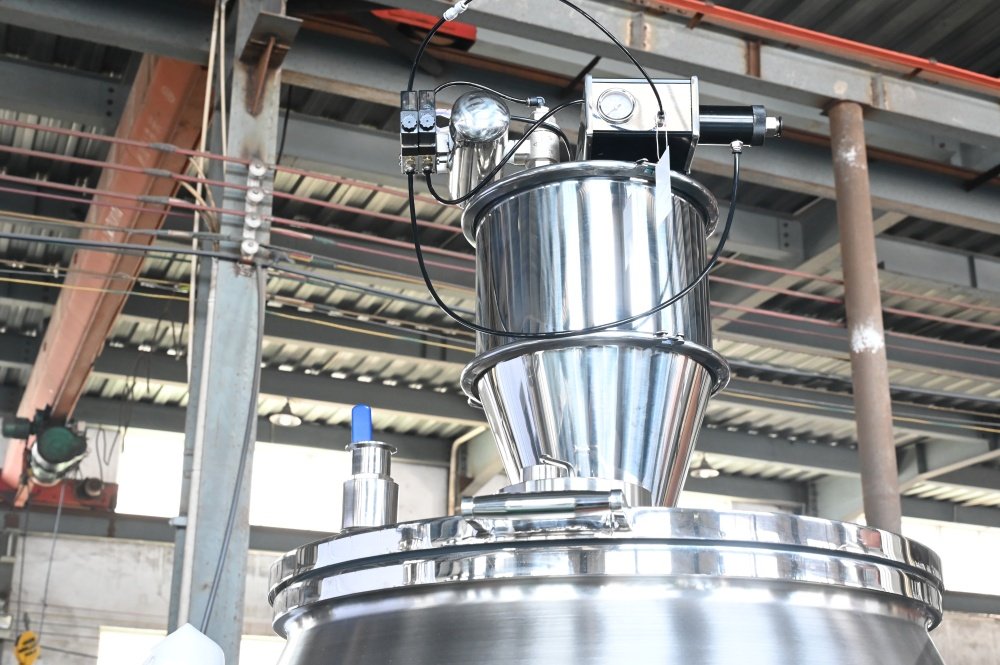
The filter catches fine particles trying to ride out with the exhaust air. Usually it’s a stainless steel mesh or cartridge-type setup. Clean it between batches. Every time. A clogged filter restricts airflow and builds up pressure in the bowl, which throws off the granulation.
Some machines have a quick-release clamp on the filter housing so you can pull it out fast for inspection. Nice to have when changeover time counts.
10. Control Panel and PLC
The control panel runs the whole machine. Impeller speed, chopper speed, binder spray rate, mixing time. All set from one spot.
Most RMGs use a PLC with a touchscreen HMI. The screen shows live data and lets you store recipes for different products. Switch formulations and you pull up the saved settings instead of starting from zero.
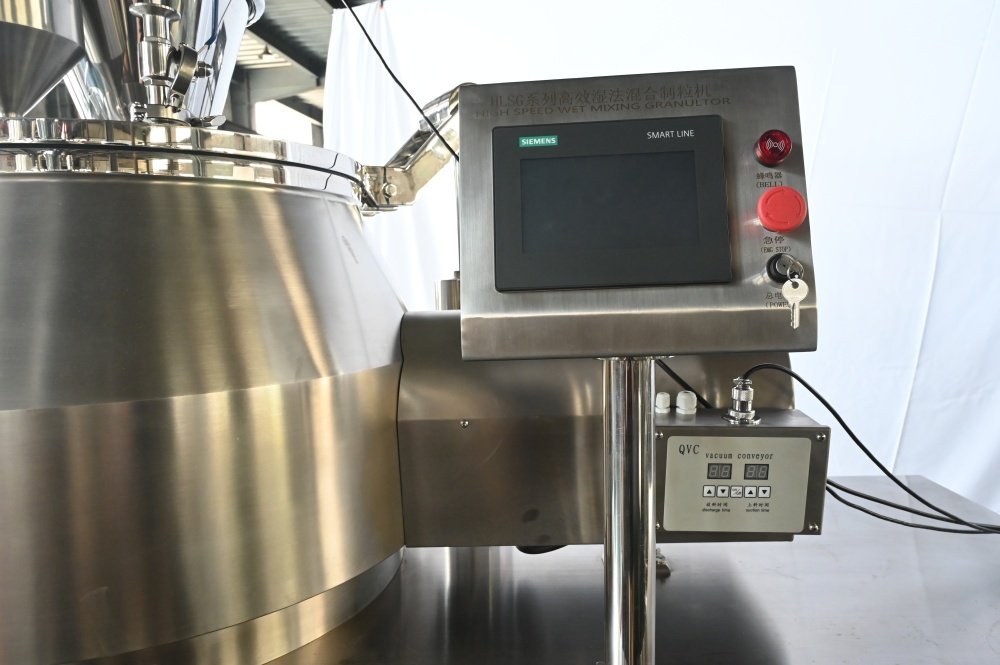
A lot of machines also have an ammeter or torque sensor wired into the PLC. As the powder absorbs binder and forms a wet mass, resistance on the impeller goes up.
That change in current or torque tells you when granulation is hitting the endpoint. Better than just guessing based on time alone.
11. Pneumatic System
Compressed air runs several moving parts on the machine. The discharge valve, lid lift, and shaft seals all need it.
The system has an air filter, pressure regulator, and lines running to each component. If air pressure drops or the filter clogs, valves stick, seals fail, and the lid lock might not engage. Not good.
Oil or moisture in the air lines is another common issue. It messes with the seals and can contaminate product. Checking the air filter and pressure gauge regularly prevents a lot of problems. Some facilities even put a dedicated air dryer right next to the machine for extra protection.
Conclusion
A rapid mixer granulator isn’t that complicated once you learn the parts. But when something goes wrong and you can’t name the rapid mixer granulator parts name for the component causing the problem, it turns into guesswork that wastes time and product.
Learning them makes maintenance easier, changeovers faster, and conversations with suppliers a whole lot shorter.