English
  Russian
  Turkish
  Spanish
  French
  German
  Japanese
| Capsule filling machine prices usually range from $5,000 to $150,000+. The final cost depends on the automation level, production capacity, material quality, and compliance requirements. Manual machines cost less, while fully automatic systems designed for high-volume production cost more. You should always evaluate price alongside ROI. |
Typical Capsule Filling Machine Price Ranges
| Machine Type | Automation Level | Output Capacity | Price Range |
| Countertop | Very low | Very low | $100 – $500 |
| Manual | Low | Very low | $5,000 – $10,000 |
| Semi-Automatic | Medium | Moderate | $20,000 – $50,000 |
| Fully Automatic | High | High | $80,000 – $150,000+ |
When buyers search for the capsule filling machine price, they often expect a single number. However, in reality, the price can change drastically based on how the machine is built, how fast it runs, and what standards it must meet.
Two machines that look similar on paper can have completely different long-term costs. Before comparing suppliers or requesting quotes, it is essential to understand what actually drives the price and how to calculate ROI.
In the sections ahead, we’ll break down the various factors that increase or decrease the price of a capsule filling machine.
Capsule Filling Machine Price Breakdown by Machine Type
Once you know how each machine type fits into real production scenarios, it can make it easier for you to judge pricing and avoid mistakes.
1. Manual Capsule Filling Machine Price
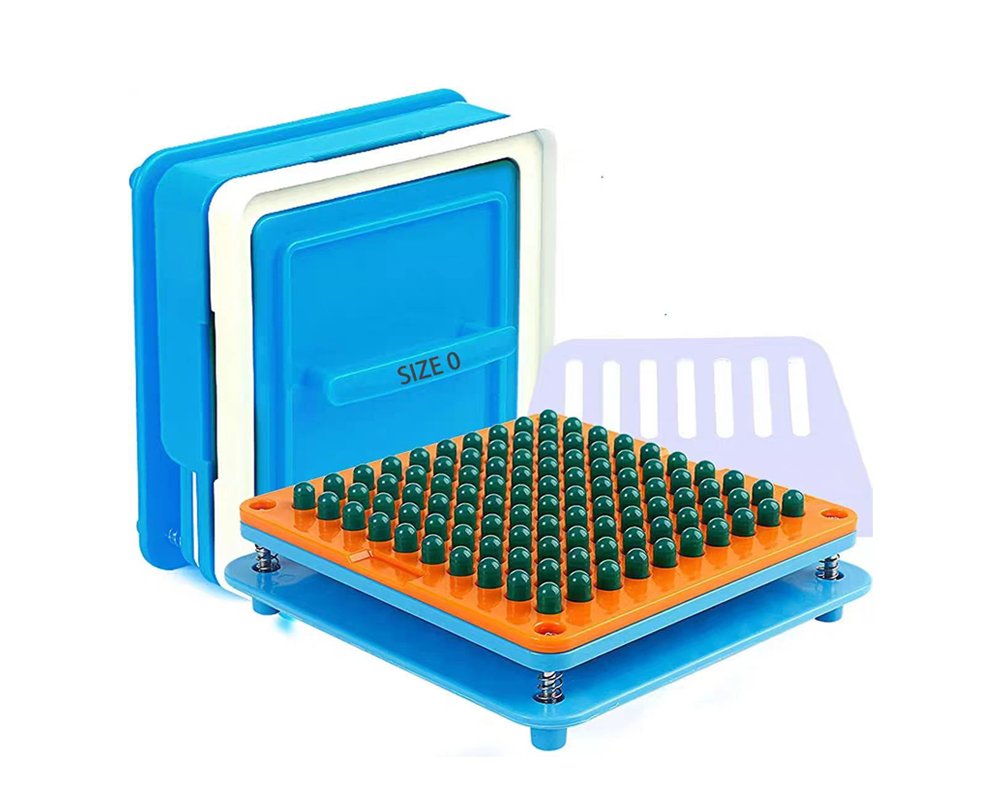
Manual capsule filling machines sit at the very beginning of the pricing spectrum. These machines are simple in design and heavily dependent on human effort. They are often used where speed is not critical and production volumes are low.
Typical use cases include R&D labs, formulation testing, and small startups that are still validating products.
The cost range for a manual capsule filling machine is between $5,000 to $10,000. It may look attractive, but the limitation becomes clear once production increases. Especially for long-term commercial production, these machines aren’t the best choice.
In addition to industrial manual units, there are also small countertop capsule fillers priced between $100 and $500. These are typically used for early-stage testing, educational purposes, or very small businesses producing capsules in extremely low volumes.
2. Semi-Automatic Capsule Filling Machine Price
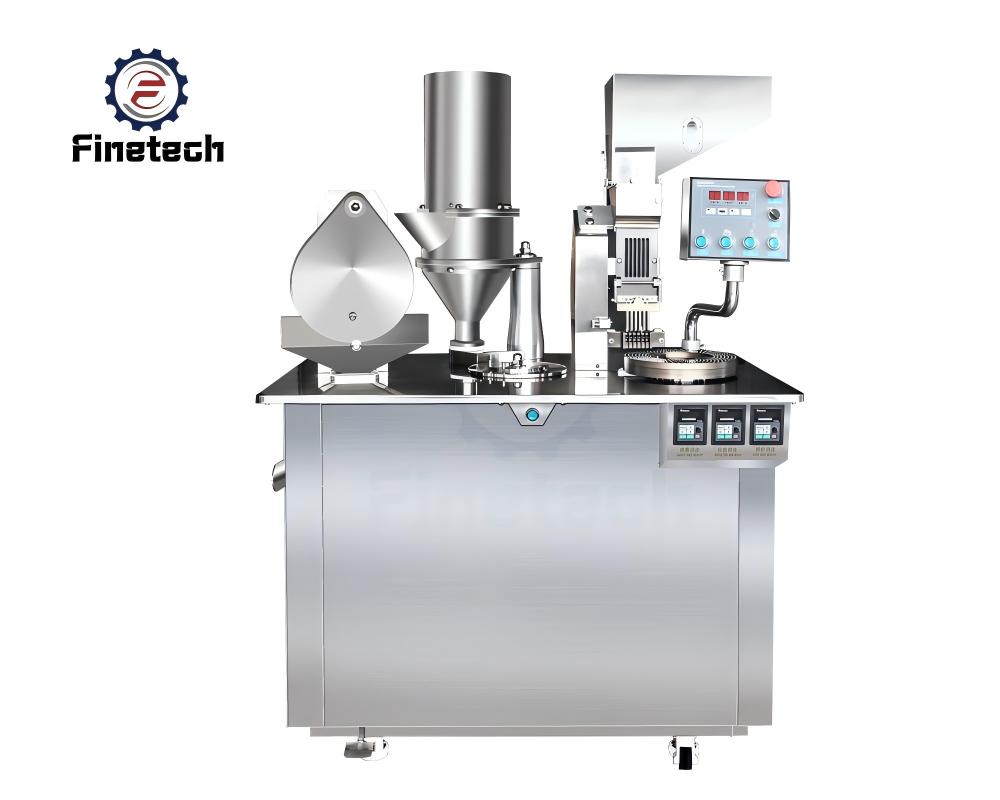
Semi-automatic capsule filling machines are often where serious production begins. They reduce manual effort while keeping costs under control. This makes them a common choice for businesses moving beyond trial batches.
These machines are the prime example of a balance between cost and output. Operators still play a role, but much of the filling process is automated.
Prices for semi-automatic machines range from as low as $20,000 to $50,000. At this level, labor reduction starts to make a visible difference in operating costs.
3. Fully Automatic Capsule Filling Machine Price
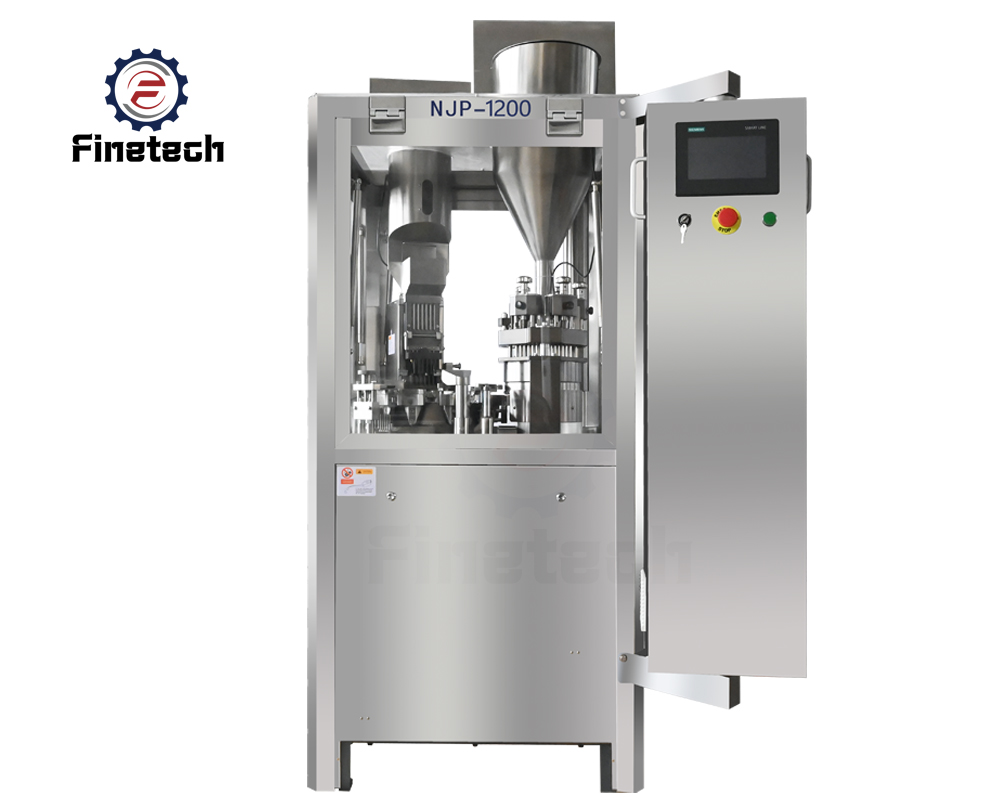
Fully automatic capsule filling machines are built for scale. They are designed to run continuously, handle large volumes, and meet strict quality standards. These machines remove most manual intervention from the process.
They are commonly used in pharmaceutical and high-volume nutraceutical production. Plus, the features such as accurate dosing, fast cycle times, and GMP compatibility justify the higher investment.
For machines of such caliber, you need $80,000 to $150,000+, depending on the capacity and configuration. While the upfront cost is high, long-term efficiency changes the equation.
Key Factors That Affect Capsule Filling Machine Price
Most marketplaces show a single price number. That number rarely tells the full story. In reality, the capsule filling machine price is shaped by several technical decisions that directly affect long-term cost.
These factors include:
1. Automation Level
When you go for higher automation, it raises the machine price because it requires advanced mechanical systems, sensors, and controls. Though there is an advantage, it results in reduced labor dependency, higher consistency, and faster production.
For instance, fully automatic machines often use industrial PLC systems and touch screens, which alone add $1,200 to $1,500 to the base machine cost.
We’ve already mentioned the prices of manual vs automatic machines above.
2. Output Capacity (Capsules Per Hour)
Output capacity has a non-linear effect on price. Doubling the output does not simply increase in a fixed way. For instance, increasing capacity from 20,000 to 40,000 capsules per hour may raise the machine price by $15,000 to $30,000.
However, pushing capacity beyond 60,000 capsules per hour often adds $40,000 to $70,000 and more as the price increase becomes steeper.
Components such as high-accuracy cam indexing boxes cost $3,000 per unit. This is one reason prices jump sharply above 60,000 capsules per hour.
3. Capsule Size Flexibility
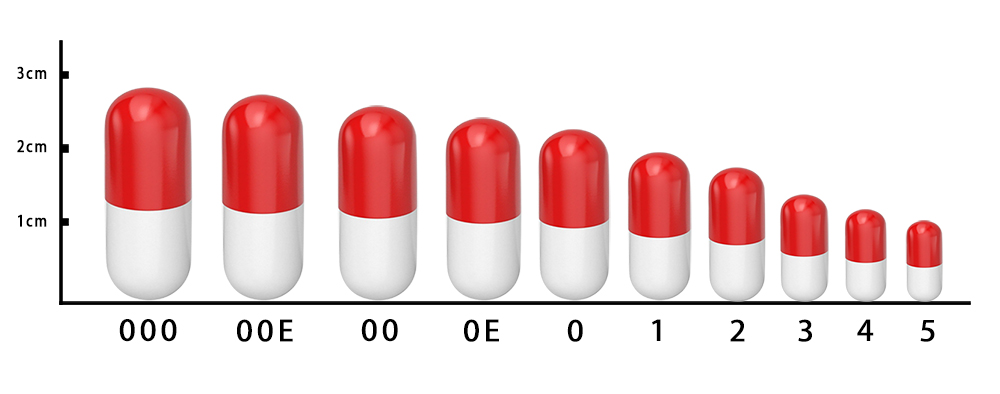
Machines that support only one capsule size are the most affordable. Adding multi-size capability usually increases the base price by $5,000 to $15,000.
Each additional capsule size requires dedicated tooling. Tooling kits typically cost $1,000 to $3,000 per size, depending on machine design and precision requirements.
Here, changeover time also matters. Machines designed for quick changeovers use precisely adjusted parts, which can cost anywhere from $5,000 to $10,000.
4. Construction Material (SS304 vs. SS316)
Material choice plays a major role in pricing. SS304 stainless steel is commonly used for nutraceutical production. It offers durability and corrosion resistance at a lower cost.
On the other hand, SS316 stainless steel typically increases the machine price by 10% to 20%, which often translates to $5,000 to $20,000. This shows that SS316 is more expensive and harder to machine.
5. Compliance and Certification
Compliance and certification significantly affect the capsule filling machine price. GMP-ready machines also require reliable detection and safety systems. For example, material level detectors and capsule sensors typically cost $80 per sensor.
Regulatory readiness also impacts long-term value. If there’s a compliance issue and your production stops, unplanned downtime could cost you $260,000 per hour.
How to Calculate ROI on a Capsule Filling Machine
Until now, we’ve only discussed the price and left the ROI untouched. With you already knowing how much you need to invest, let’s find out how to calculate ROI so you know which machine will better suit your production needs.
Step 1: Calculate Cost Per Capsule
Your first step should be to understand how much each capsule costs to produce. This includes three main components:
- Machine costsshould be allocated over its expected useful life. For example, if a machine costs $100,000 and is expected to run for five years, the annual machine cost is $20,000.
- Operating costincludes electricity, maintenance, consumables, and routine servicing. These typically range between $8,000 and $15,000 per year, depending on usage.
- Output volumedetermines how these costs are distributed. If the machine produces 10 million capsules per year, the total annual cost of $28,000 to $35,000 translates to a cost per capsule of roughly $0.0028 to $0.0035.
Step 2: Measure Labor Savings
Labor savings often deliver the fastest ROI impact.
A manual setup may require 3 operators per shift, costing around $35,000 to $40,000 per operator per year. This can push annual labor costs beyond $100,000.
Switching to a semi-automatic or fully automatic machine may reduce staffing to 1 operator per shift, which could save $50,000 to $80,000 annually. These savings alone can recover a large portion of the machine cost within the first year.
Step 3: Estimate Payback Period
To calculate the payback period, compare the machine cost against annual savings.
If a $100,000 machine delivers $70,000 per year in combined labor and efficiency savings, the break-even point is reached in roughly 14 to 18 months.
For higher-capacity machines used in multi-shift operations, a payback period of 12 to 24 months is common.
Step 4: Factor in Growth and Scalability
Future growth also plays a major role in calculating the overall ROI.
Choosing a machine that can handle 30-40% higher output than the current demand may add $15,000 to $25,000 to the purchase price. However, this avoids the need for a full replacement later, which can cost $80,000 to $150,000.
In many cases, replacing undersized equipment costs 1.5 to 2 times the original investment once downtime, installation, and retraining are factored in.
FAQs
1. What is the standard formula for calculating ROI on a capsule filler?
The basic formula is ROI=(Net Annual Savings/Total Investment Cost)×100. This calculation identifies how many years or months it will take for the machine to pay for itself through increased efficiency and reduced waste.
2. What hidden costs should be included in the “Total Investment Cost”?
Beyond the sticker price, you must factor in freight charges, installation fees, and the cost of initial operator training. Maintenance contracts and the purchase of spare parts for the first year should also be included in your capital expenditure budget.
3. Are used capsule filling machines a viable option for better ROI?
Used machines can cost 40% to 60% less than new models, potentially leading to a faster ROI. However, you must weigh the lower initial cost against the risks of higher maintenance needs and lack of manufacturer warranties.
Make the Right Capsule Filling Machine Choice
At the end of the day, choosing a capsule filling machine means understanding how the capsule filling machine price aligns with your production needs. Remember that a well-informed decision today can save significant time, money, and operational stress.
If you feel the need for expert guidance, Finetech offers a complete range of capsule filling machines. Our specialists can help you evaluate your production goals and budget to recommend a solution that works in your favor.