English
  Russian
  Turkish
  Spanish
  French
  German
  Japanese
Launching a small pharmaceutical, nutraceutical, or supplement business comes with tough decisions, and choosing the right tablet press is one of the most important. The machine you choose affects output, tablet consistency, maintenance, and long-term growth potential.
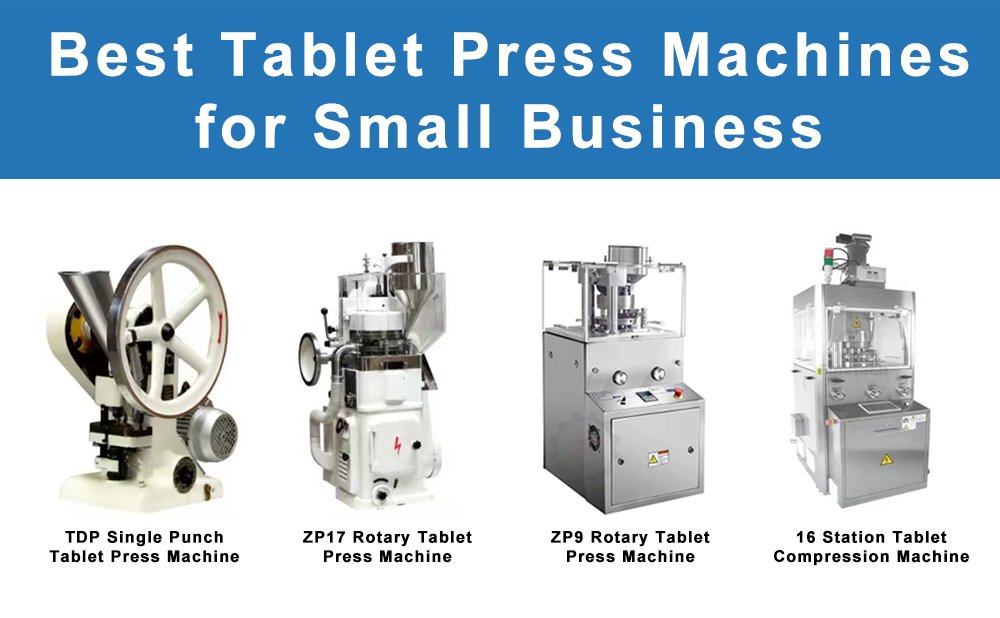
For small businesses, the choice usually comes down to single-punch presses for precise, low-volume batches or rotary presses for higher output and scalability. Each type has its advantages and trade-offs, so understanding them is key to avoiding costly mistakes.
Below, we will explore the top models of the best tablet press machines for small businesses, compare their features, and explain key factors to consider.
Let’s see which press can boost your production and growth.
Quick Overview: Best Tablet Press Machines for Small Business
Machine Model | Press Type | Output Capacity | Tablet Shapes | Best Suited For | Scalability |
TDP-1.5T / 5T / 6T | Single-punch, manual | 1 tablet per cycle | Multiple shapes (via tooling) | Startups, cosmetics, chemicals, prototyping, university labs | ❌ Not suitable for growth |
ZP17 Rotary Tablet Press | Single-sided rotary | Up to 40,800 tablets/hour | Round and shaped tablets | Small to medium pharma and nutraceutical businesses | ✅ Moderate growth support |
16-Station Tablet Press | Multi-station rotary | 80,000–180,000 tablets/hour | Depends on B/D/BB tooling | Small to medium commercial production | ✅ Strong scalability |
ZP9 Rotary Tablet Press | Single-sided rotary | 5,000 and 15,000 tablets/hour | Round, oval, capsule, square | R&D, small batches, supplement startups | ⚠️ May require upgrading as demand grows |
Why Choosing the Right Type of Tablet Press Matters
Choosing the right tablet press is more than just picking a machine; it can determine how smoothly your business runs. For example, a business that needs a small to medium-scale rotary tablet press will struggle if it invests in a single-punch manual press.
The wrong choice can slow production, increase labor costs, and lead to inconsistent tablets. This is why it’s important to consider key factors such as output per hour, tablet consistency, tooling flexibility, ease of maintenance, and future scalability.
When the machine matches your production goals, operations stay efficient, quality remains consistent, and growth becomes easier to manage.
Best Tablet Press Machines for Small Businesses
There are two main types of tablet press machines used for small businesses: single-punch and rotary. Both types serve different production needs, with different batch sizes and scalability requirements. We will discuss the best models of each type so you can find the best tablet press machine for small businesses.
1. TDP Single Punch Tablet Press Machine (Cheap Pill Press Machine)
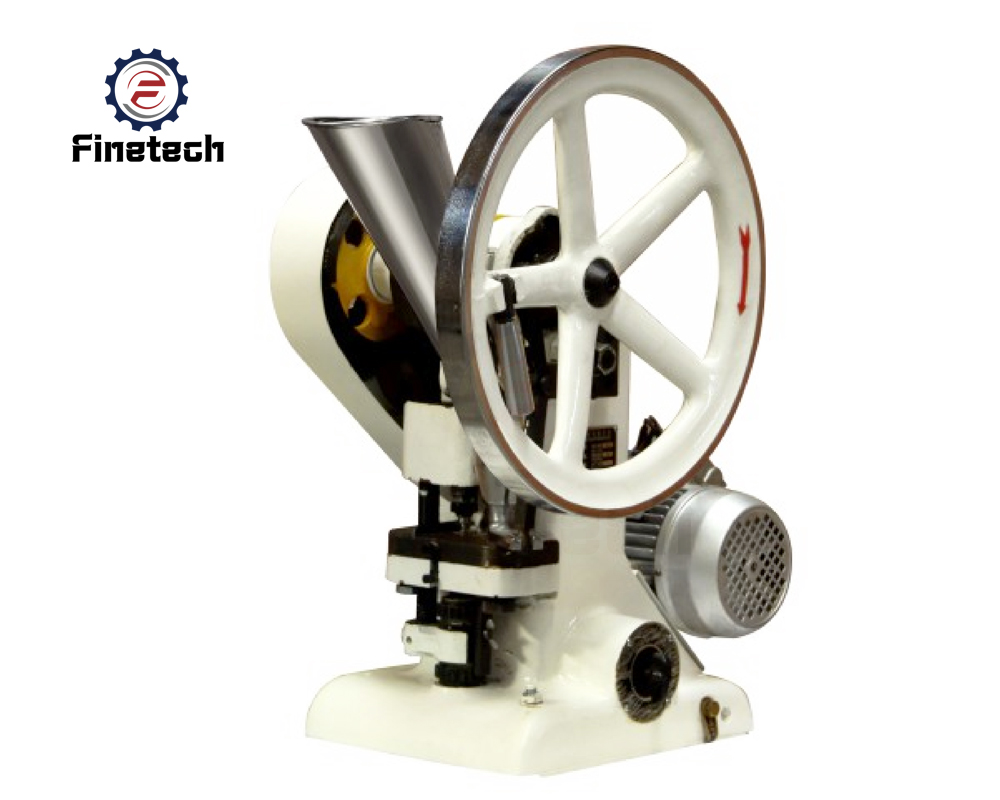
The TDP single punch tablet press is a manually operated machine designed for small-scale production. Perfect for the cosmetics and chemical sectors, as well as pharmaceutical prototyping and university labs, this press delivers precise tablets without heavy investment.
Being manual, it produces one tablet per cycle, which keeps costs low and maintenance simple. The machine delivers consistent tablets and allows quick switching between shapes and sizes through its easy tooling change system.
However, the model is not suitable for large-scale manufacturing. If your production needs are fixed and you don’t plan to expand quickly, this model is a cost-effective choice.
2. ZP17 Rotary Tablet Press Machine

The ZP17 is a high‑speed single‑sided rotary press for small businesses that efficiently compresses powder into tablets. It is designed for pharmaceutical companies, health supplement manufacturers, and research institutions.
The machine produces round tablets and can also form tablets in various shapes by changing tooling, with adjustable speed, fill depth, and tablet thickness to suit formulations. With an output of up to 40,800 tablets per hour, it delivers a significant productivity boost compared to single‑punch presses.
The only limitation is the single‑sided (single compression) press. Therefore, it cannot accommodate dual compression or complex bilayer tablets required for some advanced applications.
3. 16 Station Tablet Compression Machine
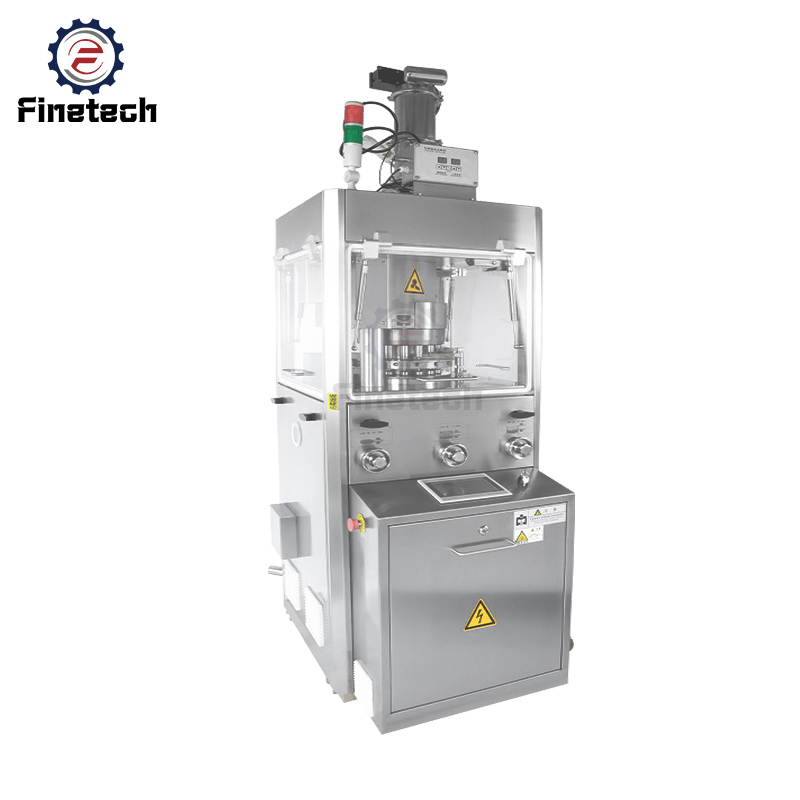
This 16‑station tablet compression machine is a rotary press engineered for high‑volume tablet production across pharmaceutical industrial applications. “16‑station” refers to the number of tooling sets mounted around a rotating turret that allows simultaneous compression of multiple tablets per revolution.
Equipped with a modern PLC touch screen and a fully enclosed glass guard, the machine ensures precise control and cleaner operation. Typical output ranges from 80,000 to 180,000 tablets per hour, which makes it ideal for small- to medium-scale production.
Most 16‑station presses use “B,” “D,” or “BB” type tooling as per TSM or EU standards, providing compatibility with a range of tablet formulations.
4. ZP9 Rotary Tablet Press Machine
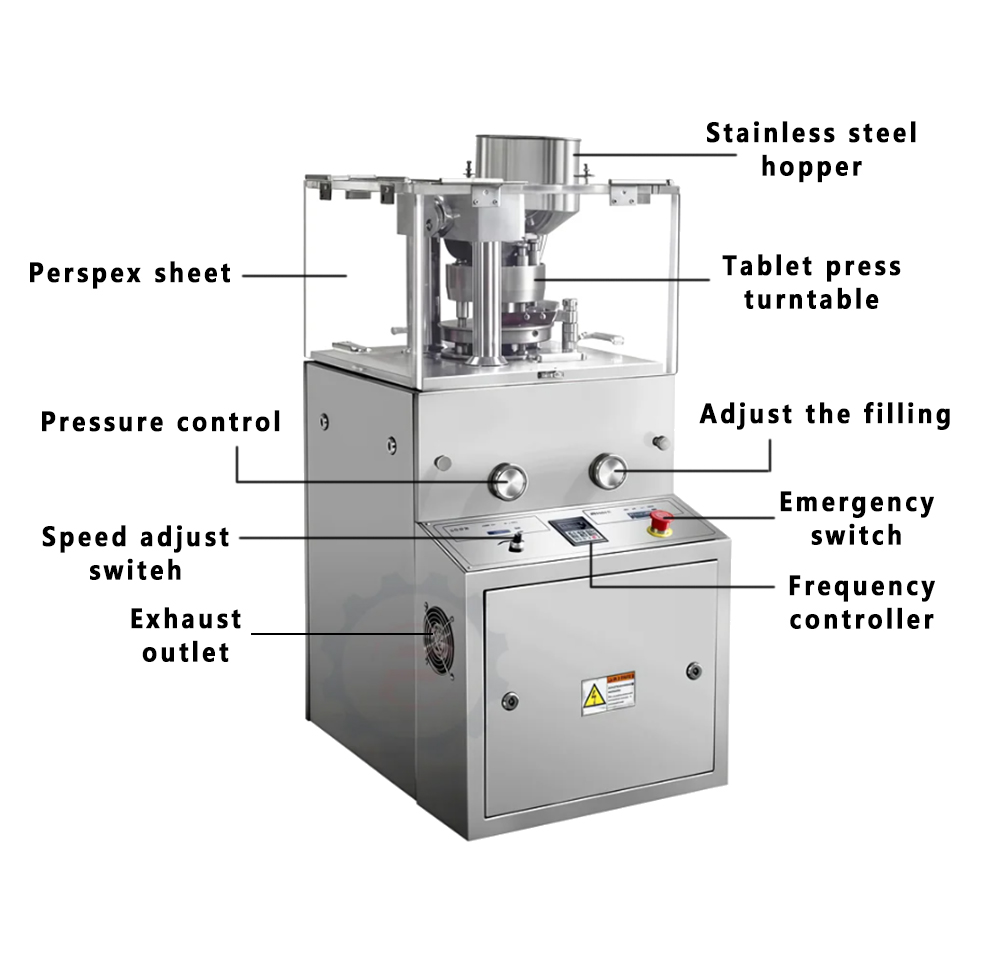
The ZP9 rotary tablet press is a versatile, single-sided press designed for small to medium pharmaceutical manufacturers, health supplement producers, and research labs. Its compact rotary turret accommodates multiple punch-and-die stations and delivers consistent tablet weight, hardness, and shape across each batch.
The press can produce tablets in various shapes, including round, oval, capsule, and square, depending on the tooling. Production capacity depends on the number of stations, ranging from 5 to 11, with output between approximately 5,000 and 15,000 tablets per hour.
Which One Is Right for Your Business Size? Factors You Should Consider
Now that you have the best tablet press machines for small businesses, it’s time to evaluate key factors that determine the right choice. These factors will help identify which machine aligns with your production needs, guarantees consistent tablet quality, and supports business growth.
1. Batch Size and Production Volume
The first factor to consider is the scale of production. Single-punch machines are ideal for low-volume, precise batches, while rotary presses, including ZP9 and 16‑station models, are better suited for higher output. Matching machine capacity with your expected demand is important to prevent underperformance or unnecessary expenses.
2. Tablet Consistency and Quality
Uniformity in tablet weight, hardness, and shape is essential for both pharmaceuticals and supplements. When choosing a press, consider how easily tooling can be adjusted, whether compression pressure is stable, and if fill depth can be fine-tuned. These factors directly impact the consistency of every tablet and help determine which machine fits your production scale and quality requirements.
3. Flexibility in Tablet Shapes
Different markets often demand diverse tablet designs, from round and oval to square or capsule forms. Machines equipped with interchangeable tooling, such as the ZP9 and ZP17, allow businesses to expand product lines easily. This versatility supports a wider range of formulations without requiring additional machinery for growing operations.
4. Ease of Operation and Maintenance
Machines that are simple to operate and maintain reduce downtime and labor costs. Single punch presses excel in ease of use. Rotary machines, on the other hand, benefit from modern PLC control and enclosed guards. You should prioritize machines that allow quick tooling changes and accessible components for smooth daily operations.
5. Scalability and Future Growth
Consider long-term growth plans when selecting a machine. Manual presses are sufficient for startups or prototyping, but businesses anticipating higher output will benefit from rotary or multi-station systems. The best option is to invest in scalable machinery that allows growth without repeated upgrades or major capital expenses.
FAQs
1. How much does a tablet press machine cost?
The price of a tablet press machine depends on its type, production capacity, and automation level. Small manual machines can start from around $500, while mid-range rotary presses typically range between $8,000 and $30,000.
High-speed, fully automated industrial models built for large-scale production can go beyond $150,000. Used machines are also available, usually priced between $5,000 and $60,000 depending on their condition and specifications.
2. What are the key features to look for in a tablet press machine?
Critical features include adjustable compression force, fill depth control, turret speed (for rotary), stainless steel contact parts, and safety interlocks.
3. Is operator training required for tablet press machines?
Basic training is recommended to understand compression settings, material handling, and troubleshooting common issues like capping or lamination.
4. Can small businesses use tablet presses for pharmaceutical production?
Yes, but they must comply with local regulatory requirements, including GMP standards, proper documentation, and quality control protocols.
Decide on Press Type, Then Evaluate Models
To choose the best tablet press machine for a small business, the first step is deciding on the right press type, followed by selecting the most suitable model. Choosing the press type early helps clarify production requirements, expected output, and scalability needs.
Once those requirements are clear, comparing individual models becomes much easier. Factors such as tablet shapes, output per hour, ease of operation, and maintenance can then be evaluated with confidence.
Beyond machine specifications, the manufacturer also matters. At Finetech, we provide free sampling, operator training, and installation assistance to help businesses reduce setup risks. With over 30 years of experience in pharmaceutical machinery, we ensure smooth commissioning and faster production startup.
Contact our team today and let us help you choose the tablet press that fits your business needs and growth plans.