English
  Russian
  Turkish
  Spanish
  French
  German
  Japanese
Pharmaceutical manufacturing is undergoing a major paradigm shift with the rise of combined drug delivery systems. Tablet-in-tablet, tablet-in-capsule, and capsule-in-capsule technologies have made possible what was considered a structural impossibility just a few decades ago.
This innovative approach has transformed the management of complex diseases like cancer, HIV, and Alzheimer’s. In these cases, targeting multiple biological pathways simultaneously is essential for therapeutic success. Combining these treatments into a single unit ensures that chronic conditions, such as diabetes, are managed with much higher accuracy.
But how do these sophisticated configurations actually function within a single dose? Let’s find out more about how these mechanisms are reshaping modern medicine.
What are Tablet in Tablet, Tablet in Capsule, Capsule in Capsule Technologies?
Tablet-in-tablet, tablet-in-capsule, and capsule-in-capsule are advanced drug delivery technologies designed for accuracy. Instead of a single mixture, these systems use a multi-component configuration to separate active ingredients, control dissolution, or combine different release speeds.
This enables tailored, multi-stage delivery such as an immediate-release shell followed by a sustained-release core within a single dose. Think of it as an innovation that boosts bioavailability and patient adherence by reducing pill burden. Such systems are essential for complex or chronic treatments that need absolute dosing consistency in therapeutic performance.
1. Tablet-in-Tablet (Multilayer Tablet)
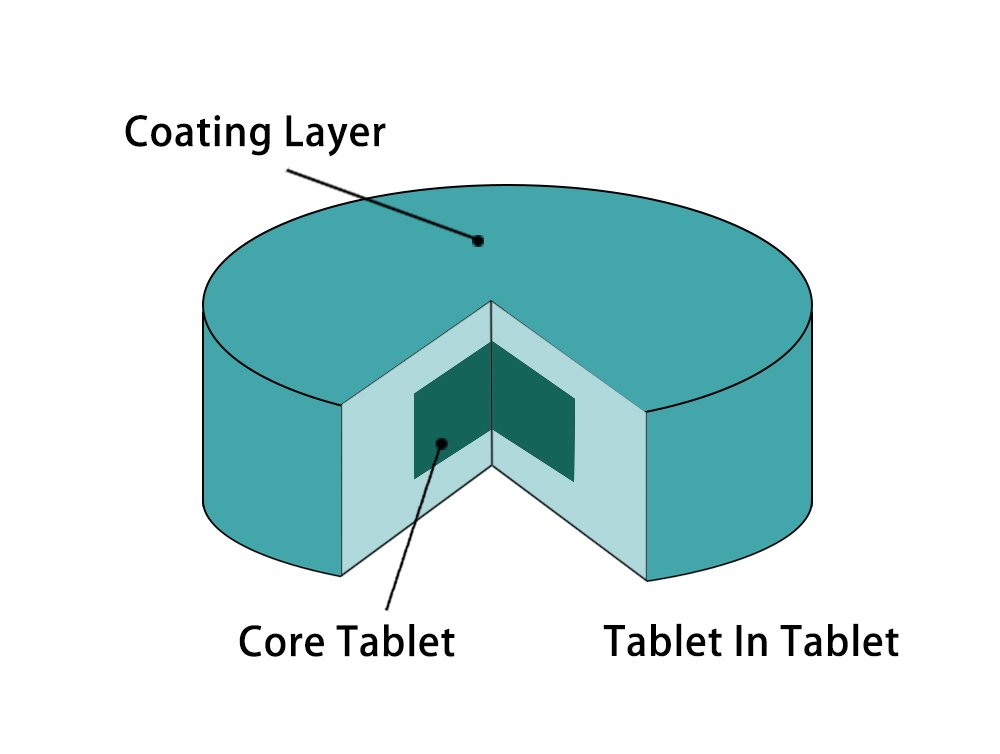
As the name suggests, a tablet-in-tablet is a double-layered structure where an internal core is encased within an outer shell. This arrangement achieves immediate release via the shell, followed by the delayed or sustained release of the core. TiT technology controls absorption rates, prevents premature metabolism, and reduces dosing frequency for drugs with limited half-lives.
a) Tablet in Tablet Manufacturing
There are numerous methods for tablet-in-tablet manufacturing; however, compression coating remains the industry standard. Here is the step-by-step process:
- Core Tablet Preparation:A high-density inner core is produced on a standard rotary press.
- Lower Layer Fill:It is done on a specialized machine equipped with a dual-feed system and a core-transfer module. The machine deposits the initial shell powder bed into the die cavity.
- Core Placement:A mechanical arm centers the pre-manufactured core onto the bed to prevent uneven shell walls or capping.
- Upper Layer Fill:A second hopper buries the core in the remaining shell powder.
- Final Compression:High pressure bonds the components into a smooth, single unit.
b) Release Mechanism
The tablet-in-tablet release mechanism operates in three distinct phases. Upon ingestion, the outer shell rapidly disintegrates via superdisintegrants and releases the first dose immediately.
The controlled-release core then becomes exposed to GI fluids. It causes internal polymers to hydrate and form a viscous gel layer. Finally, the active ingredient is released slowly from this gel via diffusion and matrix erosion over a period of up to 24 hours.
c) Benefits of Tablet-in-Tablet Technology
The tablet-in-tablet mechanism is highly valued for its structural versatility. This double-layer design provides a unique platform for complex therapeutic needs. Here are three key benefits:
- Modified Release: It enables biphasic delivery of an immediate-release shell, such as Aspirin, to enter the bloodstream quickly for a rapid effect. This is followed by a sustained-release core that maintains therapeutic levels for long-term heart health.
- Environmental Protection: The outer shell acts as a barrier that protects hygroscopic or thermo-labile drugs from moisture and heat.
- Incompatibility Separation:This arrangement physically isolates reactive ingredients to prevent chemical degradation during storage. For example, separating Amlodipine from Lisinopril in the shell preserves the stability of both APIs.
2. Tablet in Capsule (TIC Technology)
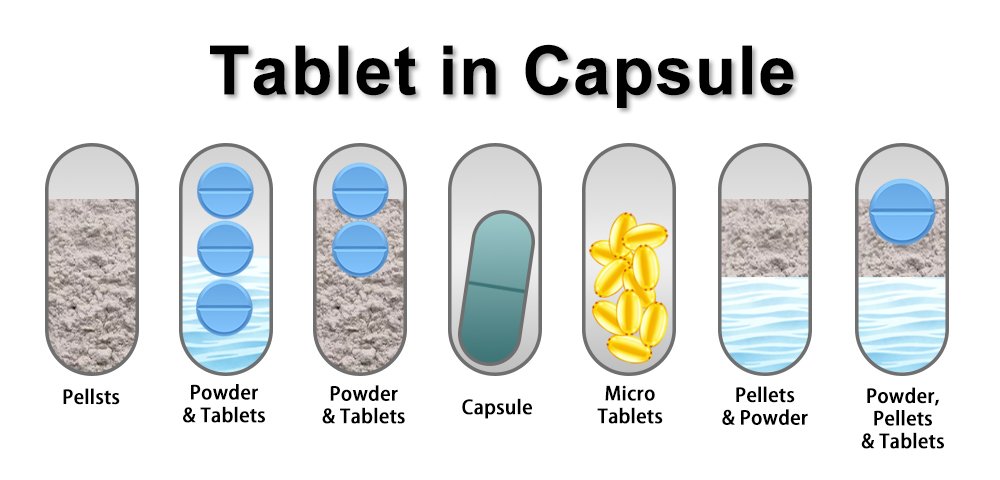
Tablet-in-Capsule (TiC) is a multiple-unit drug delivery system where small, pre-compressed mini-tablets are filled into a hard gelatin or HPMC capsule. These mini-tablets can feature distinct release profiles, such as immediate, delayed, or sustained release. This technique achieves controlled, sequential, or site-specific drug delivery within a single dose.
a) Tablet-in-Capsule Manufacturing
The production of tablet-in-capsules is a multistage process. It requires a capsule filler equipped with a specialized tablet-feeding attachment rather than a standard tamping pin. Below is the standard manufacturing process of tablet-in-capsule:
- Tablet Pre-Production: High-speed rotary presses manufacture film-coated mini-tablets. They typically range from 2mm to 4mm in diameter, to easily slide during the filling process.
- Capsule Rectification: Empty shells are fed into the machine and oriented so the cap remains on top.
- The Separation Stage: A vacuum system separates the cap from the body.
- Tablet Dosing: Mechanical feeder drops a calculated number of tablets into the capsule body using a counting plate.
- Closing and Sealing: The cap is rejoined, and liquid-filled versions go through banding to prevent leakage.
b) Release Mechanism
The tablet-in-capsule system is designed to release medication at predefined intervals or targeted locations within the gastrointestinal tract. Upon ingestion, the capsule shell dissolves first to discharge the mini-tablets.
These units either dissolve immediately for a rapid onset or provide a sustained therapeutic effect over time. Adjustment of the coating thickness and polymer type can fine-tune the release profile to meet specific therapeutic goals.
c) Benefits of Tablet-in-Capsule Technology
The tablet-in-capsule formulation has diverse applications in pharmaceutical development due to its ability to deliver drugs with accuracy and flexibility.
- Fixed-Dose Combination Therapy: It allows for the simultaneous delivery of multiple active ingredients. Keeping these substances separate within the capsule prevents reactions that might occur if they were mixed in a single granulated mass.
- Multi-Phase Release:This technology provides both controlled and multi-phase release for single- or combination-prescription and over-the-counter medicines. For instance, a single capsule can contain an immediate-release tablet for pain and a sustained-release tablet for long-term inflammation.
- Site-Specific Targeting: Drug delivery can be targeted to two different regions of the GI tract, such as the stomach and the colon. The use of specific pH-dependent coatings on individual mini-tablets ensures each component remains intact until it reaches the intended environment.
3. Capsule-in Capsule ( Nested Capsules)
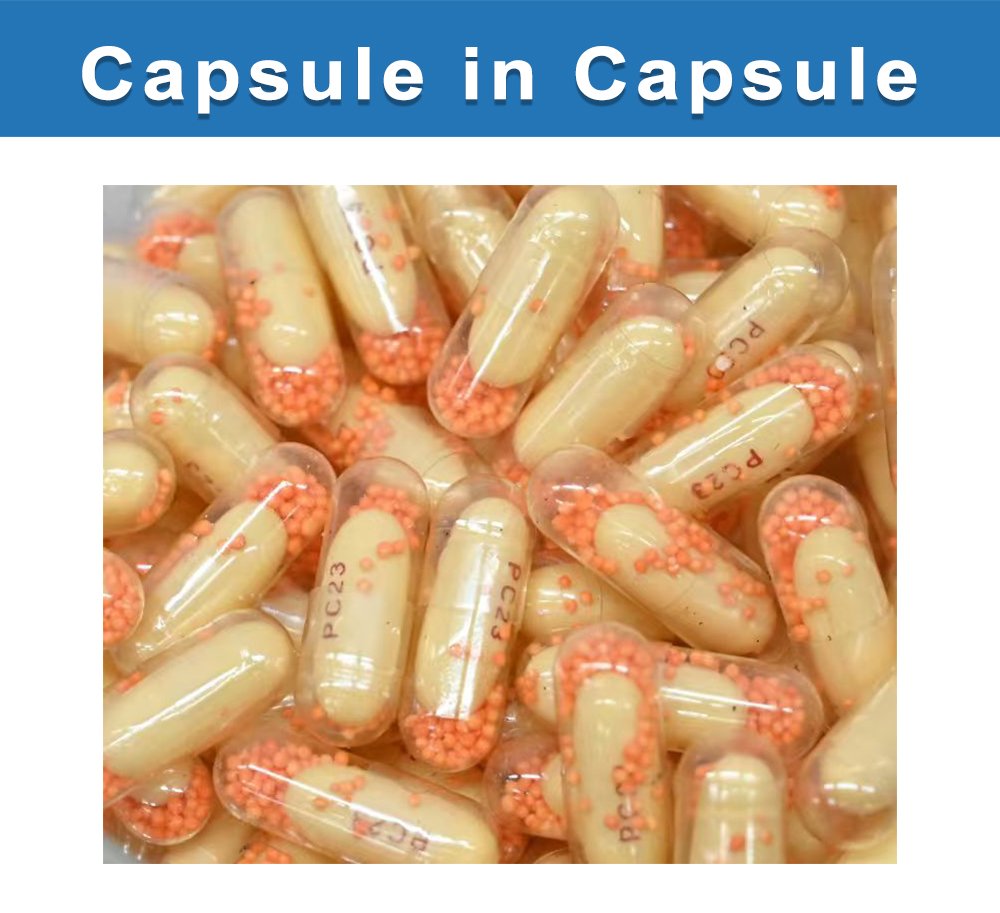
Capsule-in-capsule, also known as DuoCap technology, is a formulation method where one liquid capsule contains another liquid or solid capsule. This is not just a packaging innovation but a complex solution that combines incompatible liquids and solids or creates sophisticated dual-release profiles.
The biggest advantage of this nested design is its ability to synchronize the delivery of two distinct phases within a single, high-stability dose.
a) Capsule-in-Capsule Manufacturing
The production of a capsule-in-capsule dosage follows a strictly synchronized mechanical flow:
- Inner Capsule Preparation: The “inner” capsule, typically size 3 to 5, is filled with its specific payload and sealed. If the inner payload is liquid, the unit must be banded to prevent leakage during the next stage.
- Outer Capsule Rectification:The larger outer shell, usually size 00 to 1, is fed into the main encapsulation machine for orientation and separation.
- Primary Filling: The machine deposits the initial portion of the outer formulation, such as a liquid or powder bed, into the larger body.
- Insertion of the Inner Capsule: A specialized vacuum-pick-and-place station precisely inserts the smaller, pre-filled capsule into the center of the outer body.
- Secondary Filling: Additional liquid or powder is added to fill the remaining headspace if the formulation requires it.
- Closing and Final Sealing: The outer cap is rejoined and passed through a final banding station to create a tamper-evident, leak-proof seal.
b) Release Mechanism
The capsule-in-capsule release mechanism is designed for a multi-stage delivery through three distinct pathways. The outer shell dissolves quickly in the stomach, releasing the first dose. Meanwhile, the inner capsule resists gastric acid to dissolve later in the alkaline environment of the small intestine.
This nested design also acts as a physical barrier that delays the inner payload until the outer shell has completely vanished. Furthermore, specialized polymers on the inner capsule allow the active ingredient to diffuse out slowly and provide a sustained release profile over several hours.
c) Benefits of the Capsule-in-Capsule Technology
Much like other nested delivery systems, the capsule-in-capsule mechanism offers a structural advantage in therapeutic delivery. However, its ability to hold liquid and solid phases simultaneously gives it a competitive edge in pharmaceutical design.
- Liquid + Solid Combo: This is the most effective way to combine a liquid, such as Omega-3 or fish oil, with solid multivitamins or minerals. It is ideal for supplements that require both lipid-soluble and water-soluble ingredients in a single, stable dose.
- Biphasic Drug Delivery: The system is ideal for medicines such as Glimepiride, where an immediate-release outer liquid provides a rapid glucose-lowering effect. This is followed by a sustained-release inner capsule that maintains blood sugar levels throughout the day.
- Versatility in Formulation: CiC technology can combine diverse ingredient forms, including liquids, powders, pellets, and mini-tablets. Such flexibility allows manufacturers to address multiple symptoms or diseases within a single unit without risking cross-contamination between ingredients.
Core Technologies & Machinery Used in Combined Drug Delivery
Combined drug delivery integrates automated processes and specialized pharmaceutical machinery. From the compression of micro-tablets to the encapsulation of nested systems, three primary technologies enable this sophisticated production.
1. Rotary Tablet Presses
Rotary tablet presses are the backbone of solid dosage production. For combined delivery, manufacturers utilize multi-layer or core-coating presses equipped with vacuum-assisted centering. These specific models help with the compression of separate powder beds or the insertion of a pre-formed core into a secondary shell.
2. Capsule Filling Machines
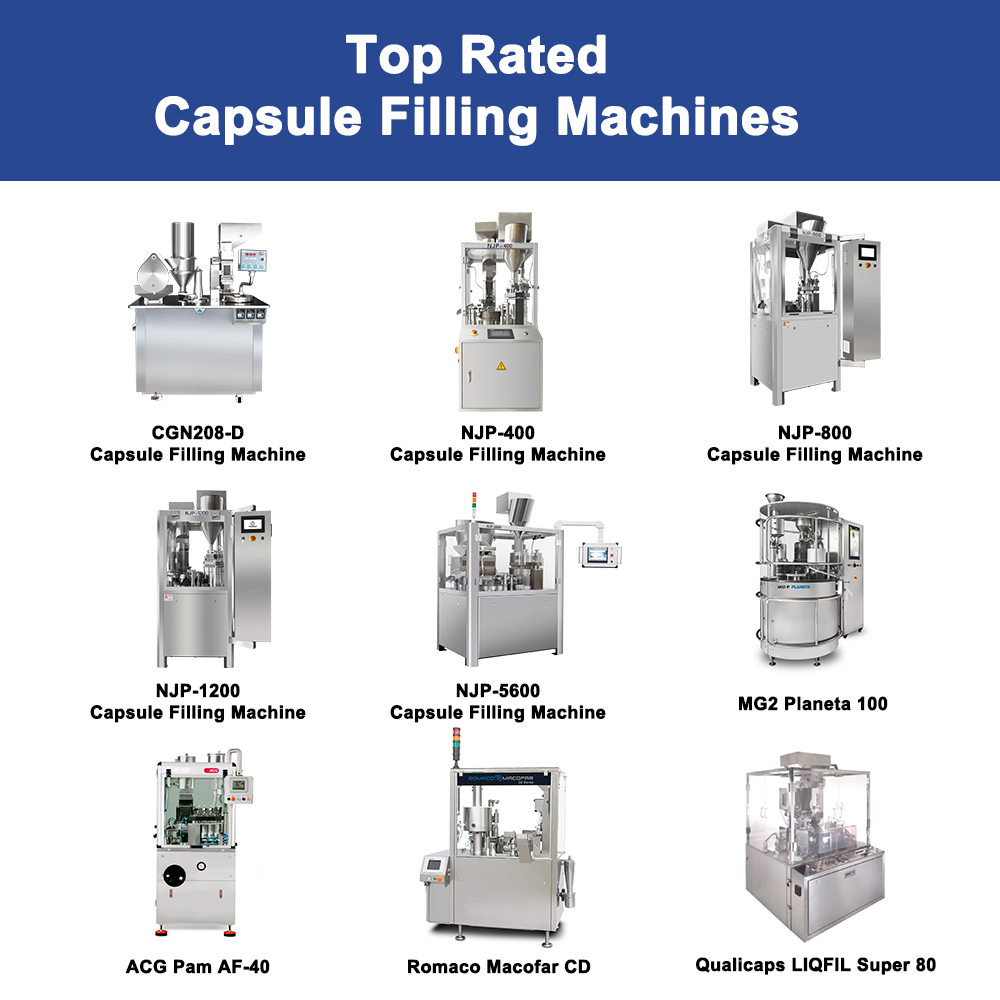
Advanced capsule filling machines are required to manage multiple payloads. Modern machines use modular dosing stations such as tablet feeders or liquid pumps instead of standard tamping pins. This flexibility allows for the high-speed filling of mini-tablets, pellets, or smaller capsules into a single outer shell.
3. Tablet Coating Machines
The role of the tablet coating machine is critical for defining release profiles. Perforated pan coaters apply functional polymers to mini-tablets or inner cores to ensure they resist gastric acid. These specialized layers also provide a controlled-release matrix for the active ingredients before final assembly.
FAQs
1. How does tablet-in-capsule technology dramatically improve fixed-dose combinations?
By placing multiple distinct mini-tablets into a single capsule shell, the system completely segregates the active ingredients. This eliminates the risks of interfacial moisture migration and chemical degradation inherent in traditional blended or bilayer tablets.
2. What is the fundamental internal architecture of a capsule-in-capsule system?
This sophisticated system features a smaller, pre-filled inner capsule suspended completely within a larger outer capsule containing a distinct carrier fluid. This structural design permits the simultaneous oral delivery of highly incompatible liquid, semi-solid, and powder formulations.
3. Why is optical vision technology critical during tablet-in-tablet production runs?
High-speed cameras track the exact physical position of the inner core as it transfers into the die cavity. Perfect centration prevents uneven erosion of the outer layer, which would otherwise trigger erratic drug release and premature active ingredient exposure.
4. What are the primary manufacturing advantages of a tablet-in-capsule system?
It leverages standard tableting and encapsulation infrastructure while completely decoupling the formulation process. Each mini-tablet can be optimized and compressed independently, significantly streamlining stability testing and minimizing cross-contamination risks during scale-up.
Integrating Complex Delivery Systems into Modern Manufacturing
Combined drug delivery is a transformative approach to pharmaceutical manufacturing that maximizes therapeutic efficacy through structural innovation. Having said that, it remains a relatively new concept and deals with significant technical challenges. Tablet-in-tablet production often faces weight variation and core centering issues, while tablet-in-capsule systems involve high manufacturing costs and complex feeding logistics.
Overcoming these obstacles requires a reliable pharmaceutical equipment manufacturer that understands the nuances of multi-component dosing. Finetech is your reliable partner for advanced pharmaceutical manufacturing.
Designed with modularity in mind, our production line is highly customizable and allows you to scale complex formulations with absolute dosing accuracy. Visit our website today and take a look at our latest pharmaceutical solutions.
References:
Capsugel® Tablet-in-Cap Tablet Capsules.
The concept of the Capsule-in-Capsule technology is applied to pharmaceutical compounding.
Copyright Notice:
You may not reproduce, modify, publish, display, transmit, or in any way exploit any content on this website, or use such content to construct any kind of database without prior express written approval by Finetech Group. For permission to use the content, please contact: info@pharmamachinecn.com
Disclaimer:
The information contained in this article is for general information purposes only. The Company does not guarantee the accuracy, relevance timeliness or completeness of any information, and the Company assumes no responsibility for errors or omission in the content of this article.