English
  Russian
  Turkish
  Spanish
  French
  German
  Japanese
Almost every person has taken a tablet or capsule at some point, whether as a daily multivitamin or a life-saving antibiotic. Yet, few consider the technical journey required to produce the trillions of medications consumed every year.
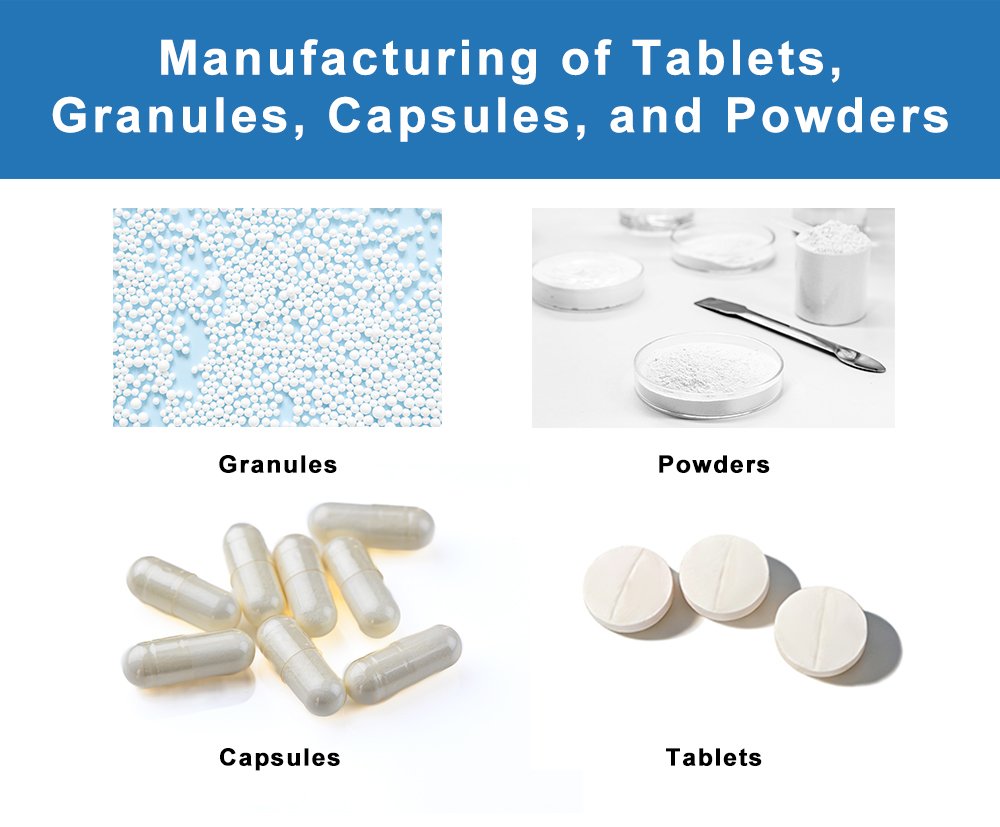
The production sequence spans from the initial milling of raw materials to the high-speed mechanics of industrial presses and filling machines. This workflow is critical for transforming loose ingredients into durable and life-enhancing products.
To understand the manufacturing of tablets, granules, capsules, and powders, let’s take a closer look at different phases of the process.
Manufacturing of Tablets, Granules, Capsules, and Powders
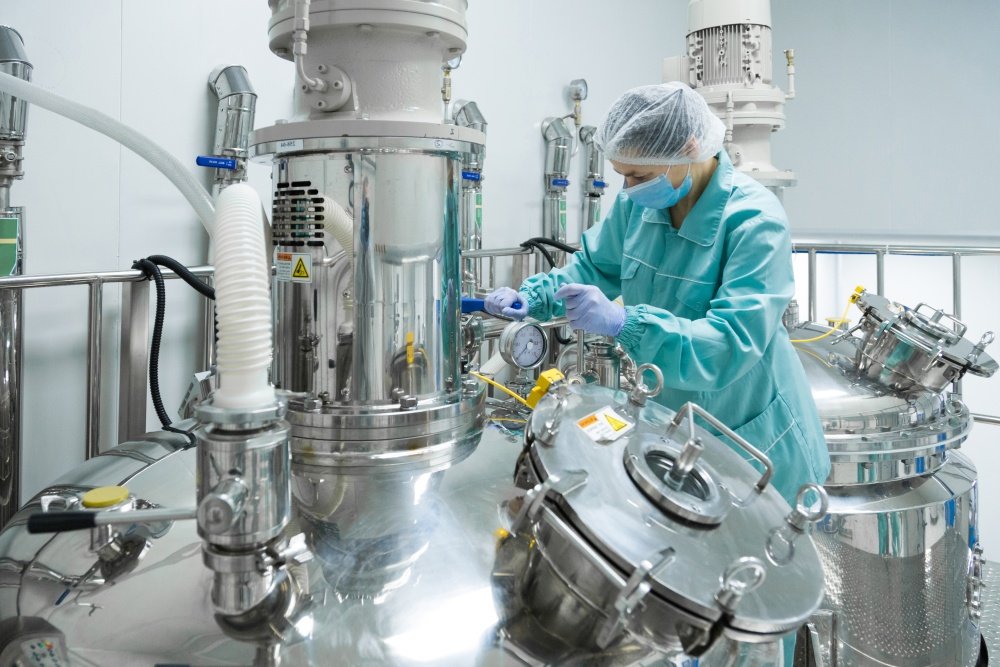
Manufacturing of tablets, capsules, granules, and powders is a multi-stage pharmaceutical process. It starts with the crushing and grinding of active ingredients and additives to assure uniform, stable, and ready-to-use medications. This sequence focuses on controlling particle size and flow for consistent filling.
To understand the complexities of pharmaceutical production, we need to look into every phase in detail. Here are the core components that define the manufacturing cycle for solid dosage forms.
Manufacturing of Pharmaceutical Powders in Pharma
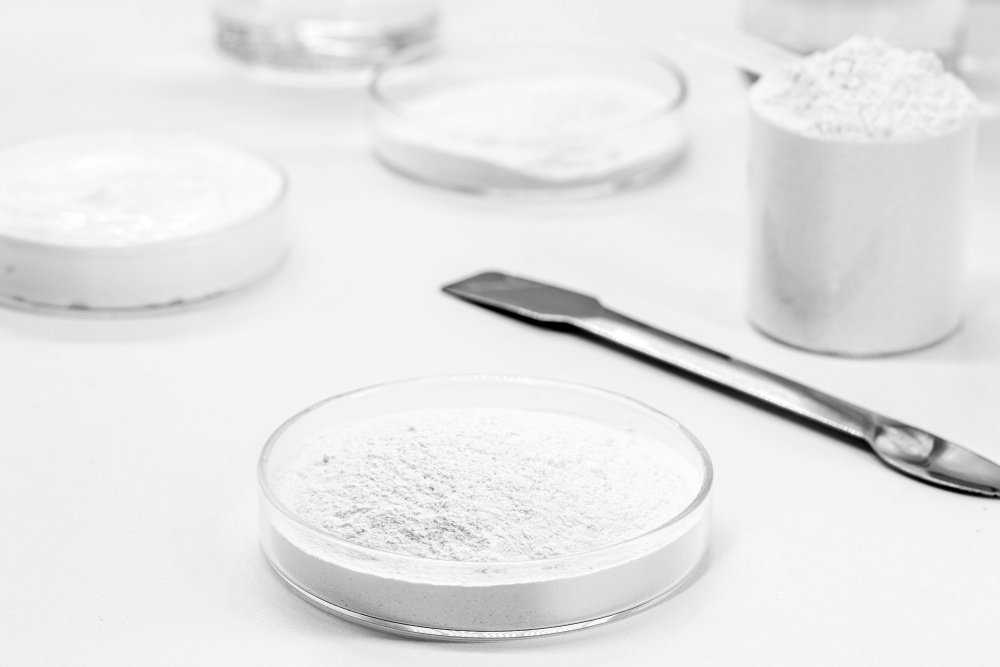
Pharmaceutical powder refers to finely divided solid particles typically ranging from 0.1 to 10 microns in size. It is usually a dry mixture of the active pharmaceutical ingredient (API) and various excipients like diluents or colors.
This manufacturing is the first step toward solid dosage forms and consists of different steps. Let’s take a look at them:
1. Particle Size Reduction
Also known as milling, this process grinds raw ingredients to a uniform size to ensure even distribution. Manufacturers utilize specialized equipment like jet milling machines, ball mills, and hammer mills to break down coarse materials.
High-energy milling systems achieve consistent results through accurate mechanical force. These machines often reduce particles to a range of 1–5 microns, specifically for inhaled drugs for deep lung penetration. For standard oral tablets, manufacturers typically target a range of 10–50 microns.
2. Blending
The blending stage involves mixing APIs with excipients such as fillers, binders, and lubricants. It is done using equipment like V-blenders or ribbon mixers to transform raw materials into a homogeneous mass.
The primary purpose of blending is to prevent segregation within the powder mixture. Blending helps achieve the final product with the exact ratio of medication required for a safe and effective dose.
3. Sieving
Sieving is a mechanical separation method that divides materials into different size fractions. By passing powders through calibrated mesh screens, manufacturers achieve a specific particle size distribution.
This step is crucial for removing impurities and optimizing powder flow. Sifting assures uniform drug dissolution and prevents blockages during the production of tablets and capsules.
Manufacturing of Granules in Pharma
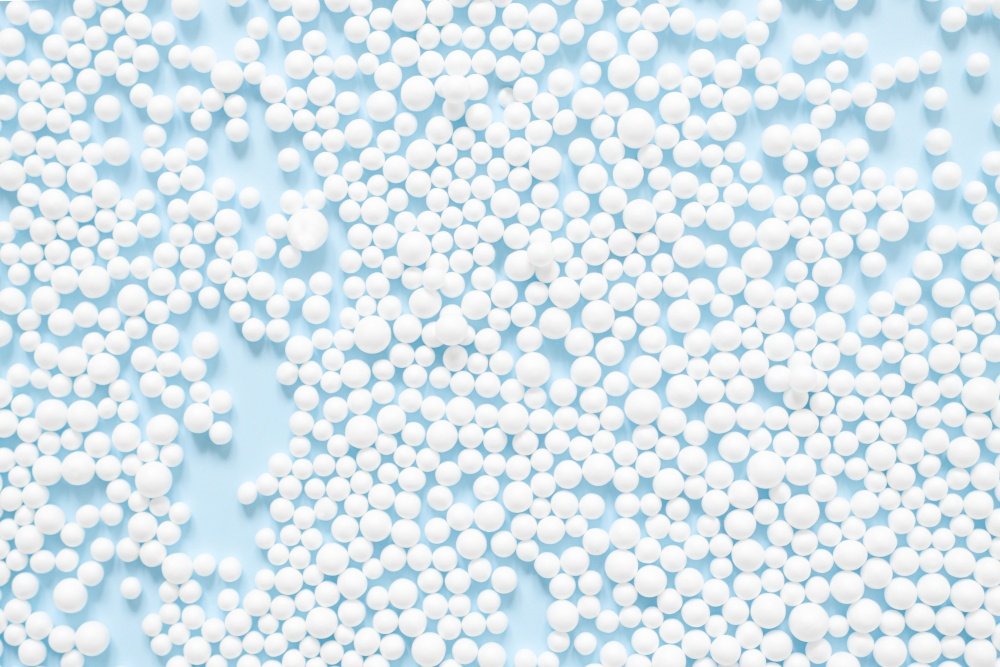
Pharmaceutical granules are solid, dry, aggregated particles ranging from 0.2 mm to 4.0 mm in diameter. Granulation is the manufacturing process that clusters fine powder particles into larger, stronger, and more flowable units.
This transformation improves the flowability, compressibility, and uniformity needed for high-quality tablets or capsules. There are two main methods of granulation, known as wet granulation and dry granulation.
1. Wet Granulation
Wet granulation transforms powder particles into durable granules by adding a liquid binder. Initially, the API and excipients are thoroughly mixed in a high-shear granulator. Then, a binding liquid (aqueous or solvent-based) is added to the mixture to form a damp mass.
The mixture is sheared into granules, and the moisture is subsequently evaporated through drying. Finally, these dried granules are screened thoroughly to confirm a uniform size. This method is typically used for potent drugs that require excellent content uniformity, such as metformin or paracetamol.
2. Dry Granulation
The dry granulation process compacts powder particles into larger, denser granules without any heat or liquid binders. The powder is blended and then compacted into ribbons or slugs using intense mechanical pressure. These slugs are subsequently milled into granules to improve flow and compression.
Dry granulation is ideal for moisture- or heat-sensitive materials that would degrade in wet conditions. Common examples include Aspirin and Vitamin C (Ascorbic Acid), which require stable, dry environments during production.
Tablet Manufacturing Process in Pharma
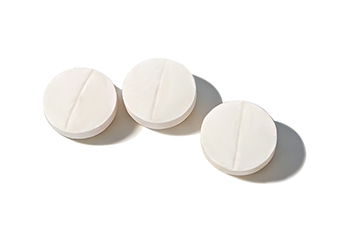
Once the granulation phase is complete, the manufacturing of tablets begins. This pharmaceutical process guarantees that every dose meets strict industry standards for shelf life and therapeutic efficacy.
1. Lubrication
Before compression, lubricants are integrated into the granules to prevent the material from sticking to the machinery. These agents, such as magnesium stearate or stearic acid, reduce friction between the powder and the metal surfaces of the press. Proper lubrication facilitates the smooth ejection of the finished tablet and prevents picking or sticking defects.
2. Compression
During this stage, granules feed into a rotary tablet press. This machine utilizes steel punches and a die cavity to define the tablet’s shape. As the turret rotates, the upper and lower punches apply immense hydraulic pressure to the granules within the die. This force bonds the particles into a solid, durable unit with accurate weight and thickness.
3. Coating
Manufacturers apply various coatings to the core tablet for functional or aesthetic reasons. Sugar coatings mask bitter tastes, while film coatings provide a protective barrier against moisture. Specialized enteric coatings are used for drugs like Aspirin to protect them from stomach acid and allow the tablet to dissolve only after reaching the intestines.
4. Quality Control
Every batch undergoes extensive friability testing to measure its durability during transport. It is a standardized procedure that uses a rotating drum to subject tablets to repeated mechanical shocks and drops. This test determines if the solid dosage can withstand shipping stresses without chipping or crumbling into dust.
Additionally, dissolution testing is performed in lab settings to confirm the drug releases at the correct rate into the body. These checks guarantee that the final product is both physically stable and medically effective.
Manufacturing of Capsules in Pharma
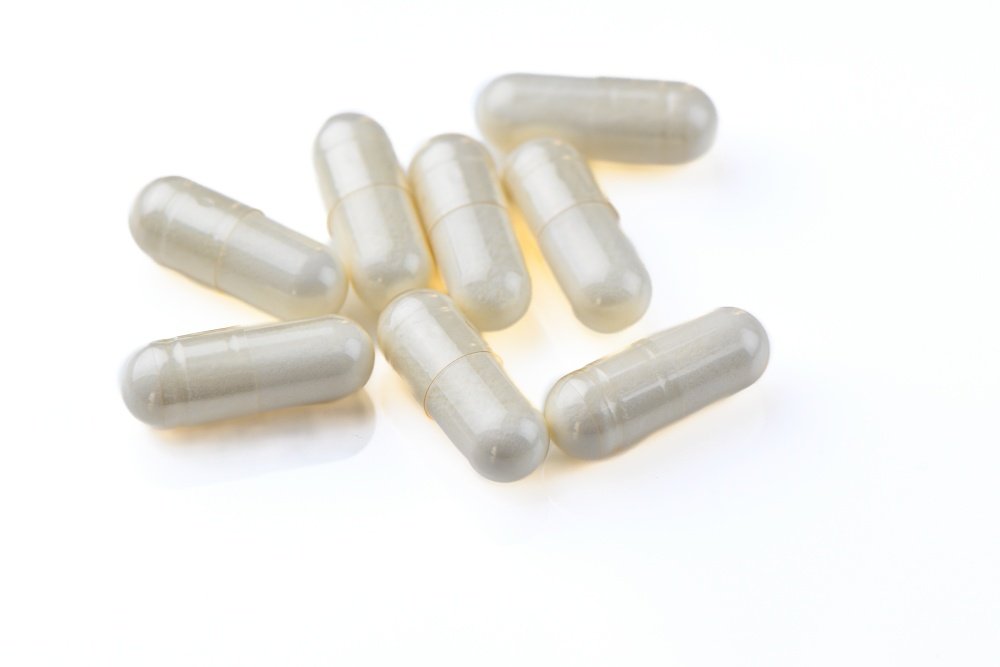
Capsule manufacturing is significantly different from tablet manufacturing. The medication is enveloped within a protective shell rather than being fused into a solid mass. This structural distinction is necessary for the delivery of liquid or sensitive powder formulations.
1. Raw Material Preparation
Production begins by selecting high-grade gelatin, typically derived from bone and pork skin. Raw materials are melted in purified water and blended with colorants, opacifiers, and plasticizers like glycerin. This process creates a uniform gel mass ready for molding, which is necessary to maintain their signature flexibility and prevent the shell from cracking.
2. Molding and Dipping
For hard capsules, stainless steel pins are dipped into a temperature-controlled gel mass to form the cap and body as separate units. These components then travel through specialized air tunnels to remove excess moisture before being stripped from the molds. Softgel capsules bypass this dipping stage entirely. Instead, two continuous gelatin ribbons are cast and fed directly into rotating dies for immediate shaping.
3. Filling and Sealing
Hard capsules are filled by machines that separate the pre-made halves, inject dry powders or granules, and snap the cap back into place. Softgels use a simultaneous form-fill-seal method. As the gelatin ribbons pass through rotary dies, the liquid medication is injected into the center. The machinery then heat-seals the edges in one continuous motion to create a seamless, airtight unit.
4. Quality Control Inspection
Just like tablets, capsules also go through quality control inspections. Technicians verify that the capsules are free of bubbles, leaks, or structural flaws. These inspections verify that the internal medication remains stable and potent until consumption.
Lastly, automated sorting systems further eliminate any units that fail to meet strict weight and dimensional specifications for pharmaceutical distribution.
FAQs
1. How does wet granulation improve tablet content uniformity?
Wet granulation involves spraying a liquid binder onto a moving powder bed to create permanent bonds between particles. This process locks the active ingredient into a larger granule structure, effectively preventing the separation of light and heavy particles during high-speed compression.
2. Why is moisture content critical during the manufacturing of granules?
Residual moisture acts as a lubricant and helps in forming “liquid bridges” during compression, but excessive levels can lead to sticking and mold growth. Conversely, overly dry granules often cause “capping,” where the top of the tablet separates due to insufficient bonding and trapped air.
3. What are the critical quality attributes (CQAs) for pharmaceutical powders?
The primary CQAs include particle size distribution, morphology, and surface area, as these directly influence dissolution rates and bioavailability. Maintaining consistency in these attributes guarantees that every batch performs identically in the patient’s digestive system.
4. What is the impact of particle size on drug dissolution?
Decreasing the particle size increases the total surface area available for solvent interaction, which accelerates the dissolution rate according to the Noyes-Whitney equation. This is a critical strategy for improving the bioavailability of poorly water-soluble drugs.
Achieve Excellence in Solid Dosage Delivery
The success of a pharmaceutical product depends entirely on the seamless integration of each manufacturing phase. Whether through the controlled pressure of a rotary press or the casting of a gelatin ribbon, every movement is designed to protect the medication’s potency.
Adhering to these rigorous protocols ensures that the final dosage form performs exactly as intended within the human body.
At Finetech, we understand the complexities of pharmaceutical production like no one else. Our state-of-the-art equipment is designed to optimize every stage of your workflow and help you maintain strict compliance while maximizing output.
Whether you need expert installation, comprehensive staff training, or customized engineering solutions, Finetech is your trusted partner in achieving manufacturing excellence.
References:
Types of Tablet Manufacturing Process Techniques.
Granulation techniques and technologies: recent progresses.
Copyright Notice:
You may not reproduce, modify, publish, display, transmit, or in any way exploit any content on this website, or use such content to construct any kind of database without prior express written approval by Finetech Group. For permission to use the content, please contact: info@pharmamachinecn.com
Disclaimer:
The information contained in this article is for general information purposes only. The Company does not guarantee the accuracy, relevance timeliness or completeness of any information, and the Company assumes no responsibility for errors or omission in the content of this article.