English
  Russian
  Turkish
  Spanish
  French
  German
  Japanese
Every production line has a beginning and an end. The end is where products are prepared for the real world, boxed, sealed, and labelled by end of line packaging machines.
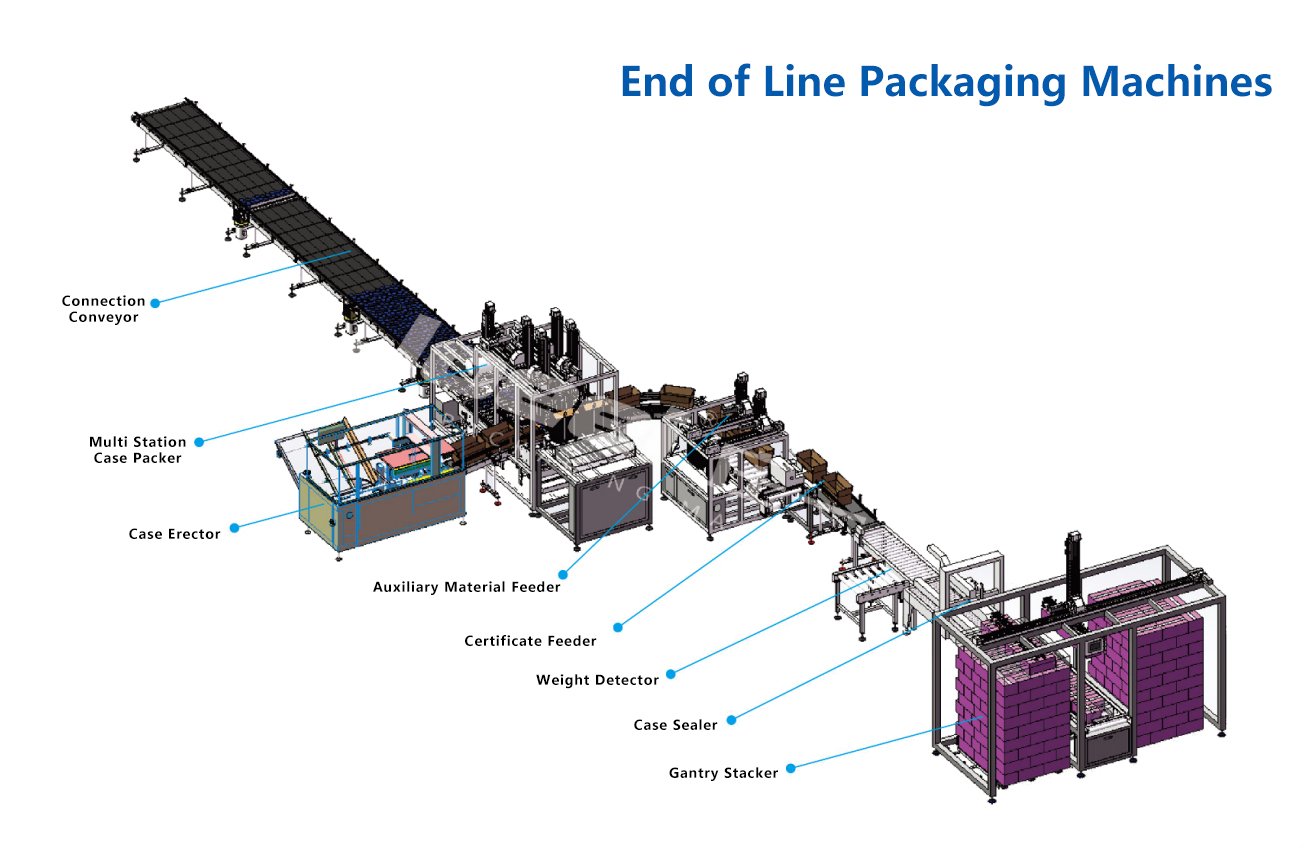
These machines automate the final steps of your packaging line. They handle tasks such as case sealing, labeling, and palletizing that need to be done consistently and at speed without relying on manual labor.
This guide covers what end of line packaging machines are, the main types, and what to consider before choosing a setup for your facility.
Types of End-of-Line Packaging Machines
End of line packaging machines cover everything that happens after a product is packaged at the primary stage. The machines below handle the final preparation stage for storage, shipment, and retail distribution.
1. Case Erectors
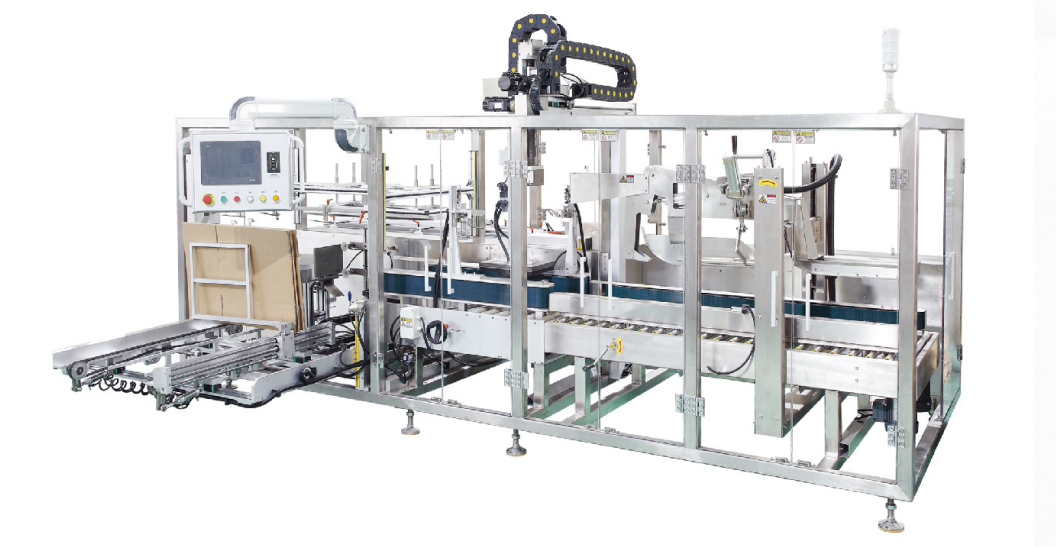
A case erector automatically forms flat corrugated cardboard blanks into open shipping cases, folds and seals the bottom flaps, and feeds them into the packing station. They eliminate one of the most labor-intensive manual tasks on the packaging floor.
Workers also make sure every case is formed consistently and at the speed the line demands. Case erectors are typically the first machine in the end-of-line sequence.
2. Case Packers

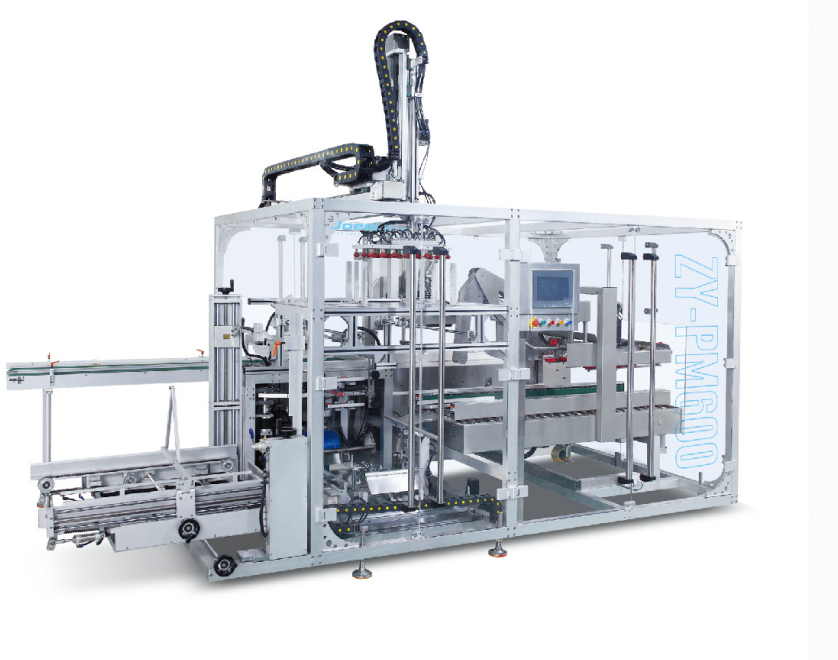
Case packers receive finished products from upstream equipment and place them into the erected shipping case in a defined arrangement. In these machines, loading patterns vary by product type.
Bottles typically stand upright, pouches and cartons stack in layers, and blister packs are usually inserted flat.
3. Case Sealers
Once a case is filled, a case sealer closes the top flaps and applies tape or hot melt adhesive along the seam to secure the carton for transport. A consistent, properly sealed case prevents product from shifting or becoming exposed during storage and shipping.
Case sealers sit between case packing and palletizing in the line sequence and are available in semi-automatic and fully automatic configurations.
4. Labeling and Coding Machines
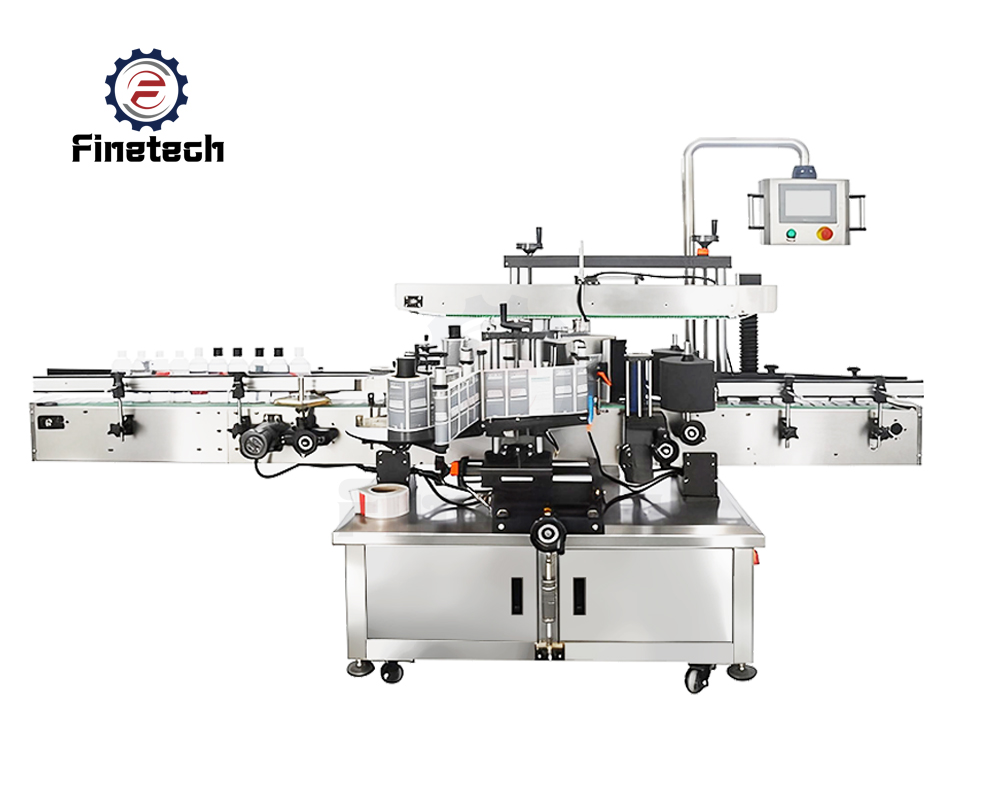
Labeling machines apply pre-printed pressure-sensitive labels to cases, cartons, or individual units with precise placement at high speed. Coding machines print variable information directly onto the outer packaging, including batch numbers, expiry dates, barcodes, and shipping data.
In regulated industries such as pharmaceuticals and food, accurate outer case labeling and coding are compliance requirements.
5. Palletizers and Robotic Palletizing Systems
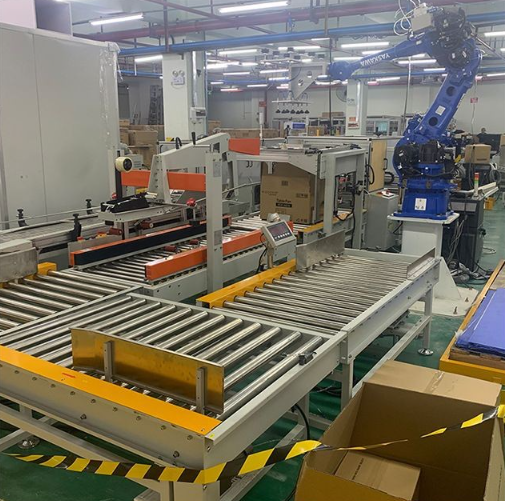
Palletizers stack filled and sealed cases onto pallets in a defined pattern to maximize load stability and storage density. Conventional palletizers use fixed mechanical arms and are well suited to high-volume, single-product lines.
Robotic palletizing systems, on the other hand, use articulated robot arms with programmable logic to run multiple product sizes and case formats. Robotic systems are increasingly the preferred choice for operations that need to switch between SKUs frequently.
6. Strapping Machines
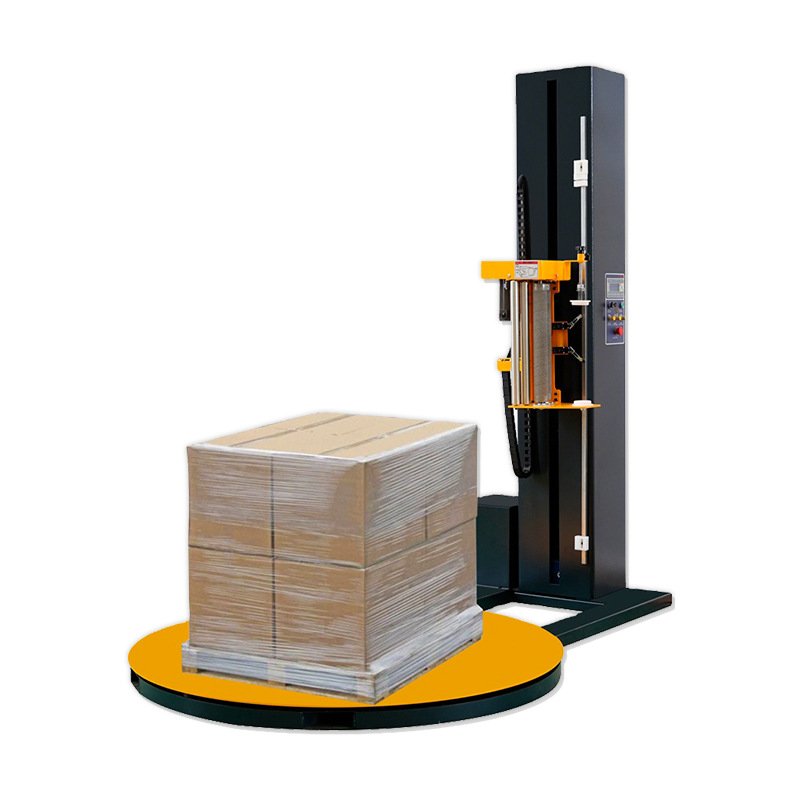
Once a pallet is built, stretch wrappers apply plastic film around the entire load to secure it for transport and protect it from dust, moisture, and movement during shipping.
Strapping machines apply plastic or steel straps around cases or pallets to add further load stability. Both are standard at the final stage of most end-of-line setups and directly affect how well your product arrives at its destination.
7. Conveyors and Sortation Systems
Source: SphereWMS
Alt Text: Conveyors.
Conveyors are the connective tissue that links every machine in the end-of-line sequence. They move cases and products from one station to the next at a controlled speed and spacing to keep the entire line balanced.
Secondly, the sortation systems add the ability to divert products to different lanes or destinations based on size, weight, label data, or destination.
How End of Line Packaging Machines Work Together
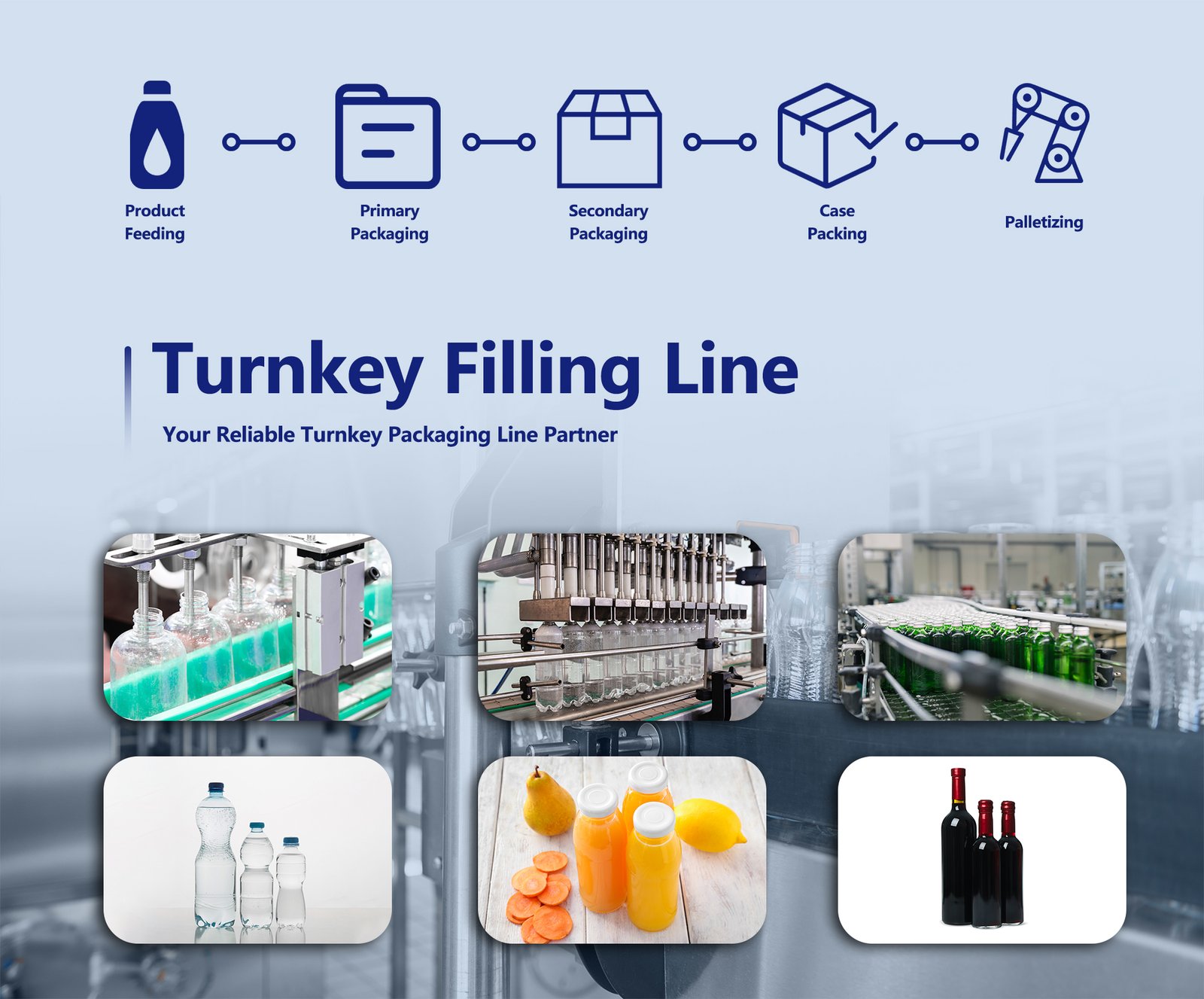
End of line packaging machines are designed to work as a connected sequence. First, a case erector forms the shipping case and passes it to the case packer, which loads the finished product.
The sealed case then moves through labeling and coding before reaching the palletizer, which stacks cases onto pallets. After that, the completed pallet is wrapped and ready for storage or dispatch using a palletizing machine.
Conveyors are what hold the entire sequence together. They control the speed and spacing of products between every station and carry sensors that automatically divert cases failing a weight or label scan without stopping the line.
When end-of-line equipment is properly integrated with the upstream cartoning or filling line, the result is continuous production flow.
Key Benefits of End of Line Packaging Machines
The key benefits of end-of-line packaging machines include:
1. Output Speed and Consistency
Manual end-of-line operations are inherently inconsistent. Speed varies by operator, fatigue sets in over long shifts, and error rates climb as the day progresses. Automated end-of-line machines eliminate that variability.
In fact, automation in packaging boosts production throughput by 50 to 75% and reduces defect rates to under 0.5%.
For manufacturers running high-volume lines, that level of consistency is impossible to achieve manually regardless of how many operators are on the floor.
2. Reduced Product Damage
Manual handling at the end of line is one of the leading causes of product damage before goods reach the customer. Cases dropped, overfilled, or improperly sealed during manual palletizing or wrapping create losses that are difficult to track or quantify.
Automated case packers, palletizers, and stretch wrappers significantly reduce damage rates during the final stages of production.
3. Labor Cost Reduction
End-of-line tasks such as case erecting, sealing, labeling, and palletizing are among the most repetitive and labor-intensive jobs on a production floor. They also carry ongoing costs that compound over time.
Labor accounts for 40% of total packaging costs, and organizations incorporating automation can reduce labor costs by up to 30%.
4. Improved Traceability and Compliance
Automated labeling, coding, and vision inspection systems at the end of line create a complete, auditable trail for every case and pallet. Serialization such as batch numbers, expiry dates, and barcodes are applied and verified automatically before a case reaches the palletizer.
In regulated industries, it is a compliance requirement, and end-of-line systems are the most reliable way to meet it consistently.
5. Decreased Operational Risk
A manual end of line is vulnerable to disruption every time an operator calls in sick or a shift runs long. Automated systems remove that dependency.
Once commissioned and running, end of line packaging machines perform the same tasks at the same speed regardless of staffing levels. This operational reliability has direct commercial value for manufacturers with high order volumes.
Manual vs Semi-Automatic vs Fully Automatic End of Line
Choosing the right level of automation for your end-of-line setup depends on where your production currently is, not where you hope it will be. Here is a clear comparison across the key factors:
| Factor | Manual | Semi-Automatic | Fully Automatic |
| Output Speed | Low | Moderate | High to Ultra-High |
| Labor Required | High | Moderate | Minimal |
| Upfront Cost | Low | Moderate | High |
| Operating Cost | High Long-term | Moderate | Low Long-term |
| Consistency | Variable | Good | Excellent |
| Changeover Time | Fast | Moderate | Longer |
| GMP/Compliance Suitability | Limited | Moderate | Full |
| Best For | Startups, low volume. | Growing operations | High volume, continuous production |
| Footprint | Minimal | Moderate | Large |
How to Choose the Right End of Line Packaging Setup
Remember, the end of line setup comes down to four things. Get these right, and the rest of the decision follows naturally.
1. Production Volume
Start with your actual numbers. How many cases per hour does your line need to produce at peak demand?
Then, match your end of line equipment to that figure with room to grow, not to your ideal future capacity. A fully automatic palletizer running at 60 cycles per minute is wasted investment for a facility producing 10 cases per hour.
Equally, a semi-automatic case sealer becomes a bottleneck the moment your upstream line doubles its output.
2. Product Type and Packaging Format
Different products demand different end of line configurations. Fragile products require gentle handling systems and specific case packing patterns. Similarly, irregular shapes may require robotic pick and place rather than conventional case packing.
Before specifying any machine, define your product dimensions, weight, fragility, and primary packaging format. These parameters determine which machines are physically compatible with your product.
3. Facility Layout
A fully automatic end of line sequence requires significant floor length and clearance for conveyors, buffers, and palletizing systems. In contrast, semi-automatic setups are considerably more compact.
To get the right machine, map your available floor space against the footprint of the proposed line layout, including maintenance access clearance. A well-specified machine that does not physically fit your facility is no use at all.
4. Budget and ROI Expectations
Higher automation levels carry higher upfront costs but lower long-term operating costs. The key question here is how quickly the investment pays back through labor savings, reduced damage rates, and improved throughput.
Calculate your current annual labor cost for end of line tasks, factor in error and damage costs, and compare that against the total cost of ownership over three to five years. For most manufacturers, the payback period is one to three years.
Build Your End-of-Line Packaging Line with Finetech
If your current operation is slowing production down, driving up labor costs, or simply not keeping pace with order volumes, investing in the right end of line packaging machines changes that picture.
For that, you can check out Finetech’s end of line packaging solutions.
We supply complete solutions for manufacturers across pharmaceuticals, food, cosmetics, and household chemicals. Every setup is GMP-compliant, fully customizable, and built around your specific production requirements.
Talk to our specialists today to build an end of line setup that works from day one!