English
  Russian
  Turkish
  Spanish
  French
  German
  Japanese
In the pharmaceutical industry, capsule filling machines are a must-have. They add a precise amount of powder and granules in each capsule, maintaining hygiene. However, like any equipment, these also develop issues during operation that require immediate action. Need guidance? Here’s an overview of the common faults of capsule filling machines and their solutions.
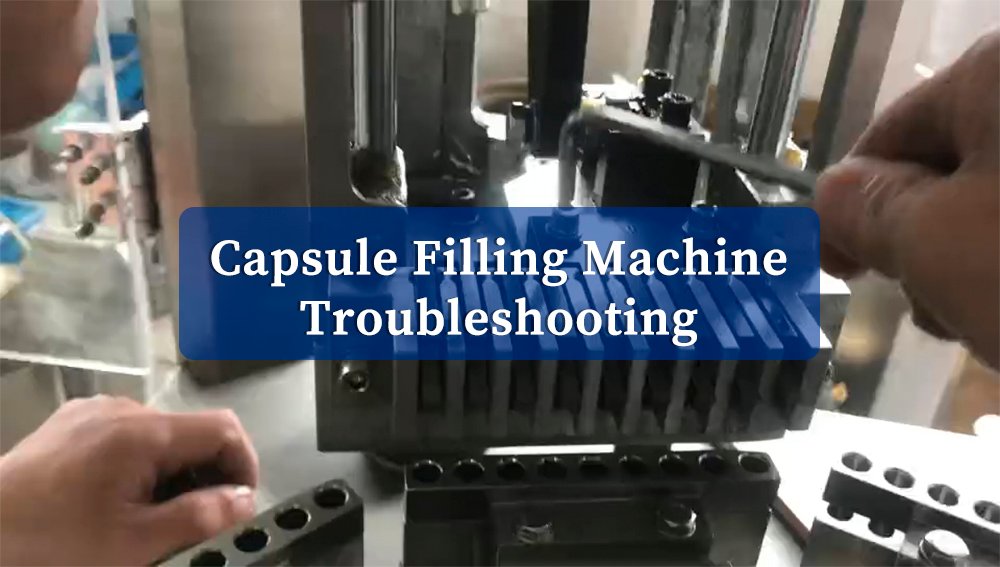
4 Common Faults of Capsule Filling Machines with Their Fixes
Do you know the global capsule filling machines market size is estimated to be valued at US$ 2.92 Bn in 2026 and is expected to reach US$ 4.17 Bn by 2033? If you have recently invested in one, here are some issues that you may come across and their fixes:
Capsule Shells Not Separated
One of the common faults of a capsule filling machine is that the capsule shells do not separate. It can happen when the vacuum pressure is too low or when filters are clogged, preventing the body from being sucked away. Perhaps the capsule material or size isn’t compatible with the machine, resulting in deformation.
How to Fix It?
To fix the problem of capsule shells not separating, you need to check the vacuum system or make a prompt tooling adjustment. Here’s an overview of these:
- Vacuum System Check: Inspect the vacuum systems and ensure the vacuum is at an appropriate level between -0.04 and -0.06 MPa. Also, clean the vacuum filter if it’s clogged to maintain proper suction.
- Check Capsule Quality: Another thing that you can do is test a new batch of capsules without any dimensional issues or inconsistent cap-body tolerances.
Variation in Powder Loading
Customer satisfaction and trust lie in quality pharmaceutical products. However, sometimes the powder doesn’t flow freely, or density changes due to poor blending cause variations in powder loading. All this also results in regulatory issues, safety risks, and treatment failures.
How to Fix It?
Fixing variations in powder loading requires a mix of mechanical adjustment and formulation control. Here’s how to do it:
- Adjust the filling rod height and make sure the dosing disk thickness matches the required powder volume.
- Use flow aids like magnesium stearate or colloidal silicon to improve powder flow.
- Sieve the powder to ensure a uniform particle-size distribution, which significantly reduces density fluctuations.
Dowel Pin Falls Out
Typically, a dowel pin is a small, headless fastener made of stainless steel that holds and precisely positions machine parts such as dosing discs. Constant vibrations from the machine when operating at high speed, or temperature variations, can cause the pins to shake loose in their holes.
How to Fix It?
To fix a faulty dowel pin, you should follow the given steps:
- Disconnect the capsule filling machine from its electrical source and remove pneumatic pressure or vacuum lines.
- Unscrew and lift all surrounding components, such as hoppers or dosing plates, that are blocking the pin.
- Using a special dowel pin puller tool, extract the damaged pin without damaging or scoring the internal walls.
- Clean the hole with isopropyl alcohol or a small brush, then apply a thin layer of food-grade lubricant.
- Position the new pin perpendicular to the hole and drive it in using a brass drift punch.
- Slide all the machine components back over the newly installed dowel pin.
- Rotate the machine turret entirely by hand for one full revolution and hear any scraping sound.
The capsule is scratched
Another one of the common faults of capsule filling machines includes scratches or marks on end products. It primarily happens due to misalignment between upper and lower mold holes or rough bushings and dies, which results in uneven pressure and dents. Moreover, if the closing pins are set too low or aren’t appropriate for the capsule size, they can strike the capsule incorrectly, resulting in scratches.
How to Fix It?
- Use a manufacturing alignment rod to check and correct the upper- and lower-segment holes.
- Inspect the locking pins; if they are bent or damaged, replace them right away.
- Deep-clean the bores inside the segments using a soft brush or compressed air to take out buildup that may be affecting capsule quality.
- Maintain a good environment with relative humidity of 35% to 55% inside the encapsulation room so the capsule doesn’t become brittle or scratched.
Know that the faults and their fixes vary based on the type of capsule filling machine you are using, whether manual, automatic, or semi-automatic. The capsules can get squeezed, split open, or fly out of the machine. So whenever you see anything unusual, stop the machine right away and call a professional worker to get the issue resolved.
Conclusion
To ensure you don’t come across common faults of capsule filling machines frequently, you should invest in a high-quality product. That’s where Finetech Pharmaceutical Equipment helps you! We offer durable, competitively priced pharmaceutical machines that meet ISO standards and will serve you for years. So why wait? Get in touch today!