English
 Russian
 Turkish
 Spanish
 French
 German
 Japanese

In the pharmaceutical industry, even small compliance gaps can lead to serious consequences. These gaps may appear in documentation, processes, equipment, or quality systems, often without being obvious during day-to-day operations.
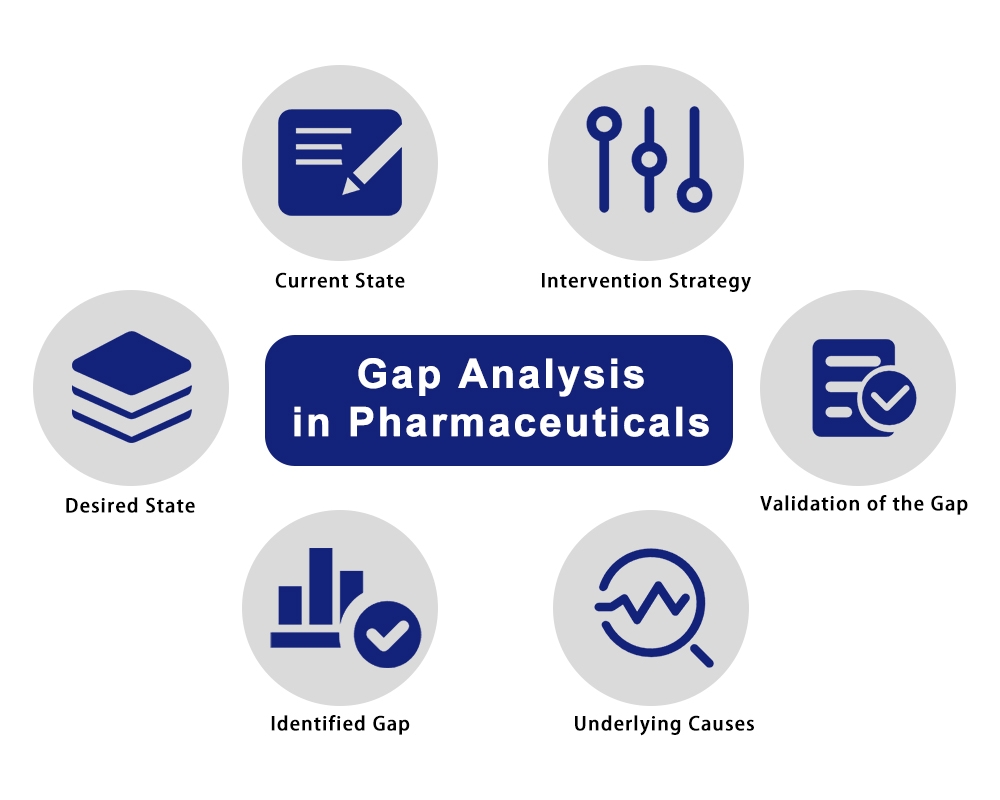
This is where gap analysis in pharmaceuticals becomes essential.
Gap analysis helps manufacturers compare their current practices against regulatory requirements such as GMP, FDA, or WHO standards. It shows what’s missing, what needs improvement, and where risks may exist.
If this is something you’re looking to know more about, read until the end as we explore what gap analysis is and how it can benefit your company.
What Is Gap Analysis in Pharmaceuticals?
Gap analysis in pharmaceuticals is a structured approach to comparing a facility’s current practices with regulatory requirements and GMP standards. Simply put, the “gap” is the difference between current practices and regulatory expectations.
Unlike routine internal audits, gap analysis is broader and more forward-thinking. Internal audits usually check whether procedures are being followed.
Regulators expect structured gap assessments because they show proactive compliance. Instead of waiting for an inspection to expose weaknesses, a gap analysis helps companies identify and resolve issues early.
How to Conduct Gap Analysis in Pharmaceuticals
Gap analysis only works when it is done in a clear, structured way. If the steps are rushed or skipped, the exercise becomes vague and unhelpful. To make sure you don’t make any mistakes, here’s how you can conduct a gap analysis:
1. Define Regulatory Standards
First, identify all regulations and guidelines that apply to your product, facility, and market. This usually includes GMP guidelines, FDA regulations, EMA requirements, WHO standards, and any local regulatory rules.
Do not rely on memory or past inspections. Always use the latest versions of these guidelines.
Next, translate those regulations into clear benchmarks. For instance, rather than “data integrity compliance,” define specific expectations, such as audit trails enabled and access controls in place.
2. Assess Current State
Once expectations are clear, the next step is to understand what is actually happening today. This involves reviewing SOPs, batch records, validation documents, training files, equipment logs, and quality systems.
It also means observing real processing on the shop floor, not just what is written on paper. Often, the biggest gaps appear where procedures exist but are not followed properly.
Interviews with operators, supervisors, and QA staff are also valuable. Ask simple questions like how tasks are performed, what challenges exist, and where workarounds are used.
3. Identify and Document Gaps
Now you need to compare the required standard with the current practice. Any difference between the two is a gap.
If regulations require an annual SOP review but the documents have not been updated for 3 years, that is a clear gap. Similarly, if equipment cleaning is documented but the acceptance criteria are missing, that is another gap.
Each gap should be written clearly, with evidence and references. Avoid vague wording.
Example: Instead of “training is weak,” state “operator training records do not include assessment of competency after training.”
4. Risk Assessment and Prioritization
Remember, not all gaps carry the same level of risk, so prioritization is essential.
At this stage, you need to classify gaps as critical, major, or minor. Critical gaps are those that directly impact patient safety, product quality, or data integrity. Minor gaps, on the other hand, may involve documentation formatting or administrative delays.
Risk assessment usually considers severity, likelihood, and detectability. For example, missing cleaning validation for a shared equipment line is far more serious than a delayed SOP review.
5. Develop Corrective Action Plan
Finally, it’s time to turn findings into action. For each gap, define a corrective and preventive action plan.
This should include what needs to be done, who is responsible, realistic timelines, and how effectiveness will be checked.
Just avoid open-ended actions. Moreover, ensure every task has an owner and a due date.
Why Gap Analysis Is Critical for Pharma Compliance
All pharmaceutical companies should understand that compliance is not a one-time task. Rules change, expectations rise, and inspections are becoming more detailed every year. Because of this, simply following old procedures is no longer enough.
The only way forward for companies is through gap analysis.
It helps you pause, step back, and compare what regulators expect with what is actually happening on the ground. With regulatory scrutiny increasing, this process has become essential. In FY2024 alone, the FDA issued 105 warning letters related to drug quality issues.
All this makes gap analysis important for pharmaceutical companies.
Benefits of Conducting Gap Analysis in Pharmaceuticals
Below are the benefits of conducting a gap analysis in your pharmaceutical facility for better compliance.
1. Improved Regulatory Readiness
One of the biggest benefits of gap analysis is that it helps teams prepare before regulators arrive. By comparing your current systems with the latest rules, you can fix issues early before any sudden inspection.
As a result, you’ll face fewer surprises and have the ability to act with a clear plan instead of stress.
2. Reduced Audit Findings and Batch Rejections
When gaps are left undetected, inspections often surface them as audit observations or findings. At worst, they can lead to batch ejections.
However, by identifying and closing compliance gaps beforehand, you greatly reduce the number of issues inspectors find. This protects your reputation and lowers the risk of costly stoppages.
3. Long-Term Cost Reduction
Poor quality creates ongoing costs through rework, deviations, investigations, and discarded batches. These issues add up quietly and often go unnoticed until they affect timelines or inspections.
Gap analysis directly targets these hidden costs by preventing issues before they escalate. Over time, this reduces financial loss, protects brand reputation, and supports sustainable compliance.
When Should a Pharma Company Perform a Gap Analysis?
If you’re not sure when you should perform a gap analysis, here’s when you should be more vigilant.
1. Before Regulatory Inspections
This is one of the most common and practical times to conduct a gap analysis. Before an inspection, teams often feel pressure and rush to resolve issues. A gap analysis done ahead of time helps identify documentation gaps and compliance risks early.
As a result, inspections feel controlled rather than reactive, and teams walk with confidence instead of anxiety.
2. After Regulatory Updates
Regulations evolve, but internal processes often lag.
When guidelines change, such as GMP revisions or new data integrity expectations, a gap analysis helps compare current practices against updated requirements. This prevents silent non-compliance from building up over time.
3. Before New Product Launches
Launching a new product increases scrutiny across manufacturing, quality control, validation, and documentation.
A gap analysis at this stage confirms that systems are ready to support the product safely and consistently. It also reduces the risk of launch delays caused by last-minute compliance audit findings.
FAQs
1. What is a gap analysis in medicine?
In a medical context, a gap analysis is a systematic assessment used to identify the “space” between current clinical practices and the ideal “gold standard” of patient care. It is frequently used in Continuing Professional Development (CPD) to determine what healthcare providers currently know versus what they need to know to provide the best outcomes.
2. How does a regulatory gap analysis speed up drug approval?
Think of it as a pre-submission audit. By performing a gap analysis during the drug development phase, companies can identify missing data or documentation errors early on. Correcting these “gaps” before submitting a New Drug Application (NDA) ensures that the package sent to regulators is complete and accurate. This reduces the number of “information requests” from the agency, leading to a much smoother and faster path to market.
3. When is the best time for a pharma company to conduct a gap analysis?
While it can be done at any time, it is most effective at critical milestones, such as at the end of Phase 1 or Phase 2 clinical trials, or right before a facility inspection. Many experts also recommend an annual “maintenance” gap analysis to stay ahead of the curve, as international regulations and safety standards are constantly evolving.
4. Can a gap analysis help in expanding a drug to international markets?
Absolutely. Each country has its own specific regulatory “flavor.” A gap analysis helps a company map out the differences between their current domestic approvals and the requirements of a new target market (such as moving from the US FDA to the European EMA). It identifies the specific additional studies, stability testing, or labeling changes needed to gain entry into those new regions efficiently.
Turn Gap Analysis Into Measurable Results
Gap analysis in pharmaceuticals is only valuable when it leads to action. If you don’t use the analysis to improve compliance, it would go to waste. Once you know about the gaps, the next step is to fix them.
And that’s why you need Finetech to help you out.
We have over 30 years of experience providing correct installation, right equipment, proper training, and GMP-aligned systems. Even a short conversation with an expert can turn gaps into progress.
So, buckle up and contact our specialists!
Copyright Notice:
You may not reproduce, modify, publish, display, transmit, or in any way exploit any content on this website, or use such content to construct any kind of database without prior express written approval by Finetech Group. For permission to use the content, please contact: info@pharmamachinecn.com
Disclaimer:
The information contained in this article is for general information purposes only. The Company does not guarantee the accuracy, relevance timeliness or completeness of any information, and the Company assumes no responsibility for errors or omission in the content of this article.