English
  Russian
  Turkish
  Spanish
  French
  German
  Japanese
The pharmaceutical industry is experiencing quick growth, and the worldwide market in 2024 was around USD 1.7 trillion. To stand out in such a competition, you need to focus on the quality and packaging of your products.
Each vial or blister needs to be accurately filled and neatly packaged before it reaches end customers. That’s where you can get help from the many types of pharmaceutical filling machines.
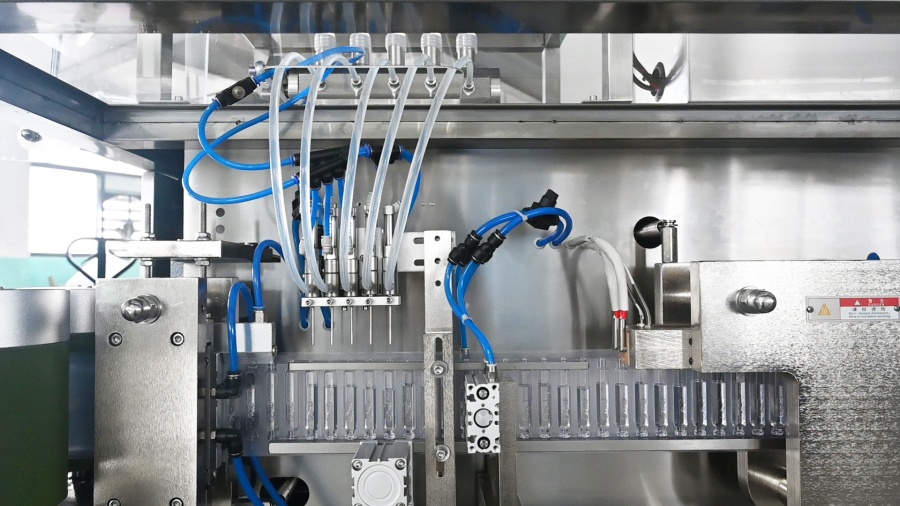
Continue reading to know about the various pharmaceutical filling equipment, their working, and benefits!
Different Types of Pharmaceutical Filling Machines
There are many types of pharmaceutical filling machines based on the degree of automation, the type of product being filled, the container type, and the type of measurement used. Here’s a detailed explanation of each category:
Based on Automation
Pharmaceutical automation typically refers to the use of machines and technologies to streamline and optimize various processes. Here’s an overview of the different automation levels in pharma filling machines:
Manual Filling Machines
Manual filling machines are those operated manually or with manual power. In this, an operator manually fills a specific volume of product in containers.
Some common equipment in this regard includes piston-based manual fillers and general bottle fillers with valves. This setup is well-suited for low-scale businesses but is prone to inaccuracies.
Semi-Automatic Filling Machine
Semi-automatic filling machines, as the name suggests, combine both manual and automatic operation. The containers are generally filled automatically, but an operator is needed to load and unload them as well as adjust filling parameters.
These machines are inexpensive compared to their fully automatic counterparts and are suitable for low to medium production volume. You’ve more flexibility and control, and can rely on them to fill various materials such as powdered drugs and creams.
Automatic Filling Machine
Automatic filling machines dispense accurate quantities of a product into containers without the need for any manual intervention. Its working is simple; empty bottles are fed onto the machine using conveyor belts.
Each bottle stops right beneath a filling nozzle where the product is dispensed using a piston or vacuum. Filled bottles then automatically exit the equipment for further processing, such as sealing and labelling.
These fillers are generally more expensive than manual and semi-automatic setups, but the high cost is offset by their high speed and accuracy. You can easily integrate them with other automated equipment, like labelers or sealers, to create an automatic production line.
Filling Product Type
As a pharmaceutical company, you have to deal with various types of products, including powders, liquids, gels, and ointments. The following are the types of pharmaceutical filling machines you can use to dispense them in a desired container:
Liquid Filling Machines
Liquid filling machines often refer to automated machinery that’s used to precisely fill liquid into jars, bottles, and vials. Depending upon the liquid viscosity and the desired fill volume, you will come across a variety of liquid fillers, which can help reduce product wastage. Here’s an overview of some:
- Gravity Fillers: In general, gravity fillers use the liquid’s weight and gravity to fill the container. This is through a timed feed from the tank above the filling heads. They are best suited for thinner and foamy liquids.
- Pump Fillers: Another type of liquid filler is pump fillers that use pumps to accurately dispense a specific volume of liquid into containers. The different types of pumps used in these include gear pumps, rotor pumps, lobe pumps, and cavity pumps. They can easily deal with liquids of low to high viscosity.
- Molten Fillers: Molten liquid fillers are machines that fill containers with liquid that is in a molten state at high temperatures but solidify at low or room temperatures. They can handle containers of unique shapes and sizes. Medicated lip balms and petroleum jelly are some examples of products that are filled using such machines.
Powder Filling Machines
Powder fillers are responsible for accurately and efficiently filling containers with powdered or dry syrup products. The different types of pharmaceutical filling machines in this regard are:
- Auger Fillers: They use a rotating screw, also known as the auger, to measure and dispense powder in containers, making them perfect for free-flowing and fine powders.
- Net Weight Fillers: Net weight fillers dispense an accurate quantity or weight of powder into a container to ensure that each package meets the outlined weight requirements. This equipment has sensors and scales that help in exact weight measurement.
- Vacuum Fillers: Powder vacuum fillers use the principle of generating a vacuum to fill powder products into liquid containers. They are perfect for non-flowing and delicate powders, eliminating any dust exposure and contamination risks.
Filling Container Type
Some filling machines are designed to handle only a specific type of container to ensure accuracy, sterility, and product integrity. Here’s an overview of the different types of equipment you’ll come across:
Capsule Filling Machine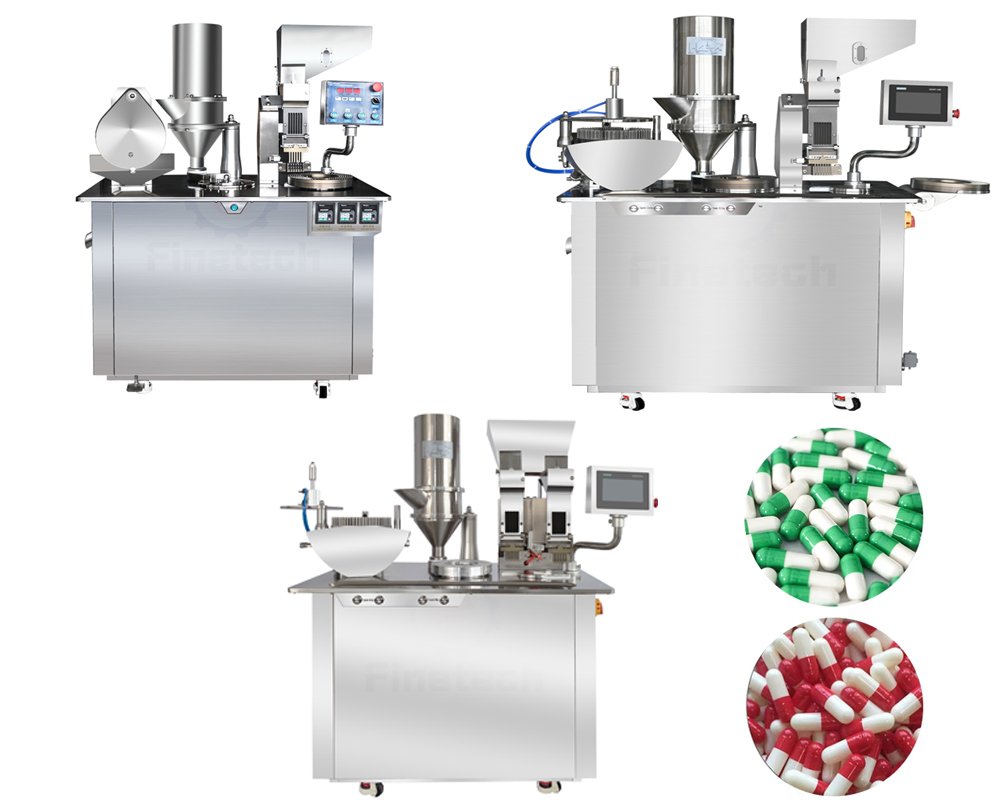
Capsule filling machines are devices that fill empty capsules and blisters with powdered, granular, and liquid substances. They are often computer-programmed and operate according to the input command. Their working mechanism is given as:
- The first step involves getting the empty capsules oriented correctly.
- Then, a vacuum system separates the caps from the bodies without any damage. This step is quite fast as the machine processes thousands of capsules per minute.
- Capsule bodies are carefully filled with a pre-measured dose of drug, whether it’s powder, pellet, or liquid.
- Know that not all capsules make it through the filling processes successfully. Some may not get opened or filled and are rejected for disposal.
- Once the capsules are filled, the separated caps are attached to their surface by applying force. The pressure is very minimal, which only secures the capsule without deforming it.
- The filled and sealed capsules are ejected from the machine and collected for packaging.
Tube Filling Machin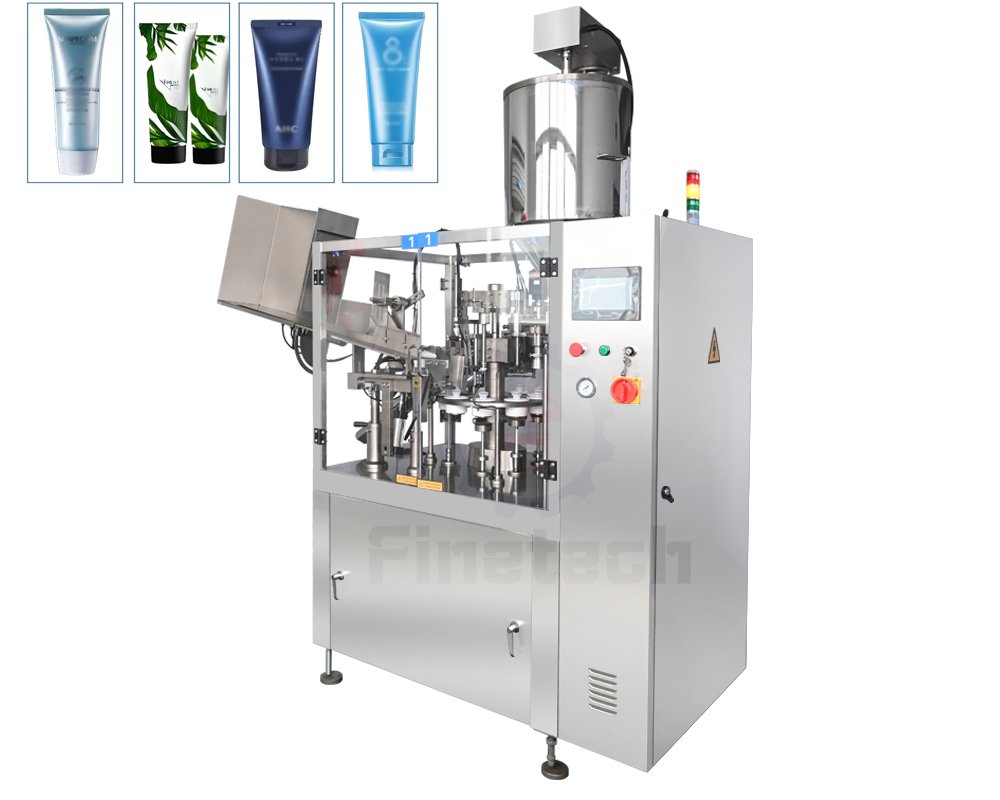
Tube filling machines are among the types of pharmaceutical filling machines that fill ointments, lotions, and toothpastes into a tube. The tubes are typically made of plastic or aluminum and come in different shapes and sizes.
These fillers automatically take the tube, use a color-coded electric eye to rotate the tube in the correct direction, and fill the product. The uneven parts of the tube are trimmed before the final filled pharma tube is popped out.
Bag Filling Machine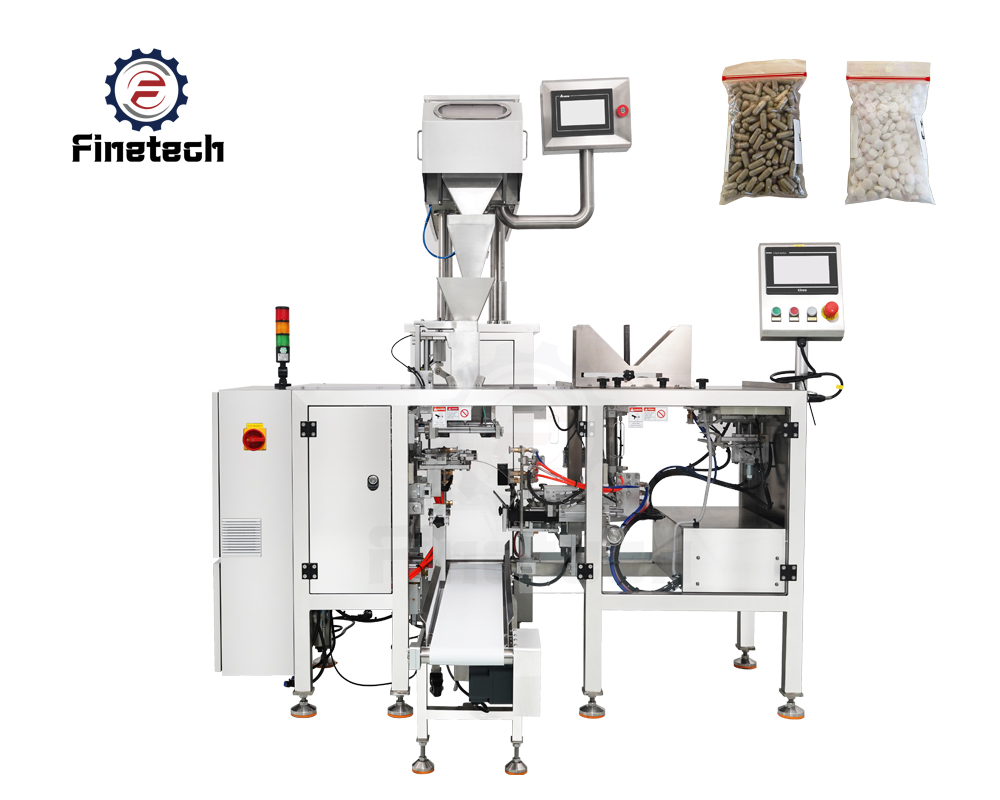
This equipment is suitable for filling various bags and pouches with pharmaceutical ingredients such as powders, granules, liquids, and then sealing them. The process starts when the machine loads the bag and a proximity sensor detects it.
Two arms hold the bag, and two more open it so a funnel can fill it with desired products. After that, the bag undergoes sealing where suitable air pressure is maintained to protect the pharmaceutical’s integrity.
Benefits of Using Different Types of Pharmaceutical Filling Machines
The pharmaceutical filling machines market is rapidly growing and is expected to hit a massive USD 8.37 billion by 2032. This increased market value is primarily due to the many benefits these machines offer, including increased production and reduced downtime. Let’s discuss these in detail:
- High Production Capacity: One of the major benefits of investing in different types of pharmaceutical filling machines is high production capacity. They can handle a large volume of containers, leading to faster production cycles. For instance, some capsule filling equipment can fill 132,000 capsules per hour and even more. You can then quickly cater to customer demands and maintain a competitive edge.
- Low Downtime: Downtime in the pharmaceutical industry can be very costly, as losses can range from $100,000 to $500,000 per hour.But there’s nothing to worry about, as pharmaceutical filling machines reduce your overall downtime. The equipment often provides you with detailed data analytics, such as the vibrations and fill speed, helping you identify potential issues and take preventive maintenance before failure.
- Better Safety: Pharmaceutical products need high-level safety protocols to prevent spoilage and contamination. That’s where pharmaceutical fillers take the limelight. For example, fully automatic machines don’t require any manual intervention, maintaining great sterility. The drugs are dispensed directly into the container, ensuring compliance with Good Manufacturing Practices (GMP). As a result, the medications have high efficacy and extended shelf life.
Some other benefits that you can enjoy are reduced wastage, flexible dosing, and customizable settings.
FAQs
How to maintain pharmaceutical filling machines?
Maintaining pharmaceutical filling machines involves multiple things, including regular cleaning, calibration, lubrication, and software updates to ensure accuracy, hygiene, and compliance.
How accurate are capsule filling machines?
Some automatic xapsule filling machines have an accuracy of 99.98% and minimal deviations of ±0.1 mg. This is very important in the pharmaceutical industry, where a slight deviation can affect overall quality and efficacy.
Are pharmaceutical filling machines customizable?
Yes, pharmaceutical filling machines are highly customizable, offering options such as changing filling technologies and container handling. You can even integrate this equipment with sealing and labelling machines to achieve high efficiency.
Conclusion
There are different types of pharmaceutical filling machines that you can invest in depending on your business needs. However, if you want suggestions on the best equipment manufacturer and supplier, Finetech is the one-stop shop. Contact us today to get your hands on reliable and competitively priced fillers!