English
  Russian
  Turkish
  Spanish
  French
  German
  Japanese
Making medicine tablets might seem simple, but it takes careful work to make sure each tablet has the right amount of medicine and is easy to carry. One way to do this is the dry granulation method of tablet manufacturing.
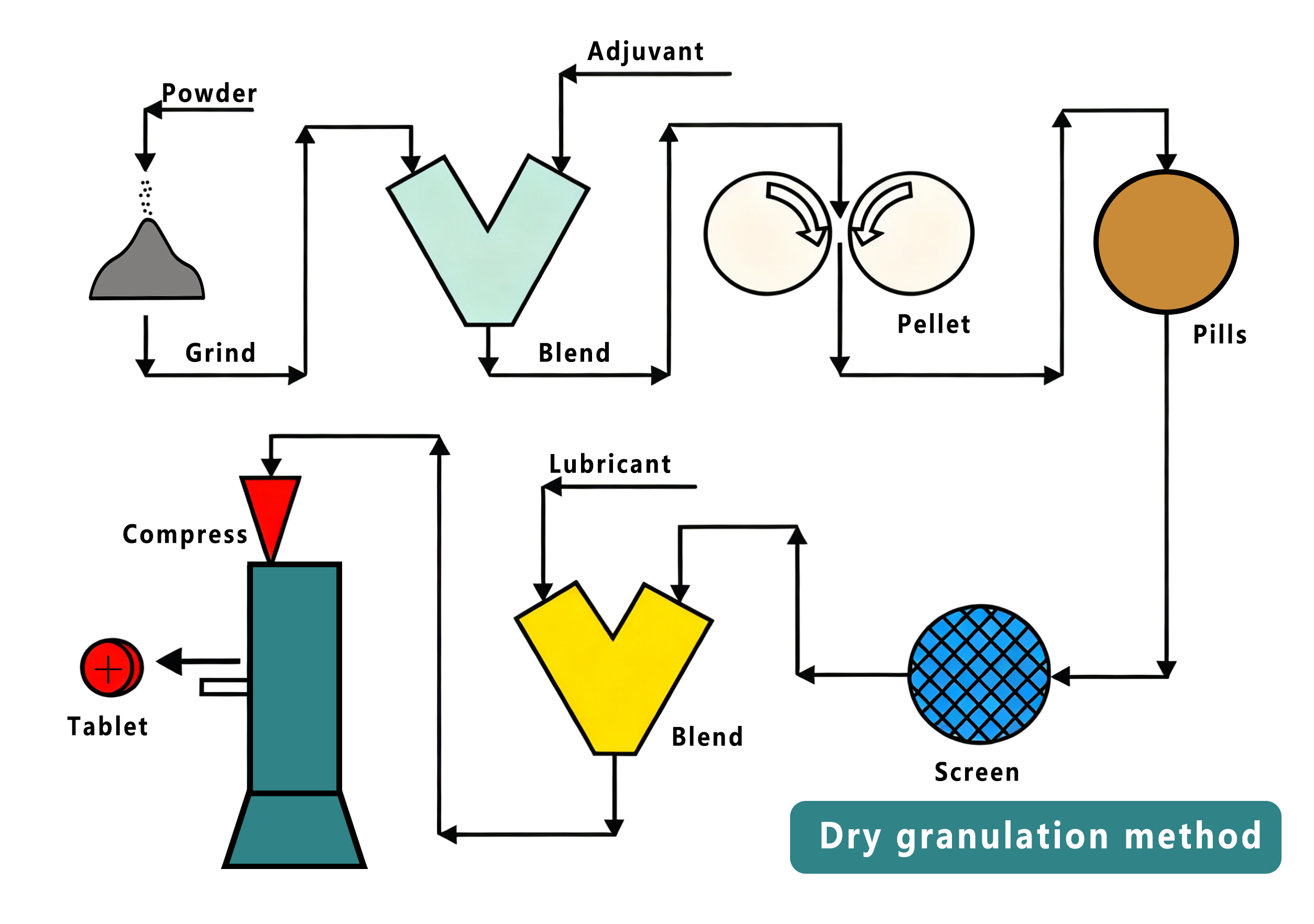
This method does not use water or heat, so it is perfect for medicines that can be damaged by moisture or high temperatures. This article will explain how the process works and why it is an important process in making medicines.
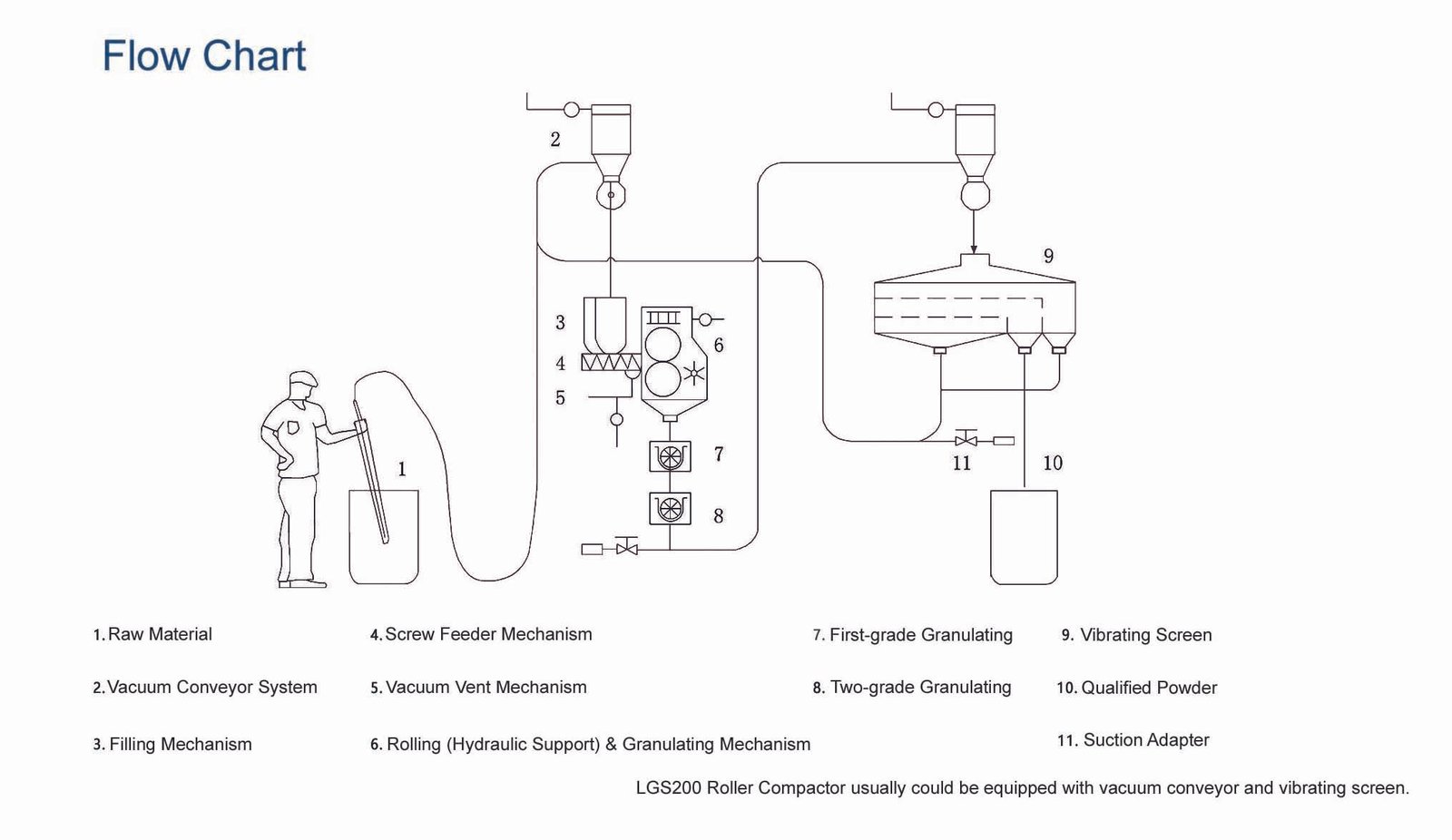
Advantages of Dry Granulation
There are many granulation techniques, and each one has its own benefits. The advantages of the dry granulation method of tablet manufacturing are many, and some of them are:
Suitable for Sensitive Drugs
Dry granulation is the best option for drugs that cannot handle heat or moisture. Some medicines lose their effectiveness if they get wet or are exposed to high temperatures. This method avoids using water or heat, which keeps the drug stable and safe.
No Need for Liquid Binders
Unlike wet granulation, dry granulation does not require any liquid or binder to form granules. This reduces the chance of chemical reactions or changes in the drug. It also makes the process simpler and cleaner.
Better Powder Flow
When powders are compacted into granules, they flow more easily during the tablet production process. A better flow makes sure that each tablet contains the correct amount of medicine. This helps when medicine tablets are made to be consistent in every dose.
Low Risk of Drug Damage
Because there is no heat or water, the medicine is less likely to get damaged. The dry granulation method of tablet manufacturing remains a strong and effective process for a long time.
Cost-Effective Production
Dry granulation needs fewer steps and simpler machines than wet granulation. This can save money, especially when making a large number of tablets.
Less Waste and Energy Use
This method does not need drying or extra materials, so it produces less waste. It also uses less energy, making production more cost-effective and environmentally friendly. With proper factory pharmaceutical line design, the production process becomes faster and more organized,
Dry Granulation Method of Tablet Manufacturing
The dry granulation method of tablet manufacturing is used to produce tablets without the use of water or heat. The process involves several steps to turn powders into uniform granules that can be compressed into tablets.
Blending of Powders
The first step in the process involves mixing all the active drug powders with other ingredients, known as excipients. This mixing is very important because it helps make sure that every tablet will have the same amount of medicine.

If the powders are not appropriately blended, some tablets may have too much or too little of the drug, which can cause problems for patients. The powders are usually mixed in a large machine that rotates gently until the mixture is uniform.
Slugging or Roller Compaction
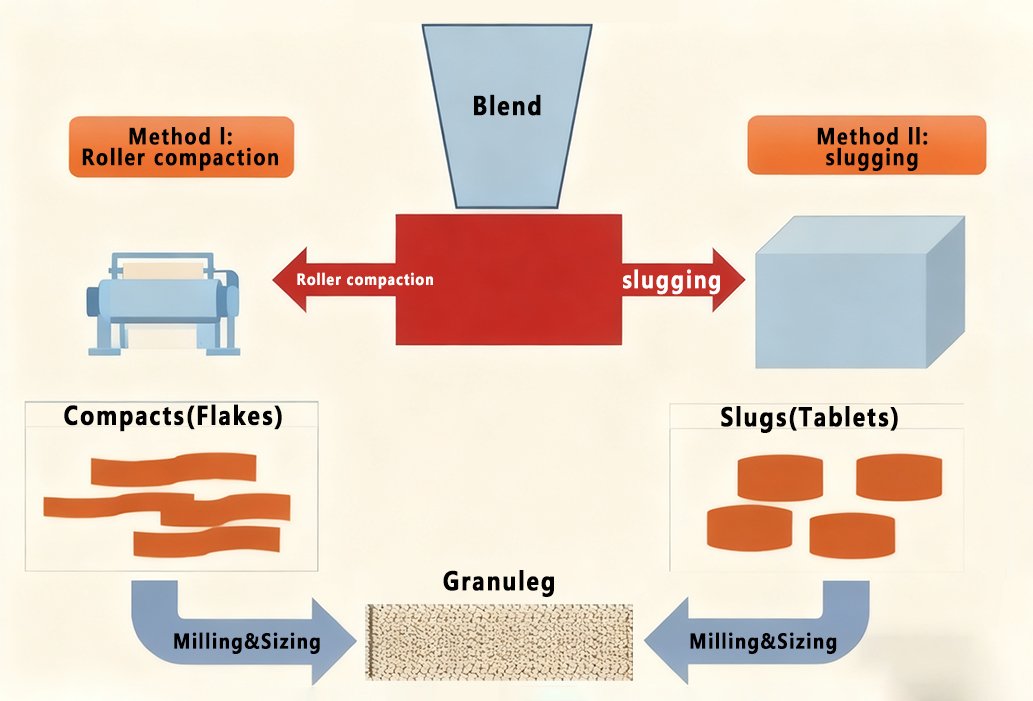
After blending, the powder mixture is pressed into large compact pieces. There are two ways to do this: slugging and roller compaction.
Slugging
Slugging involves compressing the powder into large, thick tablet-like pieces called slugs. The slugging method is usually used for small batches of tablets or when the drug is very sensitive. The slugs are strong and can be easily broken into granules in the next step.
Roller Compaction
Roller compaction uses two rollers to press the powder into thin sheets. This method is preferred for large-scale production because it can handle larger amounts of powder at once. The sheets are then milled into uniform granules for tablet compression.
Milling and Sieving
The next step in the dry granulation method of tablet manufacturing is milling and sieving. The slugs or sheets are broken into small granules by milling. This entire process makes sure the granules are all about the same size.
Uniform granules are important because they:
- Flow easily during tablet compression.
- Help tablets have the correct amount of medicine.
- Make tablets similar in size, shape, and strength.
After milling, the granules are passed through a sieve to get rid of large or uneven pieces.
Final Blending with Lubricants
Once the granules are ready, a small amount of lubricant is mixed with them. Lubricants make it easier for the granules to move through the tablet press and prevent them from sticking to the machine.
Compression into Tablets
Finally, the granules are pressed into tablets using a tablet press machine. The machine applies pressure to shape the granules into tablets that are hard enough to handle but can still dissolve properly in the body. Proper compression is significant to make sure the tablets do not break during packing or transport.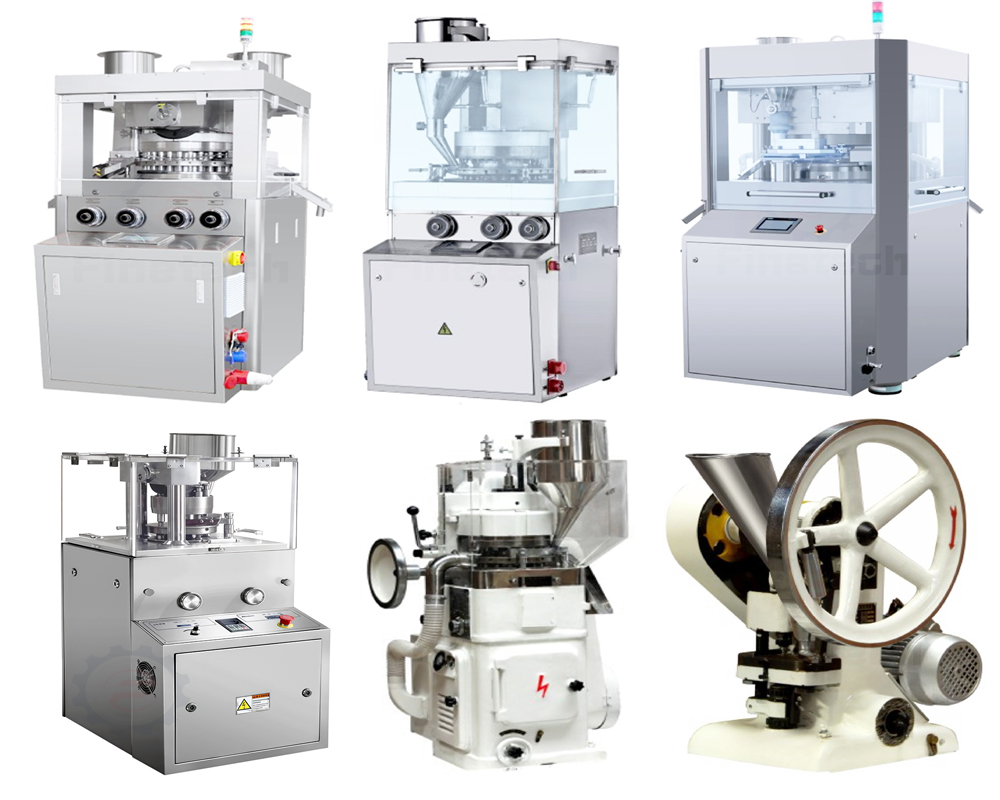
Equipment Used in Dry Granulation
In the dry granulation method of tablet manufacturing, using the right equipment is very important. Each machine has a specific role to make sure the tablets are safe and effective. Proper use of the equipment helps the process run well. Operators usually need machine operation training to handle them correctly.
Blenders or Mixers
Blenders or mixers are made from stainless steel to avoid contamination. They have a large rotating drum and blades inside that move the powders around.
Slugging Machines
Slugging machines have strong metal plates and punches that press powders into thick slugs. The body of the machine is solid enough to handle high pressure. Some machines use a flat surface with punches on top, while others have a hydraulic system to push the powder into slugs.
Roller Compactors
Roller compactors have two heavy steel rollers set close together. The powder passes between the rollers, which press it into thin sheets. The rollers can be smooth or have grooves, depending on the type of granules needed. The machine frame is made of strong metal to resist pressure and keep the rollers steady.
Milling Machines
Milling machines are made with a metal housing and rotating blades or hammers inside. The blades break the slugs or sheets into smaller granules. Some machines have adjustable screens to control granule size, and all parts that come into contact with the powder are typically made of stainless steel.
Sieves or Screens
Sieves are made from metal or mesh stretched over a frame. Vibrating motors shake the granules over the mesh, letting only the small, even pieces pass through. The frame is strong, so it can handle continuous use in a factory.
Lubrication Mixers
Lubrication mixers have a drum or container where granules and lubricant are gently mixed with specific lubrication methods. The drum is of stainless steel, and paddles or blades inside slowly turn to mix the materials evenly without damaging the granules.
Process Parameters and Quality Control
In the dry granulation method of tablet manufacturing, controlling process settings and checking quality at each step is as important as the actual production itself.
Pressure Used During Compaction
The pressure used to press powders into slugs or sheets must be adequately controlled. If the pressure is too low, the granules will be weak and may crumble. If it is too high, the granules may become too complex and challenging to compress later. Careful control is what gives strong and balanced granules.
Granule Size and Uniformity
Granule size plays a big role in the dry granulation method of tablet manufacturing. Large granules can cause uneven tablets, while excellent ones can lead to poor flow. Regular sieving and milling checks, along with proper machine technical support, can keep the granules even and ready for smooth tablet formation.
Tablet Hardness and Thickness
Each tablet must be strong enough to handle packing and transport, but still soft enough to dissolve properly in the body. Machines are adjusted to keep the proper hardness and thickness so the tablets stay consistent in quality.
Disintegration and Dissolution Testing
This test checks how quickly a tablet breaks apart and releases the medicine after it is taken. If the tablet takes too long, it might not work as expected. Continuous testing is needed to help make sure every batch of tablets performs well and meets the required standards.
Applications and Industrial Relevance
The dry granulation method of tablet manufacturing is employed in the pharmaceutical industry due to its simplicity, cost-effectiveness, and suitability for drugs that are sensitive to heat or moisture.
It allows factories to make strong tablets without using water or long drying steps, which saves time and energy. This method is also easy to control and works well for both small and large production batches.
Main applications include:
- Making tablets for moisture- or heat-sensitive drugs.
- Producing high-dose tablets that need better flow and compression.
- Manufacturing tablets in places where drying equipment is limited.
- Using it in pilot or test batches before full-scale production.
The dry granulation method is one of the best options for many pharmaceutical industries. Its flexibility makes it suitable for medicines and production scales. As technology improves, this method will become even more efficient, as it helps manufacturers meet growing healthcare demands around the world.
FAQs
What is the difference between the wet granulation and dry granulation methods?
Wet granulation uses a liquid binder to join powder particles into granules, while dry granulation compresses powders directly without using any liquid. Wet granulation is preferred for powders that do not stick well, but dry granulation is better for moisture or heat-sensitive drugs.
Which granulation method is best?
The best method depends on the nature of the drug and the manufacturing needs. Dry granulation is better for medicines that cannot tolerate moisture or high temperatures. Wet granulation, however, is preferred when stronger and more uniform tablets are required.
How long does granulation take?
The duration of granulation varies with the method and batch size. Wet granulation usually takes a few hours because the material must be dried after mixing. Dry granulation is quicker and can take less than an hour in modern continuous systems.
Conclusion
Dry granulation helps factories run tablet production in an organized way. It gives better control over each step and makes tablets that work well for patients. Looking to improve your production line? Contact us today to purchase our trusted and certified pharmaceutical machines.
References
What is the Difference Between Dry and Wet Granulation Method?
What is Wet Granulation Machine: A Complete Guide.
Types of Granulator Machine Units Used in the Pharmaceutical Industry.
Copyright Notice:
You may not reproduce, modify, publish, display, transmit, or in any way exploit any content on this website, or use such content to construct any kind of database without prior express written approval by Finetech Group. For permission to use the content, please contact: info@pharmamachinecn.com
Disclaimer:
The information contained in this article is for general information purposes only. The Company does not guarantee the accuracy, relevance timeliness or completeness of any information, and the Company assumes no responsibility for errors or omission in the content of this article.