 English
  Russian
  Turkish
  Spanish
  French
  German
  Japanese
For drug formulations, maintaining uniformity is non-negotiable. Whether for developing emulsions, creams, or other dosage forms, developers focus on even particle distribution for consistent production.
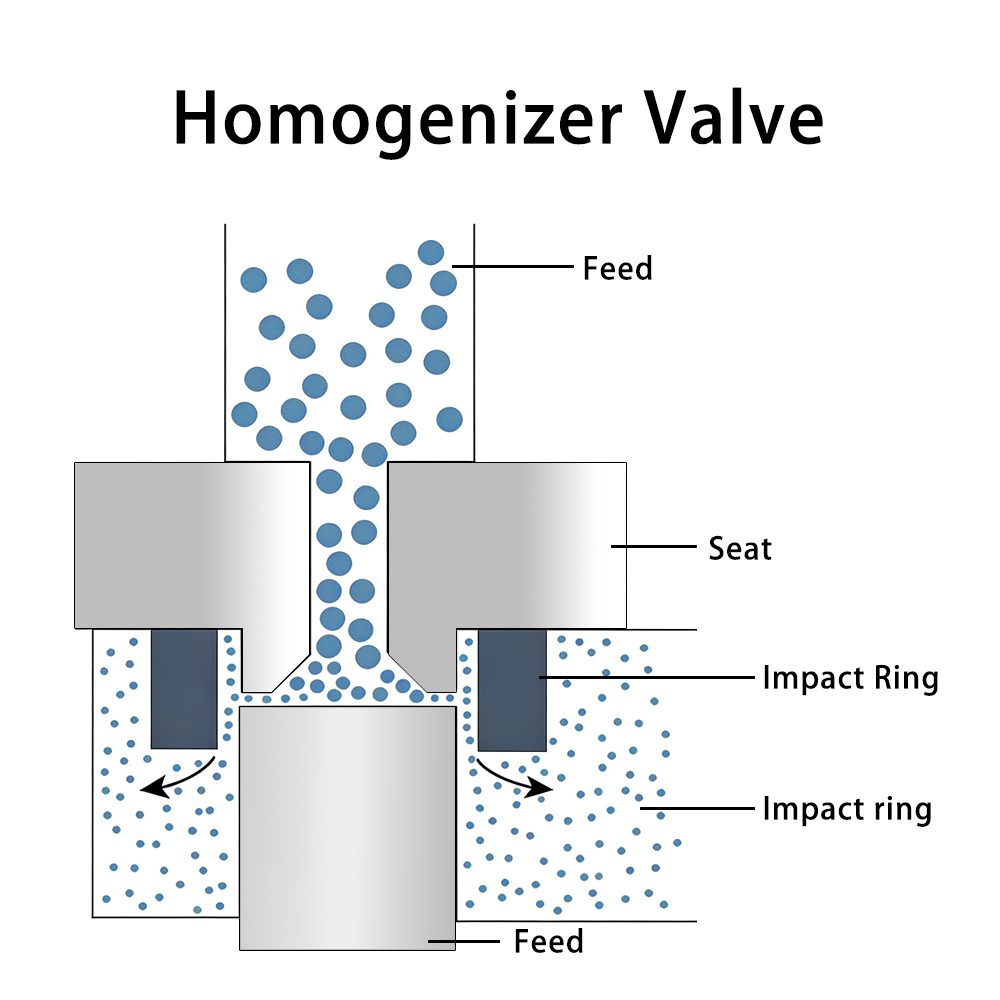
A study also shows that the stability of emulsions gets higher after passing through high-pressure homogenizers. But what does homogenized mean in the modern medicine industry? If you’re looking for a satisfactory answer, this blog covers you all.
What does Homogenized Mean?
When exploring ‘what does homogenized mean,’ you need to know that it’s more than just mixing. In this controlled process, the larger particles are broken down into uniform sizes. With this precise technique, the particles are evenly distributed throughout the formulation. It results in consistent composition, preventing separation of active ingredients.
In pharmaceuticals, such uniformity is required to ensure that each dose delivers the intended therapeutic effect.
How the Homogenization Process Works
Understanding ‘what does homogenized mean’ requires a closer look at how the process operates. Here’s an overview:
Video Source: Silverson Machines
Stage 1: Pre-Mixing
In the first stage, all formulation ingredients are combined using low-shear mixers. It includes active pharmaceutical ingredients (APIs), stabilizers, and excipients. It creates a coarse, preliminary mixture where every component is adequately wetted and evenly dispersed.
Stage 2: High-Pressure Homogenization
It’s the core stage where the answer to ‘what does homogenized mean’ becomes more evident. Here, the pre-mixed suspension is passed through a narrow valve under extreme pressure. The ratings typically range between 100 and 2000 bars. It results in intense turbulence, cavitation, and shear forces that break down coarse particles.
Thus, submicron or nanometer-sized substances are produced. This phase ensures an even distribution throughout the formulation. ResearchGate study reveals that high-pressure blending is particularly useful for size reduction, mixing, and stabilization of dispersions or droplets.
Stage 3: Cooling and Stabilization
Lastly, the processed mixture is rapidly cooled to prevent heat-related degradation of sensitive components. Stabilizers or surfactants are often added to preserve particle uniformity. It prevents phase separation and maintains the chemical integrity of the dosage forms.
Types of Homogenization Techniques
For pharmaceutical manufacturing, different blending methods are deployed. Each type of formulation requires specific techniques. The choice depends on viscosity, sensitivity, and particle size requirements. Below are the common techniques that help you understand ‘what does homogenized mean’ fully.
Ultrasonic Homogenization
This mechanism uses high-frequency sound waves to break down particles. In ultrasonic homogenization, the developers hold precise control over material size. Without excessive heat generation, they can disperse the substances evenly in a medium. This method is particularly useful for delicate small-scale or lab-level formulations.
Rotor–Stator Homogenization
In this mechanical process, a high-speed rotor is used to generate intense shear forces. They reduce particle size and create a smooth, stable mixture. This approach is ideal for semi-solid formulations like creams, ointments, gels, and pastes. Due to its energy efficiency, it’s widely used in pharmaceuticals. It’s best for handling viscous materials effectively.
High-Pressure Homogenization
In this method, developers use hydraulic pressure to achieve sub-micron particle sizes. As a result, very fine and stable dispersions are produced. This technique ensures excellent uniformity, dosage stability, and bioavailability.
For this reason, formulators employ it for parenteral formulations, lipid-based drugs, and nanoemulsions. Study shows that high-pressure homogenization significantly improves the physical stability of emulsion systems.
| Techniques | How it Works | Used for | Key Benefit |
| Ultrasonic Homogenization | Uses high-frequency sound waves to break particles into fine sizes without heat. | Small-scale or heat-sensitive formulations | Precise particle control and gentle processing |
| Rotor–Stator Homogenization | A fast-spinning rotor creates shear forces to blend materials evenly. | Creams, gels, and ointments | Effective for viscous materials and consistent texture. |
| High-Pressure Homogenization | Formulation is forced through a narrow valve at high pressure | Nanoemulsions and injectable drugs | Achieves uniform, stable, and fine dispersions |
Applications of Homogenization in Pharmaceutical Formulations
Homogenization ensures that every product maintains its quality and performance. Here are its diverse applications for different dosage forms.
- Emulsions and Nanoemulsions:Used to stabilize mixtures of oil and water by reducing droplet size. Homogenization prevents phase separation and enhances the absorption of lipid-based drugs.
- Suspensions: The homogenized technique ensures that solid particles remain uniformly distributed in liquid media. It maintains dose accuracy and prevents sedimentation during storage.
- Injectable and Parenteral Preparations:For intravenous or intramuscular preparations, uniform blending is crucial. This process creates fine and stable dispersions that enhance bioavailability.
- Topical and Semi-Solid Formulations:The uniformity is applied in the production of creams, gels, and ointments. With homogenization, the developers produce a consistent drug dispersion for improved therapeutic effect.
Advantages of Homogenized Techniques
In pharmaceutical production, the use of homogenized techniques brings several benefits. Understanding these advantages clarifies ‘what does homogenized mean’ in a practical manufacturing sense.
Improved Bioavailability
By reducing particle size, homogenized formulations allow for faster dissolution. It enhances the absorption of active pharmaceutical ingredients (APIs), retaining their therapeutic effect.
Accurate Dosage Delivery
Uniform dispersion of components ensures that each unit delivers the correct dose. With this approach, it minimizes variability and improves treatment reliability.
Better Texture and Appearance
Especially in semi-solid products, consistent blending creates a smoother, more appealing texture. It improves both usability and patient compliance.
FAQS
Is Homogenization Suitable for Heat-Sensitive Drugs?
Yes. Techniques like ultrasonic homogenization are ideal because they work efficiently without producing excess heat.
What’s the Difference Between Mixing and Homogenizing?
Mixing combines ingredients, while homogenizing breaks down and disperses particles evenly for a stable formulation.
Does Homogenization Affect Drug Absorption?
Yes. Uniformly distributed particles enhance solubility and absorption. It thus improves a drug’s bioavailability.
Conclusion
Understanding ‘what does homogenized mean’ is significant to achieve precision in every formulation. By selecting the right homogenizing method, developers can improve drug solubility and shelf life. For high-quality equipment, contact Finetech Pharmaceutical Company today. We offer a variety of blending machines that cover your drug manufacturing needs. So, produce consistent dosage forms with our reliable technology!
References:
Pharmaceutical Homogenizer Applications.
3 Advantages of Homogenizers for the Pharmaceutical Industry.
Copyright Notice:
You may not reproduce, modify, publish, display, transmit, or in any way exploit any content on this website, or use such content to construct any kind of database without prior express written approval by Finetech Group. For permission to use the content, please contact: info@pharmamachinecn.com
Disclaimer:
The information contained in this article is for general information purposes only. The Company does not guarantee the accuracy, relevance timeliness or completeness of any information, and the Company assumes no responsibility for errors or omission in the content of this article.





1 thought on “What does Homogenized Mean in Pharmaceutical Industry”
This is a very good tip particularly to those fresh to the blogosphere.
Simple but very accurate information… Many thanks for
sharing this one. A must read post!