English
  Russian
  Turkish
  Spanish
  French
  German
  Japanese
The pharmaceutical industry produces at least 30 billion capsules every year. The capsule manufacturing process is a specialised field. It enables global healthcare systems to provide reliable access to life-saving medicines, nutraceuticals, and supplements every day.
The science behind this production involves high-speed synchronisation and environmental control. These systems work in synchronisation to ensure every dose remains safe and effective for the patient.
Here is an in-depth guide about the advanced mechanics and rigorous standards that define the world of capsule manufacturing.
What is the Capsule Manufacturing Process?
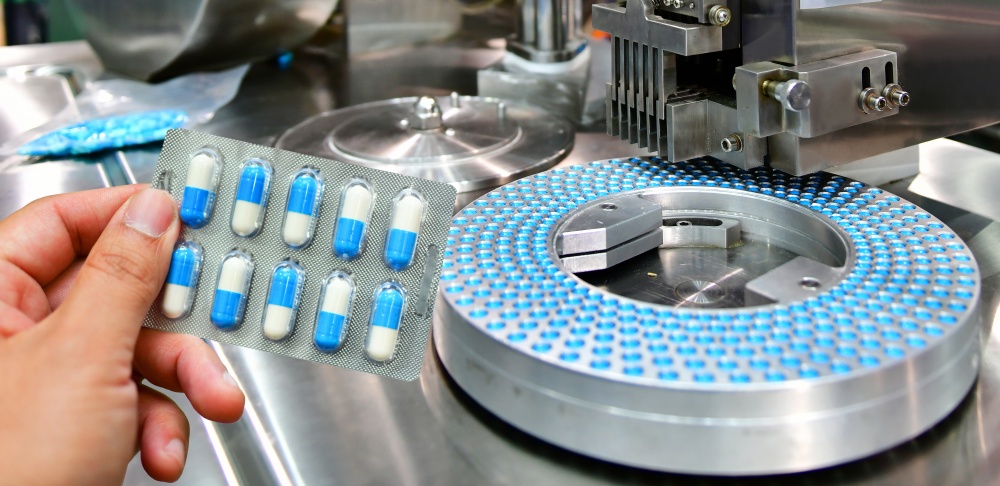
Capsule manufacturing focuses on creating drugs and therapeutic dosages for oral consumption. It is a multi-stage process that starts with the creation of gelatin or cellulose shells, followed by filling them with active powders, liquids, or pellets. Every unit is then sealed air-tight to protect the internal formulation.
The product undergoes a series of quality control checks and inspections to ensure long-term stability and shelf life. Such a setup guarantees consistent batch results and maintains the intended therapeutic performance for the patient.
Understanding Different Types of Capsules
Capsules are categorised into various functional groups based on their composition and delivery requirements. While numerous variations exist, industry standards typically divide them into two primary categories: hard gelatin capsules and soft gelatin capsules.
Let’s look at the functional distinctions between soft capsule vs hard capsule and their therapeutic usage.
1. Hard Gel Capsules
Hard gel capsules are two-piece, solid dosage forms featuring a cylindrical body and a cap with a built-in locking mechanism. These shells primarily consist of pharmaceutical-grade gelatin and water, though manufacturers often add colorants or opacifiers to protect light-sensitive ingredients.
This design is ideal for dry solids like antibiotics, pain relievers, or herbal powders. It enhances delivery efficiency and ensures a predictable therapeutic response by protecting the contents from environmental factors.
2. Softgel Capsules
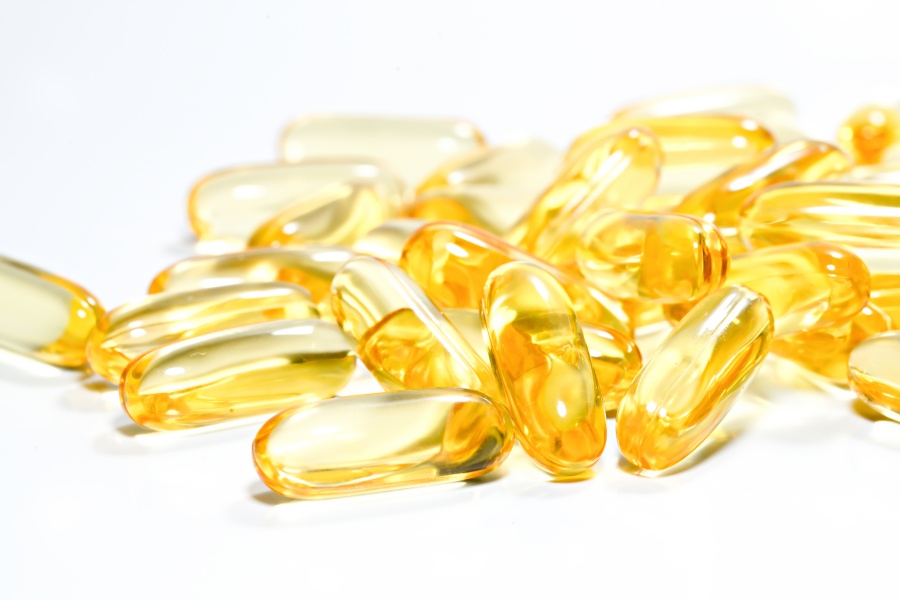
Softgel capsules are one-piece, airtight shells filled with liquid or semi-solid ingredients. They feature a smooth, flexible texture that makes them significantly easier to swallow than traditional tablets. These units are preferred for oil-based formulations, such as Omega-3 fish oils, Vitamin D3 supplements, and liquid-fill medications.
Hard Gel Capsule Manufacturing Process
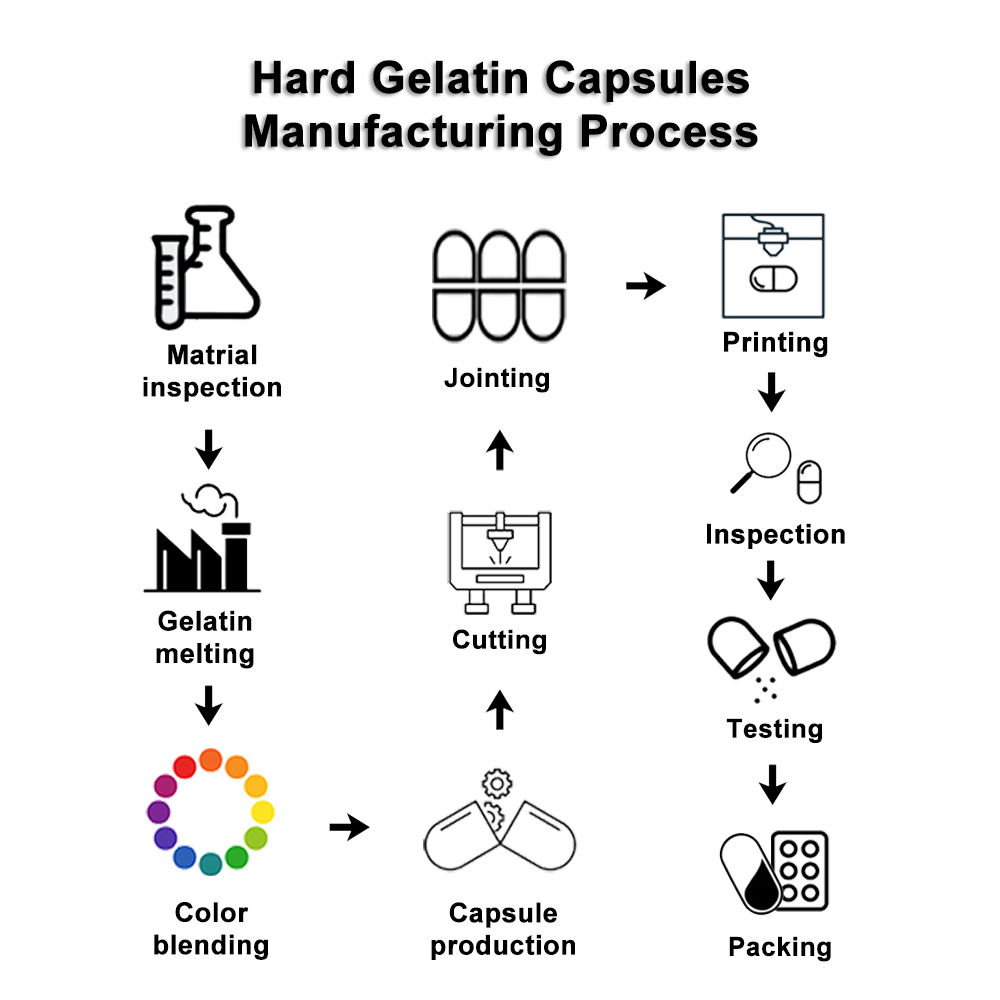
Hard gelatin capsule production is a highly automated process that relies on a series of synchronised stages. The operation runs on sophisticated machinery that maintains a consistent moisture level of 12% to 16% within the shells. Any deviation higher or lower can lead to brittle shells or structural instability during the filling phase.
Below is the step-by-step process of manufacturing these two-piece units.
1. Selection of Raw Materials
Hard capsules are primarily made of gelatin sourced from animal collagen. Manufacturers incorporate purified water, specific colorants such as dyes or pigments, and opacifiers like titanium dioxide. These additives provide structural strength and moisture stability while protecting light-sensitive active ingredients from degradation.
2. Gelatin Solution Preparation
The process begins by dissolving gelatin in demineralized water heated to approximately 60°C to 70°C. This creates a concentrated, highly viscous solution comprising about 30% to 40% gelatin.
A vacuum is applied to the mixture to remove air bubbles, which would otherwise cause structural flaws during filling or storage. Finally, colorants and pigments are blended in to achieve the desired aesthetic and branding.
3. Dipping and Film Formation
Once the solution reaches the correct viscosity, the dipping process begins. Rows of stainless steel mold pins are submerged in the heated gelatin. As these pins are withdrawn, they rotate continuously to distribute the film evenly across the surface. This mechanical rotation is critical to achieving a uniform wall thickness for both the cap and the body.
4. Dehumidification and Drying
The coated pins move through a series of drying kilns where they encounter high volumes of filtered, dehumidified air. This stage carefully extracts moisture until the gelatin sets into a rigid yet flexible shell. Accurate temperature control prevents the film from drying too quickly, which could lead to surface imperfections or cracking.
5. Stripping, Trimming, and Joining
After drying, automatic bronze jaws strip the solidified capsule shells from the mold pins. Since the dipping process leaves uneven edges, the shells are fed into a trimming unit where high-speed circular knives cut them to an exact length. The finished caps and bodies are then aligned and pushed together into a pre-locked position to prevent separation during transport.
6. Printing and Branding
In the final stage, the pre-joined capsules pass through a printing machine. Manufacturers use edible inks to apply dosage information, brand logos, or batch codes directly onto the shell surface. Once printed and polished, the capsules are ready for bulk packaging or immediate transfer to the filling line.
Softgel Capsule Manufacturing Process
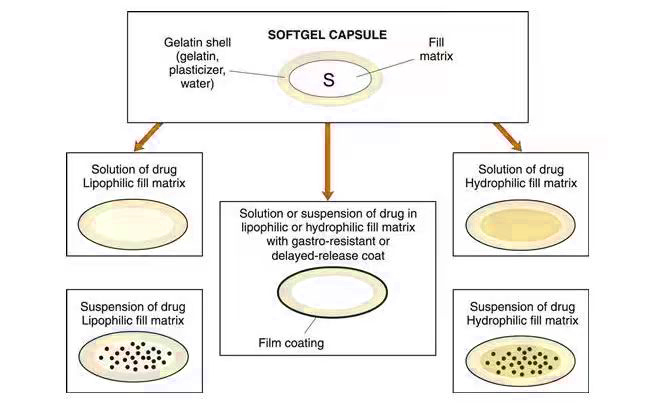
Softgel capsule manufacturing utilizes rotary die technology to encapsulate liquid or suspension fills within a single-piece shell. This specialized process integrates the creation of flexible gelatin ribbons with the immediate injection of active ingredients.
Here is the complete method for this production cycle.
1. Gelatin Mass Preparation
The process begins by creating a flexible gelatin mass. High-quality collagen is sourced from bovine, porcine, or fish origins and combined with purified water and plasticizers like glycerin or sorbitol. This mixture is heated with low agitation at 60–95°C. Blending typically occurs under a vacuum to eliminate air bubbles, so the resulting liquid mass is perfectly consistent and clear.
2. Formulation of Fill Material
The active fill material is prepared in a parallel stream. This can be a pure liquid, a non-aqueous solution, or a suspension paste. Chemists ensure the formulation is chemically compatible with the shell to prevent the gelatin from dissolving or becoming too soft over time.
3. Ribbon Formation
The molten gelatin mass flows onto two counter-rotating cooled drums. As the liquid touches the cold surface, it solidifies into two continuous, uniform ribbons. These ribbons are gauged for thickness before being fed into the encapsulation system. Mechanical sensors or laser gauges monitor the ribbon thickness in real-time to ensure it remains within a strict tolerance of a few microns.
4. Rotary Die Injection
Encapsulation happens when the two ribbons pass between a pair of rotating dies. As the dies meet, they create a pocket in the ribbons. A positive displacement pump injects the exact volume of fill material into the pocket. Heat and pressure from the dies create an air-tight seal and combine the halves into a single unit.
5. Drying
Freshly formed softgels are initially moved into tumble dryers to remove surface moisture. They are then spread onto trays and placed in drying tunnels with controlled humidity. This gradual dehydration ensures the shells reach their final desired hardness and stability.
6. Inspection and Cleaning
The final stage involves removing any lubricant oils from the shell surface using specialized cleaning solutions. Every capsule passes through a specialized inspection station to ensure product integrity. These units often utilize high-speed vision systems to detect leaks or physical deformities.
In-Process and Final Product Quality Control Test For Capsules
To make sure every batch meets pharmaceutical standards, manufacturers perform a series of diligent evaluations. These tests verify that each capsule is safe, effective, and stable throughout its shelf life.
1. Weight Variation Test
This procedure is a primary indicator of a well-calibrated filling process. Technicians randomly select and weigh 20 individual capsules from a batch to calculate the average mass.
Each capsule is then compared to this average to ensure it falls within a strictly defined percentage of deviation (usually 90-110% or 85-115% depending on content weight). If too many units fall outside this range, the batch may be rejected to prevent dosing inconsistencies.
2. Uniformity of Content
Content uniformity testing confirms that the active pharmaceutical ingredient is distributed evenly across the entire production run. This process involves analyzing 10 individual capsules to assay the API content via HPLC or UV spectroscopy.
Technicians then calculate the Acceptance Value (AV) to ensure the batch meets strict pharmacopeial standards. For a batch to pass, the AV must typically be less than or equal to 15.0, which proves that every capsule contains a consistent medicinal load.
3. Disintegration Test
A disintegration test checks how quickly a capsule breaks down into smaller particles within a medium that mimics the human body. The apparatus comprises a basket-rack assembly with six open-ended tubes submerged in a 1-liter beaker. A thermostatic arrangement maintains the fluid at body temperature while a mechanical device lifts the basket at a rate of 29-32 cycles per minute.
One capsule is placed in each of the six tubes, usually using water or simulated gastric fluid as the immersion medium. For standard capsules, the typical timeframe is 30 minutes. The batch passes if all six units disintegrate completely. If one or two fail, the test is repeated with 12 additional capsules; 16 of the total 18 must then meet the criteria.
4. Moisture Content Test
Moisture content testing is performed using a halogen moisture analyzer or the Karl Fischer titration method to ensure shell stability. Hard gelatin units should maintain a level between 13% and 16% to prevent the shells from becoming brittle or too soft.
Technicians heat a crushed sample and measure the weight loss to determine the exact water percentage. This verification protects the internal formulation from degradation. It also ensures the physical integrity of the shell remains intact during long-term storage.
FAQs
1. Why is HPMC used in capsule manufacturing?
HPMC is a plant-based cellulose polymer that maintains a very low moisture content of 4% to 6%. It actively resists cross-linking and prevents moisture transfer, making it ideal for hygroscopic APIs, probiotics, and dry powder inhalants.
2. How does a dosator capsule filling machine work?
A dosator plunges a hollow cylinder into a powder bed, using an internal spring-loaded piston to apply a single compressive force to form a slug. The dosator then retracts and ejects this consolidated slug directly into the empty capsule body.
3. How do Liquid-Filled Hard Capsules (LFHC) improve drug solubility?
LFHC technology addresses poorly soluble BCS Class II and IV drugs by pre-dissolving the API in a highly bioavailable lipid vehicle or co-solvent. This liquid matrix facilitates rapid mucosal absorption immediately upon shell dissolution in the stomach.
4. What are Multiple-Unit Pellet Systems (MUPS)?
MUPS are formulations where the total therapeutic dose divides into hundreds of microscopic, polymer-coated pellets. Encapsulating them allows for broad gastrointestinal dispersion, mitigating localized toxicity and preventing severe dose dumping.
Maintain Therapeutic Integrity Through Technology
The capsule manufacturing process is a sophisticated blend of mechanical accuracy and chemical stability. These containers serve as the primary vehicle for medication; therefore, the accuracy of the production line directly impacts patient health and therapeutic integrity.
Whether producing hard gel or softgel capsules, every single step from raw material selection to final moisture testing must be executed with zero margin for error. Achieving this level of consistency requires more than just standard machinery; it demands an integrated technological approach.
Forget about the complexities of managing multiple vendors for your production needs. Finetech provides a one-stop solution for the entire capsule manufacturing lifecycle. From high-speed capsule filling equipment and soft gel encapsulation machines to advanced blister packaging solutions, our technology ensures your facility meets the highest global standards.
Visit our website today and see how our expertise can optimize your pharmaceutical output.
References:
What is Softgel Encapsulation Machine?
What Are Vegetable Capsules: A Comprehensive Guide.
Capsule Manufacturing Company List.
How Long Does a Capsule Take to Dissolve?
Different Types of Capsule Dosage Forms and How They Work.
Capsule vs Tablet: The Complete Beginner’s Guide.
Copyright Notice:
You may not reproduce, modify, publish, display, transmit, or in any way exploit any content on this website, or use such content to construct any kind of database without prior express written approval by Finetech Group. For permission to use the content, please contact: info@pharmamachinecn.com
Disclaimer:
The information contained in this article is for general information purposes only. The Company does not guarantee the accuracy, relevance timeliness or completeness of any information, and the Company assumes no responsibility for errors or omission in the content of this article.