English
  Russian
  Turkish
  Spanish
  French
  German
  Japanese
Capsule production is an important part of pharmaceutical and supplement manufacturing. Some products are packed in hard capsules, while others need soft capsules. Both types look similar to users, but the capsule filling machines used to make them are very different.
The choice depends on the product form, production process, cost, and cleaning needs.
In this article, we discuss hard capsule vs soft capsule filling machine differences and how to choose the right option for your production line.
What Is a Hard Capsule Filling Machine?
A hard capsule filling machine is used to fill empty two-piece capsules. These capsules have a body and a cap. The machine separates both parts, fills the body with product, and then locks the cap back in place.

This machine is suitable when the product is dry and free-flowing. It can be manual, semi-automatic, or fully automatic, depending on production volume.
What Is a Soft Capsule Filling Machine?
A soft capsule filling machine is used to make and fill soft gelatin capsules. These capsules are usually one-piece capsules with liquid, oil, paste, or suspension inside.
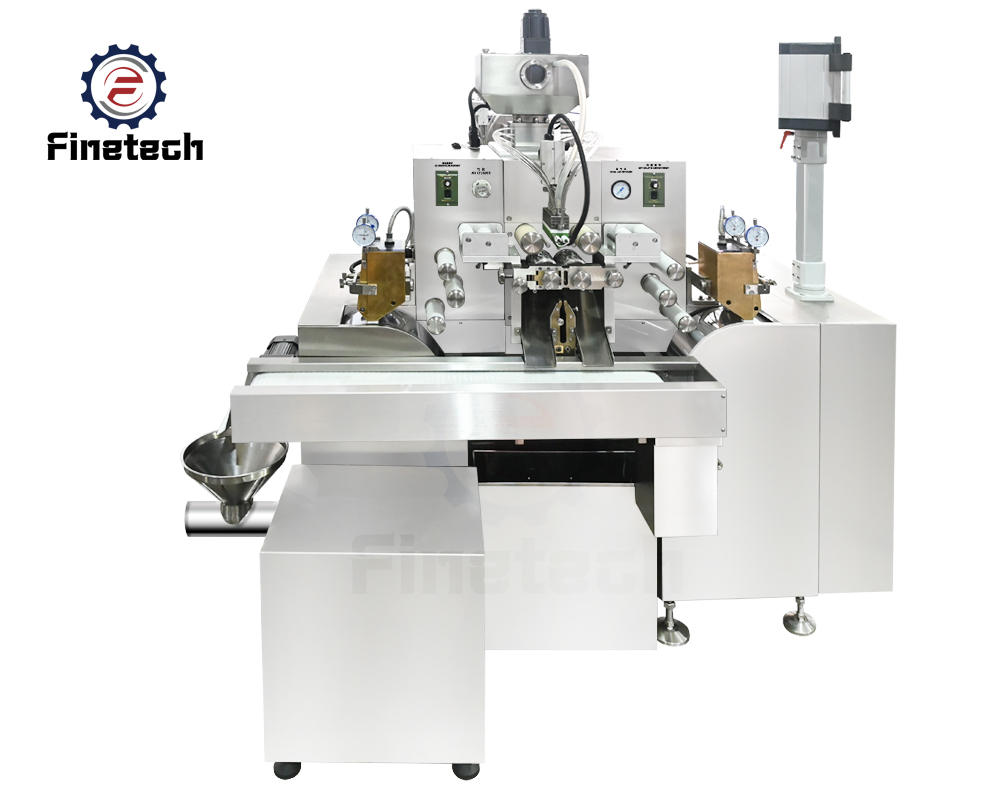
Soft capsule machines are mostly used for fish oil, vitamins, liquid extracts, and oil-based pharmaceutical products. They need careful control of gelatin, temperature, filling material, and drying conditions.
Hard Capsule vs Soft Capsule Filling Machine: Main Differences
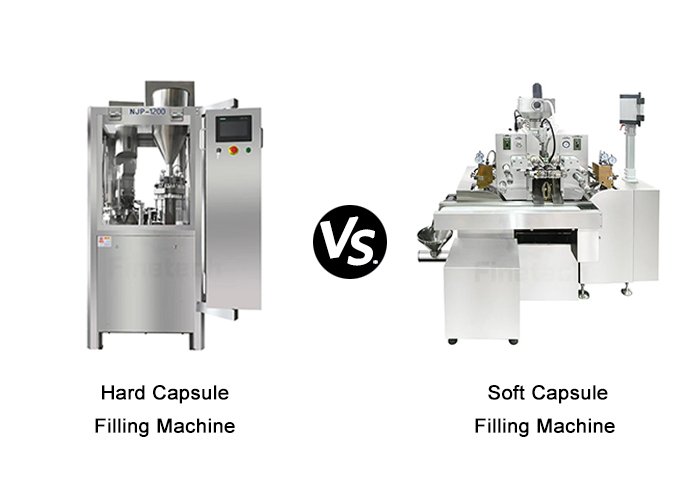
When comparing hard capsule vs soft capsule filling machine options, the biggest difference is the type of capsule and product they handle.
Capsule Type
Hard capsules come as two separate parts: body and cap. The machine fills the body and closes the capsule.
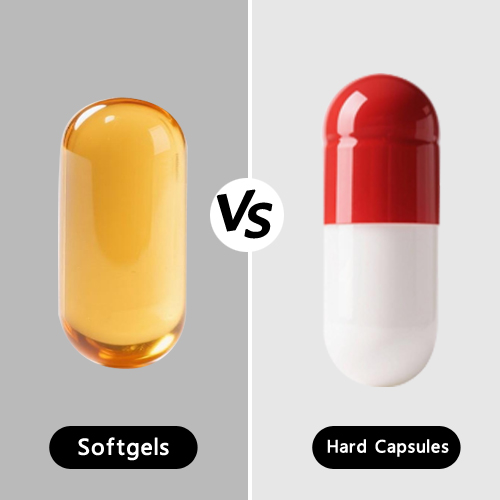
Soft capsules are made as one sealed piece. The shell is formed during production and filled at the same time. This is one major hard capsule vs soft capsule filling machine difference.
Filling Material
Hard capsule machines usually handle dry materials. These may include powders, granules, pellets, or tablet forms. If the material flows well, the filling process becomes easier.
Soft capsule machines are better for liquids, oils, pastes, and suspensions. They are used when the product cannot be filled properly into a hard capsule or when a liquid-based dose is needed.
Working Process
A hard capsule filling machine works with empty capsule shells. It aligns the capsules, separates the cap and body, fills the body, joins the capsule, and ejects the finished capsule.
A soft capsule filling machine works differently. It prepares the gelatin film, fills the product, seals the capsule, and sends it for drying. This is why soft capsule production needs more control.
Production Complexity
Hard capsule filling is usually easier to set up and operate. The process is more direct because the capsule shell is already made.
Soft capsule filling is more complex. The machine must control shell thickness, fill volume, sealing, temperature, and drying. If one part is not balanced, the final capsule quality can be affected.
This is an important point when comparing hard capsule vs soft capsule filling machine options for daily production.
Cleaning and Maintenance
Hard capsule machines are easier to clean in many cases because they mostly handle dry material. Operators still need to clean powder contact parts, dosing units, and capsule handling areas.
Soft capsule machines need more careful cleaning because they handle gelatin and liquid fill materials. Oils or pastes can stick to machine parts. Cleaning must be done properly to avoid product mixing or quality issues.
Cost and Industry Use
Hard capsule machines are usually more cost-friendly for many businesses. They are common in medicine, supplements, herbal, and powder-based product production.
Soft capsule machines are usually more expensive because the process needs more advanced control. They are common in fish oil, vitamin D, vitamin E, liquid herbal extracts, and oil-based formulas.
| Difference | Hard Capsule Filling Machine | Soft Capsule Filling Machine |
| Capsule type | Fills two-piece hard capsules with a body and cap | Makes and fills one-piece soft gelatin capsules |
| Filling material | Used for powders, granules, pellets, and small tablets | Used for oils, liquids, pastes, and suspensions |
| Working process | Separates, fills, closes, and ejects capsules | Forms, fills, seals, and dries capsules |
| Production complexity | Usually easier to operate and manage | More complex because shell making and filling happen together |
| Cleaning and maintenance | Easier to clean in most dry-product applications | Needs more careful cleaning because of gelatin and liquid materials |
| Cost | Usually has a lower setup cost | Usually has a higher setup cost |
| Industry use | Common for dry medicines, supplements, and herbal products | Common for vitamins, fish oil, liquid extracts, and oil-based formulas |
Which Capsule Filling Machine Is Better for Your Production Line?
There is no single better option for every company. The right choice depends on what you want to produce.
Choose a hard capsule filling machine if your product is dry, powder-based, or pellet-based. It can be a good option when you need easier operation, simpler cleaning, and lower production costs.
Choose a soft capsule filling machine if your product is liquid, oil-based, or paste-like. It can be better when the formula needs a sealed soft shell or when the active ingredient works better in liquid form.
Before choosing between hard capsule vs soft capsule filling machine options, check your product type, batch size, budget, cleaning needs, and quality standards.
Choose Finetech Support for All Your Pharmaceutical Packaging Needs
Choosing the right capsule filling equipment can affect product quality, production speed, and daily operation. A machine should match the product form, capsule type, and production goal.
At Finetech, we support pharmaceutical companies with capsule filling machines, packaging machines, production line solutions, and technical guidance. Our team can help businesses understand hard capsule vs soft capsule filling machine needs and choose equipment that fits their manufacturing process.
If your company needs support with capsule filling or pharmaceutical packaging, contact us today to get the help you need.